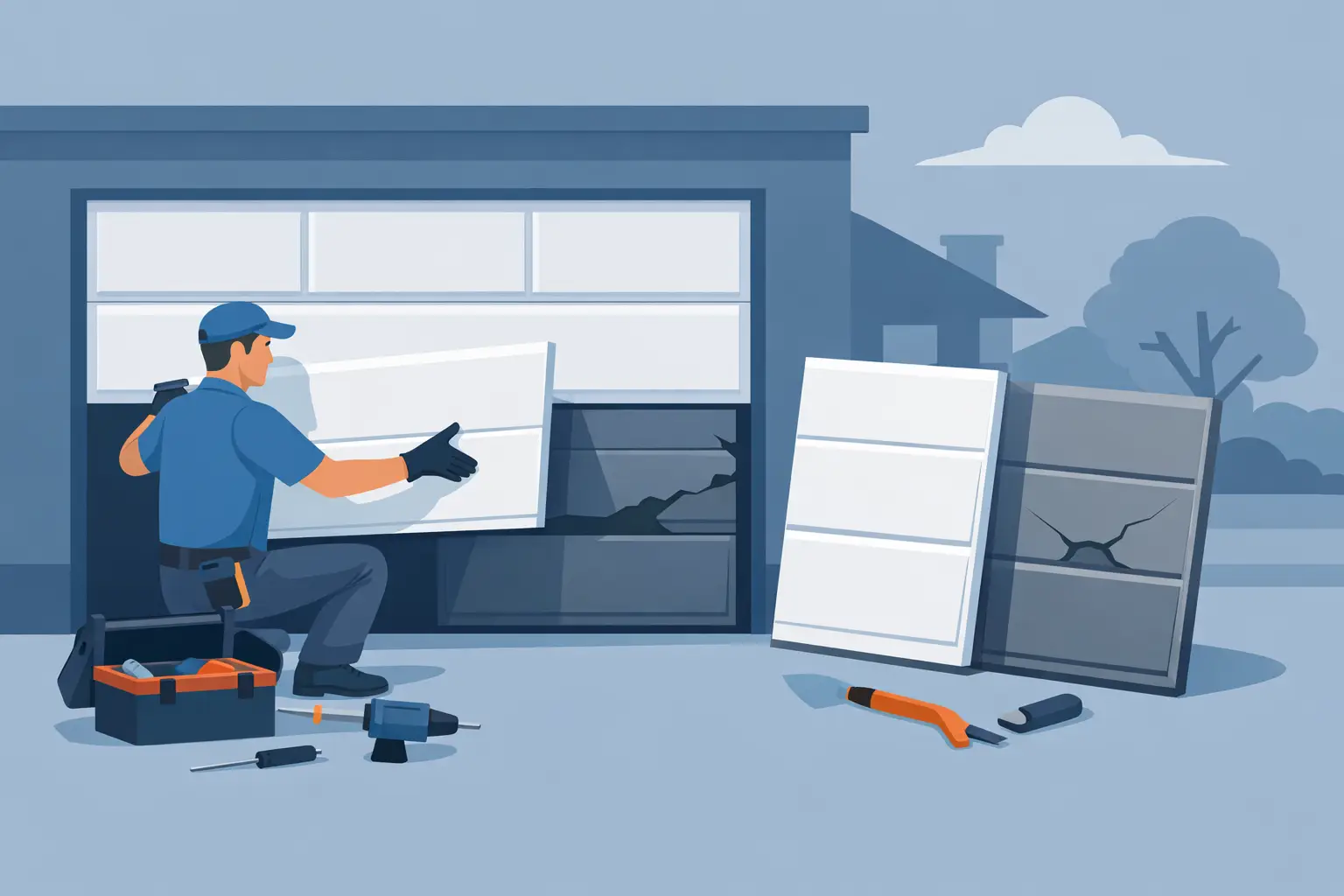
A dented garage door panel can make your whole property look rough, but appearance is usually not the real problem. In many cases, garage door panel replacement becomes urgent because the damage starts affecting how the door moves, seals, and handles daily use. One bent section can throw off alignment, strain the opener, and turn a small repair into a bigger bill if it gets ignored.
For homeowners and small business owners in the East Valley, that usually leads to one practical question: can you replace one panel, or do you need a whole new door? The honest answer is, it depends on the age of the door, the extent of the damage, and whether a matching panel is still available.
When garage door panel replacement makes sense
If the damage is limited to one or two sections and the rest of the system is in good shape, garage door panel replacement can be the smart move. This is often the case after a low-speed bump from a vehicle, a basketball hit in the driveway, storm-related damage, or wear that affects a single section more than the others.
A panel replacement is usually worth considering when the tracks are still straight, the springs and cables are working properly, and the door is not excessively old. If the structure of the door remains sound, replacing a damaged section can restore both function and curb appeal without the cost of a full door replacement.
This option can also make sense when the opener is still operating normally and the damage has not spread into the hinges, rollers, or reinforcement struts. In other words, the panel is the problem, not the entire system.
When replacing the whole door is the better call
Sometimes a panel is damaged, but the panel is not the whole story. If the impact bent the frame, pulled the track out of position, or caused the door to rack unevenly, a section swap may not solve the real issue. You could replace the panel and still end up with a door that binds, shakes, or wears out parts faster than it should.
Age matters too. Older garage doors can be difficult to match, especially if the manufacturer discontinued that style, color, or embossing pattern. Even if a replacement panel is technically available, it may stand out against faded older sections. Arizona sun is hard on finishes, and a new panel next to years of UV exposure can be pretty obvious.
A full replacement is often the better long-term value if multiple panels are cracked, rusted, bent, or separating at the seams. The same goes for doors with recurring repair issues. If you are already dealing with noisy operation, worn rollers, opener strain, and poor insulation, putting money into one new panel may only delay the bigger decision.
What technicians check before recommending panel replacement
A good service company should not just look at the dent and quote a number. They should inspect how the whole system is handling that damage.
Door balance and movement
If the door is no longer balanced, the damage may have affected more than the visible section. An unbalanced door can stress the opener and create a safety issue.
Track, hinge, and roller condition
A bent panel can twist nearby hardware. If the hinges are pulled loose or the rollers are no longer tracking cleanly, those parts may need attention at the same time.
Availability of a matching panel
This is one of the biggest deciding factors. The panel has to fit the door model, size, design, and insulation profile. A close match is not always a true match.
Overall door age
If the door is nearing the point where more repairs are likely, a professional should say so plainly. Honest guidance matters more than pushing the smaller ticket.
Cost factors homeowners should expect
There is no one-size-fits-all price for garage door panel replacement because the material and door style make a big difference. A basic uninsulated steel panel is not priced the same as a carriage-style section with windows or an insulated commercial-grade panel.
Labor can vary based on how difficult the panel is to source and install. Some jobs are straightforward. Others involve re-stacking sections, resetting hardware, adjusting tension, and fine-tuning the opener after the new panel is in place.
The biggest cost swing usually comes down to these questions: Is the panel still made? Does the color match? Did the impact damage only the panel, or also the track and hardware? If the answer to that last question is yes, the repair becomes more than a simple section replacement.
That is why transparent pricing matters. You want to know whether you are paying for a focused repair that makes financial sense, or spending close to replacement cost on an aging system.
The matching problem most people do not expect
Many property owners assume a damaged panel can be ordered like a common spare part. Sometimes that is true. Sometimes it is not even close.
Garage doors are built in specific panel profiles, widths, heights, insulation types, and design patterns. Window layouts, raised panel shapes, and surface textures also vary by manufacturer and model line. If your door is older or no longer produced, finding a proper match may take time or may not be possible at all.
Even when the panel can be ordered, color consistency can be tricky. Heat and sun exposure fade finishes over time, especially in Arizona. A fresh white, almond, brown, or wood-look panel may look noticeably different from the original sections around it.
For some customers, that cosmetic difference is acceptable. For others, especially on a front-facing residential garage or customer-facing commercial building, it is enough reason to consider full replacement.
Why DIY panel replacement is riskier than it looks
A garage door panel may look like a simple section held together by hinges, but the system around it is under serious tension. Springs, cables, brackets, and rollers all work together to lift a lot of weight safely. Getting one part wrong can cause damage to the door or injury to the person working on it.
Panel replacement also requires accurate sizing, proper hardware transfer, alignment checks, and opener adjustment once the new section is installed. If the replacement is slightly off, the door may close unevenly, rub the track, or stop sealing at the bottom.
For most property owners, this is not the repair to learn by trial and error. A trained technician can tell whether the visible damage is isolated or part of a larger problem, and that can save money as much as it saves hassle.
Residential and commercial doors are not the same decision
For a home, panel replacement is often about appearance, safety, and avoiding extra strain on the opener. For a business, the decision can affect daily operations, security, and downtime. A damaged sectional door at a warehouse, service bay, or storage area may still open, but that does not mean it is reliable enough to leave alone.
Commercial doors also tend to take heavier use, so panel damage can be a sign of larger wear in the system. The right fix depends on how critical that opening is to your workflow and whether a short-term repair will hold up under repeated cycles.
How to make the right call without overspending
The best decision usually comes from looking at the full picture, not just the damaged spot. If your door is relatively new, the damage is isolated, and a matching panel is available, replacement can be a solid, cost-effective fix. If the door is older, mismatched, unstable, or showing wear in multiple areas, a full replacement may be the better investment.
That is where a local company with real repair experience makes a difference. You want someone who will explain the trade-offs clearly, move quickly if the door is unsafe, and give you pricing without surprises. Companies like Riggs Rescue AZ build trust by keeping the process straightforward and helping customers choose the option that actually fits the condition of the door.
If your garage door has a cracked, bent, or dented section, the next step is simple: have it checked before the damage spreads. A fast inspection today can keep one bad panel from turning into a much bigger repair tomorrow.

Leave a Reply