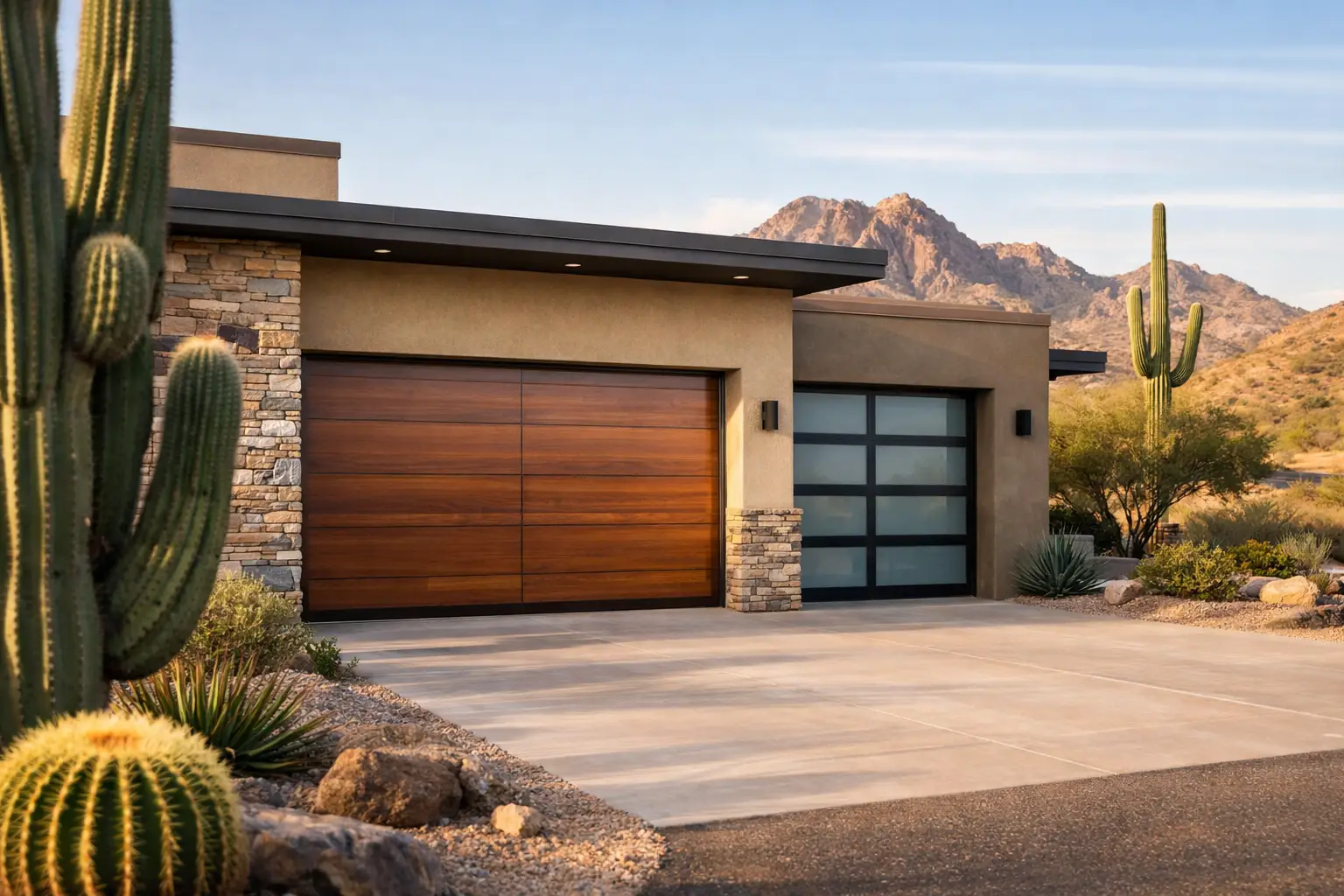
By mid-afternoon in Arizona, your garage door is taking a beating. Sun cooks the surface, heat builds inside the garage, and every moving part has to keep working through dust, dry air, and big temperature swings. That is why choosing the best garage doors for desert homes is less about looks alone and more about picking a door that can handle harsh conditions without turning into a constant repair bill.
A garage door in the desert has a tougher job than most homeowners realize. It is one of the largest moving parts of your home, and it sits exposed to direct sun day after day. The wrong material can fade, warp, dent too easily, or transfer too much heat into the garage. The right one gives you better durability, quieter operation, and fewer surprises when summer hits hard.
What makes a garage door desert-ready?
In a mild climate, you can get away with more style-first decisions. In the desert, performance matters first. Heat resistance, UV durability, insulation, and low-maintenance finishes all deserve a close look.
You also have to think about how you use your garage. If it is attached to the house, insulation matters more because heat in the garage can affect nearby rooms. If the garage faces west, the afternoon sun will be brutal, so color and material become even more important. If the space doubles as a workshop, gym, or storage area, that changes what door makes sense too.
The best garage doors for desert homes usually balance four things well: they resist sun damage, help control heat, hold up under daily use, and fit the budget without creating future headaches.
Best materials for garage doors in desert homes
Steel is the most practical choice for many homes
For a lot of Arizona homeowners, insulated steel is the safest bet. Steel doors are durable, widely available, and easier to maintain than wood. They also come in a broad range of styles, from clean modern panels to carriage-house looks.
The key is not just choosing steel, but choosing the right kind of steel door. A thin, non-insulated builder-grade door may be cheaper upfront, but it will not do much to slow heat transfer. In desert conditions, an insulated steel door usually offers better long-term value. It can help stabilize garage temperatures and often runs quieter than a basic hollow door.
There are trade-offs. Steel can dent if it takes a hit from a basketball, bike, or bumper. Lower-quality finishes may also fade faster under intense sun. But overall, for cost, durability, and performance, insulated steel is hard to beat.
Aluminum can work, but quality matters
Aluminum doors are lightweight and naturally rust-resistant, which sounds great in a dry climate. They are often used for contemporary designs, especially full-view doors with glass panels.
The downside is strength. Aluminum dents more easily than steel, so it may not be the best fit for busy households or high-use commercial settings. In hot climates, a full-view glass-heavy aluminum door can also let in a lot of heat unless the glass is upgraded appropriately. If style is the top priority, aluminum can be a good option, but it needs to be chosen carefully.
Wood looks great, but the desert is not easy on it
Wood garage doors have real curb appeal. They can make a home look high-end and warm in a way that metal sometimes cannot match. But desert weather is demanding, and wood demands attention right back.
Sun exposure dries wood out over time. Finishes need regular upkeep, and without maintenance, cracking, fading, and warping become more likely. For homeowners who love the look and are willing to stay on top of refinishing, wood can still be an option. For most people who want low maintenance and predictable costs, it is usually not the best fit.
Faux wood gives you the look without as much upkeep
If you like the appearance of wood but do not want the maintenance schedule that comes with it, faux wood or wood-look steel doors make a lot of sense. These doors are especially popular in desert neighborhoods where homeowners want strong curb appeal but also want something practical.
They are not all equal, though. Some finishes hold up better in UV-heavy environments than others. A quality product with a durable exterior finish will generally perform far better than a cheap imitation.
Why insulation matters more in the desert
A lot of people assume insulation is mainly for cold climates. In Arizona, it matters for the opposite reason. Insulation helps slow down heat transfer, which can make a big difference when your garage door is exposed to extreme sun.
An insulated door will not turn your garage into an air-conditioned room by itself, but it can help reduce the oven effect. That matters if your garage shares walls with bedrooms, a laundry room, or a living area. It also helps protect items stored in the garage from the worst of the heat.
Best garage doors for desert homes usually have insulated cores
When comparing doors, pay attention to construction. A single-layer door is the most basic option. It is usually the least expensive, but it also offers the least protection from heat and noise. Double-layer and triple-layer doors add insulation and backing materials that improve performance.
Polyurethane insulation often provides a higher insulating value and a sturdier feel than polystyrene. That does not mean every homeowner needs the highest available rating, but in the desert, stepping up from a basic non-insulated door is often money well spent.
Color, finish, and sun exposure
Color is not just a design choice in hot climates. It affects surface temperature too. Dark colors absorb more heat, which can raise door temperatures and put more stress on finishes and components. Lighter colors generally reflect more sunlight and tend to stay somewhat cooler.
That does not mean you have to avoid darker tones completely. It means you should be realistic about the exposure your door gets. A west-facing garage in full afternoon sun may do better with lighter shades or with a high-quality finish specifically designed for UV resistance.
The finish itself matters just as much as the color. Factory-finished doors often outperform field-painted doors over time, especially in direct sun. If repainting is part of your plan, using the right exterior-grade products is important.
Hardware and operation matter in desert conditions
Homeowners often focus on panels and overlook the working parts. Springs, rollers, seals, tracks, and openers all deal with heat and dust too. If those components are low quality or already worn out, even a good new door can disappoint.
Weather seals are especially important. In the desert, they help keep out dust, debris, and blowing rain during monsoon season. Bottom seals and perimeter seals wear down over time, and when they do, your garage becomes easier for heat and dirt to invade.
Openers also need to match the door. A heavier insulated door may need a stronger opener than an older lightweight model. Belt-drive openers are often a good choice for attached garages because they run quieter, while wall-mount systems can be useful when ceiling space matters.
Matching the door to the home and budget
The best choice is not always the most expensive door on the showroom floor. It is the one that fits your home, your usage, and your budget without creating regret six months later.
If you want the most practical all-around option, an insulated steel door with a durable finish is often the winner. If curb appeal is a major priority, a faux wood insulated steel door can deliver a strong look with less maintenance than real wood. If you own a modern home and love clean lines, an aluminum and glass door may work well, but only if heat gain and durability are addressed.
For business owners, the calculation can be a little different. A commercial or mixed-use property may need heavier-duty construction, more frequent cycle ratings, and stronger security features. Appearance still matters, but downtime matters more.
When to replace instead of repair
Sometimes a homeowner starts by shopping for repairs and ends up realizing replacement makes more sense. If your current door is badly faded, uninsulated, noisy, frequently off-track, or showing panel damage, putting more money into it may only delay the inevitable.
A replacement can improve curb appeal, reduce maintenance, and make the garage more usable during hot months. It can also solve compatibility problems with older openers and worn hardware. A good local garage door company should be willing to explain both options clearly instead of pushing a replacement when a repair would do.
That honest guidance matters. In places like Gilbert, Mesa, and Chandler, where summer heat is not a short season but a long reality, the right recommendation should hold up long after the service truck leaves.
If you are choosing a new garage door for a desert home, think beyond the brochure photo. Ask how the material handles direct sun, whether the door is insulated, how the finish is expected to wear, and what kind of maintenance it will need. A door that looks good on day one is nice. A door that still performs after years of Arizona heat is the one you will actually be glad you bought.

Leave a Reply