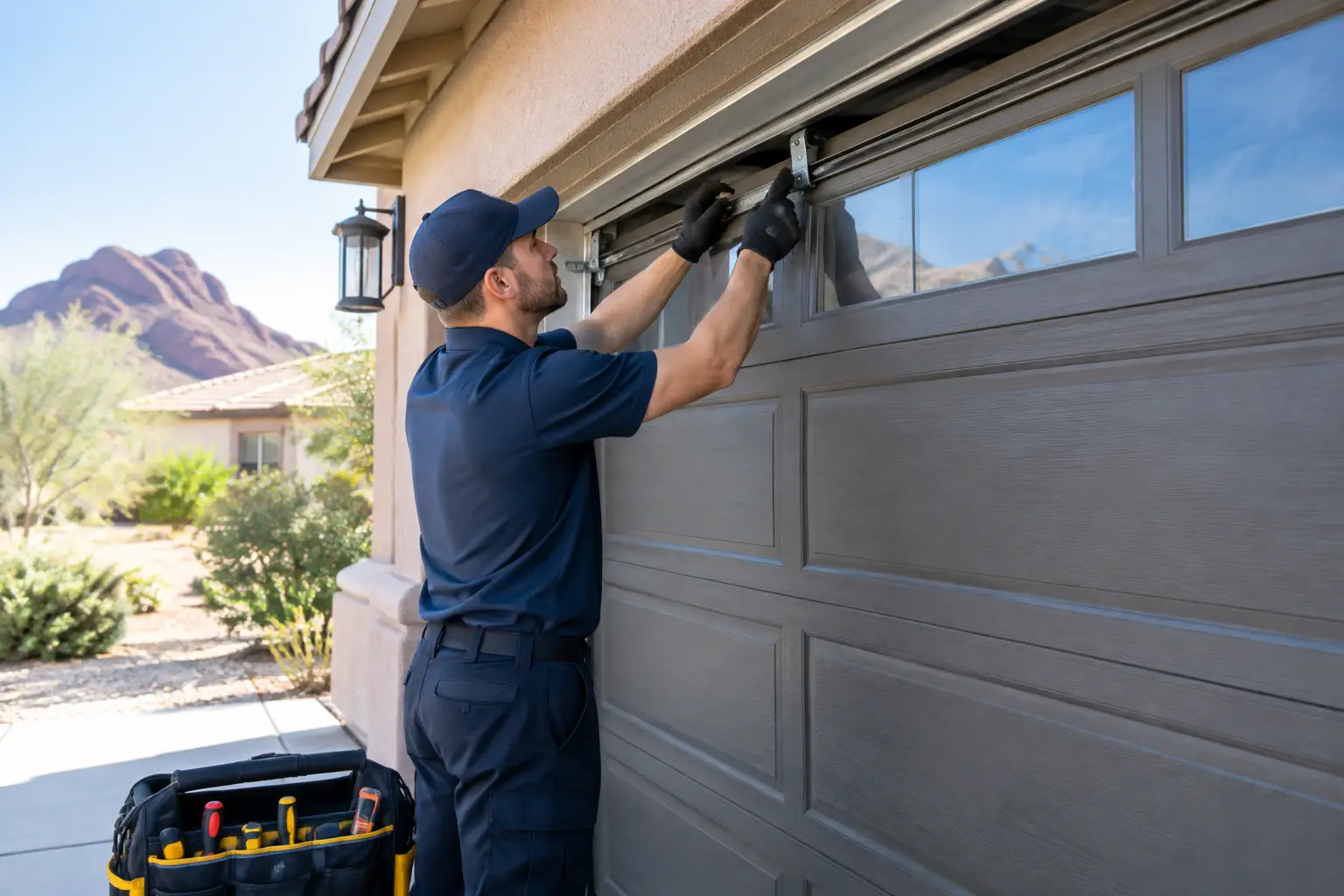
A garage door rarely chooses a convenient time to stop working. It may stick halfway open before work, reverse unexpectedly when you are trying to leave, or make a sharp grinding sound late at night. When you need garage door service Tempe homeowners can rely on, the goal is not just getting the door moving again. It is getting a clear answer, a safe repair, and pricing that does not come with surprises.
Arizona heat, daily use, dust, and worn moving parts all take a toll on a garage door system. A small issue can become a larger one quickly, especially when the door is forced to operate with a damaged spring, frayed cable, failing opener, or misaligned track. Knowing what to watch for helps you make a smart decision before a minor repair turns into a stressful emergency.
When a Garage Door Problem Needs Fast Attention
Some garage door issues are inconvenient. Others can create a real safety or security concern. If the door will not close, has come off its track, hangs unevenly, or has a broken spring, stop using it and call a professional. Trying to force a heavy garage door closed can damage the opener, bend hardware, or put someone nearby at risk.
A loud bang from the garage is often a broken torsion or extension spring. Springs carry the weight of the door, and they are under significant tension. Once one breaks, the opener may strain, the door may feel extremely heavy, and manual operation may not be safe. This is not a do-it-yourself repair.
The same applies to loose or broken cables. Cables can snap or come off their drums when a spring fails or the door becomes unbalanced. A cable problem may cause one side of the door to lift higher than the other, leaving the door crooked in the opening. Shut off use until the system can be inspected.
Common Repairs That Keep Doors Running Safely
Most service calls do not require a new garage door. In many cases, a trained technician can restore dependable operation by repairing the part that has failed and checking the rest of the system for related wear.
Springs, Cables, Rollers, and Tracks
Your garage door is a balanced system, not just a panel that goes up and down. Springs offset the door’s weight. Cables transfer that lifting force. Rollers guide the door through the tracks. When one component wears out, the others often work harder.
Worn rollers may cause rattling, jerky movement, or excessive noise. Bent tracks can make the door drag or bind. Loose hardware can create vibration that gets worse over time. Replacing the right worn components and making proper adjustments can make a door quieter, safer, and easier on the opener.
Garage Door Opener Problems
An opener that hums but will not move the door is not always an opener failure. The door may be too heavy because of a broken spring, or the safety sensors may be blocked or out of alignment. Sensor issues are common in garages where dust, storage items, or a bumped sensor bracket interrupt the beam.
If the opener runs but the door reverses, stops short, or will not respond consistently to remotes, a service check can identify whether the issue is the motor, drive system, force settings, wall control, sensors, or the door itself. Replacing an opener can be the right answer when an older unit has repeated problems, lacks current safety features, or no longer fits how you use the garage. But it should be a recommendation based on the condition of the full system, not a default sales pitch.
Repair or Replace? The Right Answer Depends
A repair is usually the practical choice when the door is structurally sound and the problem is limited to springs, rollers, cables, sensors, hardware, or an opener component. It is often faster and more affordable than replacement, particularly when the door panels, tracks, and insulation are in good shape.
Replacement becomes worth considering when the door has extensive panel damage, severe rust, repeated track damage, poor insulation, or a history of frequent repairs. A damaged section can sometimes be replaced, but matching an older door’s color, design, and panel profile is not always possible. If multiple sections are compromised, replacing the full door may provide a better long-term result.
Tempe homeowners may also choose a new garage door for curb appeal, quieter operation, better insulation, or updated wind and safety features. Insulated doors can be especially helpful when the garage shares a wall with living space or is used as a workshop. They will not turn an unconditioned garage into a cooled room, but they can reduce heat transfer and help moderate temperature swings.
What Professional Garage Door Service in Tempe Should Include
A dependable service visit should start with an inspection, not a guess. The technician should check the door’s balance, springs, cables, tracks, rollers, hinges, brackets, safety sensors, opener operation, and weather seal as needed. The goal is to find the underlying cause, not simply quiet the symptom for a few days.
You should also receive straightforward options. For example, a worn roller may be a simple targeted repair, while several worn rollers and loose hardware may make a more complete tune-up the better value. Both approaches can be reasonable depending on the age, condition, and use of your door. Clear explanations let you decide with confidence.
At Riggs Rescue AZ, that customer-first approach means honest guidance, transparent pricing, and service designed to get your day back on track. For residential customers, no service or trip charges can remove one more concern when an unexpected repair is already disrupting the day.
Do Not Ignore a Noisy or Slow Garage Door
A garage door does not need to be fully stuck to need attention. Squeaking, grinding, popping, shaking, or slowing down are early warnings. The cause might be simple lubrication needs, but it could also point to worn rollers, loose hardware, track alignment issues, or spring fatigue.
A door that suddenly feels heavier than usual, opens only a few feet, or closes with a hard impact deserves prompt service. Continuing to run an unbalanced door can overload the opener. What begins as a spring or roller repair can become an opener replacement if the system is pushed too long.
Homeowners can safely keep the area around the tracks clear and wipe sensor lenses clean. Beyond that, avoid adjusting springs, cables, or bottom brackets. Those parts are under tension and require the right tools and training.
Maintenance Helps Prevent the Worst Timing
Garage doors are often the largest moving object in a home, yet they are easy to overlook until something fails. A periodic professional check-up can catch loose hardware, worn rollers, weakening springs, and opener issues before they interrupt your schedule.
Between visits, listen to the door and watch how it moves. It should travel smoothly without excessive shaking, scraping, or hesitation. Test the photo-eye sensors by closing the door with the opener and passing an object in front of the beam. The door should reverse. If it does not, stop using the opener until the safety system is repaired.
For households that use the garage as the main entry, maintenance is even more valuable. More cycles mean more wear, and small changes in sound or motion are often the first sign that the system needs care.
Commercial Doors Need a Different Level of Planning
For a small business, warehouse, auto shop, or property manager, a malfunctioning commercial garage door can affect deliveries, security, employee access, and daily operations. Commercial doors are heavier and may operate more frequently than residential systems, so repairs need to account for the door’s size, cycle demands, operator type, and safety requirements.
Fast service matters, but so does choosing parts and equipment that fit the application. A low-use storage door and a busy loading-area door do not have the same needs. The right repair or replacement plan should balance immediate uptime with long-term reliability.
Choose a Local Team That Explains the Fix
When comparing providers, look for more than the fastest promise. Ask whether the company will inspect the full system, explain what failed, provide pricing before work begins, and offer options when replacement is not the only answer. Local experience also matters because technicians familiar with East Valley conditions understand how heat, dust, and heavy daily use affect doors and openers.
If your door is making new noises, moving unevenly, or refusing to close securely, do not wait for a complete breakdown. A quick professional check can protect your home, your schedule, and the people who depend on that door working safely.

Leave a Reply