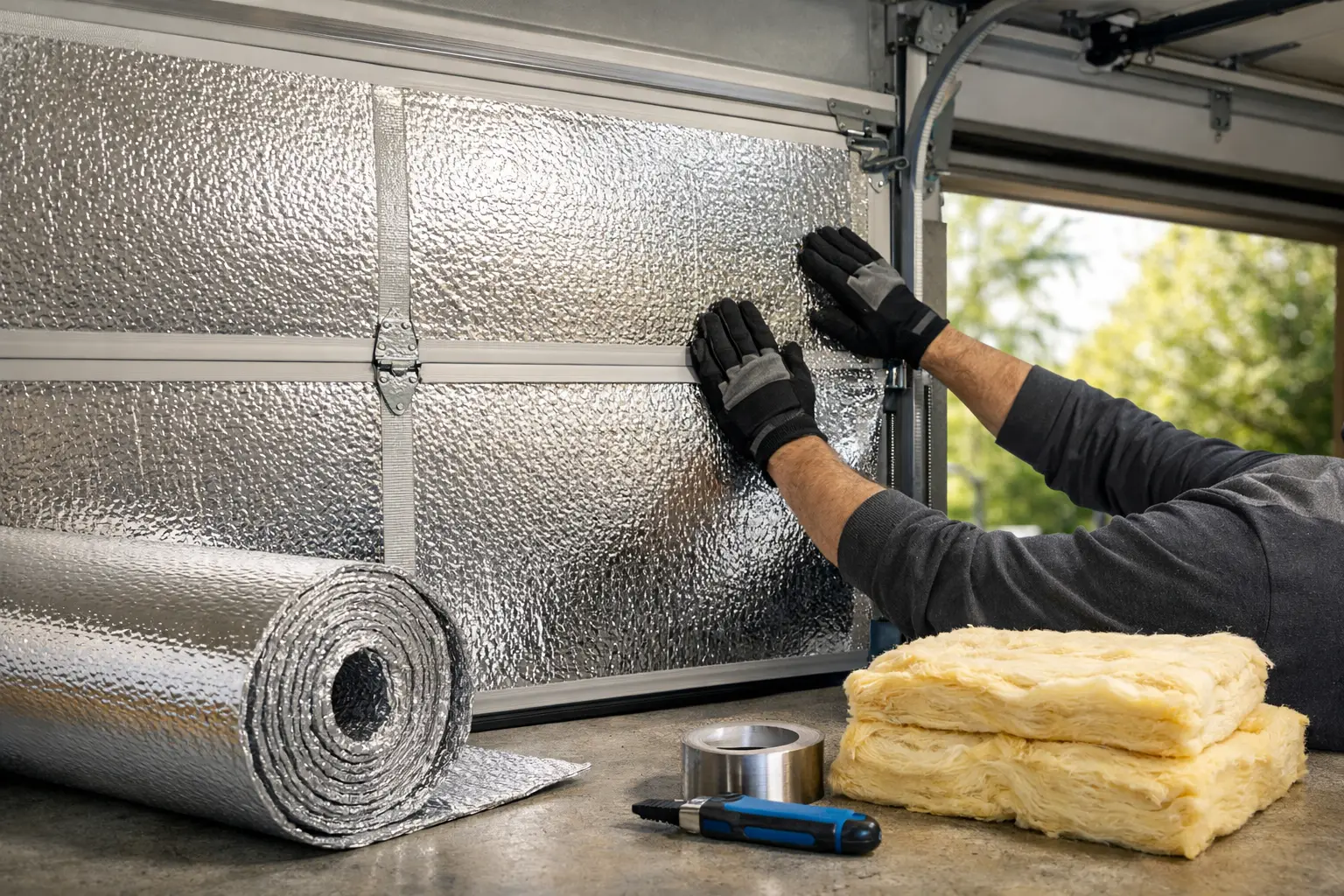
That hot wall of air you feel when you open the garage in an Arizona summer is exactly why a garage door insulation buyer guide matters. If your garage sits under a bedroom, doubles as a workshop, or shares a wall with your living space, the right insulation can make a noticeable difference in comfort, noise, and day-to-day wear on your door system.
The key is choosing insulation that matches how you actually use the garage. Some homeowners want better temperature control. Others mostly care about reducing street noise or helping the garage feel less like an oven in the afternoon. Those goals can overlap, but they do not always point to the same product.
What garage door insulation really does
Garage door insulation slows heat transfer through the door. It does not turn your garage into a fully conditioned room on its own, and it will not fix air leaks around the perimeter if the weather seal is worn out. But it can help reduce extreme swings in temperature, especially when paired with a well-sealed door.
It also changes how the door sounds and feels. An insulated door usually vibrates less, sounds less tinny, and can feel more solid during operation. That matters if your garage door opens early in the morning, if you have rooms nearby, or if the garage is part of your daily living space instead of just storage.
For Arizona homes, insulation often makes the biggest difference when the garage faces west, gets direct afternoon sun, or has attached rooms that are harder to keep comfortable. In those cases, the garage door is not a small detail. It is one of the biggest surfaces on the front of the home.
Garage door insulation buyer guide: start with the door you already have
Before comparing kits or insulated replacement doors, look at the door itself. Not every garage door is a good candidate for adding insulation.
A newer steel sectional door usually gives you the best chance of a clean upgrade. It has panel cavities that can accept insulation, and the door hardware may already be in good enough shape to handle a little extra weight. An older door is a different story. If the panels are thin, dented, warped, or already struggling to open smoothly, adding insulation can create more problems than benefits.
This is where honest guidance matters. If your door is near the end of its life, paying to insulate it may not be the most affordable path. In some cases, replacing the door with an insulated model is the smarter long-term move because you improve comfort, curb appeal, and operation all at once.
The main insulation types and how they compare
The three most common options are foam board, reflective insulation, and spray foam or factory-insulated doors.
Foam board is a common retrofit choice because it is fairly affordable and offers a decent balance of insulation value and structure. Polystyrene panels are common in DIY kits. Polyisocyanurate usually offers a higher R-value per inch, which can help when space is limited inside the panel.
Reflective insulation is different. It works by reflecting radiant heat rather than delivering high traditional R-value. In very sunny climates, that can be helpful, but it tends to perform best when installed correctly with the right air space. Homeowners sometimes buy it expecting dramatic temperature control and end up disappointed because it was not the right fit for the door or the garage setup.
Spray foam can be effective, but it is not always ideal for a garage door retrofit. If it is applied unevenly or adds too much weight, it can affect door balance and operation. Factory-insulated doors, by contrast, are built for insulation from the start. These doors often have steel on both sides with insulation in between, giving better performance, better durability, and a cleaner finish.
If you want the short version, foam board is often the practical middle ground for retrofits. Reflective insulation can help in the right situation. A factory-insulated door is usually the best-performing option if replacement is already on the table.
Do not chase R-value without context
R-value measures resistance to heat flow, and yes, it matters. But it should not be the only thing driving the decision.
A higher R-value sounds great on paper, but the real-world result depends on installation quality, door construction, perimeter seals, and how often the garage door opens. If the bottom seal is cracked and daylight shows around the sides, even good insulation will have limited impact.
It also depends on expectations. If your garage is unconditioned and opens several times a day, insulation can help moderate temperatures, but it will not hold a cool indoor temperature the way a fully insulated and air-sealed room would. If your garage is attached and you want nearby rooms to feel less affected by garage heat, insulation becomes more valuable even if the garage itself never feels cold.
Weight, balance, and opener strain
This is the part many buyers miss. Any insulation added to an existing door adds weight. Sometimes it is a modest amount. Sometimes it is enough to throw off spring balance or make the opener work harder than it should.
A garage door should be properly balanced so the opener is guiding the door, not doing all the lifting. When insulation is added without checking the springs and overall condition of the system, you can end up with noisy operation, premature wear, or an opener that struggles.
That does not mean retrofitting is a bad idea. It just means the door system has to be considered as a whole. If the rollers, hinges, or springs are already worn, insulation may expose those issues faster.
A practical budget view
This garage door insulation buyer guide would not be very useful without talking about cost. The cheapest option is usually a basic insulation kit, but cheap only wins if the result actually lasts and performs.
If you are insulating a door that is still in solid condition, a retrofit can be a sensible upgrade. If the door is older and noisy, has damaged panels, or lacks good sealing, spending money on insulation alone may feel like a patch instead of a fix.
A replacement insulated door costs more upfront, but it can bring better long-term value if you were already facing repairs, poor curb appeal, or ongoing comfort complaints. For some homeowners and small business owners, that is the better use of the budget because it cuts down on future service issues and improves daily performance.
Signs an insulated replacement door may be the better buy
Sometimes the smartest buying decision is not an insulation kit at all. If your current door shakes during operation, has visible rust or damage, feels paper-thin, or is paired with an aging opener, replacement deserves a serious look.
A modern insulated door is designed as a complete system. It often operates more quietly, seals better, and looks better from the street. If you use the garage as the main entry point to the home, that upgrade tends to pay you back in convenience every day.
For homeowners in hot Arizona neighborhoods where garages bake for hours, a better-built insulated door can also help take some pressure off adjacent rooms. It is not magic, but it is often more effective than trying to force a lightweight old door to perform like a newer insulated model.
What to ask before you buy
Ask how much weight the insulation adds, whether your current door can handle it, and whether the springs may need adjustment. Ask what kind of R-value you are realistically getting once the product is installed in your specific door. Ask whether your current weather seals are in good shape, because insulation without sealing leaves money on the table.
You should also ask how the insulation will hold up over time. Some materials sag, peel, or absorb damage more easily than others. A clean install matters, especially if the garage is visible, used as a workspace, or attached to the home.
If you want a straightforward answer, choose the option that fits the age and condition of the door first, then your comfort goals second. That order prevents overspending on the wrong fix.
At Riggs Rescue AZ, we see plenty of garage doors where the best answer is not the most expensive one. Sometimes that means improving seals and adding insulation to a solid existing door. Other times it means skipping the patchwork and putting that money toward a better insulated replacement. Either way, the right decision should leave you with fewer surprises, better performance, and a garage that works better in real life, not just on paper.
If your garage is too hot, too loud, or just feels unfinished, insulation is worth a closer look. The best buying decision is usually the one that solves the whole problem, not just the part you notice first.

Leave a Reply