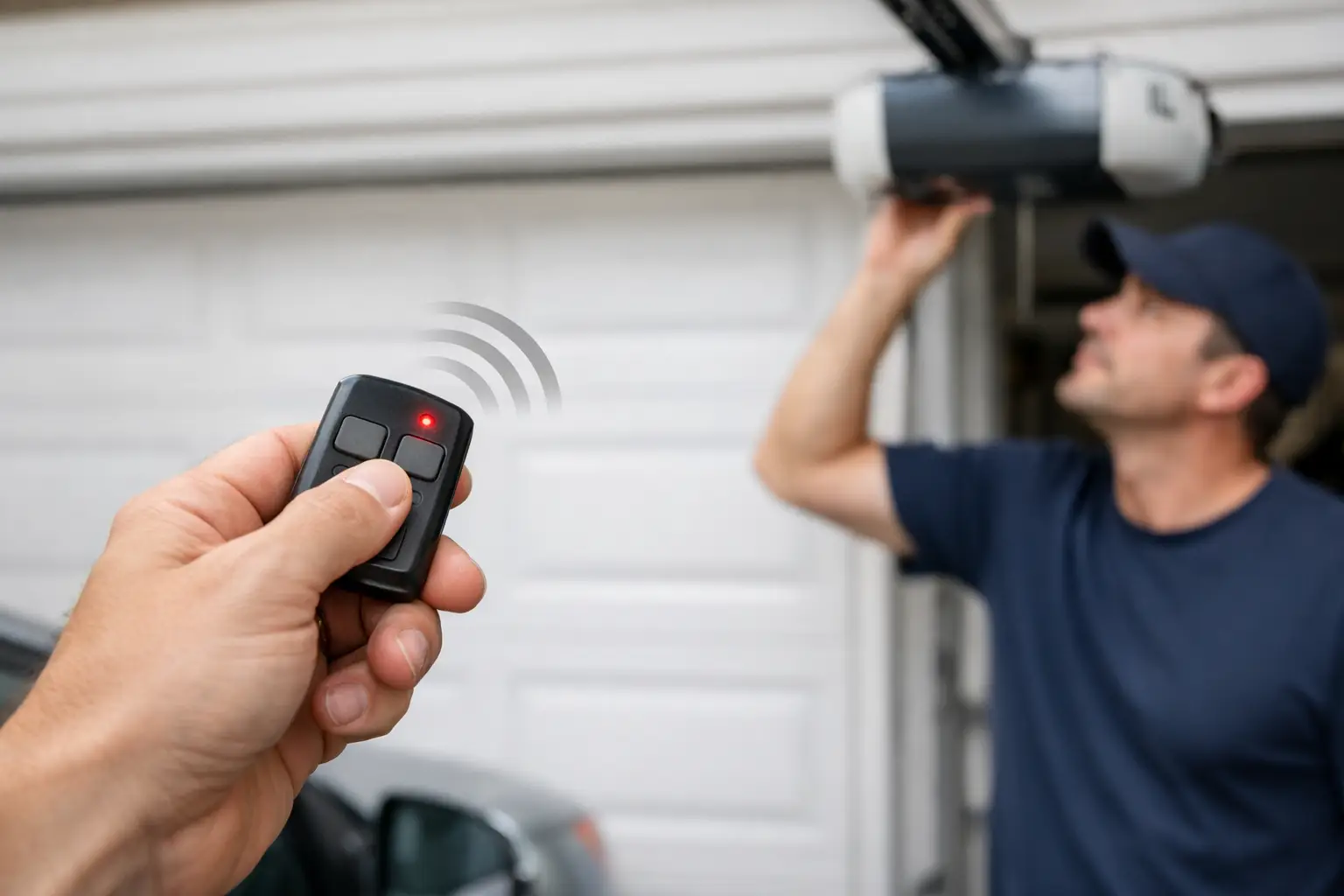
You press the button, wait for the familiar hum, and nothing happens. When your garage door remote not working problem shows up out of nowhere, it can throw off your whole day, especially when you are trying to leave for work, get the kids inside, or close up the house at night.
The good news is that a dead remote does not always mean a major repair. Sometimes the fix is as simple as a battery swap. Other times, the issue points to something bigger with the opener, safety sensors, or signal programming. The key is knowing what you can check safely on your own and when it makes sense to bring in a professional so you do not waste time or money.
Why a garage door remote is not working
Most remote problems come down to one of a handful of issues. The remote itself may have a weak battery, damaged internal contacts, or worn buttons. In other cases, the opener is receiving no signal because the remote lost its programming or because interference is disrupting communication.
There is also the possibility that the remote is not really the problem. If the wall button works inconsistently, the opener lights blink, or the door starts to move and reverses, the real issue may be with the opener system, sensor alignment, or door balance. That is why a little troubleshooting matters. It helps you avoid replacing the wrong part.
Start with the simplest checks first
If your garage door remote not working issue just started, begin with the basics. Replace the battery, even if you changed it recently. Batteries can be weak out of the package, and Arizona heat can shorten their life faster than many homeowners expect.
Next, move closer to the garage door and try again. If the remote works only when you are right in front of the door, that often points to a fading battery, signal interference, or an opener antenna issue. Check that the opener antenna is hanging down freely and is not tucked up or damaged.
It also helps to test a second remote if you have one. If one remote works and the other does not, the problem is likely isolated to the bad remote. If neither remote works, your attention should shift to the opener or the system as a whole.
Check whether the wall button still works
This step tells you a lot. If the wall control opens and closes the door normally, the opener still has power and the main motor may be fine. In that case, the problem is more likely related to the remote battery, programming, or signal path.
If the wall button does not work either, look for a more general opener problem. Maybe the unit lost power, a breaker tripped, or the opener is in lock mode. Many wall controls have a lock feature that disables remote use. It is easy to trigger by accident, especially in busy households.
The lock feature is one of those small issues that can look like a major failure. If the opener lights flash but the remote does nothing, checking the wall console for a lock setting is worth a minute of your time.
Reprogramming the remote may solve it
Remotes can lose their connection to the opener after a power outage, surge, dead battery, or replacement opener board. If that happens, the remote may light up and appear normal but still fail to operate the door.
Most garage door openers have a learn button on the motor unit. Reprogramming usually involves pressing that button and then pressing the remote button within a short time window. The exact steps vary by brand, so the process depends on your opener model.
This is one of those fixes that is often straightforward but not always smooth. If the remote still will not pair, there may be a compatibility issue, a faulty receiver, or a logic board problem inside the opener. That is where a quick service call can save a lot of trial and error.
Signal interference is more common than people think
A remote can stop working consistently even when nothing is broken. Nearby LED bulbs, wireless devices, security equipment, and even some chargers can interfere with garage door radio signals. If the remote works only sometimes, or only from certain spots in the driveway, interference is worth considering.
This can be frustrating because it does not always look obvious. Maybe the problem started after a new light bulb was installed in the opener, or after a neighbor added new electronics nearby. In these cases, the remote and opener may both be functional, but the signal is being disrupted.
That does not mean every intermittent issue is interference. A failing receiver can act similarly. The difference is that interference tends to be location-based or timing-based, while component failure usually gets worse over time no matter where you stand.
The remote may be fine, but the door may not be
If the opener clicks but the door does not move, the problem may be mechanical rather than electrical. Broken springs, damaged rollers, door misalignment, or a seized track can keep the system from operating even when the remote is sending the right command.
This is especially important because homeowners sometimes keep pressing the remote, assuming the signal is weak. That can put extra strain on the opener if the door is too heavy or jammed. A properly working opener is designed to guide the door, not force a failing system to move.
If the door feels unusually heavy, crooked, or noisy, stop there. Garage door springs and related components carry serious tension. That is not a safe DIY repair.
Safety sensors can make the remote seem dead
Photo-eye sensors near the bottom of the garage door track are designed to stop the door from closing on a person, pet, or object. If those sensors are blocked, dirty, bumped out of alignment, or have wiring issues, the door may refuse to close with the remote.
This can be confusing because the door might still open normally. Many homeowners think the remote is failing, when the opener is actually responding exactly as it should by preventing a close cycle.
Check for debris, spider webs, or storage items near the sensors. Make sure both sensor lights appear normal. If one is blinking or dark, alignment or wiring may be the issue. Cleaning the lenses gently can help, but if the problem keeps coming back, a professional inspection is the safer call.
When replacing the remote makes sense
Remotes do wear out. Buttons can stick, internal boards can fail, and older remotes may simply stop communicating reliably. If the battery is fresh, programming will not hold, and another remote works fine, replacement is often the most practical move.
Still, it pays to make sure you are buying the correct remote for your opener. Not all remotes are interchangeable, and universal options can be hit or miss depending on the system. A wrong purchase can turn a simple fix into more frustration.
If your opener is older, there is also a trade-off to consider. Replacing one remote may solve the immediate problem, but if the opener is aging, noisy, and inconsistent overall, upgrading the opener could be the better long-term value.
When to call for help
Some remote issues are quick fixes. Others are signs of a deeper opener or door problem. If you have replaced the battery, checked the lock feature, tested the wall button, confirmed the sensors are clear, and tried reprogramming without success, it is time for an expert to take a look.
That is also true if the opener hums but will not run, the door reverses unexpectedly, or the remote works only once in a while. In homes and small businesses across Gilbert, Chandler, Mesa, Queen Creek, and nearby areas, these are common service calls because the symptoms feel small at first but usually point to something more than a simple remote glitch.
A trained technician can quickly tell whether the issue is the remote, receiver, logic board, safety sensor system, or the door hardware itself. That matters because honest diagnosis saves money. You do not want to replace remotes if the opener is failing, and you do not want to replace an opener if the issue is just a misaligned sensor.
At Riggs Rescue AZ, that practical approach matters. Fast, reliable service, clear recommendations, and no surprises make a stressful garage issue easier to handle.
A few ways to avoid the problem next time
A little maintenance goes a long way. Replace remote batteries before they fully die, keep sensors clean, and pay attention to changes in door speed or noise. If the door starts acting differently, addressing it early can prevent a more expensive repair later.
It also helps to store remotes carefully. Dropping them, leaving them in extreme heat, or exposing them to moisture can shorten their life. In Arizona, that hot-car effect is real, and electronics feel it.
When your garage door remote stops working, the right next step is not to panic or guess. Start simple, stay safe, and if the signs point beyond a battery or programming issue, get it checked before a small inconvenience turns into a door that will not open when you need it most.

Leave a Reply