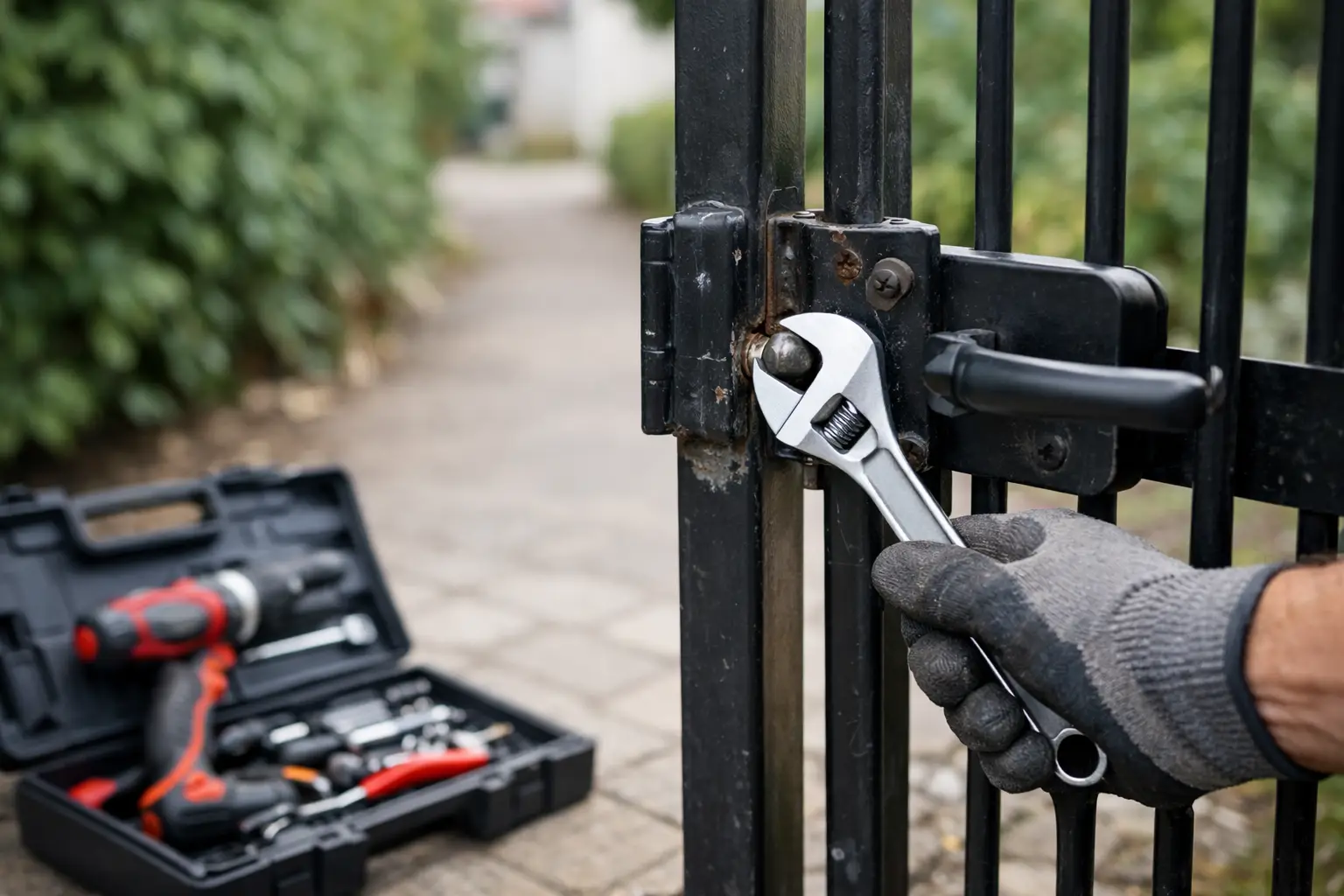
A pedestrian gate usually gets ignored until it stops latching, starts dragging, or won’t open without a shoulder check. That is when pedestrian gate repair moves from a minor annoyance to a safety and security issue. If the gate protects a side yard, pool area, courtyard, or business entry, a small problem can quickly turn into a daily headache.
Most gate issues do not start with a dramatic failure. They start with subtle signs – a latch that sticks, hinges that squeak, a frame that looks slightly off, or a self-closing arm that suddenly feels weak. Catching those signs early can save money, reduce wear on the whole gate system, and help you avoid getting locked out or leaving a property unsecured.
What pedestrian gate repair usually involves
Pedestrian gates are simpler than large vehicle gates, but they still have several moving parts that need to work together. A typical repair might involve hinges, latches, closers, locks, posts, welds, alignment, or the gate frame itself. In some cases, the issue is mechanical. In others, it comes from shifting ground, rust, heat exposure, or plain old wear.
In Arizona, heat and sun can speed up material fatigue, especially on metal components, finishes, and hardware. Dust also gets into hinges and latch assemblies, which can make the gate feel rough or inconsistent. If a gate is installed near irrigation, moisture can add corrosion to the mix. That combination is why a gate that worked fine six months ago can suddenly start acting up.
The most common signs you need pedestrian gate repair
A gate rarely fails without warning. More often, it starts asking for help in small ways.
If the gate drags on the ground or scrapes the concrete, alignment is likely off. That could mean a sagging hinge, a shifting post, or a frame that has started to twist. If the latch no longer lines up cleanly, the gate may need adjustment, hardware replacement, or post correction.
A gate that slams shut can be just as problematic as one that will not close at all. Self-closing hardware wears out over time, and that matters even more around pool barriers or commercial access points where dependable closure is part of daily safety. If the lock sticks, the key turns poorly, or the handle feels loose, the issue may be isolated to hardware – but it can also point to a larger alignment problem.
Rust spots, cracked welds, and loose fasteners are also worth attention. They might look cosmetic at first, but they often affect structural stability. A gate that wobbles when opened is not just inconvenient. It is telling you something is no longer secure.
Why small gate problems get expensive
The cheapest repair is usually the one done before other parts start compensating for the failure. When a hinge loosens, the latch starts taking extra stress. When the gate sags, people push harder, which strains the frame and post. When a closer weakens, the gate may be left partly open, exposing the property to security risks.
For homeowners, that can mean pets getting out, side yard access left unsecured, or pool safety concerns. For business owners, it can mean employee frustration, customer access issues, or a gate that no longer meets the demands of everyday traffic.
This is also where honest diagnosis matters. Sometimes a quick adjustment and hardware replacement is all you need. Other times, replacing one part without addressing the root cause only buys a little time. A dependable repair should solve the actual problem, not just the symptom.
DIY or professional pedestrian gate repair?
It depends on the issue.
Basic maintenance like cleaning debris from the latch, tightening visible screws, or lubricating the correct hardware can help with minor sticking and noise. If the gate simply needs a small adjustment and the structure is sound, a handy property owner may be able to improve it.
But once you are dealing with sagging, welding issues, bent frames, failing posts, lock problems, or gate closers that must be set correctly, professional repair is usually the better move. The same goes for any gate tied to a pool barrier, controlled access point, or safety requirement. A repair that looks straightforward can become frustrating fast if the gate has more than one point of failure.
The real trade-off is time versus certainty. A DIY fix might feel cheaper upfront, but if the gate still drags, will not latch, or starts failing again a week later, you are paying twice – once in effort and again in repair.
What a good repair visit should look like
A proper service call should start with inspection, not guessing. The technician should check how the gate opens and closes, whether the latch aligns, how stable the post feels, and whether the frame shows stress, rust, or separation. If the gate has a closer, lock, magnetic latch, or specialty hardware, each part should be tested under normal use.
From there, the repair plan should be clear. Maybe the gate needs hinge replacement and realignment. Maybe the post has shifted and needs correction. Maybe the latch is fine, but the gate frame has dropped enough that nothing will work right until the sag is fixed. Good service means explaining the difference.
That is also where transparent pricing matters. Nobody wants a mystery bill for a gate that already caused enough frustration. Clear recommendations, practical options, and no-surprise communication go a long way, especially when the gate protects a home or small business.
When repair makes more sense than replacement
Not every bad gate needs to be replaced. In many cases, pedestrian gate repair is the smarter and more affordable option, especially if the gate frame is still in decent condition and the issue is limited to hardware, alignment, or localized damage.
Repair often makes sense when the gate has one failing component, the post is still structurally solid, and the material is worth saving. It is also a good choice when you want to restore dependable function without taking on the cost of a full new gate installation.
Replacement becomes more likely when the frame is severely bent, corrosion is widespread, welds are failing in multiple places, or previous repairs have turned into a patchwork. If a gate has chronic issues because it was installed poorly or no longer fits the opening correctly, replacement may save money over time.
This is one of those areas where honest advice matters more than hard selling. A trustworthy gate company should be able to tell you when a repair is the right answer and when it is only delaying a bigger problem.
Pedestrian gate repair for homes and small businesses
Residential gate issues are often about convenience, safety, and peace of mind. A side gate that will not latch is an open invitation for trouble. A pool gate that does not self-close is more than inconvenient. A decorative front walk gate that sticks every day wears on you quickly.
For small businesses, the priorities can shift a bit. Access control, consistent operation, and secure entry points matter more when staff, customers, or vendors use the gate regularly. A gate that jams during business hours can slow operations and create a poor first impression.
That is why fast response matters. When a gate is part of daily access, waiting around for a vague service window is not helpful. Local companies that understand the area, the climate, and the equipment people actually use tend to diagnose these problems faster and fix them more efficiently.
How to help your gate last longer
You do not need a complicated maintenance plan to get more life out of a pedestrian gate. What helps most is paying attention.
If the gate starts making a new noise, sticking, dragging, or missing the latch, do not force it for months and hope it works itself out. Keep hinges and moving hardware clean. Watch for rust, loose fasteners, and signs the post is shifting. If the gate closes too hard or not enough, have the closer checked before it fails completely.
For many property owners, the biggest mistake is waiting until the gate stops working entirely. By then, the repair is often larger than it needed to be.
If your gate has started giving you trouble, getting it checked sooner usually means a simpler fix, lower cost, and less disruption. For local homeowners and business owners who want fast, honest help, Riggs Rescue AZ is the kind of team that understands how to keep access points working without adding stress to the day. A gate should open, close, and secure the property without a fight – and when it does not, a timely repair can make life easier again.

Leave a Reply