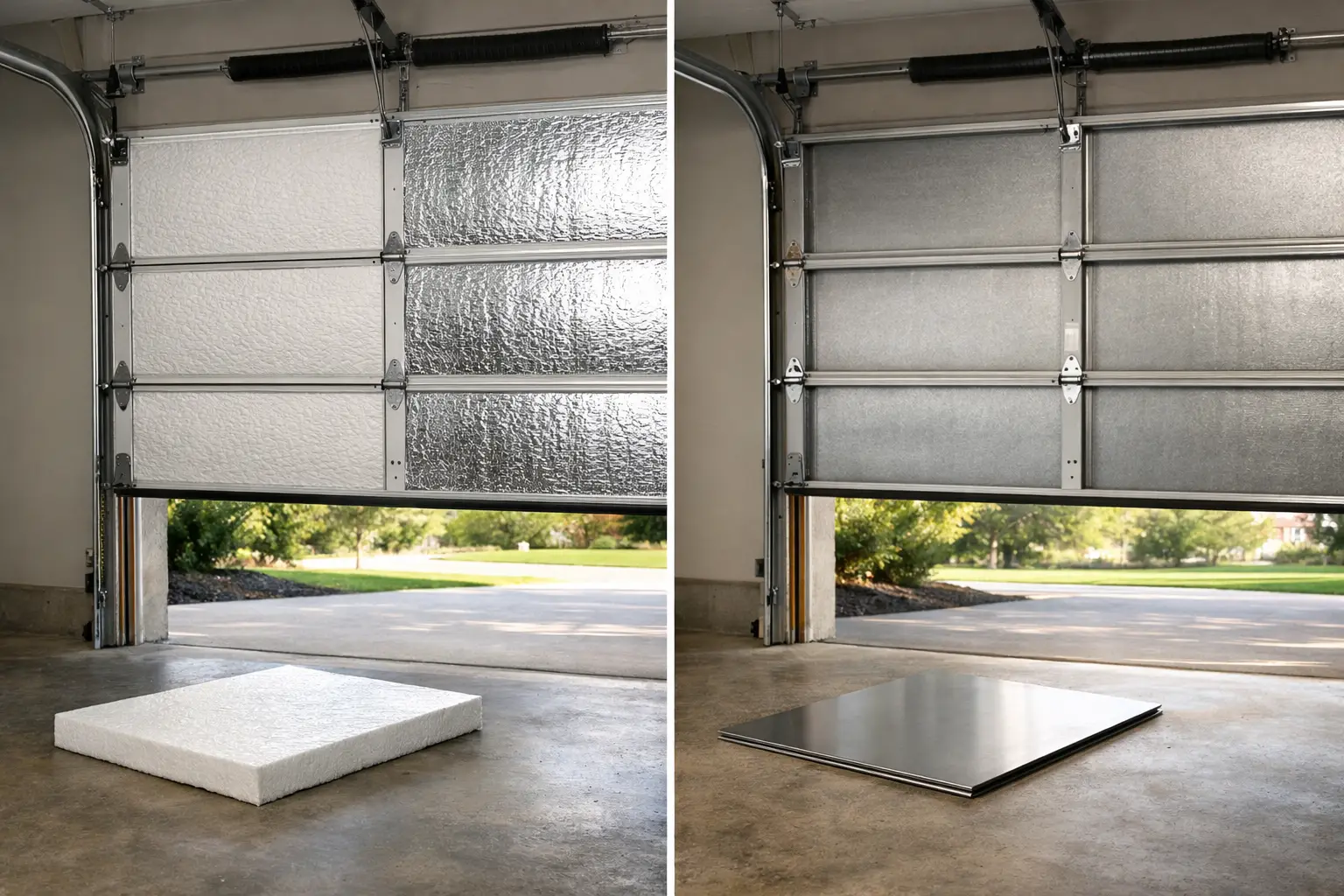
That cheap garage door quote can look great – right up until your garage turns into an oven in July, your opener sounds louder than expected, and the door feels flimsier than you thought. When homeowners compare an insulated vs non insulated garage door, the real question is not just price. It is how the door will perform day after day in your home.
In Arizona, that choice matters more than many people realize. Your garage may not be fully air conditioned, but it still affects comfort, noise, storage conditions, and in some homes even the rooms next to or above it. If you are replacing an old door or choosing one for a new installation, it helps to know where the extra money goes and when it actually pays off.
Insulated vs non insulated garage door: what is the difference?
A non-insulated garage door is usually a single layer of steel or another material without added thermal backing. It does the basic job – opening, closing, securing the garage, and protecting what is inside from sun, wind, and rain.
An insulated garage door includes extra layers and insulating material inside the door sections. In many cases, that means steel on the outside, insulation in the middle, and sometimes a backing layer on the interior side. This creates a thicker, more solid door.
That added construction changes more than temperature. Insulated doors tend to feel sturdier, sound quieter, and resist dents better than thinner non-insulated models. So while insulation is often sold as an energy feature, many homeowners end up appreciating the comfort and durability just as much.
Why insulation matters in Arizona
In places like Gilbert, Mesa, and Chandler, garage heat is not a small issue. Even if your garage is not part of your conditioned living space, the temperature inside can climb fast. That heat can affect stored items, tools, paint, batteries, workout equipment, and anything else you keep in the garage.
It can also affect the rooms around it. If there is a bedroom above the garage or a wall connecting the garage to the house, a hotter garage can add strain to your cooling system. An insulated door will not turn your garage into a refrigerated space, but it can help reduce temperature swings and slow down how quickly heat moves through the door.
That said, insulation is not magic. If your garage has no ventilation, uninsulated walls, and gaps around the door, an insulated door alone will not fix every comfort issue. It helps most when it is part of a well-sealed setup.
The biggest reason some people still choose non-insulated
Cost is the obvious reason. A non-insulated garage door usually has a lower upfront price, and for some properties that makes perfect sense. If you have a detached garage, use it only for parking, and are simply replacing a damaged door without upgrading the rest of the space, a non-insulated option may be the practical call.
There is nothing wrong with choosing a simpler door when your needs are basic. A lot depends on how you use the garage. If it is more like a carport with walls, you may never notice enough of a difference to justify paying more.
The key is to avoid buying strictly on sticker price without thinking about the long term. A cheaper door can cost less now but feel less comfortable, wear differently, and provide fewer benefits over time.
Where insulated doors usually win
For many homeowners, insulated garage doors make everyday life better in ways that show up immediately. The first thing people often notice is noise. Insulated doors generally open and close with less rattling and vibration. If your garage is under a bedroom, beside a living area, or you leave early for work, that matters.
The second advantage is strength. Multi-layer insulated doors tend to be more rigid than single-layer doors. That can mean fewer dents from basketballs, bikes, trash cans, or the normal bumps that happen in an active household.
Then there is comfort. If you work in the garage, use it as a home gym, do laundry there, or just spend any amount of time in the space, an insulated door can make it less harsh. It will not eliminate Arizona heat, but it can make the space more usable.
Insulated vs non insulated garage door cost
This is where the decision gets real. Insulated garage doors cost more upfront, sometimes noticeably more depending on size, material, style, and insulation level. If your priority is the lowest immediate replacement cost, non-insulated doors usually win.
But the better question is whether the higher price lines up with how you use the garage. If the garage is attached to the house, if your family enters through it every day, or if you keep temperature-sensitive items inside, the upgrade often feels worthwhile.
There can also be a value argument. A sturdier, quieter, more comfortable garage door may improve your experience with the home more than you expect. For some homeowners, that daily benefit matters just as much as any energy savings.
What about energy efficiency?
Insulation can help with efficiency, but this is where honest guidance matters. Some companies oversell garage door insulation as if it will dramatically slash utility bills on its own. Usually, the truth is more modest.
An insulated door can reduce heat transfer, which may help if your garage is attached and influences nearby indoor spaces. But the actual savings depend on the full setup – wall insulation, weather sealing, how often the door opens, sun exposure, and whether the garage is conditioned.
So yes, there can be energy benefits. Just do not treat them as the only reason to upgrade. Comfort, noise reduction, and durability are often the bigger everyday wins.
When a non-insulated garage door is the right choice
A non-insulated door can be the smart option if your garage is detached, used mainly for vehicle storage, or you are trying to stay within a strict budget. It can also make sense for some rental properties, workshops with other climate solutions, or situations where appearance and basic function matter more than added performance.
If you go this route, quality still matters. Even a non-insulated door should be installed correctly, balanced properly, and fitted with good hardware. A budget-friendly choice should still be safe and dependable.
When insulated is worth the upgrade
An insulated door is often the better investment if your garage is attached to the home, you use it as a workspace, or you want a quieter and more solid-feeling door. It is also a strong choice if you plan to stay in the home for years and want fewer trade-offs in comfort and performance.
Families often notice the benefit faster than expected. The garage is not just where the car goes. It is the main entry point, the storage room, the project zone, and sometimes the place where kids come and go all day. A better door changes how that space feels.
A few details most homeowners overlook
The door itself is only part of the equation. Weather stripping, bottom seals, track condition, opener settings, and overall installation quality all affect performance. A well-installed non-insulated door can outperform a poorly installed insulated one in some important ways.
It also helps to pay attention to insulation ratings, but do not get lost in numbers alone. Higher ratings can be good, but your actual experience depends on the full door construction and how well the garage is sealed.
This is one reason local advice matters. A good installer should ask how you use the garage, what bothers you about the current door, and what budget range feels realistic. That leads to a smarter recommendation than simply pushing the most expensive model.
So which garage door should you choose?
If you want the shortest answer, choose non-insulated when budget and basic function are your top priorities. Choose insulated when comfort, quieter operation, stronger construction, and better day-to-day performance matter more.
For many Arizona homeowners, attached garages tip the scales toward insulated. For detached garages with minimal use, non-insulated can be completely fine. It depends on your home, your budget, and how much you expect from the space.
At Riggs Rescue AZ, we have seen both choices make sense in the right situation. The best garage door is not the one with the biggest sales pitch. It is the one that fits your home, your routine, and your budget without surprises.
If you are still weighing the options, think about how your garage actually functions for your family. That answer usually points you to the right door faster than any brochure ever will.

Leave a Reply