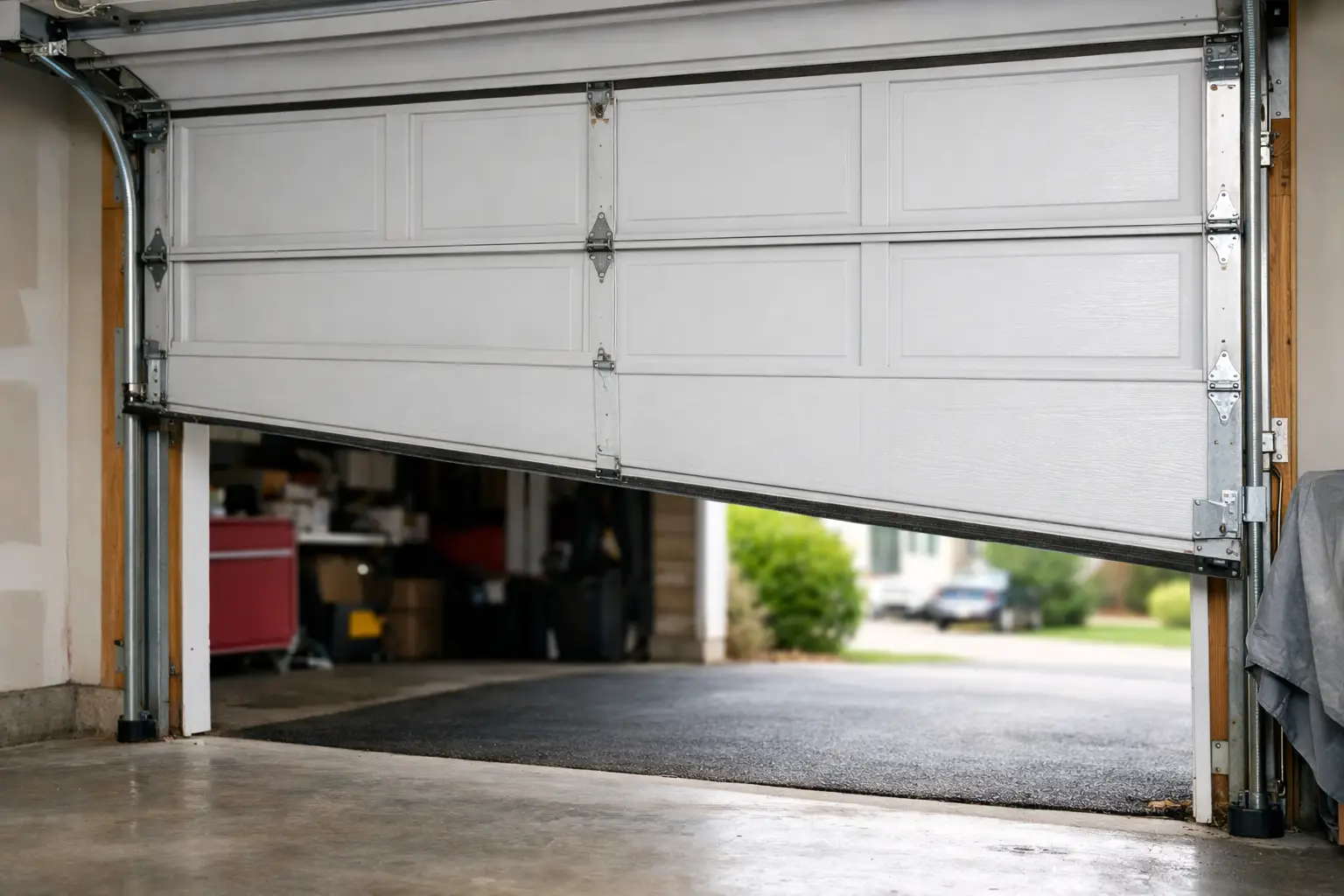
You hit the opener, the garage door starts moving, and one side suddenly lifts faster than the other. That is usually the moment homeowners ask, why is garage door opening unevenly, and is this something minor or something dangerous? The honest answer is that an uneven garage door is never something to ignore. Sometimes the fix is simple, but in many cases it points to a worn or failing part that can put extra strain on the whole system.
A garage door is supposed to rise evenly because the springs, cables, rollers, tracks, and opener all work together to keep the weight balanced. When one part falls out of sync, the door can twist, bind, drag, or lift crooked. That can lead to louder operation, faster wear, and in some cases a door that gets stuck halfway or drops unexpectedly.
Why is garage door opening unevenly in the first place?
In most cases, the problem comes down to balance. Garage doors are heavy, and the system is designed to spread that weight evenly across both sides. If one cable loosens, one spring weakens, one roller binds, or one track shifts out of position, the door may start lifting unevenly.
The tricky part is that the symptom looks simple, but the cause is not always obvious from the ground. A crooked door can be caused by a small alignment issue, but it can also be the first visible sign of a spring or cable problem. That is why uneven movement deserves a closer look sooner rather than later.
A worn or damaged lift cable
Lift cables do a lot of the heavy work every time the door opens and closes. If one cable starts fraying, stretches out, or slips off the drum, one side of the door may rise differently than the other. You might notice one corner lagging behind, the door tilting as it opens, or the bottom section looking crooked.
This is one of the more urgent causes because a damaged cable can fail completely. If that happens, the door can jam or drop on one side. Cables are under high tension, so this is not a good DIY repair.
A broken or weakening spring
Torsion and extension springs counterbalance the weight of the garage door. When a spring is worn out or breaks, the door may no longer have equal support across its width. Sometimes the opener still tries to lift the door, but the movement becomes jerky, heavy, or uneven.
If you have a two-spring setup, one spring may weaken before the other fails completely. That can create an uneven lift even before you hear the classic loud snap of a broken spring. In Arizona heat, springs can wear faster over time, so age and climate both matter.
Bent tracks or loose track hardware
The tracks guide the rollers as the door moves. If a track gets bumped, bent, or pulled out of alignment, the rollers may not travel smoothly. That can make one side hesitate or bind while the other keeps moving.
Loose brackets can cause similar trouble. Even a small track shift can throw off the path of the door enough to create an uneven opening. This is one of those problems that may start small and get worse as the door continues to force itself through each cycle.
Other reasons a garage door opens crooked
Not every uneven door is caused by a major failure. There are a few smaller issues that can create the same symptom.
Worn rollers
Rollers help the door move smoothly through the tracks. If one or more rollers are worn, cracked, or seized up, that side of the door may drag. Nylon rollers can wear down over time, and metal rollers may become noisy or rough if they lose lubrication or develop damage.
A bad roller can make the whole system look more dramatic than it is, but it still should not be ignored. One failing roller puts extra stress on nearby hardware.
Door sections shifting or warping
If the door itself has taken an impact or has age-related wear, one section may no longer sit square. That can make the door appear to open unevenly even if the tracks and springs are still mostly doing their job.
Wood doors can warp. Steel doors can bend. Section joints can loosen. When the panels do not line up correctly, the whole door may rack during operation.
Opener force or travel issues
Sometimes the opener is not the root cause, but it can add to the problem. If the opener settings are off, the motor may strain against a door that is already unbalanced. In some cases, worn gears or a stressed rail can make the movement look rougher or less controlled.
That said, if the door is truly opening unevenly, the opener is often reacting to another mechanical issue rather than creating it alone.
Signs the problem is getting more serious
An uneven garage door rarely fixes itself. Usually, it gets louder, rougher, and less reliable. If you notice any of these signs, it is smart to stop using the door until it is checked:
- The door looks slanted when opening or closing
- One side lifts higher or faster than the other
- The cables appear loose, frayed, or off the drum
- The rollers are popping or jumping in the track
- The opener sounds strained or the door reverses unexpectedly
- The door feels unusually heavy in manual mode
If the door is severely crooked or appears stuck under tension, do not keep cycling it. That can turn a repair into a much bigger problem.
Can you troubleshoot it yourself?
There are a few safe things you can observe, but there is a big difference between checking and repairing. You can look for obvious track obstructions, listen for grinding or popping, and inspect the rollers and hinges for visible wear. If the door is closed, you can also check whether the bottom sits evenly on the floor.
What you should not do is loosen springs, remove cables, or attempt to reset major hardware under tension. Those parts store enough force to cause serious injury. If you disconnect the opener to test balance, do it only if the door is fully closed and appears stable.
For many homeowners, the best move is to stop at inspection. Once the door is moving unevenly, the safest and most cost-effective choice is usually a professional diagnosis before another part gives out.
Why fast service matters
Garage door issues have a way of becoming urgent at the worst time. Maybe the car is trapped inside before work, or the door will not close evenly at night. An uneven door is not just annoying. It affects safety, security, and daily routine.
Quick service matters because the underlying cause often affects more than one part. A weak spring can wear out the opener. A bad roller can damage the track. A loose cable can twist the door and stress the panels. Catching the issue early usually means fewer parts, less downtime, and a lower overall repair bill.
That is also where honest guidance matters. Not every uneven door needs full replacement. Sometimes the right repair is a cable reset, roller replacement, track adjustment, or spring repair. The key is getting a clear answer without guesswork or surprise pricing.
Why is garage door opening unevenly after years of working fine?
Most of the time, it comes down to wear. Garage doors open and close thousands of times over their lifespan, and the system slowly drifts out of perfect balance. Heat, dust, vibration, and daily use all take a toll. In places like Gilbert, Chandler, and the surrounding area, intense summer temperatures can also speed up wear on metal parts and lubrication.
That is why a door can seem fine one week and crooked the next. The failure often builds gradually, but the symptom appears all at once when one part finally slips past its limit.
If your door has started lifting unevenly, making new noises, or looking crooked in the tracks, getting it checked now is a lot easier than dealing with a stuck or fallen door later. A dependable local team like Riggs Rescue AZ can pinpoint the cause, explain the fix clearly, and get your door back to moving safely without adding stress to your day.
When a garage door starts opening unevenly, trust what it is telling you. It is asking for attention before a small repair turns into a bigger rescue.

Leave a Reply