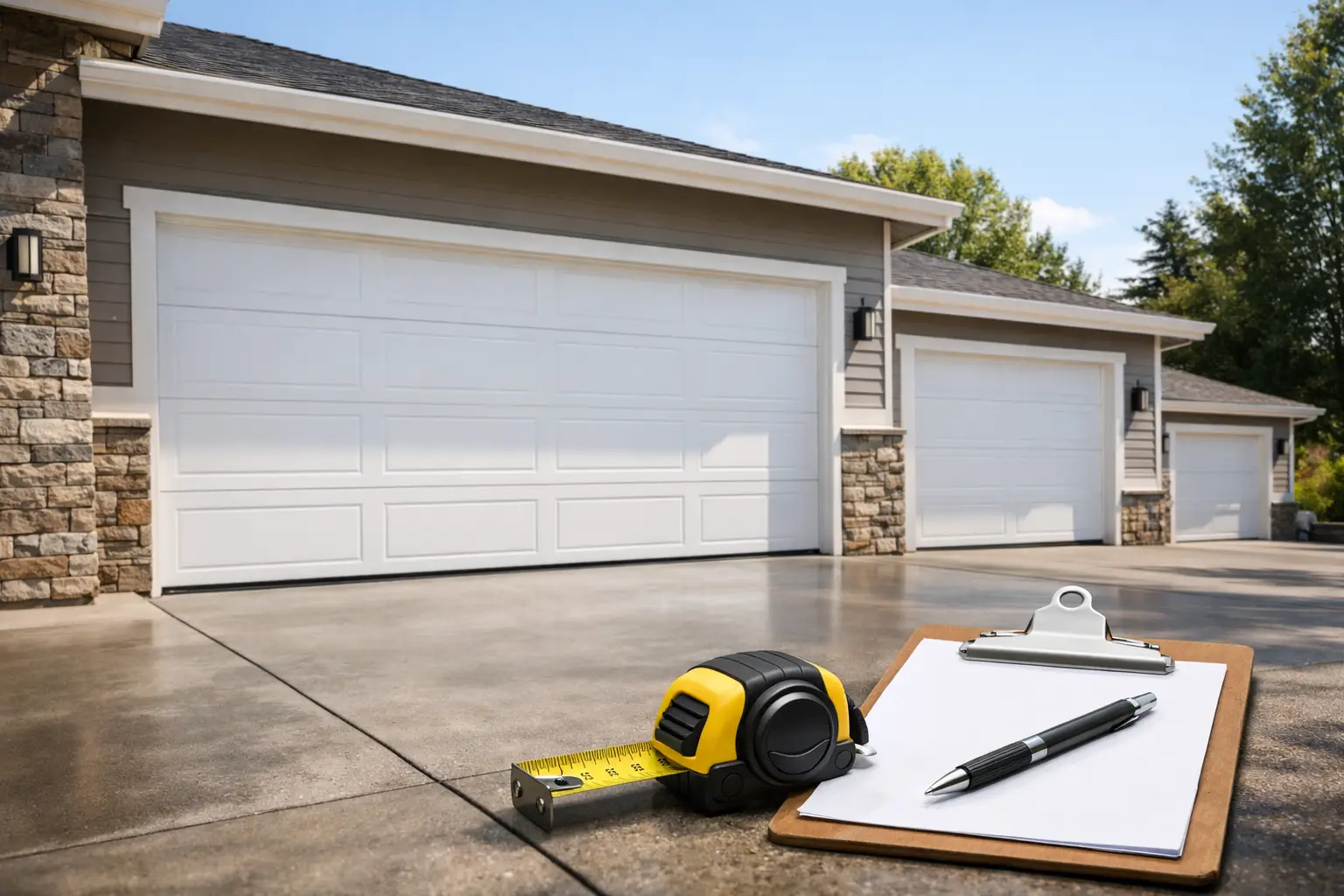
A garage door that looks fine on paper can become a headache the moment you try to park, store tools, or fit a taller vehicle inside. That is why knowing how to choose garage door size before you order matters. The right size gives you safe clearance, smoother daily use, and fewer expensive surprises during installation.
For most homeowners, this decision is not just about the opening width. It is about the full picture – what you drive now, what you may drive later, how much headroom your garage has, and whether the space is strictly for parking or doing double duty as storage, a workshop, or both. For small business owners, the stakes can be even higher because the wrong size can slow down operations and create avoidable wear on the door system.
How to choose garage door size without guessing
The fastest way to get this wrong is to measure only the existing door and stop there. Older doors are not always ideal, and some garages were built around smaller vehicles than what many people drive today. If you are replacing a door, your current size is a starting point, not the final answer.
Begin with the rough opening. Measure the width and height of the finished opening in several spots to confirm it is consistent. Then measure the side room, headroom, and backroom. Side room is the space on each side of the opening for track and hardware. Headroom is the area above the opening. Backroom is the depth from the opening to the rear wall. All three affect what kind of door and track system can actually fit.
That matters because two garages with the same opening size may need different solutions. A low ceiling, a beam above the opening, or an opener setup can limit your options. This is one of those areas where a quick professional measurement can save a lot of frustration.
Standard garage door sizes and when they work
Many residential garages follow standard sizing, which keeps replacement simpler and more affordable. A single garage door is commonly 8, 9, or 10 feet wide and 7 or 8 feet tall. A double garage door is often 16 feet wide and 7 or 8 feet tall.
For a standard sedan or small SUV, a 9-by-7 single door usually works well. If you have a wider truck, a full-size SUV, or you simply want easier entry without hugging the mirrors every day, a 10-foot-wide option can feel much more comfortable. Double doors offer more flexibility for two vehicles, but the larger span means the door system has to work harder and stay properly balanced.
Commercial sizes vary much more. A service garage, warehouse, or gated storage area may need taller doors for vans, trailers, or delivery vehicles. In those cases, choosing a size based on current traffic alone can be shortsighted. If your business may upgrade vehicles or equipment, it makes sense to build in room now rather than replace the door again later.
Single vs. double garage doors
This is often less about style and more about how you use the space. Two single doors can give you better energy control, less wear per cycle on each door, and more flexibility if one side needs service. One double door gives you a wider opening and can make parking easier, especially for larger vehicles.
There are trade-offs. A double door can be convenient, but if it goes down unexpectedly, your entire opening is affected. Two singles cost more in hardware and installation, but some homeowners prefer the reliability and control. If your garage layout allows it, think about how often both bays are used at the same time.
Choosing height for trucks, SUVs, and lifted vehicles
Width gets most of the attention, but height is where people often run into trouble. A standard 7-foot-tall door may be enough for many vehicles, but roof racks, ladder racks, lifted suspensions, and larger trucks can change that fast. An 8-foot door may be a better fit if you want more breathing room.
Do not measure your vehicle once and assume you are done. Measure its highest point, then add reasonable clearance. You want room for daily use, not a tight squeeze that forces you to crawl in every time. If you plan to buy a different vehicle in the next few years, factor that in now.
The measurements that matter most
When homeowners ask how to choose garage door size, the real answer is that the door has to fit both the opening and the way the garage functions. A good measurement includes more than width and height.
Start with the opening itself. Measure the width from finished jamb to finished jamb, and the height from floor to header. Then check the side room. Most standard track setups need enough space on both sides for vertical tracks and spring hardware. Limited side room can affect door style and hardware choices.
Next, look at headroom. This is especially important if you want an automatic opener. Standard systems need enough space above the opening for tracks, springs, and opener clearance. If your garage has low headroom, special track systems may still work, but they can change the install plan and cost.
Finally, measure backroom. The horizontal tracks need room to extend into the garage, and openers also require depth. If you use overhead storage, hanging shelves, or ceiling racks, make sure those are not competing for the same space.
Don’t forget your garage use beyond parking
A lot of garages in Arizona are doing more than storing cars. Some hold freezers, tools, bikes, home gym equipment, or workbenches. Others serve as part-time hobby spaces or storage hubs. That changes what size feels practical.
If your vehicle barely fits and you have to shuffle around it to reach everything else, the garage may technically work but still be frustrating every day. In some cases, a wider or taller door can improve access enough to make the whole space more usable. In other cases, the opening is fixed and the smarter move is adjusting storage layout instead.
This is also where insulation and door weight can come into play. A larger door gives easier access, but it may cost more, weigh more, and require a stronger opener. Bigger is not automatically better if the gain in clearance is minor and the cost jump is significant.
New construction vs. replacement doors
If you are building a new garage, you have more freedom. This is the best time to think ahead. Plan for the vehicles you own now, but also consider resale value and future needs. Slightly increasing width or height during construction is often easier than modifying the opening later.
If you are replacing an existing door, your options depend on the current structure. Changing the opening size may require framing, exterior finish work, and updated track or spring systems. Sometimes it is worth it. Sometimes staying with a standard size is the more affordable path. The right answer depends on how badly the current setup limits you.
For homeowners trying to balance budget and long-term value, standard sizes usually offer the best pricing and fastest installation. Custom sizes solve specific problems, but they can mean longer lead times and higher material costs.
Common mistakes that lead to the wrong size
One common mistake is measuring the old door instead of the opening. Another is forgetting to account for trim, uneven floors, or low ceiling clearance. Some people also choose a size based only on today’s smallest vehicle, then regret it after buying a truck or adding roof storage.
There is also the issue of convenience. A door can technically fit your garage and still be annoying to use. If you are folding mirrors every day, backing in at an angle, or avoiding overhead storage because clearance is too tight, the size may not be working as well as you think.
For commercial properties, underestimating traffic needs is a big one. If deliveries, service vehicles, or equipment movement are part of the job, the door should support efficient operation, not slow it down.
When it makes sense to get a pro involved
If your garage is straightforward, measuring can be simple. But if the opening is older, the ceiling is tight, or you are considering changing sizes, it helps to have an experienced installer look at it. A professional can spot issues with framing, spring clearance, track setup, and opener compatibility before you order the wrong door.
That kind of guidance can be especially useful in places like Gilbert, Mesa, and Chandler, where garages often carry a heavy load as storage space in addition to parking. A quick site check can tell you whether a standard size will work or whether a custom approach is worth the extra cost.
At Riggs Rescue AZ, this is the kind of problem-solving we like – straightforward advice, no surprises, and a clear path to the right fit.
The best garage door size is the one that fits your opening, your vehicles, and your daily routine without making life harder. If you are stuck between two options, lean toward the one that gives you practical clearance and room to grow, not just the one that barely works today.

Leave a Reply