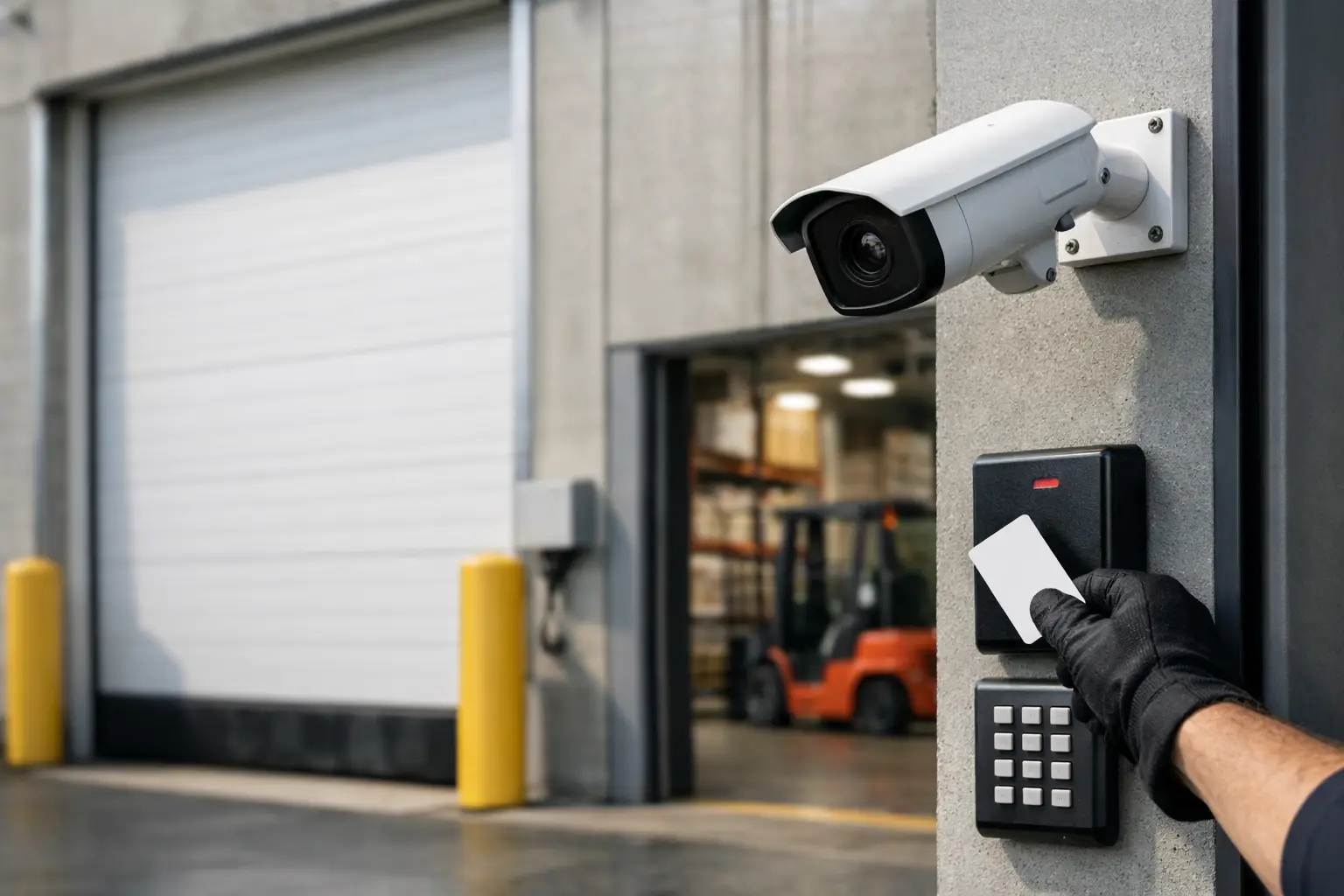
A warehouse door that does not close fully at the end of a shift is more than a maintenance issue. It is an open invitation to theft, weather damage, pests, and a costly interruption the next morning. The right warehouse door security solutions protect inventory while keeping deliveries, staff, and daily operations moving on schedule.
For Arizona business owners and property managers, security has to work through intense heat, dust, frequent use, and the pressure of a busy loading dock. That usually means looking beyond a padlock or an alarm sticker. A secure facility starts with a door system that is in good condition, correctly matched to the opening, and backed by access controls your team can actually use.
Start With the Door Itself
Security upgrades work best when the commercial door is structurally sound. A worn track, damaged bottom seal, bent panel, failing spring, or unreliable operator can leave a door partially open or make employees avoid closing it properly. Even a high-quality lock cannot do much if the door can be forced out of its tracks or does not sit flush against the floor.
Inspect loading dock doors, warehouse roll-up doors, sectional doors, and personnel doors for visible gaps, corrosion, damage around the lock area, and hardware that has loosened over time. Pay close attention to the bottom corners and side guides. These are common weak points on doors that see forklifts, pallet jacks, and constant traffic.
A door that shakes, jerks, reverses unexpectedly, or makes grinding sounds deserves prompt service. Waiting until it fails can create a security problem at the worst possible time, such as after hours or during a delivery rush. Regular commercial door maintenance is often the most affordable first step because it identifies problems before they become an emergency replacement.
Warehouse Door Security Solutions for Real Risks
There is no one setup that fits every warehouse. A small storage facility with a few employees has different needs than a high-volume distribution space with multiple dock doors and drivers arriving throughout the day. The goal is to match protection to the risk, without paying for features that do not solve a real problem.
Heavy-duty locking systems
Manual roll-up doors and certain commercial sectional doors may benefit from slide locks, interior deadbolts, or reinforced hasps. These options add a physical barrier when the building is closed. For doors with electric operators, use locking hardware designed to work with the door system. Adding the wrong lock to an automatic door can damage the opener or create a safety hazard when someone tries to operate it.
For higher-risk locations, an interior locking system is usually preferable because it is harder to reach or tamper with from outside. The trade-off is that your opening and closing procedure needs to be clear. If the first employee arriving cannot unlock the door safely and quickly, the system may be ignored when it matters most.
Commercial operators with controlled access
A commercial door operator gives you more control than a door that is opened by hand or left unattended. Keypads, key switches, remotes, and smart access controls can limit who can operate each entrance. Instead of passing one physical key around the team, you can assign access codes or credentials and remove access when an employee leaves.
For some facilities, a keypad is plenty. For others, especially locations with valuable equipment or frequent vendor access, a managed access system provides better accountability. You can set schedules, track entries, and avoid changing locks every time staffing changes. Keep in mind that more advanced controls require proper setup and occasional maintenance. Convenience should never come at the expense of a door that employees cannot operate during a time-sensitive delivery.
Sensors and door-position monitoring
A door-position sensor tells you whether a door is open, closed, or left open too long. This can be one of the most practical upgrades for a warehouse, particularly when teams are busy loading trucks and moving inventory between areas.
A monitored system can alert a manager if a door stays open after a set period or opens outside approved hours. That notification gives you a chance to act before an exposed opening turns into a theft or weather-loss event. It also helps identify workflow problems. If the same dock door is regularly left open, the issue may be training, a faulty closer, or a door that is too slow for the pace of the operation.
Better perimeter protection
Warehouse door security is strongest when the door and the property perimeter support each other. An automatic gate can control vehicle entry before anyone reaches the loading area. Well-placed lighting reduces blind spots, while cameras aimed at entrances help document activity and discourage opportunistic theft.
This does not mean every business needs a full gate, camera, and access-control overhaul. A smaller operation may get excellent results from improved exterior lighting, a properly secured back door, and an operator with a dependable keypad. A larger yard with trailers, equipment, or after-hours deliveries may need gate access and monitored entry points. The right answer depends on what you store, who needs access, and when the property is active.
Do Not Overlook Emergency Access and Safety
Security should make it harder for unauthorized people to enter, not harder for authorized people to exit. Warehouse doors and gates must be installed and configured with safe emergency procedures in mind. Employees should know how to use manual releases, where keys or controls are stored, and who to call if an operator fails.
Avoid makeshift solutions such as chaining a door shut, blocking an exit with equipment, or disabling safety features to keep a door from opening. Those shortcuts can expose your business to injury, property damage, and code issues. They may also make a minor repair much more expensive later.
For powered commercial doors, photo eyes, reversing systems, and safety edges need routine checks. A secure door that closes on a person, forklift, or delivery load is not a secure solution. Good security protects people as well as property.
Build a Closing Routine Your Team Will Follow
The best equipment still relies on daily habits. A simple closing routine prevents many security gaps. Before the last person leaves, confirm each warehouse door is fully closed and locked, access controls are secured, and no remotes or keys are left in vehicles or unsecured desks.
For businesses with several shifts, assign responsibility by role rather than assuming someone will handle it. A short checklist near the exit can help, but it should be practical. If it takes 20 minutes to complete, people will find ways around it. If it takes two minutes and the system is easy to use, it is far more likely to become part of the routine.
Review access when employees change roles or leave the company. Reprogramming a keypad code is easier and less expensive than dealing with an unauthorized entry. The same applies to lost remotes. Treat them like keys to the building, because that is exactly what they are.
When Repair Is Enough and When to Upgrade
Not every security concern requires a new door. Replacing damaged rollers, repairing a track, adjusting an operator, adding a lock, or installing new weather seals may restore protection at a reasonable cost. If the door is in otherwise good shape and still fits your operation, repair can be the smart move.
Replacement becomes more worthwhile when the door has repeated failures, serious structural damage, outdated controls, or a design that no longer supports your security needs. A newer commercial door and operator can improve reliability, access control, and energy efficiency at the same time. The key is getting an honest assessment of what is failing and what can safely be repaired.
Riggs Rescue AZ helps local businesses evaluate commercial doors, operators, and gate systems without the runaround. Whether you need a quick repair after a door will not close or a longer-term plan for stronger access control, clear options and dependable service make the decision easier.
A secure warehouse should not depend on luck, a temporary chain, or the hope that everyone remembers to close up perfectly. Start with the door that gives you the most trouble, fix the weak point, and build outward from there. Small, well-chosen improvements can protect your inventory and give you one less thing to worry about when the lights go out.

Leave a Reply