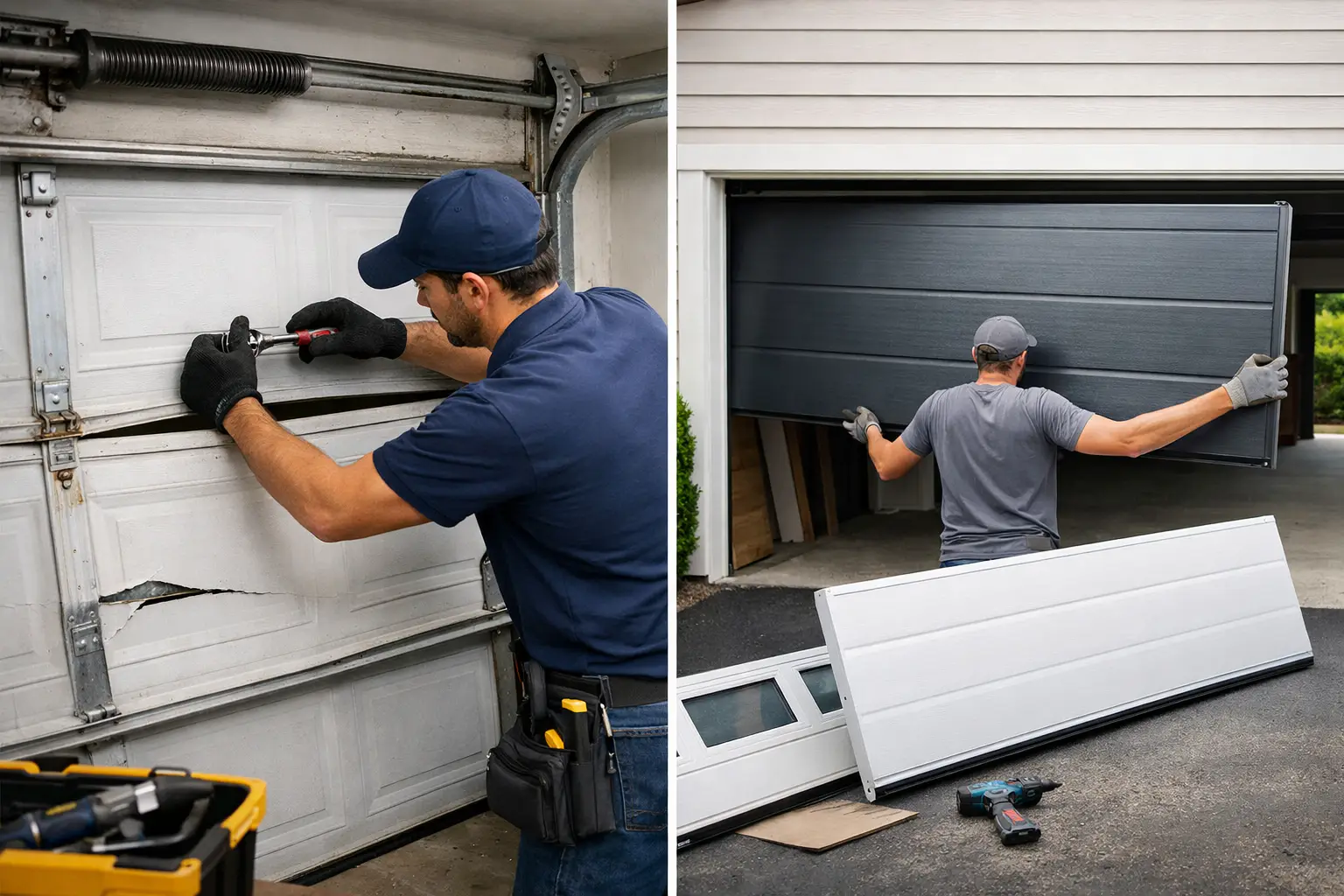
A garage door that hesitates, bangs, or stops halfway usually raises one question fast: should you fix it or start over? That is exactly where the garage door repair vs replacement decision gets real. For most homeowners, it is not just about price. It is about safety, reliability, appearance, and whether today’s fix turns into next month’s bigger bill.
If your garage door is the main way you enter the house, a breakdown is more than an inconvenience. It throws off your whole day. For small business owners, a bad door can slow operations, create a security problem, or leave vehicles and equipment exposed. The right call depends on what failed, how old the system is, and whether the door still makes sense to invest in.
How to think about garage door repair vs replacement
The easiest mistake is focusing only on the cheapest number in front of you. A repair almost always costs less upfront, but that does not always make it the better value. Replacement costs more on day one, yet it can solve repeat issues, improve safety, and give you years of dependable use.
A good way to look at it is this: if the problem is isolated and the rest of the system is in solid shape, repair often makes sense. If the door has multiple aging parts, visible damage, or a history of repeat service calls, replacement may save money and stress over time.
That is why honest diagnosis matters. Springs, rollers, cables, tracks, panels, and openers all wear differently. One broken part does not automatically mean the whole door is done. On the other hand, replacing one part on a worn-out system can feel like putting fresh tires on a car with a failing engine.
When repair is usually the smart move
Repair is often the right answer when the issue is mechanical and limited to a specific component. Broken springs, worn rollers, misaligned tracks, frayed cables, failing sensors, and opener problems are common fixes. If the door itself is structurally sound and the hardware matches the system, a professional repair can get you back up and running quickly without overspending.
This is especially true if your door is relatively new. A door that is only a few years old and has one failed part usually does not need full replacement. In many cases, a targeted repair restores safe operation and gives you plenty of life left.
Cosmetic damage can also fall into the repair category, depending on the material and extent. A minor dent in one section of a steel door might be manageable. Some hardware upgrades, like quieter rollers or a new opener, can also improve performance without replacing the entire door.
For business owners, repair often makes sense when downtime is the top concern and the core door system is still dependable. A same-day fix on a commercial spring or opener issue can keep operations moving without the cost of a full system change.
When replacement makes more sense
There comes a point when repairing a door stops being practical. If the door is older and has frequent breakdowns, replacement usually becomes the more affordable long-term choice. The same goes for doors with major structural damage, severe rust, cracked panels, wood rot, or bent tracks that affect safe operation.
Safety is a major reason to replace. A garage door is heavy, and the system works under high tension. If multiple components are worn, the door may become unpredictable. That is not something to gamble on, especially if kids, pets, or daily vehicle traffic are involved.
Replacement is also worth considering if parts are obsolete or hard to match. Older doors and opener systems can become expensive to keep alive simply because compatible components are no longer easy to source. At that point, the repair bill may not tell the full story.
There is also the curb appeal factor. If your garage door takes up a large part of your home’s front view, replacing an outdated or damaged door can make a noticeable difference. For homeowners thinking about resale, that matters more than people expect.
The cost question: cheap now or better later?
Most people start here, and that is understandable. But garage door repair vs replacement is really a cost-over-time decision, not just a cost-today decision.
A repair is usually easier on the budget in the short term. If the problem is straightforward, that can be the right move. But if you are paying for repeated visits, replacing one worn part after another, the total can add up fast. That is where a bigger investment in replacement can actually be the more affordable option.
Think about the age of the system, the number of recent repairs, and how critical the door is to your routine. If you depend on it multiple times a day, reliability has real value. A door that works consistently saves time, prevents lockouts, and reduces the risk of emergency service later.
Transparent pricing matters here. You should know what the repair solves, what it does not solve, and whether other parts are likely to fail soon. No surprises is the standard you want.
Signs your door is telling you it is time
Some garage doors make the decision pretty obvious. Others sit in that gray area where a trained eye makes the difference. A few signs tend to point toward replacement more than repair.
If the door shakes hard during travel, sounds unusually loud even after maintenance, or struggles to open and close evenly, the issue may go beyond one bad part. Sagging sections, recurring balance problems, and visible panel separation are also red flags.
Energy efficiency can be another factor. An older, uninsulated garage door may let in more heat than you want, especially in Arizona. If your garage is attached to the home or used as a workspace, a newer insulated door can improve comfort and cut down on temperature swings.
Appearance matters too. Faded, cracked, dented, or mismatched sections can make the front of the property feel tired. If several panels are damaged, replacing the whole door often looks better than patching pieces together.
Don’t forget the opener
Sometimes the door is fine and the opener is the problem. Other times, both are aging together. If your opener lacks basic safety features, reverses inconsistently, or struggles with a heavy older door, replacing the opener alone might solve the issue.
But if the opener is working overtime because the door is unbalanced or the hardware is worn out, a new opener will not fix the bigger problem. It may even wear out faster. The system has to be evaluated as a whole.
For homeowners who want quieter operation, smart access, battery backup, or improved security, opener replacement can be a great middle-ground solution. It gives you modern convenience without changing the entire door if the door itself is still in good shape.
Repair vs replacement for Arizona homes
In places like Gilbert, Mesa, Chandler, and nearby communities, garage doors deal with intense sun, dust, and heat for long stretches of the year. That can speed up wear on seals, finishes, moving parts, and electronics. A door that looks fine from a distance may have hidden wear that shows up in noisy operation, slower response, or uneven movement.
That does not mean every older door needs replacement. It does mean regular wear can stack up faster than some homeowners realize. If your door has been through years of heat and heavy daily use, the right decision should account for the full condition of the system, not just the one part that failed today.
The best next step is an honest inspection
The right answer is not always repair, and it is not always replacement. It depends on the door’s condition, the urgency of the issue, your budget, and how long you plan to stay in the property. A good service company will walk you through those trade-offs clearly instead of pushing the bigger sale.
That is what local homeowners and business owners need most when a garage door fails: fast help, straightforward advice, and pricing that makes sense. Riggs Rescue AZ built its service around that kind of experience because people should not have to guess whether they are fixing a small problem or sinking money into the wrong door.
If your garage door is acting up, do not wait until it quits completely. A timely inspection can tell you whether a repair will truly buy you more life or whether replacement is the smarter move before the next breakdown picks the timing for you.

Leave a Reply