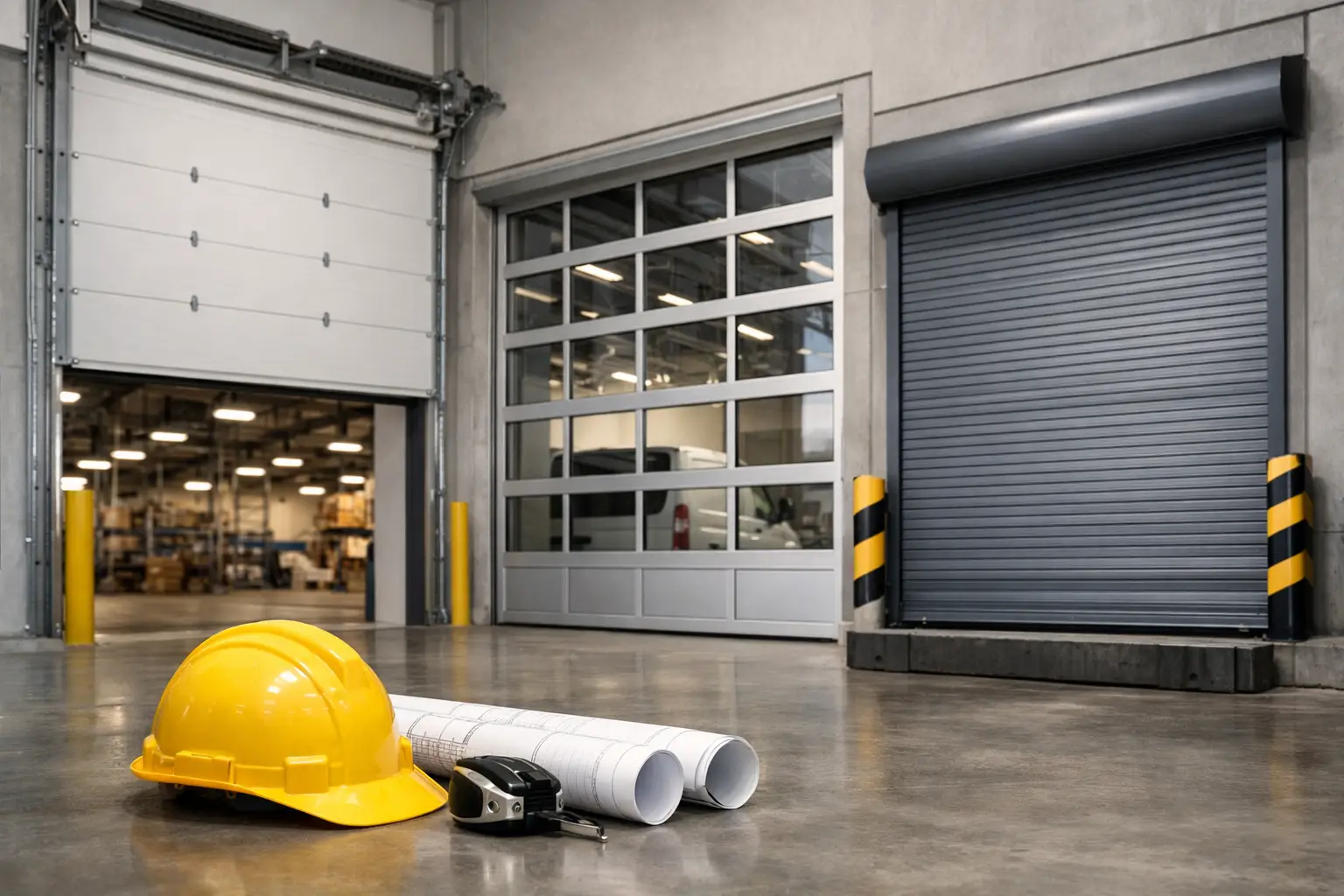
A commercial door that sticks halfway open at 7 a.m. can delay deliveries, frustrate employees, and leave expensive equipment exposed. This commercial overhead door selection guide helps business owners and property managers choose a system that fits the way their building actually works – not just the opening size or the lowest initial price.
The right door should protect your property, support daily traffic, and hold up in Arizona heat. Whether you manage a warehouse in Mesa, an auto shop in Gilbert, a storage facility, or a busy retail loading area, the best choice depends on use, security needs, available space, and long-term service expectations.
Start With How the Door Will Be Used
Before comparing materials or colors, look at what happens at the opening each day. A door used twice daily for employee parking has different demands than one opening 40 times a day for deliveries. Frequency matters because springs, cables, rollers, openers, and tracks all experience more wear as cycle counts rise.
Think through who operates the door and what moves through it. Forklifts, delivery trucks, service vans, customers, and employees each create different clearance and safety requirements. If vehicles back close to the opening, consider whether you need sensors, warning devices, bottom-edge protection, or a more visible door finish.
Also consider downtime. A small service bay may be able to pause operations for a repair. A distribution facility or fire station may not have that flexibility. In high-use settings, spending more on a higher-cycle spring system, dependable operator, and planned maintenance can be far less expensive than losing access during a busy workday.
Choose the Right Commercial Door Style
Commercial overhead doors are not one-size-fits-all. The door style should match the building layout, security requirements, climate exposure, and how much daily use it will receive.
Sectional steel doors
Sectional steel doors are a practical choice for many commercial properties. They move upward on tracks and sit overhead when open, preserving the space in front of the building. They are commonly used for service bays, warehouses, loading areas, and commercial garages because they offer solid security, dependable performance, and a wide range of insulation options.
Steel doors can be a smart long-term value, but the gauge, panel construction, hardware, and finish all matter. A lightly used storage opening may not need the same hardware package as a high-traffic automotive shop.
Rolling steel doors
Rolling steel doors coil into a compact space above the opening. They are often a good fit where ceiling room is limited or where security is the primary concern. Storage facilities, back-of-house retail areas, warehouses, and industrial buildings often use them for that reason.
The trade-off is that rolling doors may have a higher upfront cost and require the correct headroom and side-room clearances. They also need professional installation and periodic service to keep the curtain, guides, springs, and operator working safely.
Full-view aluminum and glass doors
Full-view doors bring natural light into showrooms, restaurants, vehicle service facilities, and customer-facing spaces. They can create a clean, modern appearance while maintaining an overhead door format.
They are not always the best answer for every building. Glass panels may offer less privacy, and the door needs the right glazing and frame construction for security, weather, and energy goals. For a business where appearance matters as much as access, they can be a worthwhile investment.
Insulated or specialty doors
Insulated doors are especially useful for climate-controlled warehouses, food service areas, conditioned workspaces, and buildings that face direct Arizona sun. Specialty options may include fire-rated doors, high-speed doors, or doors designed for unique openings and operational needs. These systems should be selected based on code requirements and the consequences of a door failure, not simply on appearance.
Insulation Matters More Than Many Owners Expect
Arizona businesses deal with more than high afternoon temperatures. Heat can build up in metal buildings, work bays, and loading areas, placing extra strain on cooling systems and making indoor work less comfortable.
An insulated commercial overhead door can help limit heat transfer, reduce outside noise, and provide a more substantial panel construction. Look at the door’s R-value, which measures resistance to heat flow. A higher R-value can be helpful, but it is not the only decision point. Gaps around the opening, damaged weather seals, poor wall insulation, and frequent door use can all affect real-world energy performance.
For a door that stays closed most of the day, insulation can make a noticeable difference. For a loading door that remains open for long stretches, fast operation, dock procedures, and air-control solutions may matter just as much. The best choice comes from looking at the entire opening, not just the door panel.
Match the Operator to Traffic and Safety Needs
A commercial operator should be selected for the door’s size, weight, use frequency, and operating style. A residential-style opener is not designed for many commercial applications, particularly large or heavy doors. Choosing an undersized operator may save money at installation but can lead to early wear, unreliable operation, and avoidable repair calls.
Commercial operators can be set up with wall controls, keypads, remotes, pull stations, timers, vehicle detectors, and access-control systems. The right controls depend on who needs entry and when. A staff-only warehouse door may benefit from controlled access, while a service bay might need simple, quick operation throughout the day.
Safety devices should never be treated as optional add-ons. Photo eyes, monitored sensing edges, warning lights, and audible alerts help protect people, vehicles, and inventory. They are also a practical way to reduce the risk of a costly accident near a busy opening.
Plan for Security, Not Just Strength
A heavy door helps, but commercial security is about the full system. The tracks, locks, operator controls, emergency release, access points, and surrounding building conditions all play a role.
For openings that contain tools, vehicles, inventory, or sensitive equipment, consider how the door is secured after hours. You may need interior slide locks, automatic operator locking features, restricted remote access, or a door style with minimal window exposure. If employees or vendors come and go at different times, access-control options can also help you know who can enter without distributing keys or shared remotes.
Security needs vary by property. A small enclosed service area may need a straightforward steel sectional door and reliable locks. A facility with valuable inventory or an exposed rear entrance may justify a rolling steel door, upgraded controls, and a more detailed security plan.
Confirm Measurements and Building Conditions Early
The width and height of the opening are only the starting point. A qualified technician should also inspect headroom, sideroom, backroom, ceiling obstructions, sprinkler lines, electrical access, roof slope, and the condition of the jambs and header.
These details determine what track system, spring setup, and operator configuration can be installed safely. Low headroom, for example, may require a specialized track arrangement. A sloped ceiling or overhead ductwork can affect where the door travels when open. Catching those limitations before ordering a door prevents delays, unexpected costs, and last-minute compromises.
If the existing door has failed, do not assume the replacement should match it exactly. Your business may have changed since the last installation. Higher traffic, new vehicles, added climate control, or updated security expectations may point to a better system.
Compare Total Cost, Not Just the Quote
A lower-priced door is not always less expensive over its service life. Compare the complete installation: door construction, springs, cables, rollers, track, operator, controls, safety equipment, weather sealing, warranty, and expected maintenance.
Ask direct questions before approving the work. What cycle rating is included? Is the operator sized for the door and expected traffic? Which safety devices are part of the quote? What maintenance will the system need? A clear answer now helps avoid surprises later.
For many commercial properties, planned maintenance is part of a smart door selection. Regular inspections can catch worn rollers, loose hardware, frayed cables, failing sensors, and operator issues before they stop the door at the worst possible time. It also gives you a clearer picture of when repair is still reasonable and when replacement is the better investment.
A Practical Commercial Door Selection Checklist
Before making a final decision, make sure your choice addresses these five areas:
- Daily cycles and the required spring and operator rating.
- Door style, material, insulation, and weather protection.
- Vehicle clearance, ceiling space, and building conditions.
- Security controls and safety devices for employees and visitors.
- Installation cost, expected maintenance, and the cost of downtime.
A commercial overhead door is part of your operation, not just part of the building. Choosing it carefully means fewer interruptions, better protection, and a door that works as hard as your business does. If you need straightforward guidance for a commercial property in the East Valley, Riggs Rescue AZ can inspect the opening, explain the options clearly, and help you move forward with a fast, reliable, and affordable plan.

Leave a Reply