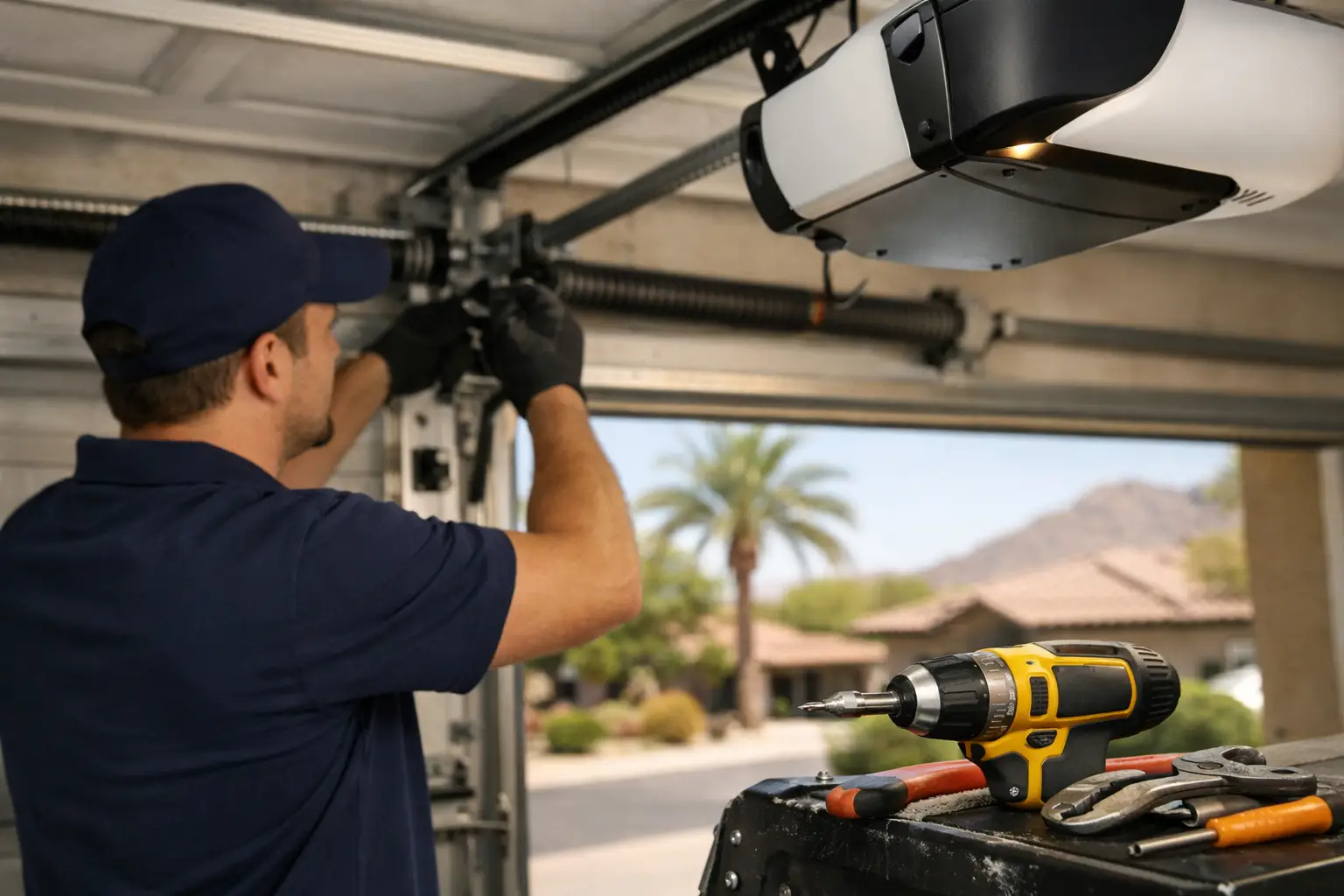
A garage door can seem fine right up until the morning it will not open, starts shaking across the tracks, or leaves your vehicle stuck inside. This Phoenix garage door tuneup example shows what a useful maintenance visit should look like for an everyday homeowner – not just a quick spray of lubricant and a few minutes in the driveway.
In the Arizona heat, garage doors work harder than many people realize. Dry weather, dust, hot metal, aging rollers, and frequent daily use can all add up. A professional tuneup is designed to catch small issues before they turn into a broken spring, damaged opener, or door that is unsafe to operate.
A Phoenix Garage Door Tuneup Example From Start to Finish
Imagine a homeowner in Phoenix calls because their double garage door has become louder over the last few months. It still opens and closes, but it jerks near the middle of travel and the opener light flickers when the door reaches the floor. There is no emergency yet, but the door is giving clear warning signs.
A proper tuneup starts with a conversation. The technician asks when the noise began, whether the door ever reverses unexpectedly, if anyone has noticed a gap at the bottom, and whether the opener has been struggling. Those details help narrow down the cause before adjustments begin.
Next comes a visual inspection of the full system: door sections, hinges, rollers, tracks, cables, springs, brackets, bearing plates, opener rail, safety sensors, and bottom weather seal. The goal is not to sell parts that are not needed. It is to identify wear, explain what is urgent, and give the homeowner clear options with no surprises.
Step 1: Check the Door’s Balance
The technician disconnects the opener and manually moves the door, using safe procedures. A balanced garage door should stay near the halfway point instead of dropping to the floor or racing upward. If it will not hold position, the springs may need adjustment or replacement.
This is one of the most important checks in any garage door tuneup. Springs carry the door’s weight. When they are not doing their job, the opener has to pull far more than it was built to handle. That extra strain can shorten the life of an otherwise good opener.
Spring work is not a homeowner DIY project. Torsion springs are tightly wound and can cause serious injury if handled incorrectly. If a balance problem is found, a trained garage door technician should make the correction.
Step 2: Inspect Rollers, Hinges, and Tracks
In this example, several steel rollers are worn and making a rattling sound as they move through the track. The hinges are intact, but a few fasteners have loosened from normal vibration. The tracks are also dusty, though they are still properly aligned.
The technician tightens accessible hardware, checks track mounting, and makes sure the rollers are traveling smoothly. If the rollers are badly worn, replacement may be the smarter choice rather than trying to stretch a few more months out of them. Nylon rollers often run quieter than older steel rollers, but the best option depends on the door, budget, and how much noise reduction the homeowner wants.
Tracks should not be heavily greased. Grease attracts dust and grit, which can create a messy buildup in Arizona. Instead, the tracks are cleaned as needed while the moving parts that require lubrication receive the correct garage-door-rated product.
Step 3: Lubricate the Right Moving Parts
A tuneup includes lubrication of the hinges, rollers with bearings, spring coils, bearing plates, and other appropriate moving points. This reduces friction and helps the door move with less noise and resistance.
Lubrication helps, but it is not a fix for damaged components. A cracked roller, frayed cable, bent track, or weak spring needs more than spray lubricant. Honest maintenance means making that distinction clear.
For this homeowner, lubrication noticeably reduces the squeaking, but it does not completely eliminate the rough movement. That points back to the worn rollers. The technician explains that the door is safe to use for the moment, but replacing the rollers soon will protect the opener and restore smoother operation.
Step 4: Test Cables, Drums, and Safety Hardware
Cables are inspected for fraying, corrosion, slack, and proper placement on the drums. Even a small cable issue can turn into a door that hangs crooked or becomes stuck. Because cables operate under tension, they should be inspected and repaired by a professional rather than adjusted at home.
The technician also checks the brackets that connect the door to the lifting system. Bottom brackets deserve extra caution because they are connected to the high-tension cables. Tightening the wrong fastener without knowing what it does can be dangerous.
A good tuneup also includes a look at the door panels and reinforcement struts. In Phoenix, sun exposure can fade finishes and dry out weather seals, while strong winds can reveal weak sections in an older door. Cosmetic wear may not require immediate action, but structural damage should never be ignored.
Step 5: Test the Opener and Safety Sensors
The opener is only one part of the system, but it gets blamed for many problems caused by the door itself. Once the door is checked and balanced, the technician tests the opener’s force settings, travel limits, remote controls, wall button, and manual release.
The photo-eye safety sensors near the bottom of the tracks are cleaned and aligned. These sensors should reverse the door if something crosses the beam while it is closing. The auto-reverse feature is also tested to confirm the door reverses when it meets resistance.
In this tuneup example, the opener is working properly, but its close-force setting was slightly high because it had been compensating for the door’s rough travel. After the maintenance adjustments, the setting can be corrected. That is better for the opener and safer for everyone using the garage.
If an opener is older, loud, or lacks modern safety and convenience features, replacement may be worth discussing. Still, replacement should be based on its condition and the homeowner’s needs, not pressure. Many openers can keep working well after a tuneup if the door is properly balanced and maintained.
What the Homeowner Receives After the Tuneup
At the end of the visit, the homeowner should understand what was checked, what was adjusted, and what may need attention later. In this case, the immediate maintenance includes tightening hardware, cleaning key areas, lubricating moving parts, aligning sensors, and correcting opener settings.
The technician recommends replacing the worn rollers within the next few months. There is no broken spring or failed opener, so the homeowner can choose whether to schedule the upgrade now or plan for it soon. That is the kind of transparent guidance that helps people make a confident decision without feeling rushed.
A clear estimate should separate necessary repairs from optional upgrades. For residential customers, Riggs Rescue AZ focuses on straightforward recommendations, affordable solutions, and no residential service or trip charges. If something needs repair, you should know why it matters before work begins.
When a Tuneup Is Enough – and When It Is Not
A tuneup is a smart choice when the door is noisy, moving less smoothly, showing minor vibration, or overdue for routine care. For most homes, annual maintenance is a practical starting point. Doors used multiple times each day, exposed to heavy dust, or serving a busy household may benefit from more frequent attention.
Some problems call for repair rather than maintenance. A snapped spring, frayed cable, bent track, door off its track, broken panel, or opener that will not respond needs prompt professional service. Do not keep forcing a garage door that is binding, crooked, or unusually heavy. That can create more damage and increase the safety risk.
Commercial doors and gates have their own maintenance needs, especially where daily traffic affects business access and security. In those cases, a service plan may make more sense than waiting for a breakdown.
Your garage door does a lot of work quietly, until it cannot. A timely tuneup gives you a chance to hear what the system is telling you, make informed repairs, and keep one of your home’s largest moving parts working safely when you need it most.

Leave a Reply