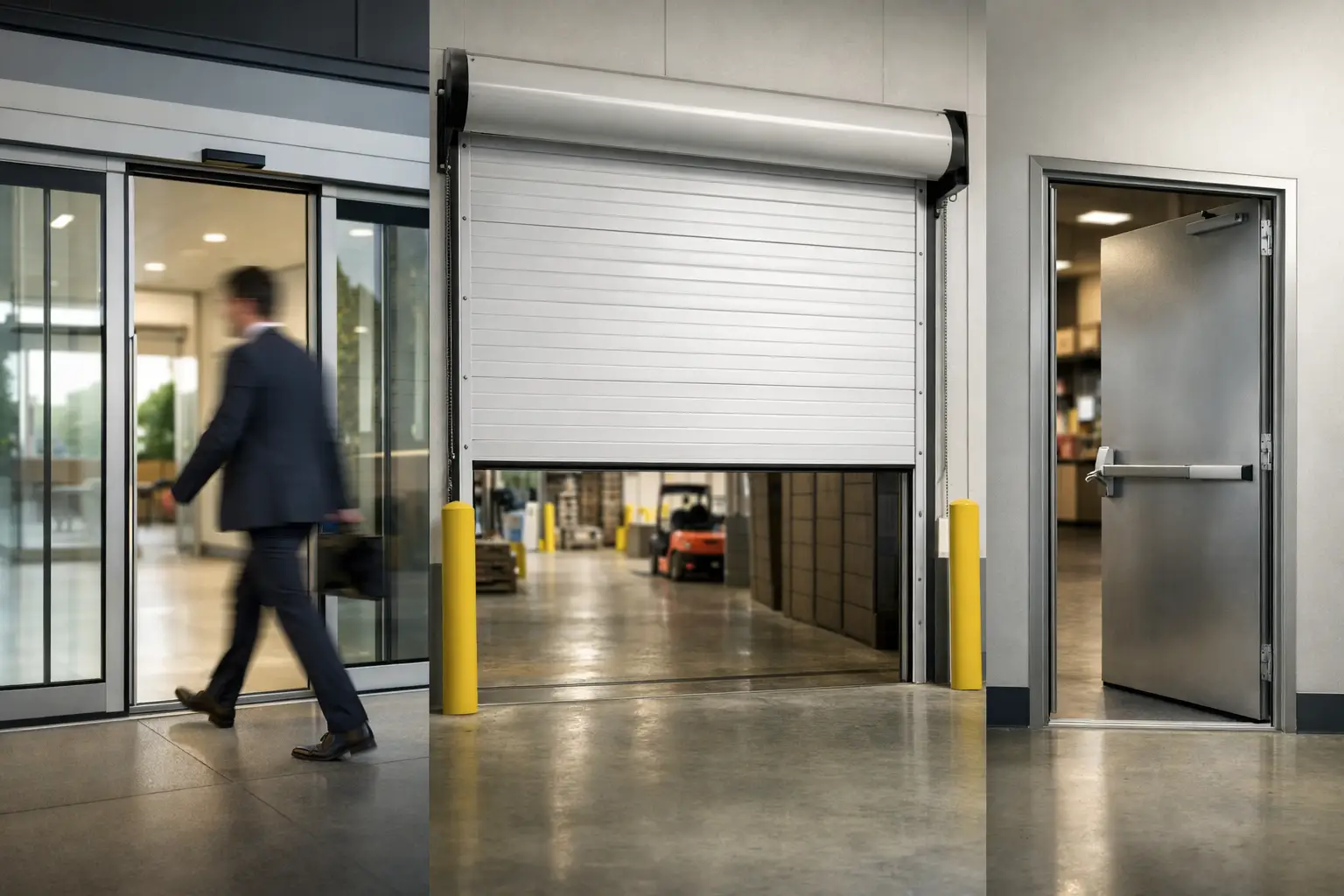
A stuck loading-bay door at 7 a.m. can do more than create an inconvenience. It can delay deliveries, leave equipment exposed, frustrate employees, and put the whole day behind schedule. Commercial doors are working equipment, not just an entry point, so the right door and timely service matter to your security, safety, and bottom line.
For small business owners and property managers, the best choice is rarely the cheapest door on the initial quote. The right system has to fit how your building operates, how often the opening is used, what vehicles or people pass through it, and how much security and weather protection the space needs. A practical plan helps prevent surprises later.
What Commercial Doors Need to Handle
A commercial door may open dozens of times a day, carry heavier components than a residential door, and protect valuable inventory after hours. That combination creates demands that standard doors are not built to meet. Door selection should begin with the job the opening performs, not simply its dimensions.
A warehouse or auto shop may need a sectional overhead door that provides insulation and dependable daily cycling. A storage facility may benefit from rolling steel doors that conserve ceiling space and offer strong security. Restaurants, offices, and retail spaces often need reliable pedestrian doors, closers, and access hardware that keep customer traffic moving while maintaining controlled entry.
Arizona conditions add another consideration. Extreme heat can affect lubricants, weather seals, electronics, and the comfort of employees working near large openings. Wind, dust, and monsoon storms can expose weak seals, worn rollers, loose hardware, or damaged panels quickly. A door that looks acceptable from the parking lot may still be wasting energy or operating unsafely.
Choosing Commercial Doors for the Way You Work
There is no single best commercial door for every property. The right choice depends on use, building layout, security needs, and budget. A busy service bay has different requirements than a back-room storage opening, and a high-traffic retail entrance needs different hardware than a loading dock.
Start with traffic and opening size
Think about what goes through the opening and how frequently it needs to move. Forklifts, delivery trucks, fleet vehicles, carts, and foot traffic all affect the size, clearance, speed, and durability your system requires. A door that is undersized or slow for the operation can create daily bottlenecks.
For frequent vehicle access, an operator rated for commercial cycles is usually worth the investment. It is designed for more demanding use than a typical residential opener. If employees must operate the door throughout the day, controls should be placed conveniently and safely, with clear procedures for manual operation during a power outage.
Match the material to the environment
Steel sectional doors are a common choice because they balance durability, security, and cost. Insulated steel can be especially helpful in conditioned workspaces or buildings where heat transfer affects utility costs and employee comfort.
Aluminum and glass doors can create a clean, modern storefront or showroom look while allowing natural light inside. The trade-off is that glass choices and framing need to be selected with security, privacy, and local conditions in mind. Rolling steel doors are often a strong fit when security and space efficiency matter more than natural light or curb appeal.
Do not overlook insulation and weather sealing
Insulation is not only about keeping a building warm in winter. In the East Valley, it can reduce heat gain, make spaces near the door more comfortable, and take some pressure off cooling systems. Its value depends on the building use. An air-conditioned workshop or occupied warehouse may benefit significantly, while an unconditioned storage area may prioritize security and durability instead.
Weather seals at the bottom, sides, and top of the opening deserve the same attention. When they are cracked, flattened, or missing, dust, pests, water, and hot air have an easy way in. Replacing worn seals is often a straightforward service that can make the door operate and protect the space better.
Safety Features Are Part of the System
Commercial door safety is not limited to whether the door opens and closes. Springs, cables, tracks, rollers, hinges, operators, photo eyes, and reversing functions all work together. When one component wears out, it can put extra strain on the others.
A heavy door with a damaged cable or weak spring is not a do-it-yourself project. Commercial components store significant tension, and an improper repair can cause injury or more expensive damage. A trained technician can identify whether a problem is isolated or whether related parts are approaching the end of their service life.
For powered doors, photo eyes and other safety devices need to stay aligned, clean, and functional. Employees should never bypass a safety feature just to get a door moving. That may seem like a quick fix during a busy shift, but it creates a real risk for people, vehicles, and property.
Four Signs Your Door Needs Prompt Service
A commercial door rarely fails without giving some warning. Addressing early signs can help you avoid an emergency call, a security issue after closing, or a door that stops in the middle of a delivery.
- The door moves unevenly, shakes, binds, or makes new grinding, popping, or scraping sounds.
- It will not stay fully open or closed, or it reverses without a clear obstruction.
- The operator runs but the door does not move correctly, or controls respond inconsistently.
- You see frayed cables, bent tracks, broken rollers, gaps in seals, or damaged panels.
If a door is off its track, a cable has come loose, or the opening cannot be secured, keep people away from the area and arrange service right away. Continuing to force the system can turn a repair into a full replacement.
Maintenance Protects Uptime
Maintenance is one of the most practical ways to reduce door-related disruptions. It is not about replacing parts that still have useful life. It is about inspecting moving components, tightening hardware, checking balance and safety systems, lubricating approved points, and catching wear before it shuts down an entrance.
The ideal maintenance schedule depends on usage. A door used a few times per day may need a different approach than one cycling constantly in a warehouse, shop, or distribution setting. Property managers with several doors should consider keeping a simple record of service dates, recurring issues, and any parts replaced. Patterns can help with budgeting and replacement planning.
Maintenance also gives you a chance to evaluate whether the current setup still fits the operation. A growing business may need a faster operator, more secure access controls, a better insulated door, or an additional opening to reduce congestion. Making that decision before a failure gives you more options and less pressure.
Repair or Replace? Make the Call Based on Value
Repair is often the sensible choice when the door is structurally sound and the issue is limited to a spring, roller, cable, sensor, seal, operator component, or damaged hardware. A clear explanation of the problem and price should come before the work starts, especially when downtime is already creating stress.
Replacement may make more sense when panels are heavily damaged, the door has repeated breakdowns, replacement parts are no longer available, or the system no longer meets the building’s security and operational needs. A new commercial door can also be a smart upgrade when energy use, curb appeal, or workflow has changed.
The key is honest guidance. You should not be pushed into replacement when a dependable repair will solve the issue, and you should not keep paying for repeated temporary fixes when the system has reached the end of its useful life.
Get the Right Help Before Downtime Grows
When your door affects deliveries, customer access, inventory protection, or employee safety, waiting is expensive. Local service matters because a technician who understands the pace of Gilbert, Mesa, Chandler, and surrounding businesses can respond with practical options instead of vague promises.
Riggs Rescue AZ helps commercial customers with repair, replacement, maintenance, operators, and access solutions with straightforward communication and no-surprise recommendations. Whether the problem is a noisy door or an opening that will not secure, getting it checked early can protect the workday you have planned. A dependable commercial door should fade into the background and let your business do what it does best.

Leave a Reply