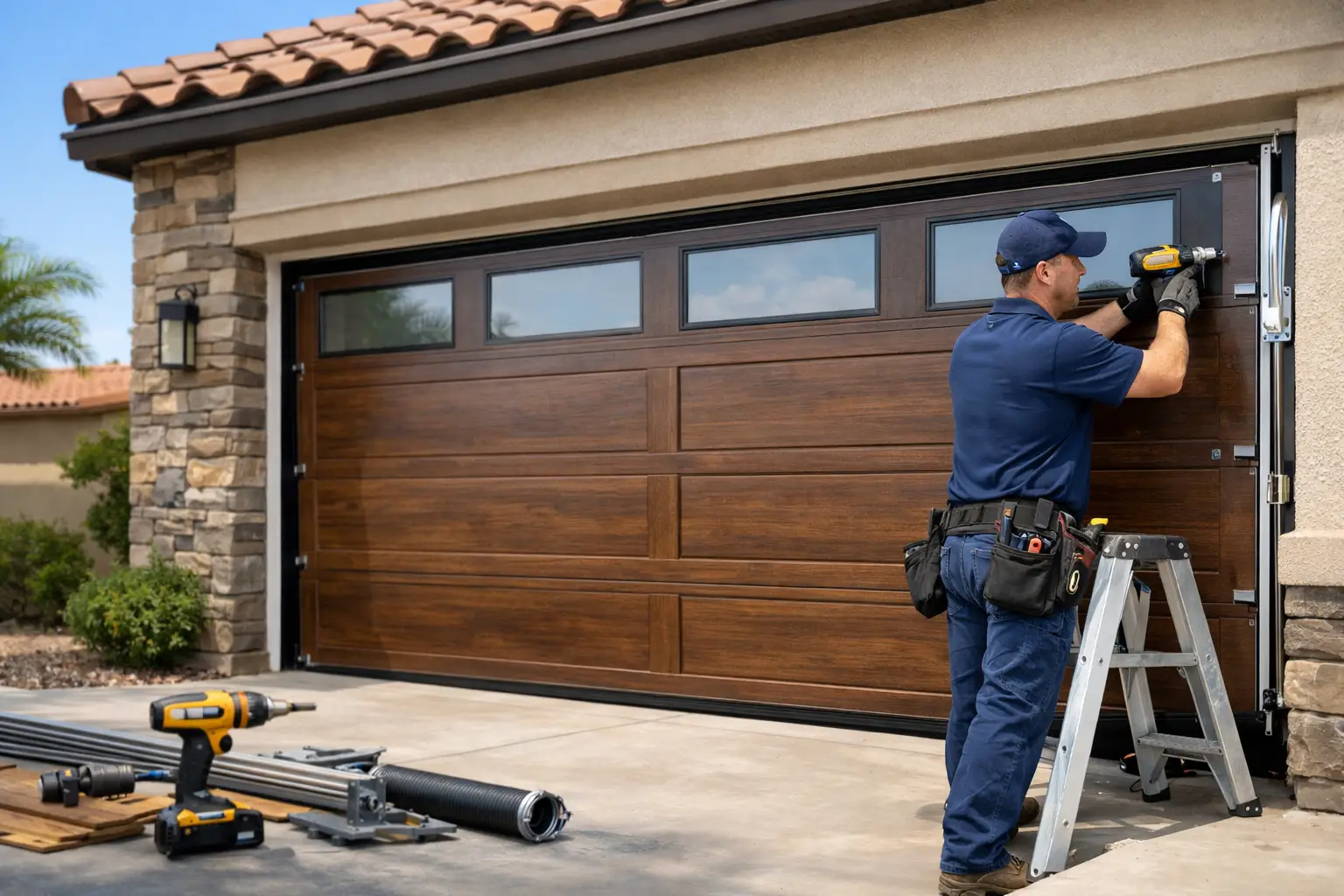
A garage door replacement usually becomes urgent at the worst possible time: the old door is loud, damaged, unreliable, or no longer secure. This Gilbert garage door installation example shows what a well-planned replacement can look like for a local homeowner who wants clear answers, dependable equipment, and no surprises on installation day.
A Realistic Gilbert Garage Door Installation Example
Picture a homeowner in Gilbert with an older two-car garage door that has started binding near the floor. The panels are faded from years of sun exposure, the door shakes when it moves, and the opener strains hard enough that everyone in the house notices. A repair may be possible, but the door has multiple worn components and visible panel damage. At that point, putting more money into an aging system may not be the best value.
The homeowner’s goal is straightforward: install a door that looks better, operates safely, fits the home’s exterior, and holds up to Arizona heat. They do not need the most expensive option on the market. They need the right option for their home, budget, and daily routine.
A professional visit begins with measurements and an honest assessment of the existing setup. That includes the opening width and height, headroom above the door, side room near the tracks, condition of the framing, and whether the existing opener is compatible with the new door. These details matter because a garage door is a moving system, not just a set of panels.
Choosing the Right Door for the Home
For this example, the homeowner chooses a steel sectional garage door with insulated panels and a traditional raised-panel design. Steel is a practical choice for many Gilbert homes because it is durable, low maintenance, and available in styles that work with everything from ranch homes to newer subdivisions.
Insulation is worth discussing, especially when the garage faces the afternoon sun or connects directly to living space. An insulated door can help reduce heat transfer and may make the garage more comfortable. It will not turn an unconditioned garage into an air-conditioned room, but it can be a meaningful upgrade for homeowners who use the space for storage, hobbies, laundry, or a home gym.
The trade-off is cost. A basic non-insulated steel door is generally more affordable, while insulated construction, upgraded windows, decorative hardware, and custom colors increase the investment. A good installer explains those choices without pressuring the customer toward features they do not need.
What Happens Before Installation Day
Once the door style and size are confirmed, the next step is scheduling and preparation. A clear estimate should identify what is included: the new door sections, tracks, rollers, springs, hardware, removal of the old door, installation labor, and any opener-related work. If the project needs added framing, electrical work, or a new opener, those items should be explained upfront.
Before the crew arrives, the homeowner should move vehicles out of the garage and clear the area around the door opening. Bikes, storage bins, tools, and vehicles can slow the work down or create a safety issue. The installation team needs room to remove the old sections, set up ladders, and safely handle spring components.
It is also smart to talk through access needs. If the garage is the main entry point for the family, confirm whether the work can be completed the same day and ask about temporary access if an unexpected issue comes up. Most standard residential installations are completed efficiently, but damaged framing or special-order parts can change the timeline.
Installation Day: More Than Swapping Panels
The old door is carefully removed first. This is not a casual DIY task. Garage door springs and cables are under high tension, and incorrect handling can cause serious injury or property damage. A trained technician removes the old system, checks the opening, and prepares the space for the new tracks and hardware.
Next, the team assembles and installs the new door sections from the bottom up. Each section is aligned so the door seals properly at the floor and moves evenly through the opening. The tracks, rollers, hinges, cables, drums, and spring system are then installed and adjusted as part of one balanced system.
Balance is a major safety and performance issue. A properly balanced door should not feel excessively heavy to the opener, and it should not race upward or slam downward. The springs carry the door’s weight, while the opener guides movement. When springs are wrong or poorly adjusted, the opener works harder than it should and may fail sooner.
If the homeowner is replacing the opener too, the installer mounts the unit, connects the door arm, programs remotes, and tests the wall control. Modern openers may include battery backup, smartphone control, quiet belt-drive operation, or built-in lighting. Those features can be useful, but the best choice depends on how the garage is used and whether the current opener is still in good condition.
Final Safety Checks Matter
No Gilbert garage door installation example is complete without final testing. Before the job is considered finished, the installer should run the door through multiple cycles and check that it opens, closes, and seals correctly.
The safety reversal system should also be tested. Photo-eye sensors near the bottom of the tracks must detect an obstruction and stop the door from closing. The auto-reverse function should be checked as well. These systems are essential for households with children, pets, and busy driveways.
The technician should then walk the homeowner through the new setup. That includes how to use the remotes and keypad, how to release the door manually during a power outage, what normal operation sounds like, and when to call for service. A new garage door should run smoothly, but occasional maintenance helps protect the investment.
Questions Homeowners Should Ask Before Saying Yes
A garage door quote should feel understandable, not confusing. Before approving an installation, ask what door material and insulation level are being recommended, whether the estimate includes all hardware and removal, and whether the opener is being inspected for compatibility.
It also helps to ask about the door’s wind-load requirements, especially if the property has unique exposure or local building requirements. Most homes do not need a complicated custom system, but the door must be appropriate for the opening and installed according to applicable requirements.
Ask who will perform the work and what support is available after installation. Local service matters when a question comes up, a remote needs programming, or the door needs an adjustment later. Homeowners should not be left guessing whom to call after the installer leaves.
When Repair Is Still the Better Choice
Replacement is not always necessary. If a door is structurally sound and the issue is limited to a broken spring, worn rollers, damaged cable, misaligned track, or opener problem, repair may be the smarter and more affordable path.
The decision often comes down to the condition of the panels, age of the system, frequency of breakdowns, and cost of the needed repair compared with replacement. An honest garage door company will explain both options. At Riggs Rescue AZ, that means helping homeowners make a practical decision instead of pushing a replacement that does not make sense.
A new garage door is one of the largest moving parts in your home, and it affects curb appeal, daily convenience, and security every time it opens. If yours is struggling, do not wait for a complete failure. A clear inspection and straightforward recommendation can give you a safer door and one less thing to worry about when you leave for the day.

Leave a Reply