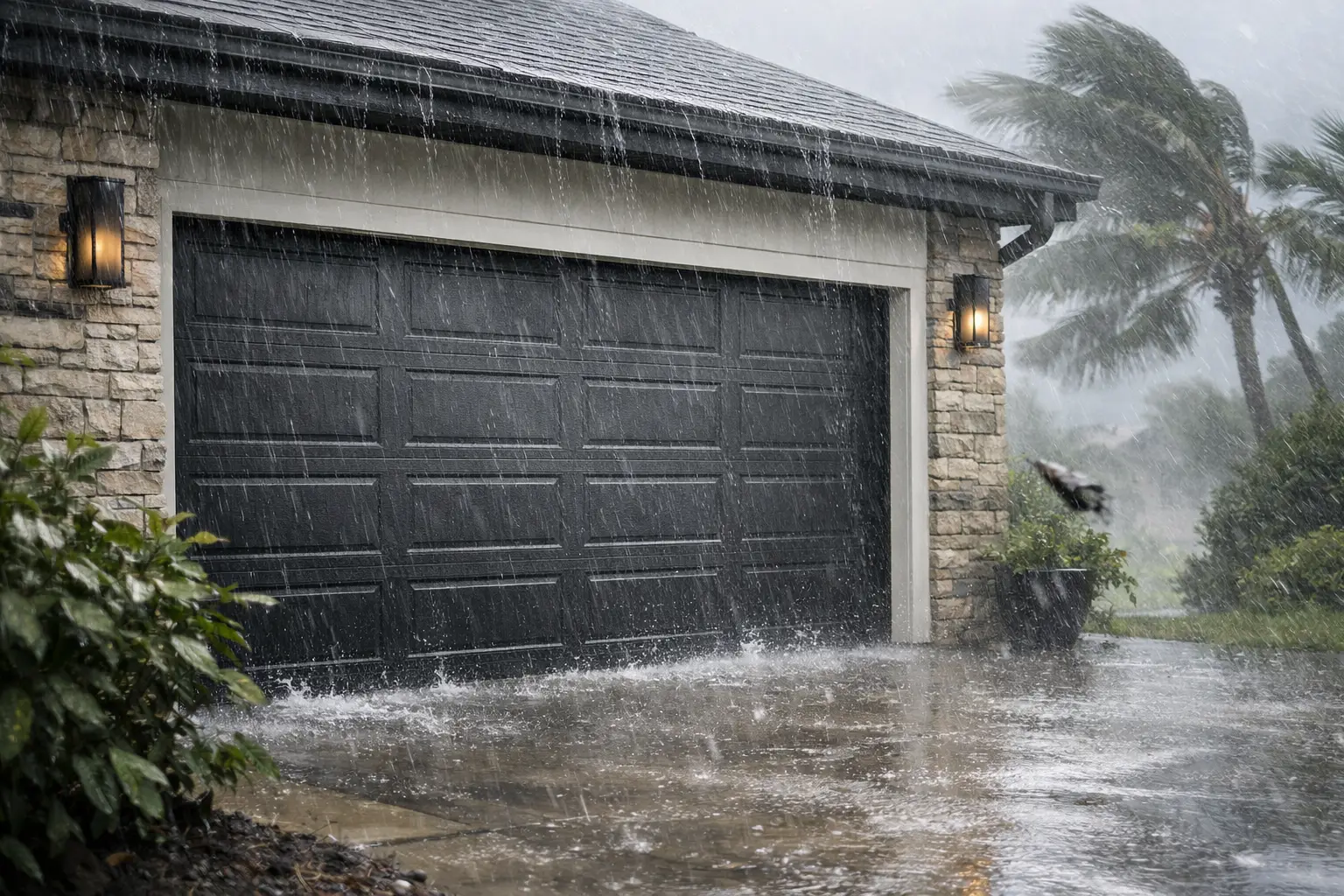
A monsoon can turn a normal Arizona afternoon into a high-wind, dust-filled downpour in minutes. So, can garage doors withstand monsoons? A properly installed, well-maintained door often can handle a typical storm, but its condition, wind rating, hardware, and drainage around the garage all matter. A door with weak springs, loose tracks, worn seals, or storm damage is far more likely to fail when the weather turns rough.
For homeowners and business owners, the goal is not to make a garage door completely waterproof. The goal is to keep the door secure, minimize water and debris intrusion, and avoid a dangerous failure that leaves your property exposed.
What Monsoon Weather Does to a Garage Door
Arizona monsoons bring more than rain. Sudden wind gusts, microbursts, blowing dust, lightning, and fast-moving water can put different parts of a garage door system under stress at the same time.
Wind is usually the biggest concern. A closed sectional garage door is a large moving wall, and strong gusts push against every panel. If the door is correctly fitted to solid tracks and supports, it can resist normal wind pressure. But a loose track, bent reinforcement strut, damaged roller, or weakened panel gives that pressure a place to start working its way in.
Water creates a different set of problems. Rain can blow beneath the bottom seal, through worn side weatherstripping, or around gaps at the top of the door. Water may not destroy the door itself, but it can damage stored belongings, drywall, flooring, electrical equipment, and the opener if it reaches the wrong place.
Dust also deserves attention in Gilbert, Chandler, Mesa, and surrounding East Valley communities. Wind-driven dust can clog photo-eye lenses, settle into rollers and tracks, and expose existing friction in a door that was already struggling to move smoothly.
Can Garage Doors Withstand Monsoons in Arizona?
It depends on the door and the storm. Many modern residential garage doors are designed to handle everyday weather and reasonable wind loads. However, not every door is built or installed for extreme wind events. A powerful microburst can produce forces that exceed what an older, lightweight, damaged, or poorly maintained door can safely manage.
Steel doors in good condition generally hold up well, especially when they have proper reinforcement. Wood doors can be more vulnerable to moisture absorption, peeling finishes, warping, and added weight if water repeatedly reaches unprotected areas. Aluminum and glass doors resist rust, but their frames, seals, tracks, and glass panels still need to be in good shape.
The installation matters as much as the material. A quality door attached to weak framing or fitted with worn hardware is not truly prepared. Springs, cables, hinges, rollers, brackets, tracks, and the opener all work together. When one part is compromised, the entire system may become less stable.
No garage door should be treated as a flood barrier, either. Weather seals help with light rain and windblown debris, but they cannot reliably stop standing water from entering a garage. If water is moving toward the garage, exterior drainage and grading are the real first lines of defense.
Warning Signs Your Door May Not Be Storm-Ready
You do not have to wait for a monsoon to find out whether your door has a problem. A door that shakes, scrapes, jerks, or makes grinding sounds in calm weather needs attention before wind and rain add more stress.
Look for daylight around the sides or bottom of the closed door. Check whether the bottom seal is cracked, flattened, detached, or missing sections. Inspect the inside of the door for bent horizontal braces, loose hinges, frayed cables, rusted hardware, and rollers that wobble in the tracks.
Pay close attention to how the door closes. If it stops short of the floor, reverses unexpectedly, or leaves a visible gap, rain and debris have an easy path inside. If the opener strains or the door feels unusually heavy when operated manually, do not keep forcing it. That can point to a spring, cable, or balance issue that needs professional service.
For commercial properties, signs of trouble can include damaged bottom astragals, worn dock seals, slow operation, misaligned tracks, or a door that no longer latches correctly. A monsoon-related closure problem can disrupt deliveries, security, and daily operations, so preventive repairs are often less costly than an emergency shutdown.
Simple Steps to Prepare Before Storm Season
A little preparation can make a meaningful difference, particularly if your garage stores vehicles, tools, inventory, or equipment. Start by closing the door fully before storms are expected. Leaving it partially open during high wind creates a much greater risk of panel damage, track failure, and debris entering the garage.
Keep the area along the bottom of the door clear. Leaves, dirt, rocks, and stored items can prevent the seal from sitting flat against the floor. Clear nearby gutters, downspouts, and exterior drains so water is directed away from the garage rather than pooling at the threshold.
Test the opener’s safety sensors by placing an object in the door’s path and closing it. The door should reverse before contact. Wipe the photo-eye lenses with a soft cloth, since dust buildup can cause false reversals or prevent the door from closing when you need it to.
If your opener has a battery backup, test it according to the manufacturer’s instructions. A backup can be helpful during a power outage, but it is not a reason to operate a visibly damaged door. Also know where the emergency release is located, but avoid pulling it during a storm unless you have a safe reason to do so. A door with a broken spring can become extremely heavy once disconnected from the opener.
Do not add improvised braces, ropes, or clamps to a door unless a qualified technician has recommended a specific solution. A temporary fix that blocks movement or puts pressure on the wrong component can create a bigger repair and a real safety hazard.
What to Do During and After a Monsoon
During high winds, keep the garage door closed and avoid cycling it repeatedly to check on conditions outside. Opening the door invites wind, rain, and debris into the garage, and it exposes the panels to pressure they may not be designed to handle.
After the storm passes, inspect from a safe distance before using the opener. Look for bent panels, gaps, damaged weatherstripping, loose tracks, fallen branches, standing water near electrical components, or cables that appear slack or out of place. If the door is crooked, partially off track, or hanging unevenly, leave it alone. Do not try to straighten it by hand or run the opener.
If water entered the garage, move valuables away from the wet area when it is safe, and dry the space as soon as possible to limit moisture damage. Never touch an opener, outlet, or extension cord that may have been exposed to standing water.
A door that looks mostly normal can still have hidden damage after a severe storm. Tracks can shift slightly, rollers can crack, and brackets can loosen without causing an immediate failure. If operation sounds different or the door no longer seals properly, a check-up can catch a small issue before the next monsoon turns it into an urgent repair.
When Repair Is Enough and When Replacement Makes Sense
Many storm-related issues are repairable. Replacing weather seals, rollers, hinges, cables, brackets, or a damaged panel can restore safe operation when the rest of the system is sound. Track alignment and opener adjustments can also solve problems caused by vibration, dust, or shifting hardware.
Replacement may be the smarter option when the door has extensive panel damage, repeated water-related deterioration, major structural weakness, or a poor fit for the opening. An older door that has needed frequent repairs may also be a candidate for replacement, especially if a newer insulated or reinforced option would improve security, durability, and energy efficiency.
The right answer should be based on the actual condition of the door, not pressure to buy more than you need. A clear inspection and upfront explanation of the repair options help you decide with no surprises.
If a monsoon leaves your garage door stuck, noisy, off track, or unable to close, fast help matters. Riggs Rescue AZ can assess the system, explain what failed, and help restore secure operation without adding unnecessary stress to an already difficult day. Before the next storm clouds build, listen to what your garage door is telling you – smooth, quiet operation and a tight seal are often the best signs that it is ready.

Leave a Reply