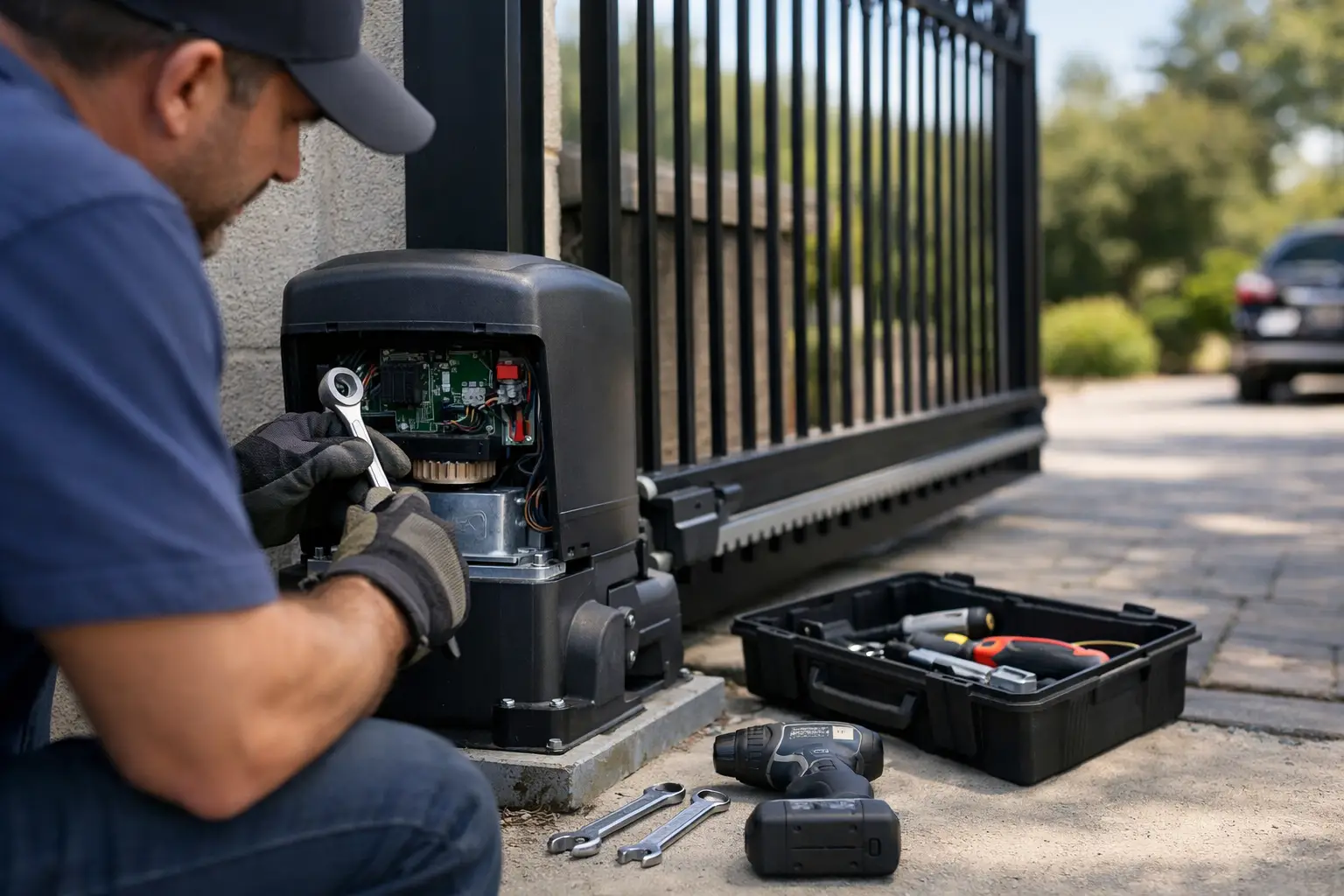
A driveway gate rarely fails at a convenient time. It sticks when you are late for work, will not close after dark, or stops responding just as guests arrive. Regular driveway gate maintenance is the best way to avoid those stressful moments, protect your property, and get more life from the equipment you already own.
For homeowners and small businesses in the East Valley, gate care has an extra challenge: Arizona heat, windblown dust, monsoon moisture, and intense sun can wear down moving parts faster than expected. The good news is that a few simple checks, paired with professional service when needed, can prevent many common gate problems before they turn into an urgent repair.
Why driveway gate maintenance pays off
An automatic gate is more than a convenience. It is a security system with moving mechanical parts, electrical components, safety devices, and often a heavy gate panel. When one part is out of adjustment, the entire system can become unreliable.
Maintenance helps identify small issues early, such as a loose hinge, a worn roller, an obstructed photo eye, or a battery that is losing its charge. Addressing those concerns early is usually quicker and more affordable than waiting for a motor to strain, a gate to come off track, or an opener to fail completely.
It also helps protect the operator. A gate that drags across the ground or binds during travel makes the motor work harder every time it opens and closes. That extra strain can shorten the life of the operator, gearbox, chain, belt, or drive components. In many cases, the gate itself is the real source of the problem, not the opener.
Start with a simple monthly visual check
You do not need to take apart your gate system every month. A careful look and listen can reveal a lot. Open and close the gate while standing at a safe distance, then watch how it moves from start to finish.
The gate should travel smoothly without jerking, sagging, scraping, bouncing, or stopping unexpectedly. Listen for grinding, squealing, popping, or unusually loud motor noise. A gate that suddenly sounds different is worth checking, even if it still operates.
Look along the path of travel for rocks, branches, leaves, trash, mud, or anything else that could block the gate. Sliding gates need a clear track or rolling surface, while swing gates need enough ground clearance throughout their full arc. Arizona dust and gravel can build up quickly, especially after a windy week or monsoon storm.
Also inspect the gate frame, posts, hinges, rollers, wheels, chain, and visible hardware. Watch for rust, bent metal, cracked welds, loose fasteners, frayed wiring, or a gate panel that no longer sits level. Do not ignore a gate that appears slightly out of alignment. A small sag can become a major issue once the operator begins compensating for the added weight and resistance.
Keep moving parts clean and properly lubricated
Dust is a constant concern for gates in Gilbert, Mesa, Chandler, Queen Creek, and nearby communities. It settles into hinges, rollers, tracks, and operator components, where it can combine with old lubricant and create a gritty paste. That buildup increases friction and can cause unnecessary wear.
Clean accessible moving parts with a dry cloth or soft brush. Remove debris from the gate path, but avoid spraying water directly into the operator housing, electrical connections, keypad, or photo eyes. If a track is present, clean it carefully and check for dents or damage that could interfere with the wheels.
Lubrication is helpful, but too much of the wrong product can attract even more dust. Use a lubricant designed for gate hinges, rollers, chains, or metal moving parts, following the manufacturer’s recommendations. Do not use heavy grease on every component. Some rollers, bearings, and operator systems are sealed or require a specific product.
If you are unsure what your gate needs, it is better to ask a gate technician than to coat the system in lubricant. A professional can identify whether the issue is dryness, misalignment, worn hardware, or a failing part that lubrication will not fix.
Sliding gate care
For a sliding gate, focus on the wheels, track or rolling surface, guide rollers, chain, and gate alignment. The gate should stay upright and move evenly without rubbing the guide rollers too tightly. If the gate drags, leans, or requires the operator to pull unusually hard, stop using it until the cause is found.
A chain that is too loose may skip or slap during operation. One that is too tight can put added stress on the operator. Chain adjustment is not always a DIY task, particularly when the gate is heavy or the operator settings need to be reset afterward.
Swing gate care
Swing gates depend heavily on strong posts, properly aligned hinges, and adequate ground clearance. Check that both leaves are level and that they do not scrape the driveway as they move. Pay close attention after heavy rain, landscaping changes, or soil movement around the posts.
If a swing gate is sagging, do not keep forcing it open with the remote. The operator arm can be damaged when it is asked to move a gate that no longer swings freely.
Test the safety devices every month
Automatic gates should have safety systems that help prevent the gate from closing on a vehicle, person, or object. Depending on your setup, these may include photo eyes, monitored safety devices, edge sensors, loops, or built-in obstruction detection.
Start by cleaning photo-eye lenses with a soft cloth. Dust, spider webs, direct sun glare, or a bumped sensor can interrupt the beam and cause inconsistent operation. Make sure the sensors are aligned, securely mounted, and free of plants or decorative items.
Then test the gate according to the manufacturer’s instructions. A common test is to place an object in the photo-eye path while the gate is closing. The gate should stop or reverse as designed. Never test it with a child, pet, vehicle, or your body in the gate’s path.
If the gate fails a safety test, operates unpredictably, or closes with excessive force, stop using the automatic function and arrange service. Safety devices are not optional extras. They are critical parts of the system.
Protect the operator, controls, and power supply
Your operator needs more than a working remote. Check the operator housing for damage, insect nests, standing water, or signs that the cover is loose. Keep landscaping trimmed back so branches and irrigation do not interfere with the unit, wiring, photo eyes, or solar panel if your system has one.
Replace remote batteries when range becomes noticeably weaker. If you use a keypad, make sure the buttons respond consistently and the mounting hardware is secure. For battery backup systems, ask a professional to test the battery during routine service. A backup battery can lose capacity gradually, leaving you without dependable access during an outage.
Monsoon season deserves extra attention. After a storm, inspect the gate area for pooled water, blown debris, damaged wiring, and shifted photo eyes. If lightning, a power surge, or water exposure affects the operator, avoid opening the control box yourself. Electrical and gate operator repairs should be handled by a trained technician.
Know when to call for professional gate service
Some maintenance is straightforward, but gates are heavy and automated systems can be hazardous. A professional inspection is the right move when the gate will not open or close, comes off its track, makes grinding noises, moves unevenly, reverses unexpectedly, or has damaged wiring or safety equipment.
You should also call for help if the operator runs but the gate does not move, the gate opens by itself, the remote and keypad both stop working, or the gate seems to be pulling against the motor. Continuing to operate a struggling gate can turn a manageable repair into an operator replacement.
For commercial properties, scheduled service matters even more. A gate that blocks employee access, delivery traffic, or customer entry can disrupt the entire day. Property managers should have gates inspected on a regular schedule based on how often they operate, their size, and the demands of the site.
A practical maintenance schedule
A quick monthly check is a smart baseline for most residential gates. Clean debris from the travel path, inspect the visible hardware, test safety devices, and pay attention to new sounds or changes in movement. Every few months, clean and lubricate applicable parts according to the system’s requirements.
At least once a year, schedule a professional gate tune-up. High-use gates, large estate gates, commercial gates, and systems exposed to heavy dust or harsh weather may need service more often. The right interval depends on gate type, usage, age, and condition – not just the calendar.
Riggs Rescue AZ can inspect your gate, explain what is causing a problem in plain language, and recommend the repair or maintenance that makes sense for your system. No pressure, no confusing technical runaround.
A little attention now can keep your gate dependable when you need it most. If something feels off, sounds wrong, or no longer operates safely, trust that instinct and have it checked before a small issue becomes a locked-out driveway.

Leave a Reply