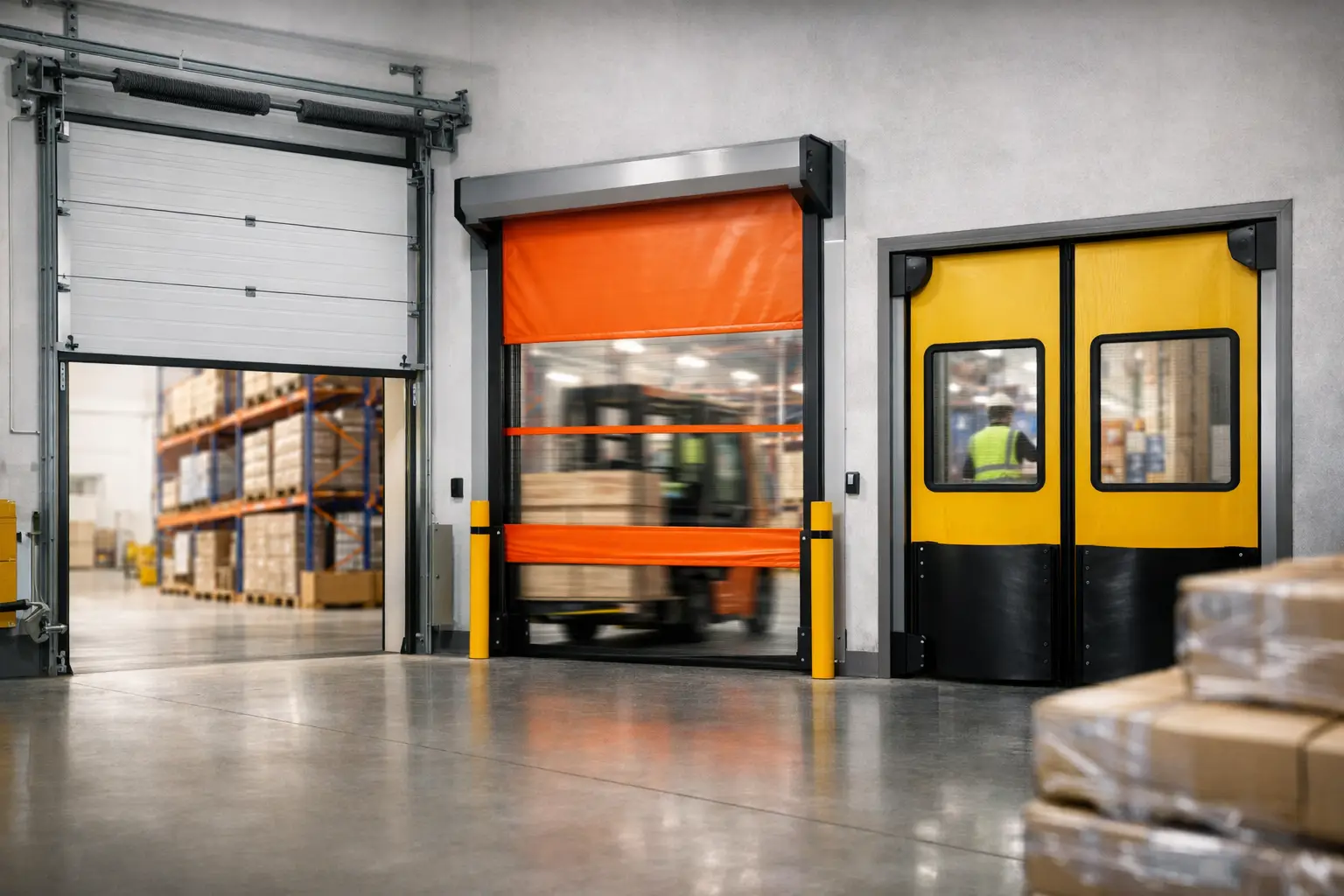
A warehouse door can either keep your operation moving or become the weak point that slows everything down. When deliveries stack up, forklifts are waiting, or a door will not close securely at the end of the day, the right equipment matters fast. Choosing among warehouse door options is not just about filling an opening – it is about protecting inventory, controlling energy costs, improving safety, and keeping your team productive.
For business owners and property managers, the best choice depends on what happens at that opening every day. A climate-controlled storage space has different needs than an active loading dock, auto shop, distribution center, or agricultural building. Here is how to narrow down the options without paying for features your facility does not need.
Start With How the Door Will Be Used
Before comparing materials or door styles, look at traffic. How often will the door open each day? Will people walk through it, forklifts pass beneath it, or delivery trucks back up to the opening? Is the door exposed to direct sun, dust, wind, or monsoon rain?
A door that opens a few times each week can often use a standard commercial sectional system. A busy loading area may need a high-cycle door built for hundreds of open-and-close cycles each day. Installing a light-duty door in a high-traffic opening may save money upfront, but frequent spring, cable, roller, and operator repairs can quickly erase that savings.
Also consider what happens if the door is out of service. If one opening is your only receiving point, reliability should carry more weight than the lowest initial price. A second door, a manual release plan, or a faster commercial operator may be a practical investment when downtime affects deliveries and payroll.
Common Warehouse Door Options
Sectional Steel Doors
Sectional steel doors are one of the most common warehouse door options because they are versatile, dependable, and available in many sizes. They are built in horizontal panels that travel on tracks and sit overhead when open. This gives trucks and employees a clear opening without requiring extra space in front of the building.
Steel sectional doors can be non-insulated or insulated. For warehouses in Gilbert, Mesa, Chandler, and other hot Arizona areas, insulated panels are often worth serious consideration. They can reduce heat transfer, help stabilize interior temperatures, and make a noticeable difference in a warehouse that is cooled or that stores temperature-sensitive materials.
The trade-off is that insulated doors cost more than basic single-layer steel. Still, they are a smart fit for many facilities because they balance security, durability, appearance, and repairability. If a panel is damaged by a forklift or vehicle, it may be possible to replace the affected section instead of the entire door.
Rolling Steel Doors
Rolling steel doors coil into a compact roll above the opening. They are a strong choice where headroom is limited, where security is a major concern, or where the opening needs a tough, simple design.
These doors are common at warehouses, storage rooms, service counters, and loading areas. Their steel slats create a durable barrier when closed, and the compact coil keeps ceiling space clear. That can be especially helpful in facilities with overhead piping, lights, or equipment that makes traditional horizontal tracks difficult.
Rolling doors are not always the best answer for every opening. They can be louder than sectional doors, and some models may not offer the same insulation value. For an exterior opening that sees frequent traffic and Arizona heat, ask about insulated rolling steel models and high-cycle components rather than assuming all rolling doors perform the same way.
High-Speed Doors
High-speed doors are designed for active facilities where every second the opening stays exposed affects traffic flow, security, dust control, or indoor temperature. Depending on the model, these doors may use fabric, rubber, vinyl, or specialized slats and can open much faster than a conventional commercial door.
They are often a good fit for distribution spaces, refrigerated areas, manufacturing facilities, and busy internal passages where forklifts move constantly. Faster operation means less waiting, less opportunity for unauthorized entry, and less hot outdoor air entering a cooled building.
The upfront investment is higher, and the door needs the right operator, safety devices, and maintenance plan. But for a high-volume operation, speed can pay off through better workflow and reduced energy loss. The key question is simple: does the facility move enough people, equipment, or product through that opening to justify it?
Full-View Aluminum and Glass Doors
Full-view doors use aluminum framing with glass or polycarbonate panels. They are not usually the first choice for a rough loading dock, but they work well for showrooms, service departments, vehicle bays, breweries, equipment facilities, and businesses that benefit from natural light and visibility.
These doors give a commercial space a clean, modern look while allowing employees to see activity on the other side of the opening. The right glazing can provide privacy, impact resistance, or better thermal performance.
Appearance is a real benefit, but it should not override function. Glass panels require cleaning, and a full-view door may not provide the same level of insulation or impact tolerance as a heavy-duty steel door. It is best used where visibility and customer-facing presentation matter.
Fire-Rated Doors
Some warehouse openings require fire-rated doors to help compartmentalize a building and slow the spread of fire and smoke. These may be rolling steel doors or specialized sectional systems designed to meet applicable fire-rating requirements.
This is not an area for guesswork. Fire doors must be properly specified, installed, tested, and maintained. A door that is blocked open, damaged, or disconnected from its closing system may fail when it is needed most. If your facility has a fire door, schedule regular inspections and make sure employees understand that the opening must stay clear.
Do Not Overlook the Operator and Safety Equipment
A commercial door is only as dependable as the system moving it. The operator should match the door’s size, weight, use frequency, and mounting requirements. A standard operator may be fine for a low-traffic bay, while a busy warehouse often needs a heavier-duty unit designed for frequent cycling.
Safety equipment is just as important. Photo eyes, monitored reversing devices, warning lights, vehicle detection, and pedestrian controls can reduce the risk of a door closing on a person, pallet jack, or forklift. For loading areas, clear traffic patterns and controls placed where operators can safely access them make a real difference.
Security deserves attention too. Consider locks, access controls, keypads, remote controls, and integration with your gate system if the property has one. The goal is to make daily access convenient for authorized staff without leaving a vulnerable entry point after hours.
Measure the Whole Opening, Not Just Width and Height
Door size matters, but it is not the entire measurement. A commercial door professional should also look at headroom, side room, backroom, ceiling obstructions, dock layout, wall condition, and the path of the door when open. A door that fits the opening on paper may still require a different track setup or mounting approach.
If trucks back into the area, check whether dock bumpers, seals, levelers, and shelters are working with the door rather than against it. A poorly matched setup can create gaps that let in heat, pests, dust, and water. It can also increase the chance of impact damage during deliveries.
Plan for Maintenance Before There Is a Problem
Commercial doors work hard, and small issues become expensive when they are ignored. Loose hardware, worn rollers, frayed cables, damaged panels, and an operator that starts hesitating are all signs that service should not wait.
Regular maintenance helps catch those problems early and can extend the life of the door, springs, and operator. It also gives you a chance to confirm that safety devices are working correctly. For businesses that rely on daily access, a planned checkup is far easier to schedule than an emergency repair during a delivery rush.
The best warehouse door is the one that fits your operation, protects your people and property, and stays dependable when the workday gets busy. If you are weighing an upgrade or replacing a failing commercial door, Riggs Rescue AZ can help you compare practical options, explain the costs clearly, and get the right system in place without surprises.

Leave a Reply