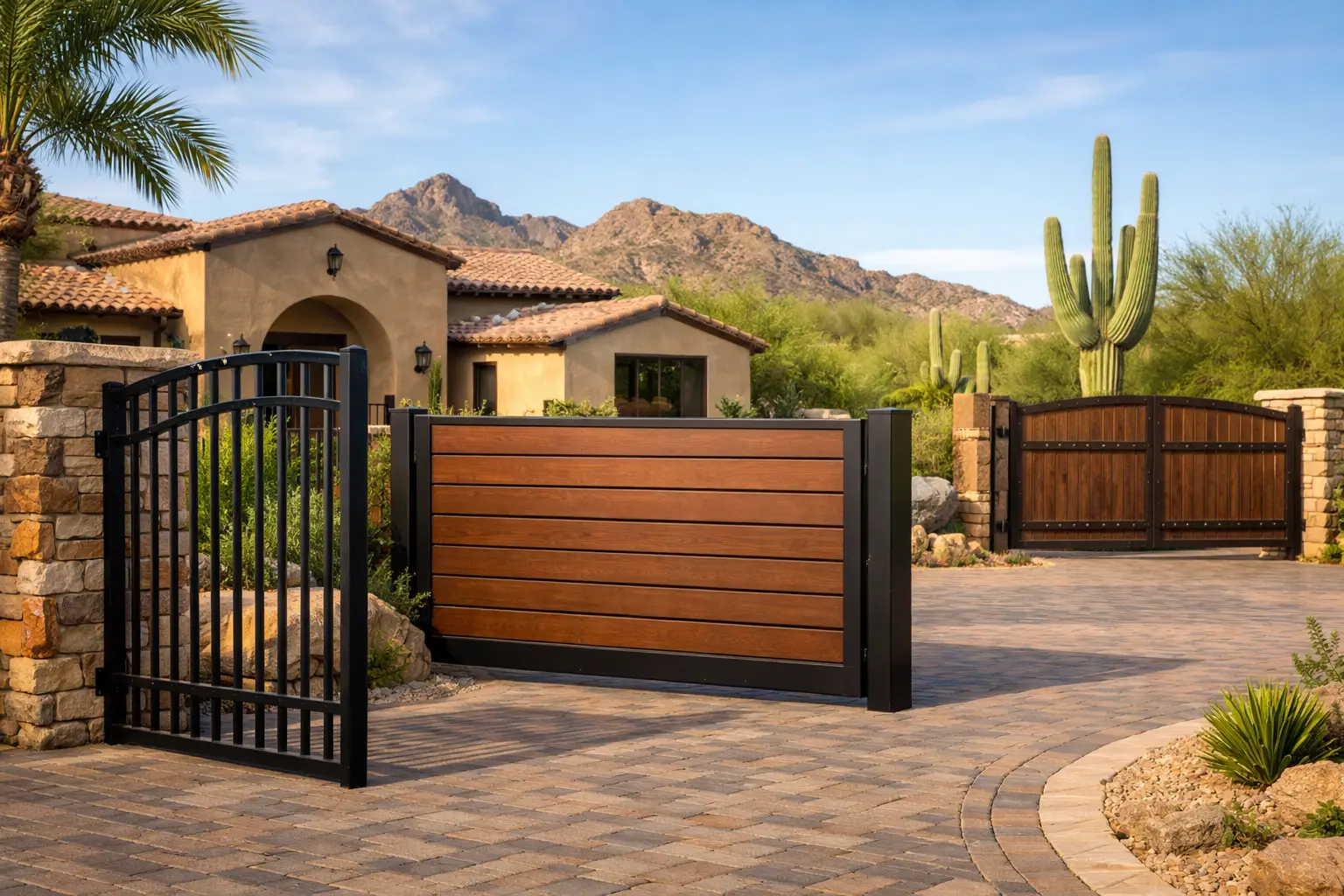
A driveway gate should make arriving home feel easier, not turn every trip into a struggle with a remote, keypad, or stubborn latch. The right driveway gates add a clear layer of privacy and access control, but they also need to stand up to Arizona heat, monsoon dust, daily vehicle traffic, and the way your household actually comes and goes.
For homeowners, business owners, and property managers, choosing a gate is about more than curb appeal. It is a decision about safety, convenience, maintenance, and long-term cost. A good system fits the property, opens reliably, and has service options you can count on when something goes wrong.
Start With How the Property Needs to Work
The first question is not, “What style looks best?” It is, “How will people and vehicles use this entrance every day?” A gate that works beautifully for a quiet residential driveway may not be the right choice for a small business, shared private road, rental property, or home with frequent deliveries.
Think through who needs access. Family members may use remotes or a smartphone app, while guests need a keypad or call box. Landscapers, pool technicians, and delivery drivers may need temporary codes. If the property has a separate pedestrian entrance, that gate should be planned as part of the full access system rather than treated as an afterthought.
Also consider the driveway itself. Measure the opening, available side room, slope, turning space, and distance from the street. A gate placed too close to the road can leave a vehicle waiting in traffic while the gate opens. On a busy street, that is more than an inconvenience.
Swing or Sliding Driveway Gates?
Most automatic driveway gates fall into two basic categories: swing gates and sliding gates. Both can be dependable when they are sized, installed, and maintained correctly. The better choice depends on the layout of your property.
Swing gates
A swing gate opens inward or outward on hinges, much like a large door. It is often a natural fit for level residential driveways with adequate room behind the gate. Single-swing gates work well for narrower openings, while dual-swing gates can cover wider entrances without requiring a very large single panel.
Swing gates can offer a classic, clean appearance and may be less visually intrusive than a slide gate. The trade-off is clearance. They need room to travel, and a sloped driveway, uneven ground, wind exposure, or parked vehicles can interfere with operation. In most cases, an automatic swing gate should open inward so it does not extend into a public street or sidewalk.
Sliding gates
A sliding gate moves sideways along the fence line or driveway edge. This design is often the better answer for properties with limited depth, uphill driveways, wider openings, or areas where wind is a concern. Commercial properties frequently use slide gates because they can handle larger, heavier gate panels and higher traffic when paired with the correct operator.
The trade-off is that a slide gate needs enough horizontal room beside the opening for the entire gate panel. It also needs a stable track or properly engineered cantilever system. Dirt, small rocks, leaves, and monsoon debris can affect a tracked gate, so regular cleaning matters.
Choose a Material That Handles Arizona Conditions
The material affects the gate’s appearance, weight, maintenance needs, and performance. In Gilbert, Chandler, Mesa, Queen Creek, and nearby communities, extreme sun and dry conditions should be part of the decision from day one.
Steel is strong and highly customizable. It can support decorative designs, privacy panels, and heavier security-focused construction. However, steel needs quality coating and occasional inspection for chips, scratches, and early signs of corrosion. A properly finished steel gate can last for years, but neglecting damaged paint can create a repair issue later.
Aluminum is lighter and naturally resistant to rust. That lighter weight can reduce strain on hinges and operators, making it a practical option for some residential gates. It is not always the best fit for a location needing heavy-duty impact resistance, but it can provide a sharp look with less upkeep.
Wood brings warmth and privacy, especially when paired with a steel frame. The downside is maintenance. Arizona sun can dry, fade, crack, or warp wood without regular sealing and care. Composite panels may offer a similar look with fewer maintenance demands, though they should still be selected for outdoor heat exposure.
For many properties, the best answer is a combination: a durable metal frame with infill panels that deliver the desired level of privacy and style.
The Operator Matters as Much as the Gate
A beautiful gate is only half the system. The operator, controls, safety devices, wiring, and hardware determine whether it opens consistently and safely. Choosing an operator based only on the lowest upfront price often leads to poor performance, especially with a heavy gate or frequent daily cycles.
The operator must match the gate’s size, weight, travel path, and expected use. A residential gate that opens a few times each day has different needs than a commercial entry serving employees, customers, vendors, and deliveries. An undersized operator can wear out quickly, while the wrong installation can create binding, excessive noise, or premature part failure.
Access controls are worth planning carefully, too. Remote controls are simple and familiar. Keypads allow code-based entry and make it easy to change access when needed. Telephone entry systems, card readers, and app-enabled controls can make sense for multi-user properties or small businesses that need more control over who enters.
Power also deserves attention. A hardwired system is common, but battery backup can keep the gate working during an outage. Solar power may be an option where trenching electrical lines is difficult, although panel placement, shade, gate usage, and battery capacity all affect whether it will be reliable.
Safety Features Are Not Optional
Automatic gates move large, heavy objects. That is why gate safety needs to be built into the system, not added later after an incident or malfunction.
A professionally installed automatic gate should include properly placed photo eyes, monitored safety edges where appropriate, and an operator designed to stop or reverse when it detects an obstruction. The gate must have safe gaps around hinges, rollers, and moving panels, particularly where children or pets could reach through. Manual release access is also essential in case of power loss or operator failure.
Do not rely on a remote control as a safety device. Never let children play on, climb, or ride a driveway gate. If the gate starts reversing unexpectedly, fails to close, drags on the ground, makes grinding noises, or opens more slowly than usual, stop using it until a qualified technician can inspect it.
Plan for Maintenance Before There Is a Problem
Like a garage door, an automatic gate works best when small issues are handled early. Dust buildup, loose hardware, worn rollers, misaligned photo eyes, damaged hinges, and aging batteries can all turn into a no-access situation if ignored.
A simple monthly check can help. Watch the gate complete a full open-and-close cycle. Listen for new noises, look for sagging or rubbing, test the keypad and remotes, and make sure safety sensors are clean and aligned. Keep the gate path clear of rocks, branches, and stored items. For tracked slide gates, remove debris from the track carefully and consistently.
Leave spring tension, operator adjustments, electrical work, and major alignment repairs to a trained gate technician. These systems can carry significant stored energy and electrical risk. A professional inspection can catch worn parts before they strand your vehicle inside or outside the property.
Know When Repair Makes Sense and When Replacement Is Better
Many gate problems can be repaired without replacing the whole system. A worn remote receiver, failing battery, damaged photo eye, loose chain, bent roller, broken hinge, or tired operator component may have a straightforward fix. Repair is often the practical choice when the gate frame is solid and the system has otherwise performed well.
Replacement may make more sense when the gate is severely rusted, structurally sagging, repeatedly damaged, improperly sized for the entrance, or paired with an obsolete operator that no longer meets current safety expectations. The same is true if repair calls are becoming frequent enough that you are spending money without gaining reliable operation.
Honest guidance matters here. The cheapest fix is not always the most affordable choice over the next few years, and replacement should not be pushed when a safe, durable repair will do the job.
A driveway gate should protect your space without adding stress to your day. If yours is noisy, slow, damaged, or unreliable, Riggs Rescue AZ can help you sort through the options, explain the work clearly, and get your access system back on track with no surprises.

Leave a Reply