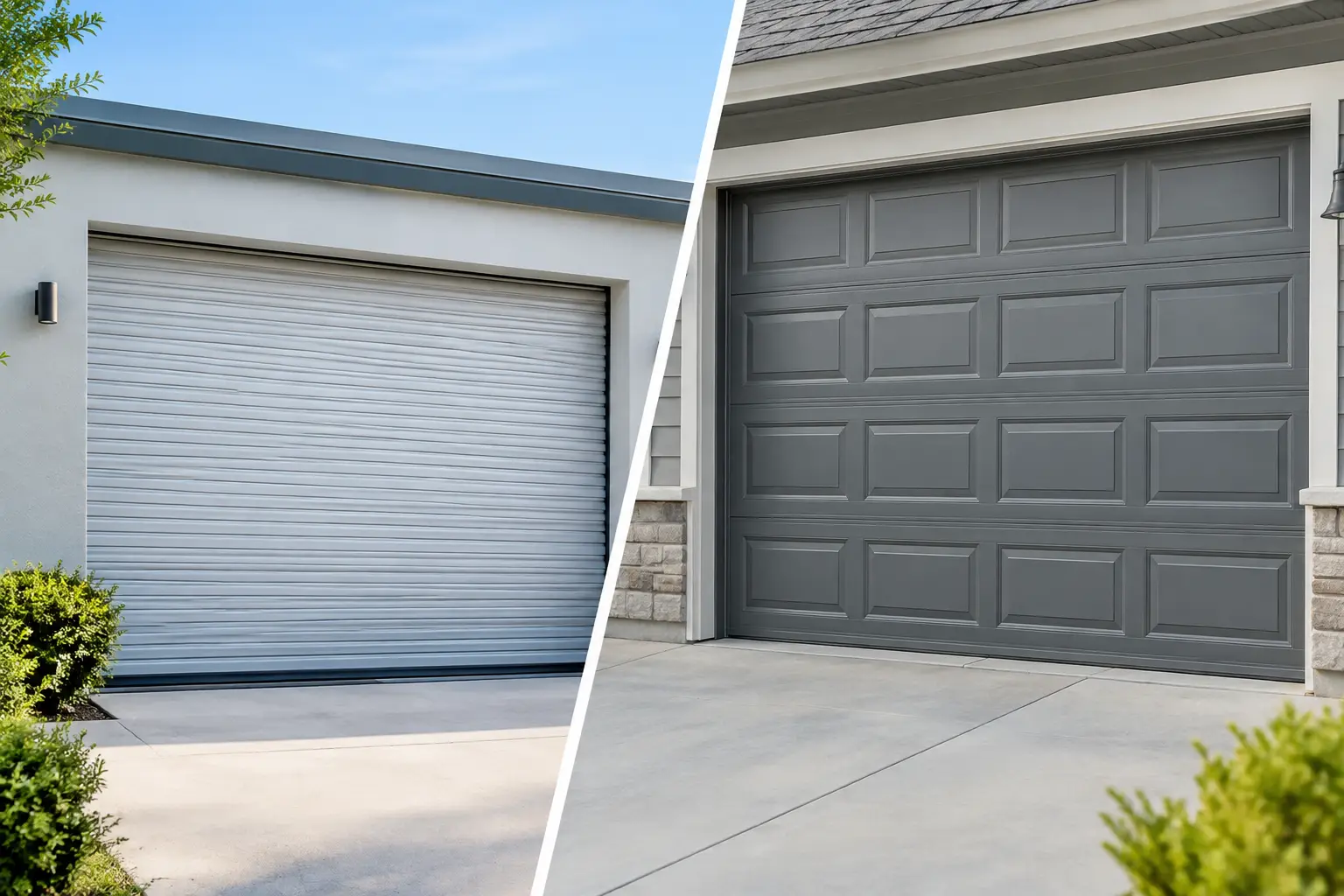
A garage door has to do more than open and close. It needs to protect what is inside, work reliably in Arizona heat, fit the available space, and make daily access easy. When comparing rollup versus sectional garage doors, the right answer usually comes down to how the building is used, not which style simply looks better.
For most East Valley homes, a sectional door is the familiar and practical choice. For commercial buildings, storage facilities, service bays, and tighter openings, a roll-up door can be the better fit. Both can be secure, durable, and dependable when properly installed. Their construction, clearance needs, insulation options, and repair requirements are very different.
Rollup Versus Sectional: The Basic Difference
A sectional garage door is made of several horizontal panels connected by hinges. As the door opens, rollers guide each panel along tracks that curve from the wall to the ceiling. The door rests overhead when open.
A roll-up door, often called a rolling steel or coiling door, is made of narrow metal slats. Instead of traveling across the ceiling, the door coils into a compact roll above the opening. You will see roll-up doors most often in commercial settings, although some residential properties use them for workshops, detached garages, carports, and specialty storage areas.
That movement pattern affects almost every part of the decision. Sectional doors use more overhead space. Roll-up doors use space directly above the opening. Before choosing either one, the opening, headroom, ceiling layout, and daily use all need to be evaluated.
Why Sectional Doors Work Well for Most Homes
Sectional garage doors are popular in residential garages for good reason. They are available in a much wider range of colors, panel designs, window layouts, and finishes than standard roll-up models. Homeowners can choose a simple raised-panel steel door, a modern flush design, carriage-house styling, or insulated options that complement the home.
They also work especially well with residential garage door openers. A properly sized opener can provide quiet, convenient access from a vehicle, keypad, wall control, or smart-device app. For a family that uses the garage several times each day, that convenience matters.
Insulation is another major advantage. An insulated sectional door can help reduce heat transfer into the garage, which is valuable during Gilbert, Mesa, and Chandler summers. It will not turn an unconditioned garage into a cooled living space, but it can make the area less punishing and help protect belongings stored inside. Insulated panels also tend to operate more quietly and feel sturdier than thin single-layer doors.
Sectional doors do require clear space inside the garage. Tracks run along each side of the opening and across the ceiling. If there are overhead shelves, ductwork, lighting, storage racks, or a very low ceiling, installation may require special track configurations or a different door type.
When a Roll-Up Door Makes More Sense
Roll-up doors are built for efficient use of space and frequent use. Because the curtain coils above the opening, they do not need horizontal tracks stretching deep into the building. That can be a real advantage in commercial garages, warehouses, retail back rooms, storage buildings, and mechanic bays where ceiling space needs to stay open.
A rolling steel door is also a strong option where durability and security are the priority. Commercial-grade slats, guides, and locking hardware are designed to handle repeated cycles and tougher operating conditions. Businesses that need to protect equipment, inventory, vehicles, or loading areas often appreciate that straightforward strength.
For some properties, a roll-up door solves a space problem that a sectional door cannot. A detached workshop with a high but shallow interior, for example, may benefit from a coiling door. So can a building where a crane, lift, sprinkler system, or other equipment occupies the overhead area.
The trade-off is appearance and insulation. Basic roll-up doors are typically more industrial in style, and many standard models are not insulated to the same level as a quality residential sectional door. Insulated rolling doors are available, but they can increase the initial investment. If the door is highly visible from the street and curb appeal is part of the goal, a sectional door usually offers more attractive options.
Space and Clearance: Measure Before You Decide
The available space around the opening can rule out one option before price even enters the conversation. A sectional door needs room above the opening for the tracks, plus ceiling depth for the door panels when fully open. Standard setups often work well in a typical attached garage, but custom homes and converted spaces can present complications.
A roll-up door needs headroom above the opening for its coil and bracket assembly. The exact amount depends on the door height, slat style, and operating system. A larger commercial opening creates a larger roll, so proper measurements are essential.
Side room matters, too. Both systems need space for tracks or guides and hardware. An experienced technician should inspect the opening rather than relying only on rough measurements. A door that technically fits on paper may still conflict with a beam, electrical conduit, opener location, or existing gate and access equipment.
Cost Depends on More Than the Door
A basic sectional garage door can be a cost-effective residential replacement, while decorative, insulated, or custom-sized models cost more. The final price also reflects the spring system, tracks, weather sealing, windows, opener compatibility, removal of the old door, and installation conditions.
Roll-up doors can range from relatively affordable light-duty storage doors to substantial commercial systems with heavy-gauge steel, high-cycle components, motor operators, and advanced safety features. Comparing only the door price can lead to surprises. The right comparison includes the complete installed system and the expected level of daily use.
For a small business, buying a light-duty door for a high-traffic opening can become expensive over time. For a homeowner, paying for a heavy commercial door may not provide enough practical benefit to justify the added cost. Honest guidance should match the door to the job instead of pushing the most expensive option.
Maintenance and Repair Differences
Both door styles need periodic attention. A sectional system relies on springs, cables, rollers, hinges, tracks, and an opener. Springs and cables operate under significant tension and should be handled by a trained garage door technician. Common signs of trouble include a crooked door, loud grinding, a door that will not fully open, broken rollers, or an opener that strains.
Roll-up doors have fewer moving parts across the ceiling, but their curtain, guides, bearings, counterbalance system, and operator still need service. Dirt in the guides, damaged slats, a bent bottom bar, worn bearings, or a misaligned curtain can prevent smooth operation. Commercial doors may also need more frequent maintenance because they often run many more cycles than a residential garage door.
Arizona dust, heat, and monsoon winds can speed up wear on either style. Keeping tracks or guides clean, checking weather seals, listening for new noises, and scheduling a professional check-up can help catch a small issue before it stops the door during a busy morning or business day.
Security, Safety, and Daily Convenience
A good door is only as secure as its hardware and operation. Sectional doors can provide solid security when fitted correctly, closed fully, and paired with a reliable opener and locking system. Modern openers also include safety reversal features and photo eyes that help protect people, pets, and vehicles near the opening.
Roll-up doors are often chosen for commercial security because their steel curtain and guide system create a strong barrier over a wide opening. They can also be fitted with manual locks, motor operators, key controls, and access systems based on the needs of the property.
The best choice depends on who uses the opening and how often. A homeowner coming and going with kids, groceries, and vehicles may value the quiet operation and finished appearance of a sectional door. A business moving deliveries or equipment through a service bay may care more about ceiling clearance, cycle life, and rugged performance.
Choosing the Door That Fits the Building
If you are replacing a typical home garage door, start by looking at insulated sectional models. They offer the best blend of appearance, convenience, and everyday comfort for most residential properties. If the opening serves a workshop, commercial bay, storage building, or a space with limited ceiling depth, a roll-up door deserves a closer look.
There is no reason to guess based on a photo or a quick online price. A site inspection can confirm measurements, identify clearance issues, and clarify what the full installation will require. Riggs Rescue AZ can help homeowners and business owners compare practical options with clear pricing and no surprises.
The right door should feel easy after installation: it opens when it should, protects what matters, and fits the way you use your property every day.

Leave a Reply