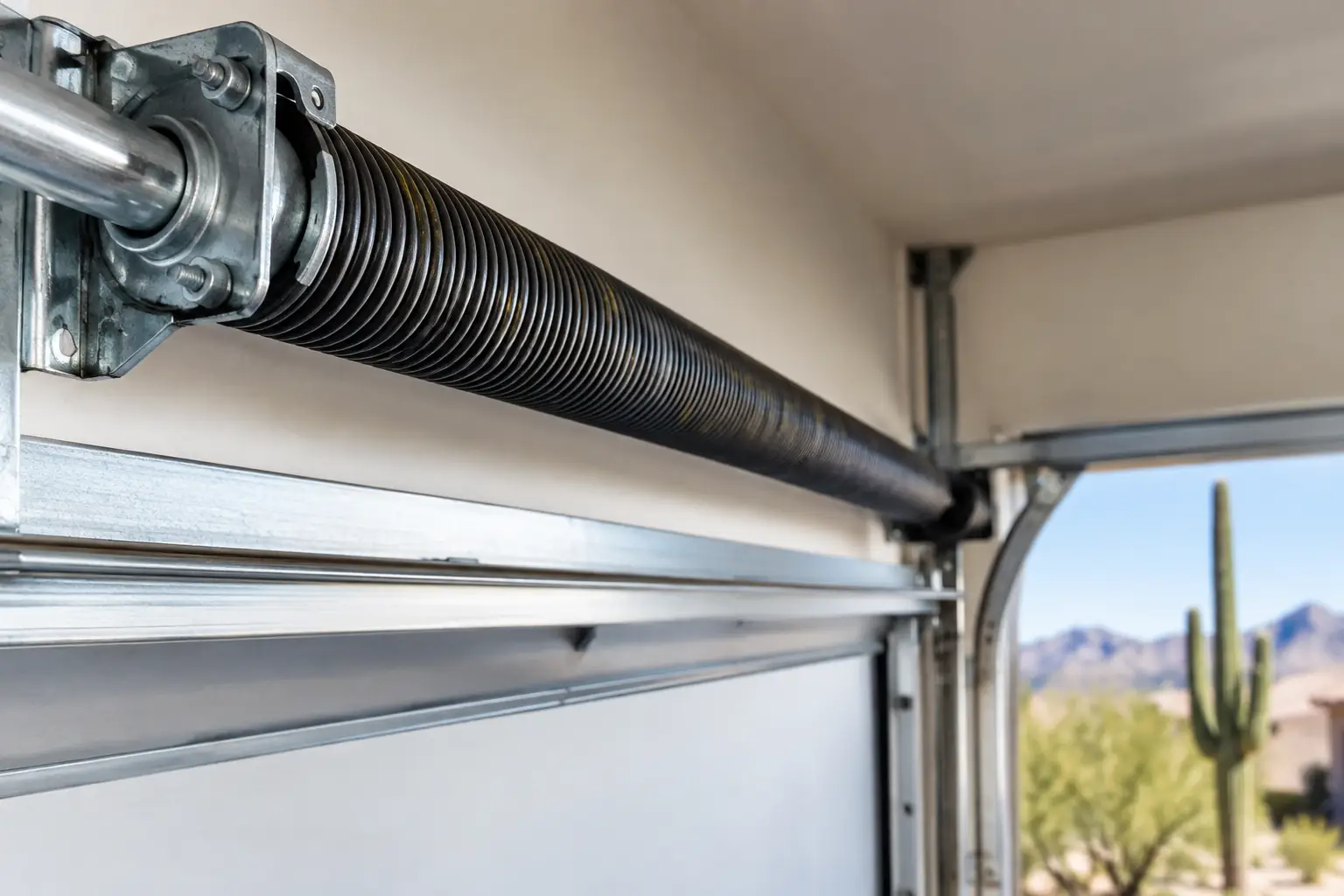
A garage door that suddenly feels too heavy, opens only a few inches, or slams shut is not having a minor off day. It may have a worn or broken spring. This garage door spring lifespan guide helps Arizona homeowners understand how long springs typically last, what shortens their life, and when it is time to call for a safe repair instead of forcing the door to work.
Garage door springs do the lifting. Your opener provides the movement, but the springs carry most of the door’s weight. When a spring reaches the end of its useful life, the issue can go from inconvenient to unsafe quickly. Knowing the warning signs early can spare you a stuck car, a damaged opener, and an urgent repair at the worst possible time.
How Long Do Garage Door Springs Last?
Most standard residential garage door springs are rated for about 10,000 cycles. One cycle is one complete opening and closing of the door. For a household that uses the garage door four times per day, that works out to roughly seven years. A door used twice daily may get closer to 12 to 14 years, while a busy family using it eight or more times a day can wear through standard springs in as little as three to five years.
That cycle rating is a useful estimate, not an expiration date. Springs can fail earlier due to corrosion, poor installation, lack of maintenance, or a door that is out of balance. They can also last longer when the system is correctly sized, maintained, and used under normal conditions.
High-cycle springs are available for many doors. Depending on the door’s size and weight, they may be rated for 20,000, 30,000, or more cycles. They usually cost more upfront, but they can be a smart value for homes where the garage is the main entrance or for small businesses with frequent daily traffic.
Garage Door Spring Lifespan Guide: What Changes It?
The calendar matters less than how hard the system works. A spring is under significant tension every time the door moves, and several conditions can speed up fatigue.
Daily use adds up faster than most homeowners expect
For many families, the garage is used for school drop-offs, work commutes, errands, dog walks, and evening activities. That can mean six to 10 cycles in a single day. If your garage is the household’s primary entry, it makes sense to consider high-cycle springs when replacement time comes.
Arizona heat can be tough on the whole system
Garage door springs are made of steel, but the rest of the system matters too. Extreme heat can dry out lubricants, affect rollers and bearings, and expose worn parts faster. Dust and debris can build up along tracks and moving components, adding resistance. Springs are not usually ruined by a hot afternoon alone, but Arizona conditions make regular inspection and lubrication more valuable.
An unbalanced door overworks springs and openers
A properly balanced garage door should stay roughly in place when lifted halfway by hand with the opener disconnected. If it crashes downward, shoots upward, or feels unusually heavy, the spring system may be improperly adjusted or nearing failure. Do not try to correct spring tension yourself. The test is useful as an observation, but adjustment is a professional repair.
A door that is out of balance also makes the opener work harder. That can lead homeowners to think they have an opener problem when the real issue is a tired spring or an incorrectly matched spring.
Rust, wear, and neglected moving parts matter
Surface rust can weaken a spring over time. Worn rollers, damaged cables, bent tracks, and failing bearings can make the door bind as it travels. More resistance means more strain across the entire system. Regular service catches those smaller issues before they turn into a broken-spring call.
Signs Your Garage Door Spring May Be Near the End
A broken torsion spring often makes a sharp bang that can be heard from inside the home. That sound is startling, but not every failing spring breaks without warning. Watch for changes in how the door moves and sounds.
If the door feels heavy when operated manually, opens unevenly, stops partway, or reverses without a clear obstruction, schedule an inspection. Gaps between coils on a torsion spring are another strong sign of a break. Extension springs, which run along the sides of the door, may stretch, sag, or show visible separation when worn.
You may also notice that the opener strains, hums, or lifts the door only a few inches before stopping. Avoid repeatedly pressing the wall button or remote. An opener is not designed to lift the full weight of a garage door without spring support, and continued use can burn out the motor or damage internal gears.
A crooked door is especially urgent. If one side rises while the other side remains low, a cable may be off or a spring-related component may have failed. Keep people and vehicles clear of the opening until a trained technician can inspect it.
Torsion Springs vs. Extension Springs
Torsion springs are mounted above the garage door opening on a metal shaft. They use torque to help lift the door and are common on newer residential doors. When properly installed, torsion systems tend to provide smooth, controlled operation and are often the preferred option for heavier doors.
Extension springs are mounted along the horizontal tracks on either side of the door. They stretch and contract as the door moves. These systems can work well, but safety cables are essential because an extension spring can become dangerous if it breaks and is not contained.
Neither system is a safe do-it-yourself repair. Springs are tightly wound or stretched under heavy force, and the tools and procedures must match the specific system. A wrong adjustment can cause serious injury or damage the door. Transparent advice is simple here: homeowners can observe symptoms and keep the area clear, but spring replacement belongs in professional hands.
Can You Make Garage Door Springs Last Longer?
You cannot stop metal fatigue forever, but a little attention can help you get the expected service life from your springs. Keep the tracks clear of leaves, dirt, and stored items, but do not apply grease to the tracks. Tracks need to stay clean so rollers can move properly.
Use a garage-door-safe lubricant on springs, rollers, hinges, and bearings as recommended by the product instructions. A light coating helps reduce friction and can limit corrosion. Avoid soaking components or using heavy grease that attracts dust.
It also helps to listen to the door once a month. Squeaking, scraping, popping, or jerky travel deserves attention before it develops into a breakdown. Check that photo-eye sensors are clean and aligned, and avoid hanging heavy objects from the door or using the door as a shortcut for storing equipment.
Most importantly, arrange a professional tune-up when the door starts acting differently or at least periodically for a heavily used door. A technician can inspect spring condition, cable wear, roller performance, hardware, opener force settings, and door balance in one visit. That is more than routine upkeep – it is a practical safety check for one of the largest moving objects in your home.
When Replacement Is the Better Choice
If one spring breaks on a two-spring torsion system, replacing both is often the sensible choice. The second spring has experienced the same number of cycles and may not be far behind. Replacing the pair can help restore even lifting force and reduce the chance of another service call soon after.
The right replacement is not always the cheapest spring available. Spring size, wire diameter, length, inside diameter, door weight, and drum configuration all affect safe operation. A spring that is too weak can leave the door heavy. One that is too strong can make the door difficult to close and strain other components. Accurate sizing protects the door, the opener, and the people who use them.
For homeowners in Gilbert, Mesa, Chandler, Queen Creek, and nearby East Valley communities, a fast inspection can take the guesswork out of a door that suddenly will not move. Riggs Rescue AZ can explain what failed, what needs attention now, and what can reasonably wait – with no surprises and a focus on getting your garage back to safe, dependable operation.
If your garage door is getting louder, heavier, or less predictable, do not wait for it to leave your car trapped inside. A timely check gives you options, keeps repair costs more manageable, and helps your door stay ready for the next busy morning.

Leave a Reply