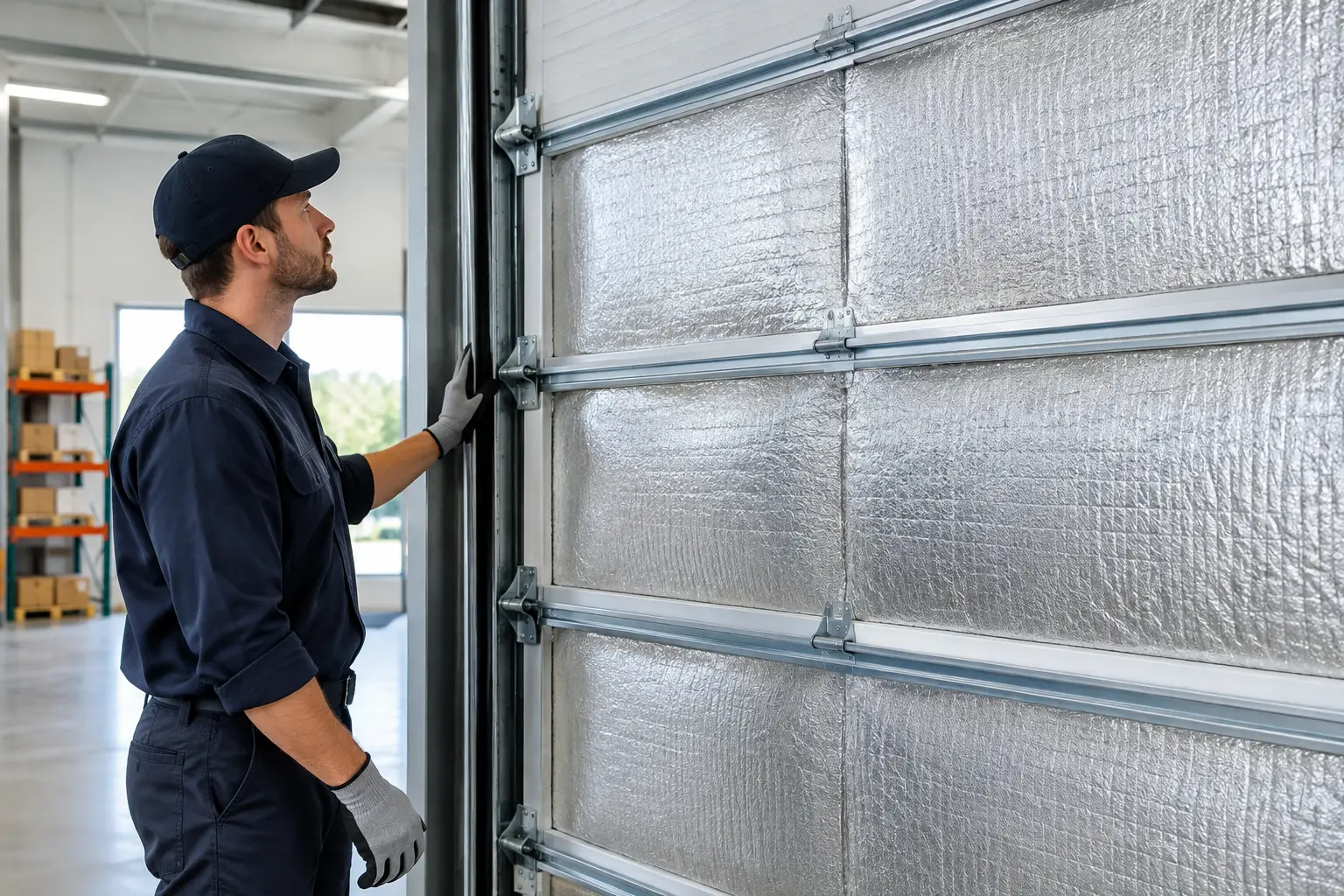
A commercial garage door can be one of the largest openings in your building, and in Arizona, it can also be one of the biggest sources of unwanted heat. Commercial garage door insulation helps reduce heat transfer through the door, making work areas more comfortable and helping protect temperature-sensitive inventory. But insulation is not an automatic upgrade for every property. The right choice depends on how the space is used, the condition of the door, and what problem you are trying to solve.
For a busy warehouse, auto shop, storage facility, or retail loading area, a better-insulated door can support a more reliable operation. It will not turn an open loading dock into a climate-controlled room, but it can make a meaningful difference when the door is closed and the building is working hard to stay cool.
What Commercial Garage Door Insulation Actually Does
Insulation slows the movement of heat through a garage door. During a Gilbert summer, that means less outdoor heat radiating through the door into your workspace. During cooler months, it helps retain conditioned air inside the building.
Most commercial insulated doors use polyurethane or polystyrene insulation between steel panels. Polyurethane is typically denser and offers a higher R-value in a thinner door. Polystyrene can be a practical, budget-friendly option for some applications, though it generally provides less insulating performance per inch.
The R-value measures resistance to heat flow. A higher number usually means better insulation, but it should not be the only number guiding your decision. A door with a strong R-value can still underperform if it has worn bottom seals, damaged side weatherstripping, gaps around the opening, or frequent cycling that leaves the door open for long periods.
Insulated construction can also make a door feel more solid. The added core helps reduce vibration and outside noise, which is useful when a work area sits near traffic, neighboring businesses, or active equipment.
When Insulation Is Worth the Investment
Commercial garage door insulation tends to make the most sense when the door separates your business from a conditioned or regularly occupied space. An automotive service bay with technicians working near the doors, for example, can be noticeably more comfortable with insulated doors and well-maintained seals. The same is true for workshops, production spaces, retail back rooms, and facilities storing items affected by extreme heat.
It can also be a smart choice for businesses that run air conditioning for much of the year. If your HVAC system is constantly compensating for heat coming through a large metal door, improving that door may help reduce the strain. Savings vary by building, equipment, usage, and local utility costs, so it is best to view insulation as part of an overall efficiency plan rather than a guaranteed utility-bill fix.
Inventory matters too. Electronics, certain tools, packaging materials, adhesives, food products, and other supplies may not perform well when exposed to sustained high temperatures. Insulation will not replace proper climate control where it is required, but it can help create a more stable environment when the door is closed.
There is also an employee comfort factor. A more manageable workspace can make a difference during long shifts, especially in areas where staff work close to the garage door. That practical benefit is often as valuable as the energy conversation.
When an Insulated Door May Not Be the Priority
Not every commercial property needs a high-R-value door. If your door stays open most of the business day for deliveries, loading, or vehicle traffic, insulation alone will have limited impact. In that situation, consider whether faster door operation, workflow changes, dock seals, strip curtains, or scheduled delivery windows would do more to control heat gain.
A detached storage building with no HVAC and no regular occupants may also not justify a premium insulated door. Basic security, door durability, and dependable operation could be more important than thermal performance.
The current condition of the system matters as well. If your existing door has damaged sections, failing rollers, loose hardware, or an unreliable operator, those issues should be addressed first. An insulated door that does not close correctly is not doing its job. Honest guidance means looking at the entire opening, not selling insulation as a one-size-fits-all answer.
Choosing the Right Insulated Commercial Door
The best door begins with how your business uses the opening. A light-duty commercial space may need a different setup than a high-cycle warehouse door or a fire-rated opening. Door size, wind-load requirements, security needs, daily cycles, and operator compatibility all affect the recommendation.
For many businesses, a sectional steel door with insulated panels offers a dependable balance of durability, appearance, and thermal performance. Steel stands up well to everyday commercial use, while insulated panel construction can improve comfort without requiring a complete change to your workflow.
If your operation includes heavy equipment, frequent deliveries, or multiple shifts, pay close attention to the door’s cycle rating and hardware. Springs, cables, rollers, tracks, and the commercial operator need to be matched to the weight and usage of the door. A door is only as dependable as the system moving it.
Weather seals deserve equal attention. The bottom seal, perimeter weatherstripping, and any gaps around the frame can undermine an otherwise well-insulated door. Replacing worn seals is often one of the most affordable ways to improve comfort, and it may be enough if the door itself is already in good condition.
Retrofit Insulation vs. Door Replacement
Adding insulation to an existing door can be tempting, especially when you are looking for a lower upfront cost. Retrofit kits may help in certain cases, but they are not always the best commercial solution. Extra weight can affect spring balance and operator performance, and some older doors are not designed to carry it.
A professionally built insulated door is engineered as a complete system. Its panels, reinforcement, hardware, and insulation work together. If your current door is aging, damaged, noisy, or difficult to operate, replacement can provide better long-term value than modifying a door that is already near the end of its useful life.
Before adding anything to a commercial door, have the balance, springs, tracks, and operator evaluated. This is especially important for high-lift, rolling steel, or high-cycle systems. Commercial garage doors carry serious weight, and adjustments should be handled by trained technicians.
Maintenance Protects the Benefits of Insulation
Even the right insulated door needs regular attention. Small gaps, bent tracks, damaged panels, and weak springs can create bigger operational problems if they are ignored. A door that binds or reverses may leave your building unsecured or interrupt a delivery at the worst possible time.
A practical maintenance visit should include inspection of the moving hardware, cables, rollers, hinges, tracks, springs, operator settings, safety devices, and weather seals. Lubrication and adjustments can help keep the door moving smoothly, while early repairs can help avoid a larger shutdown later.
Watch for warning signs such as daylight around the closed door, a sudden increase in outside noise, rattling during operation, uneven movement, slow response from the operator, or visible damage to the bottom seal. These do not always mean you need a new door, but they do mean the system deserves a closer look.
A Better Door Starts With the Right Questions
Before choosing commercial garage door insulation, ask what you want the door to improve. Is the work area too hot? Are employees uncomfortable near the opening? Is inventory exposed to heat? Is the existing door worn out, or are gaps around it the real issue? Clear answers help prevent overspending on features that will not solve the problem.
For business owners across the East Valley, the most cost-effective path is often a straightforward inspection and a recommendation based on how the building actually operates. Riggs Rescue AZ can help evaluate whether new insulated doors, replacement weather seals, repairs, or maintenance will make the biggest difference. A commercial door should protect your building, support your team, and keep your day moving without surprises.

Leave a Reply