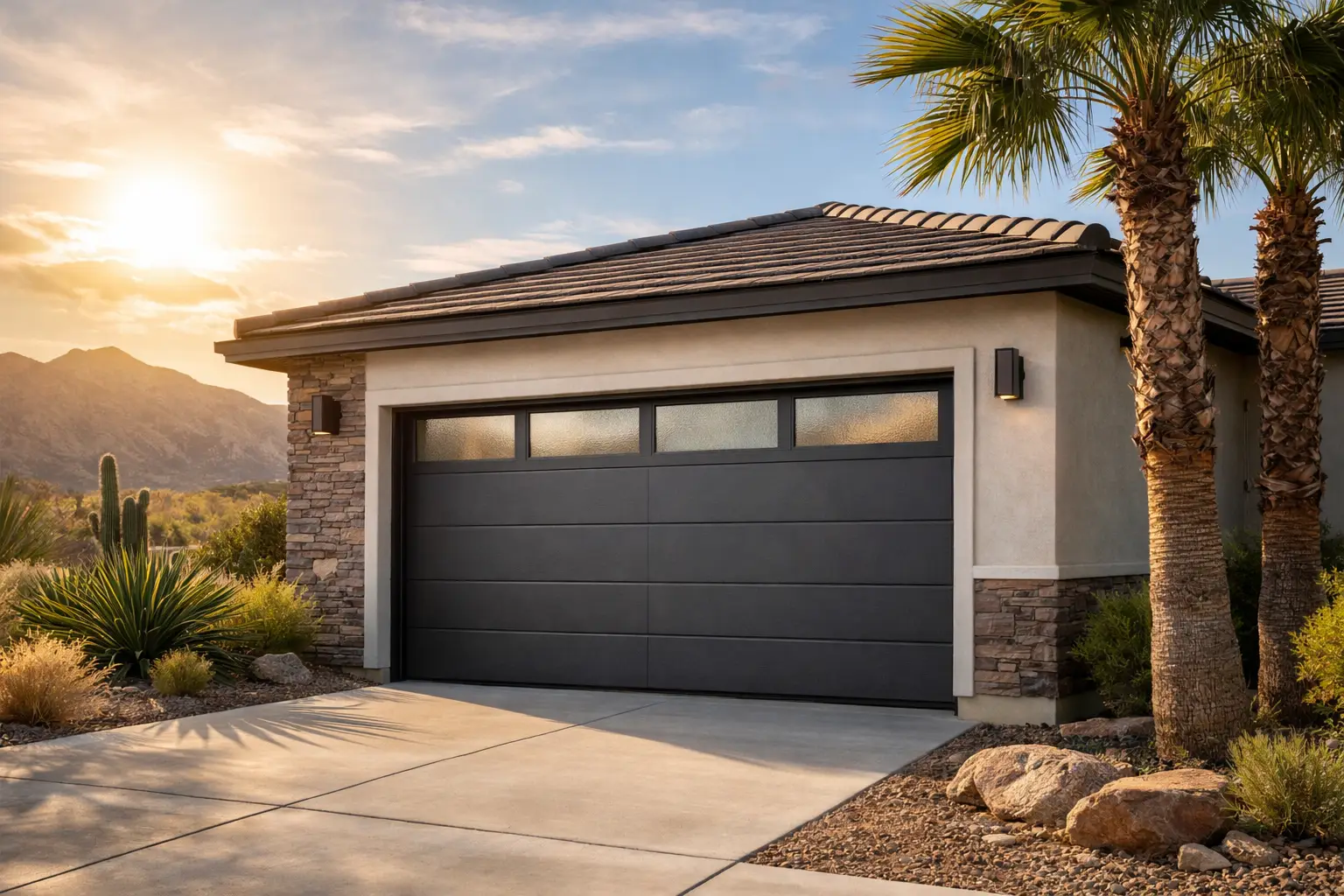
Step into an Arizona garage in July and you can feel the difference between a door that fights the heat and one that absorbs every bit of it. If you’re shopping for the best garage doors for hot climates, the right choice can make your garage more usable, protect what’s stored inside, and reduce strain on rooms next to the garage.
Hot weather is hard on garage doors. Constant sun exposure can fade finishes, warp lower-quality materials, dry out seals, and turn your garage into an oven by late afternoon. That means the best option is rarely just the cheapest door on the shelf. It needs to handle heat, sun, and daily use without becoming a maintenance problem a year later.
What makes garage doors perform better in extreme heat
In hot climates, three things matter most: material, insulation, and exterior finish. Material affects how well the door resists warping, cracking, denting, and sun damage. Insulation helps slow heat transfer into the garage. The finish and color determine how much solar heat the door absorbs throughout the day.
The tricky part is that no single garage door is perfect for every home or business. A detached garage has different needs than an attached garage. A west-facing door in full sun needs more protection than one shaded most of the day. If your garage is used as a workshop, gym, or storage area for temperature-sensitive items, investing in a better-performing door usually pays off faster.
Best garage doors for hot climates by material
Insulated steel garage doors
For most homeowners, insulated steel is the strongest all-around choice. Steel holds up well in intense heat, does not warp like wood, and comes in a wide range of styles and price points. When paired with quality insulation, it helps block a significant amount of heat from entering the garage.
This is often the sweet spot between durability, appearance, and cost. Steel doors can still get hot to the touch in direct sun, but insulation inside the door panels helps reduce how much of that heat transfers inward. If your priority is practical performance without overspending, insulated steel is hard to beat.
The trade-off is that thinner steel doors can dent more easily, especially in busy households or commercial settings. Not all steel doors are built the same, so gauge, insulation type, and panel construction matter.
Aluminum and glass garage doors
Aluminum doors are lightweight, rust-resistant, and a popular modern design option. In dry desert climates, aluminum can be a smart material because it resists corrosion and usually requires less upkeep than wood. But by itself, aluminum is not the best insulator.
If you’re considering an aluminum and glass door, be careful. These doors look sharp, but large glass sections can let in a lot of heat unless the glass is insulated or specially treated. For a climate like Arizona, this style works best when appearance is a top priority and the product is built with heat control in mind.
Faux wood composite doors
If you want the look of wood without the maintenance headaches, composite or faux wood doors are worth a close look. They can stand up better to sun exposure than real wood and usually require less refinishing over time. Many are built over an insulated core, which is helpful in hotter regions.
This option can be a good fit for homeowners who want strong curb appeal but do not want to deal with the cracking, fading, and upkeep that real wood often brings in extreme heat.
Real wood garage doors
Wood doors can be beautiful, but they are usually not the first recommendation for hot, sunny climates. Dry heat and direct sun can cause wood to dry out, fade, crack, or warp over time if it is not maintained carefully. That does not mean wood is always a bad choice. It means you should go in knowing it will likely need more attention and more money over its lifespan.
For most homeowners looking for long-term value and low stress, wood is more of a style-driven choice than a practical one.
Why insulation matters more than many people think
People often assume insulation only matters in cold weather. In Arizona, the opposite is just as true. An insulated garage door helps slow the movement of heat into your garage, especially during the hottest parts of the day.
That matters if your garage shares walls with your home, has a bedroom above it, or stores paint, tools, electronics, or anything sensitive to extreme temperatures. A well-insulated door can also help your garage door opener work under less strain, since intense heat can affect moving parts and electronics over time.
When comparing doors, ask about the insulation type and the R-value. Higher R-values generally mean better thermal resistance, but the best choice depends on your setup. A detached garage used only for parking may not need top-tier insulation. An attached garage with heavy sun exposure probably should not settle for a basic non-insulated door.
Color and finish can change how hot your garage gets
Color is not just a design decision in hot climates. Dark garage doors absorb more heat, especially on south- and west-facing homes. Lighter colors reflect more sunlight and usually stay cooler.
If you love a darker look, that does not automatically rule it out. It just means insulation and finish quality become even more important. Factory finishes designed for UV resistance tend to hold up better against fading, peeling, and surface breakdown.
This is one of those areas where appearance and performance need to be balanced. The best-looking door on day one is not always the one that still looks good after several Arizona summers.
Features that matter in hot climates
A garage door built for heat should have more than just the right material. Weather seals around the perimeter help reduce hot air and dust entering the garage. Quality bottom seals are especially important because desert heat often comes with blowing dirt and debris.
Heavy-duty hardware also matters. Rollers, hinges, tracks, and springs all deal with repeated expansion, contraction, and use in high temperatures. A door may look great, but if the hardware is low quality, you may end up dealing with noisy operation, premature wear, or repair calls sooner than expected.
If you have an automatic opener, make sure the opener and door are matched correctly. A heavier insulated door may need a stronger opener or upgraded components. That is not a reason to avoid insulation. It is simply something to plan for so the system works reliably.
The best garage doors for hot climates depend on how you use the space
If your garage is attached to your home and gets full afternoon sun, an insulated steel or insulated composite door is usually the most sensible option. It offers durability, better heat control, and lower maintenance.
If your garage is detached and mainly used for vehicle storage, you may be able to prioritize budget a little more, though insulation can still help. If your garage doubles as a workspace, home gym, or storage area, it makes sense to invest in a better-insulated door with strong seals and a UV-resistant finish.
For commercial properties, durability and cycle life become even more important. A small business with frequent daily door use needs something that can handle heat and repetition without constant downtime.
Don’t overlook installation quality
Even the best door can underperform if it is installed poorly. Gaps, uneven tracks, weak seals, and improper spring setup all affect how the door handles heat, dust, and daily operation. In a hot climate, those small issues tend to show up fast.
Professional installation also gives you a better chance of getting the door size, insulation level, and hardware package that actually fits your property. A good installer should explain your options clearly, point out trade-offs, and avoid pushing features you do not need.
That kind of honest guidance matters, especially when you want a door that lasts instead of one that just looks good for a few months. For homeowners and business owners around Gilbert, Mesa, and Chandler, choosing the right product upfront can save a lot of frustration later.
What we’d recommend for most Arizona properties
For most homes in hot, sunny areas, the safest recommendation is a double-layer or triple-layer insulated steel garage door in a lighter color with strong perimeter seals. It gives you the best mix of affordability, durability, and heat resistance.
If curb appeal is a big priority, an insulated faux wood composite door can be a strong upgrade. If you want a modern look, aluminum can work well, but be careful with large glass sections unless the door is designed to limit heat gain.
A garage door should make life easier, not add another problem to your to-do list. If you’re weighing options, focus less on showroom looks and more on how the door will perform after years of sun, heat, and daily use. That is usually where the right choice becomes clear.

Leave a Reply