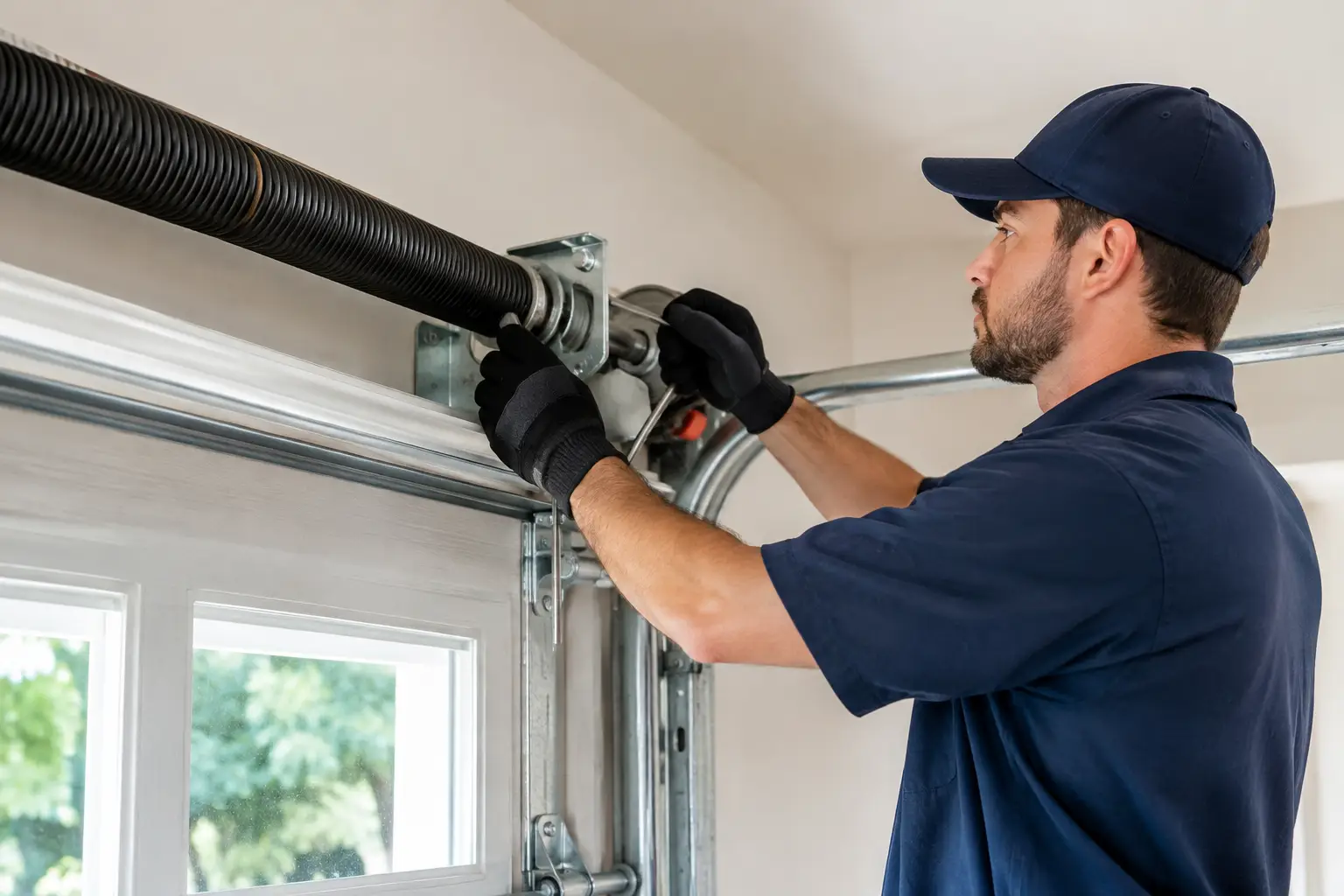
A garage door that suddenly feels too heavy to lift, opens only a few inches, or makes a sharp bang from the garage may have a broken spring. Garage door spring repair is one of those jobs that can look simple from the driveway but carries serious force and safety risks. The good news is that a trained technician can usually diagnose the problem quickly and give you clear options before any work begins.
For homeowners and business owners, the goal is not just getting the door moving again. It is getting it repaired safely, correctly, and at a fair price – without creating a bigger problem for the opener, tracks, cables, or people using the door.
What Garage Door Springs Actually Do
Your garage door springs do the heavy lifting. They counterbalance the door’s weight so you can open it by hand and so the opener does not have to strain every time it runs. Even a standard residential garage door can weigh a few hundred pounds, and insulated or custom doors may weigh more.
There are two common spring setups. Torsion springs sit on a metal shaft above the garage door opening. Extension springs run along the horizontal tracks on either side of the door. Both types are tightly wound or stretched under tension. When one breaks, the door may be difficult or impossible to open safely.
A spring is not there to make the door move faster. It is there to make the door feel balanced. That distinction matters because an opener can sometimes still move a door with a weak spring, but forcing it to do so can burn out the motor, damage internal gears, or cause the door to bind.
Signs You Need Spring Repair
Springs do not always fail without warning. Pay attention when the door starts behaving differently, especially if the change is sudden. A broken torsion spring often makes a loud pop or bang that can be heard inside the house. That sound comes from the steel spring releasing stored tension.
Other warning signs include a door that opens a few inches and stops, hangs unevenly, closes too quickly, or feels extremely heavy when you try to lift it manually. You may also see a visible gap in a torsion spring above the door. With extension springs, one side may look loose, stretched out, or disconnected.
Your opener may hum without lifting the door, reverse unexpectedly, or struggle more than usual. While those symptoms can also point to an opener, sensor, roller, or track issue, a failed spring is a common cause. A professional inspection keeps you from replacing the wrong part.
For commercial doors, spring trouble can look like slower operation, an uneven curtain or sectional door, unusual noise, or a door that will not stay open. Since a disabled commercial door can affect deliveries, security, and daily operations, fast service is especially valuable.
Why DIY Spring Repair Is Risky
There are many garage door maintenance tasks a homeowner can handle, such as keeping tracks clear, checking weatherstripping, and lubricating moving metal parts with a garage-door-rated lubricant. Replacing or adjusting springs is different.
Torsion springs are wound under significant tension. Incorrect tools, an unsecured winding bar, a loose set screw, or one wrong movement can cause a spring or tool to whip unexpectedly. Extension springs can also cause injury if they snap or are not properly contained. This is not a repair where a general household tool kit is enough.
There is also a fit issue. Garage door springs are selected based on door weight, height, track setup, drum size, and other measurements. Installing a spring that is too strong or too weak can leave the door unbalanced. The door may slam, fail to stay open, or put unnecessary stress on the opener.
If you suspect a broken spring, do not keep pressing the wall button or remote in hopes the opener will push through it. Avoid pulling the emergency release unless you understand that the door may become very heavy and difficult to control. Keep children, pets, and vehicles clear of the door until it has been inspected.
What Professional Spring Repair Includes
A proper spring repair starts with more than swapping out a broken part. A technician should confirm the cause of the failure, identify the correct spring size, and inspect the rest of the system for damage or wear.
During a typical service visit, the technician will safely secure the door, remove the damaged spring, install a correctly matched replacement, and set the proper tension. They should then test the balance, travel, cables, drums, rollers, bearings, tracks, and opener operation. A balanced door should move smoothly and stay near the halfway point when disconnected from the opener and carefully tested by a trained professional.
In many cases, replacing both springs is the practical choice when a door has a pair. Springs installed at the same time generally have similar cycle life, so if one has broken, the other may not be far behind. Replacing both can help avoid another service call soon after. Still, the right recommendation depends on the condition of the remaining spring, the door’s use, and your budget. Honest service means explaining the trade-off instead of pushing a replacement you do not need.
How Long Do Garage Door Springs Last?
Most standard residential springs are rated by cycles, not years. One cycle is one complete opening and closing of the garage door. A commonly installed spring may be rated for about 10,000 cycles, which can mean several years for a lightly used door or much less for a busy family garage.
If your garage door is the main entrance to the home, it may run several times a day. Families with multiple drivers, deliveries, pets, or frequent errands can use up spring cycles faster than they realize. Heat, corrosion, poor balance, and lack of maintenance can also shorten a spring’s service life.
Higher-cycle springs can be worth considering for doors that see heavy daily use. They may cost more upfront, but they can reduce the frequency of future spring replacement. For a rental property, an active household, or a small business, that added lifespan may be a smart value. A technician can explain whether the upgrade makes sense for your specific door.
Can Maintenance Prevent a Broken Spring?
No maintenance plan can make a steel spring last forever, but regular checks can help you spot related issues early. A door that is out of balance makes springs and openers work harder. Dry rollers, worn bearings, loose hardware, and bent tracks can also make the system less efficient.
Once or twice a year, watch the door as it opens and closes. Listen for grinding, squealing, or jerky movement. Check that the photo-eye sensors are aligned and that the door reverses when it meets an obstruction. Do not touch, loosen, or adjust springs, cables, bottom brackets, or hardware marked with warning labels.
A professional tune-up is a good time to catch wear before it turns into a no-access emergency. For homeowners in Gilbert, Chandler, Mesa, Queen Creek, and nearby East Valley communities, the intense Arizona heat also makes routine checks worthwhile. Heat does not directly cause every spring break, but it can contribute to wear across the door system, including rollers, weather seals, and lubrication.
What to Do When a Spring Breaks
If the door is closed, leave it closed if possible. Do not park under it, walk beneath it, or try to force it up with the opener. If your car is trapped inside, explain that when you schedule service so the technician can prioritize safe access options.
If the door is stuck open, keep the area clear and avoid leaving the property unsecured. Do not attempt to pull the door down by yourself unless a qualified professional has instructed you to do so. An unbalanced door can drop quickly.
When you call for service, share what you noticed: the loud bang, visible gap in the spring, door position, opener behavior, and whether a vehicle is inside. Clear information helps the repair team arrive prepared. Riggs Rescue AZ focuses on fast, reliable garage door help with straightforward recommendations, so you know what needs attention and why.
A broken spring can disrupt your entire day, but it does not have to turn into a stressful guessing game. Keep the door secured, avoid the temptation to force it, and let a qualified local technician restore safe, smooth operation so you can get back to using your garage with confidence.

Leave a Reply