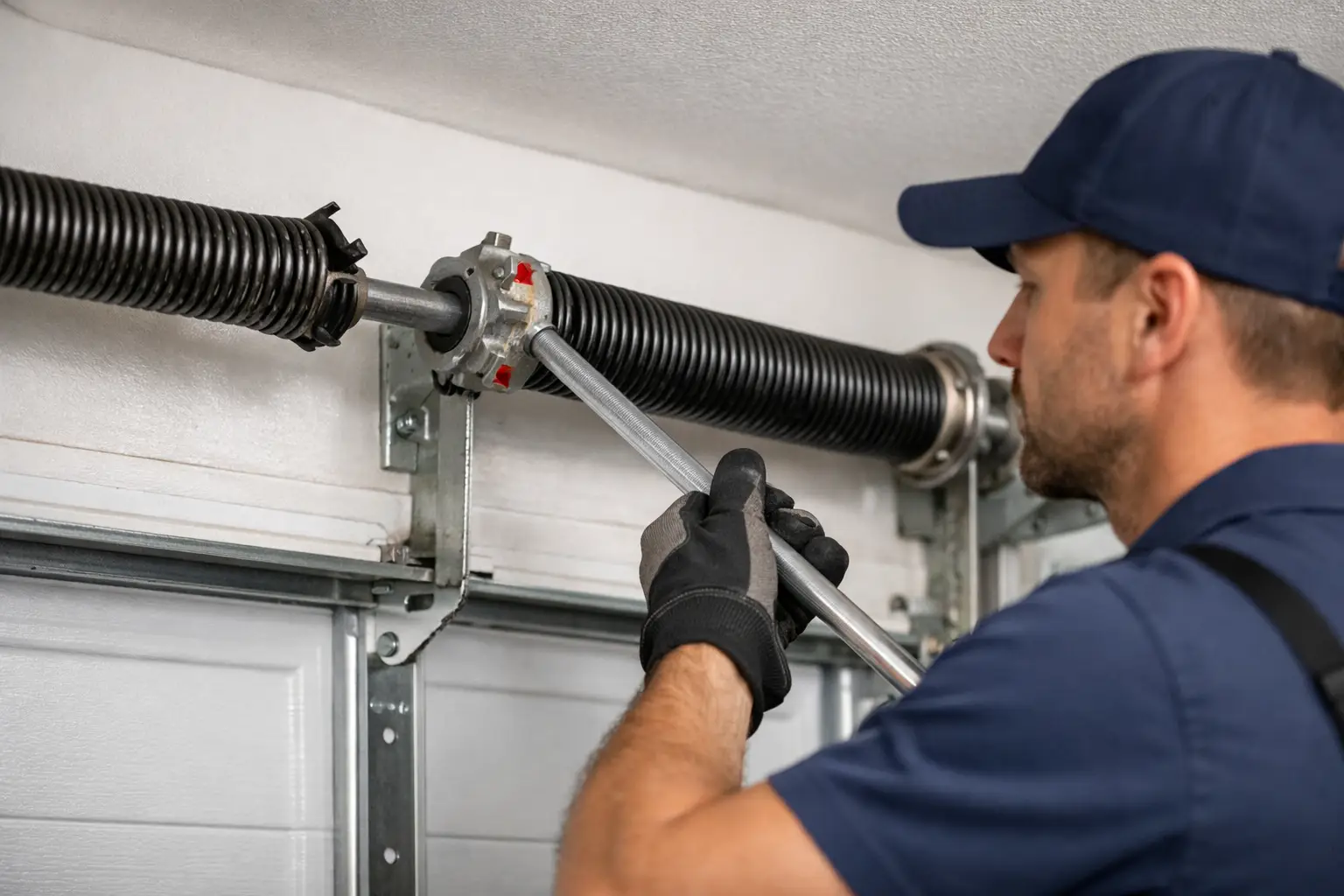
A garage door that suddenly will not open is often more than an inconvenience. If the opener hums, the door lifts only a few inches, or you hear a sharp bang from the garage, a broken spring may be the reason. This garage door spring replacement example shows what a typical service call looks like, what a qualified technician checks, and why spring work is not a repair to gamble on.
For homeowners in Gilbert and across the East Valley, the goal is simple: get the door working safely again without surprise recommendations or confusing technical talk. The right repair starts with an honest inspection, not a guess.
A Garage Door Spring Replacement Example From Start to Finish
Imagine a homeowner leaves for work one morning and finds that the garage door will not rise. The wall button activates the opener, but the door moves an inch or two before stopping. Looking up, they notice a visible gap in one of the springs above the door.
That gap is a common sign of a broken torsion spring. Torsion springs are mounted on a metal shaft above the garage door opening. They store energy while the door closes, then release that energy to help lift the weight of the door. When a spring breaks, the opener is suddenly trying to move a very heavy door with little or no counterbalance.
At the appointment, a technician first disconnects the opener and confirms whether the door can be moved by hand. They inspect the spring system, cables, drums, bearings, center bracket, tracks, rollers, and bottom brackets. This matters because a broken spring can be the obvious problem while worn cables or damaged hardware may be contributing to unsafe operation.
In this example, the door uses two torsion springs. One is broken, and the second has reached a similar point in its life cycle. Since both springs have worked through the same number of door cycles, replacing them together is usually the practical choice. Replacing only the broken one may cost less today, but the older matching spring could fail soon after, leading to another service call and another interruption.
The technician measures the existing springs and door weight to select properly rated replacements. Spring size is not based on a quick visual estimate. Wire diameter, inside diameter, length, winding direction, and the door’s actual weight all affect the correct setup. A spring that is too weak can leave the door heavy and strain the opener. One that is too strong can cause the door to rise unexpectedly or fail to close correctly.
Once the correct springs are installed, the technician sets the tension, reconnects the system, and checks door balance. A properly balanced door should stay near the halfway point when operated manually, rather than slamming down or shooting upward. The opener’s force settings and safety reversal system should also be tested before the job is finished.
Why Spring Replacement Is a Safety Job
Garage door springs are under extreme tension. That tension is what allows a 150-pound or 300-pound door to feel manageable when lifted by hand. It is also why a slipping tool, incorrect winding procedure, or damaged component can cause serious injury.
Online videos can make this work look straightforward, but they cannot evaluate the condition of your specific door, the correct spring rating, or whether related hardware is safe to reuse. Extension springs, which run along the horizontal tracks, have different risks and should have safety cables in place. Torsion springs require specialized winding bars and precise handling.
A homeowner can safely observe warning signs, keep people clear of the door, and arrange service. The repair itself is best left to a trained professional with the right tools and experience. Do not try to force the door open with the opener after a spring breaks. That can burn out the opener motor, damage gears, bend the top section, or pull cables off the drums.
What Affects the Cost of Spring Replacement?
There is no one-price answer because garage doors and spring systems vary. A transparent estimate should explain what is being replaced and why. In most cases, pricing is affected by the type of spring system, whether one or two springs are needed, the size and weight of the door, spring cycle rating, and the condition of surrounding hardware.
Standard springs are designed for a certain number of open-and-close cycles. A higher-cycle spring may cost more upfront but can make sense for a busy household where the garage is the primary entrance. A family that opens the door eight or ten times per day puts very different wear on a spring than a household that uses it twice daily.
The door itself also matters. An insulated steel door, a custom wood door, or an oversized commercial-style residential door may require heavier-duty springs. If cables are frayed, rollers are failing, or the shaft is worn, a technician may recommend additional repairs. Those recommendations should be specific, easy to understand, and tied directly to safety or reliable operation – not vague add-ons.
Signs Your Garage Door Spring May Be Failing
Springs do not always break without warning. A door may begin to feel heavier, move unevenly, or make more noise than usual. The opener may struggle, the door may not open fully, or it may close with a hard impact. A visible gap in a torsion spring is one of the clearest signs of failure.
You may also notice loose or hanging cables. While cables do not always mean the spring is broken, they are a reason to stop using the door until it can be inspected. Do not touch the cables, bottom brackets, or springs. Those parts are connected to the door’s lifting system and can move suddenly under tension.
If the door is stuck closed, use another entrance to the home rather than forcing it. If it is stuck open, keep vehicles, children, and pets away from the opening and schedule service as quickly as possible. A door that cannot close affects both security and weather protection.
Should You Replace One Spring or Both?
For a two-spring torsion system, replacing both is often the better long-term decision. The springs were installed at the same time and have carried the same workload. When one breaks, the other is commonly near the end of its service life.
There are exceptions. If one spring was replaced recently and the other was not, or if the system uses mismatched springs for a particular door design, a technician may recommend a different approach. The point is not to sell more parts. It is to match the repair to the door’s condition, usage, and safe operating needs.
A reliable technician should explain the options clearly: replace the failed spring only, replace the pair, or upgrade to higher-cycle springs if your household uses the door frequently. You should know the trade-off between immediate cost and avoiding another likely breakdown before any work begins.
Protecting Your New Springs
Spring life depends mostly on use, but regular garage door maintenance can prevent avoidable stress on the system. Keep tracks clear, listen for new grinding or squealing sounds, and have the door checked if it becomes uneven or difficult to operate. Springs should not be coated with heavy grease, but other moving components may need the appropriate lubrication as part of professional maintenance.
Balance is especially important. When a door is out of balance, the opener has to work harder every time it runs. That extra load can shorten the life of the opener, cables, rollers, and springs. A quick check-up can catch small issues before they turn into a door that will not open on a busy morning.
Riggs Rescue AZ provides clear, local help for garage door spring problems, with a focus on fast response, honest guidance, and repairs that make sense for your home. If your door is heavy, stuck, noisy, or showing a broken spring, treat it as a safety concern and get it inspected. A properly balanced garage door should feel dependable every time you press the button.

Leave a Reply