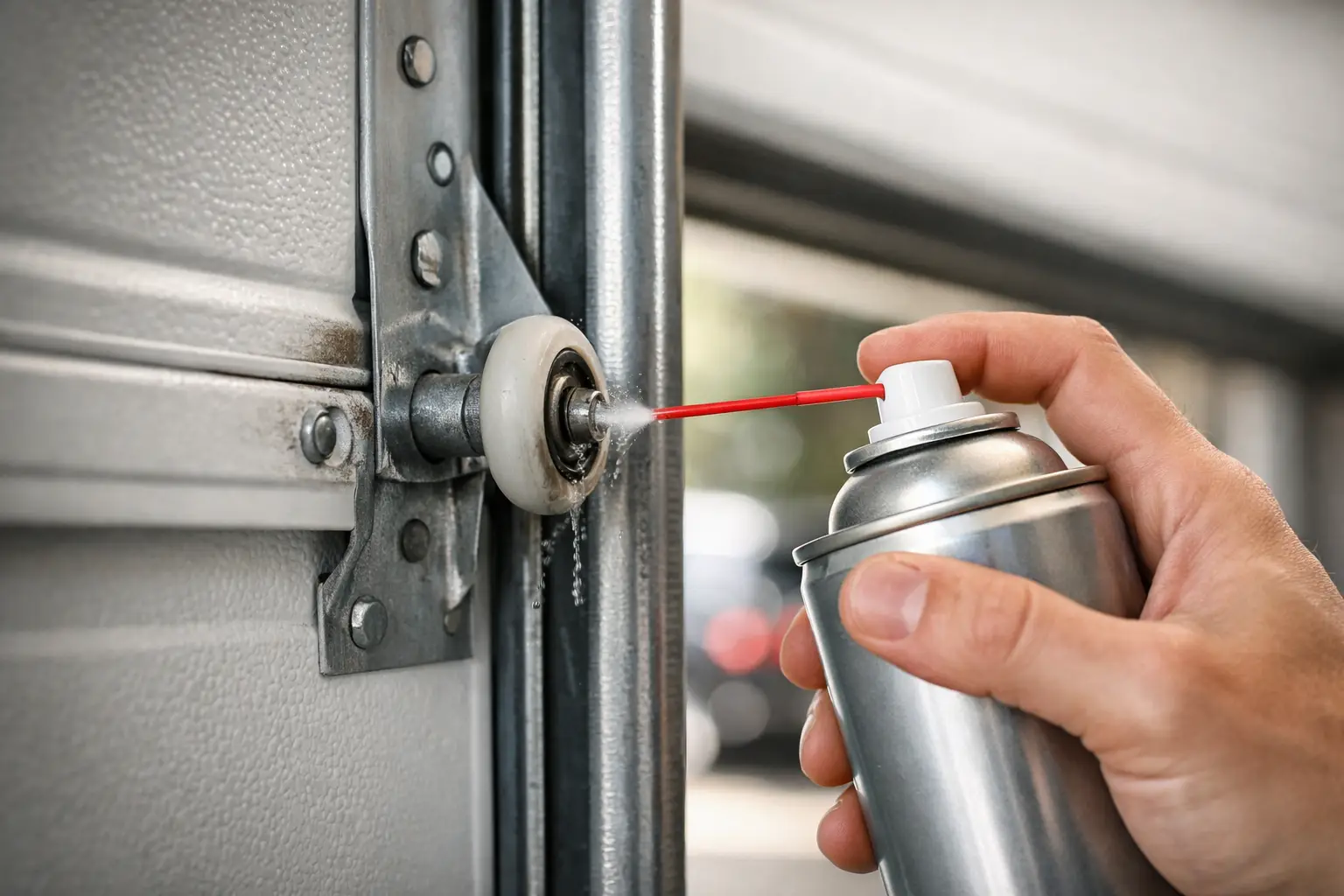
That grinding, squeaking sound from the garage usually starts small, then gets louder fast. If you are wondering how to lubricate garage door rollers, the good news is that this is one of the simplest maintenance jobs you can do to help your door run quieter and last longer.
The key is doing the right maintenance in the right places. A little lubricant can reduce friction, cut down on wear, and help rollers move smoothly through the tracks. Too much lubricant, or the wrong kind, can make a mess and attract dirt that creates more problems than it solves.
Why garage door roller lubrication matters
Garage door rollers do a lot of work every day. Every time the door opens or closes, the rollers guide that weight through the track while dealing with vibration, dust, heat, and general wear.
When rollers dry out, they can start squealing, chattering, or dragging. That extra friction does not just create noise. It can also put more stress on the opener, strain other moving parts, and wear down the roller bearings sooner. In Arizona, dry conditions and blowing dust can make that wear show up faster.
Lubrication helps, but it is not a fix for every roller problem. If a roller is cracked, bent, badly worn, or wobbling on the stem, lubricant will not repair it. In that case, replacement is the safer move.
What kind of lubricant to use
Before getting into how to lubricate garage door rollers, it helps to know what belongs on a garage door and what does not.
A garage-door-specific spray lubricant or a silicone-based lubricant is usually the best choice. These products are designed to reduce friction without turning into a sticky grime magnet. A lithium-based spray can also work well on metal moving parts, depending on the product label.
What you want to avoid is standard grease for this job and household products that are not made for garage doors. Heavy grease can collect dust and debris. WD-40 is a common mistake. It is better known as a cleaner and water displacer than a long-term lubricant for rollers.
How to lubricate garage door rollers safely
This is a quick job, but safety comes first. A garage door has a lot of tension in its system, especially around the springs. Lubricating rollers is a DIY-friendly task. Adjusting or removing spring components is not.
Step 1: Close the garage door
Start with the door in the fully closed position. This gives you better stability and easier access to most roller stems and bearings.
If your opener has been running rough, unplug it or disconnect power before you begin. You do not want the door moving while your hands are near the tracks and rollers.
Step 2: Inspect the rollers before spraying anything
Look closely at each roller on both sides of the door. You are checking for chips, cracks, flat spots, rust, looseness, or rollers that do not spin freely.
If you have nylon rollers, pay attention to whether they have exposed bearings. Some nylon rollers are quieter than steel, but they can still wear out. If the wheel itself looks damaged, lubrication is not enough.
Step 3: Apply lubricant to the roller bearings
This is the part many people miss. You do not need to soak the whole wheel or flood the track. The focus should be on the bearings, where the roller stem meets the wheel.
Spray a small amount directly on the bearings of each roller. If the roller has visible ball bearings, aim there. Then move to the next one and repeat on both sides of the door.
For nylon rollers, avoid spraying lubricant all over the nylon wheel unless the manufacturer specifically recommends it. The bearing area matters more than the outer wheel.
Step 4: Open and close the door to spread the lubricant
Once all rollers are treated, manually lift and lower the door a few times if it is safe to do so, or reconnect the opener and run a full cycle. This helps distribute the lubricant through the moving parts.
Listen as it moves. In many cases, the door should sound noticeably quieter right away. If you still hear scraping or popping, there may be another issue beyond dry rollers.
Step 5: Wipe away excess
If lubricant drips or builds up, wipe it off with a clean rag. A light application is better than an overdone one.
Too much product can collect dirt over time, especially in dusty areas. That dirt can end up working against the smooth motion you were trying to create.
Where not to put lubricant
One of the biggest mistakes in garage door maintenance is spraying everything in sight. More is not better here.
Do not lubricate the tracks themselves. The rollers are supposed to roll along the track, not slide through a greasy channel. Spraying the tracks can attract dust and grime and make operation worse.
You also want to stay away from the torsion spring and any parts you are not comfortable identifying. Some metal components may benefit from lubrication, but if you are unsure what you are looking at, it is better not to guess.
How often should you lubricate garage door rollers?
For most homes, about twice a year is a good starting point. If your garage door gets heavy daily use, or if you notice noise returning sooner, you may need to check it more often.
In dry, dusty conditions, regular inspection matters just as much as a set schedule. A quick look and listen every few months can help you catch wear before it turns into a repair call.
If the door suddenly gets much louder, jerks while moving, or feels uneven, do not just keep adding lubricant. That usually means something else needs attention.
Signs the rollers need more than lubrication
Knowing how to lubricate garage door rollers is useful, but it is just as important to know when not to force a DIY fix.
If the door shakes during travel, a roller comes off line, or one side seems to lag behind the other, there could be a bigger hardware issue. Worn hinges, bent track sections, failing bearings, or balance problems can all create similar symptoms.
A door that sticks halfway, reverses unexpectedly, or puts extra strain on the opener should be checked professionally. The same goes for visible damage near springs or cables. Those are not parts to troubleshoot casually.
A few practical tips for better results
Less spray is usually better than more. You want enough to coat the moving bearing surfaces, not enough to drip across the entire assembly.
Use a product with a narrow straw applicator if possible. It gives you better control and helps keep lubricant off surfaces that do not need it.
And if your door has older metal rollers and still sounds rough even after lubrication, that could be a sign it is time for an upgrade. Nylon rollers are often quieter and smoother, though the right choice depends on the door weight and hardware setup.
When it makes sense to call a pro
Routine lubrication is a smart homeowner task. But if the rollers are worn, the tracks are bent, or the door is making more than simple squeaks, having it inspected can save money in the long run.
A service visit can identify whether the noise is really from the rollers or from hinges, bearings, springs, or opener strain. That matters because replacing the wrong part does not solve the problem. It just delays it.
For homeowners who want fast, reliable, and affordable help without the runaround, this is the kind of issue a local garage door company can usually sort out quickly. If your door is noisy, shaky, or overdue for maintenance, Riggs Rescue AZ has you covered with honest recommendations and no surprises.
A quiet garage door is not just nicer to live with. It is often a sign that the whole system is moving the way it should, and that is worth staying ahead of.

Leave a Reply