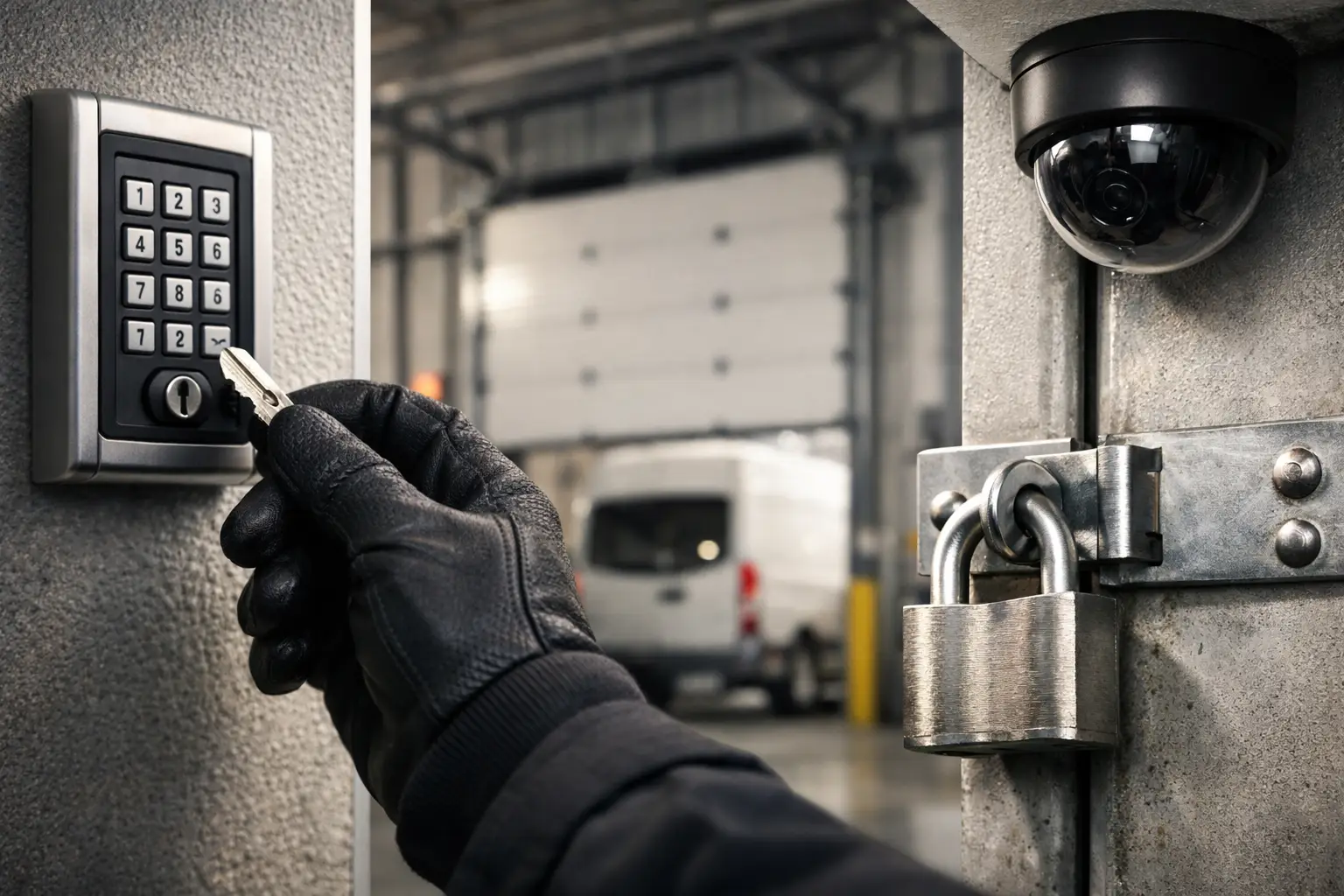
A commercial garage door can be the weakest point in your building security if it is treated like just another entry. For many shops, warehouses, service bays, and storage spaces, it is actually the largest moving access point on the property. If you are wondering how to secure commercial garage doors, the answer is not one product or one quick fix. It is a combination of the right door, the right hardware, smart access control, and consistent maintenance.
That matters even more for small businesses that cannot afford downtime, stolen inventory, or a door that fails at the worst possible time. A break-in is expensive, but so is a jammed commercial door that keeps your crew from opening on schedule. Good security protects both.
How to secure commercial garage doors starts with the door itself
Before you add cameras, alarms, or keypad systems, look at the condition and type of door you already have. If the door panels are bent, the bottom seal is missing, the track is loose, or the locking points do not line up correctly, your security plan is already compromised.
Older commercial doors often have wear that is easy to miss during daily use. A door may still open and close, but if it can be pried up from the bottom or flexed at a damaged panel, it becomes a much easier target. Steel rolling doors, sectional overhead doors, and insulated commercial doors all have different strengths, and the best setup depends on how the building is used.
A high-traffic auto shop has different needs than a storage unit, a warehouse, or a retail back-of-house loading area. In some cases, upgrading the door is more cost-effective than adding layers of security to a system that is already worn out.
Match the door to the risk level
If your building stores tools, vehicles, equipment, or expensive inventory, lightweight material and aging hardware may not be enough. Heavier-gauge steel doors, reinforced struts, tamper-resistant brackets, and commercial-grade track systems provide better resistance than entry-level setups.
That does not mean every business needs the heaviest door available. More security usually brings a higher upfront cost, and some operations need speed, visibility, insulation, or ventilation just as much as they need forced-entry resistance. The goal is to choose a door system that fits your actual operation, not just the cheapest option on the estimate.
Secure the opener and access points
Many commercial break-ins do not start with someone smashing through the center of the door. They happen because the opener, remote system, keypad, or side entry access is easy to exploit. If your opener is outdated or your staff shares one code with everyone, the problem is bigger than the door itself.
Commercial openers should be designed for heavier cycles and integrated with controlled access. Basic consumer-style setups are not a good fit for busy businesses. They wear out faster, offer fewer security features, and can create reliability issues that show up as both safety and security problems.
Use modern access control
A keypad with a code that never changes is convenient, but it is not strong security. If employees come and go, vendors need occasional access, or staff turnover is common, you need better control. Commercial access systems can allow unique codes, scheduled access windows, and audit trails that show who opened the door and when.
For some businesses, a keypad is enough if the code is changed regularly and managed well. For others, key cards, mobile credentials, or integrated access systems make more sense. It depends on how many users need entry, how often schedules change, and how sensitive the contents of the building are.
Protect remotes and wall controls
Remotes left in company vehicles, taped above visors, or handed out casually create unnecessary risk. Wall stations inside the building should also be placed where visitors or unauthorized staff cannot reach them easily. If a remote is lost or an employee leaves, access should be removed immediately.
This is where a lot of businesses get tripped up. They invest in a solid door, then leave everyday access management loose and informal. Strong hardware cannot fix weak habits.
Add physical security that slows forced entry
If someone targets your building after hours, time matters. The longer it takes to force the door, the more likely they are to give up or get noticed. That is why physical reinforcement still matters, even with alarms and cameras.
Slide locks, interior bar locks, commercial-grade hasps, and reinforced bottom bars can all improve resistance when used correctly. Some properties also benefit from bollards or barriers in front of vulnerable doors to prevent vehicle impact attacks. If the door is not used overnight, interior locking methods can add another layer of protection beyond the opener alone.
The trade-off is convenience. Extra locking hardware can slow down morning opening routines, and if staff is not trained to use it consistently, it becomes one more security step that gets skipped. The best setup is one your team will actually use every day.
Maintenance is part of security, not a separate issue
One of the biggest mistakes business owners make is separating security from maintenance. In reality, worn rollers, loose hinges, misaligned tracks, frayed cables, and failing springs all affect how secure a commercial garage door really is.
A door that does not close fully leaves gaps. A misaligned track can keep the locking system from engaging properly. A failing opener may reverse unexpectedly or stop short of a full close. These may look like service issues, but they also create easy opportunities for intrusion.
Inspect the weak points regularly
At a minimum, commercial property managers should keep an eye on the bottom seal, side gaps, lock engagement, opener response, photo eyes, track alignment, and door balance. If the door looks crooked, sounds louder than usual, jerks during travel, or leaves visible daylight around the edges, it needs attention.
Arizona heat can make this worse. High temperatures, dust, and heavy use can wear components faster, especially on doors that cycle throughout the day. Staying ahead of repairs is usually cheaper than dealing with a full failure after hours.
How to secure commercial garage doors with better daily routines
Even a well-installed commercial door can become a problem if the people using it are inconsistent. Security often breaks down in the routine moments, not the dramatic ones.
Train staff to fully close the door every time, even during short gaps between deliveries or service calls. Make sure supervisors know who has access, when codes were last updated, and what the lockup procedure is at the end of the day. If your team props doors open for convenience, leaves remotes in plain sight, or ignores unusual noises, small habits can turn into expensive problems.
It also helps to assign ownership. When everyone assumes someone else is checking the door, nobody really is. One clear person or role should be responsible for access reviews, code changes, and service scheduling.
Use security systems that support the door
Cameras, motion lighting, and alarms work best when they support a physically sound door system. They are not replacements for it. A camera may record a break-in, but it will not stop a weak bottom bar from being forced up.
That said, smart monitoring has real value. Exterior lighting reduces concealment. Camera coverage at the garage door and approach path improves visibility. Contact sensors can alert you if the door opens after hours, and some systems can notify managers when the door has been left open too long.
For higher-risk sites, integrating the garage door with the broader alarm or access control system is often worth it. For smaller operations, even a basic setup with motion lighting and after-hours alerts can be a meaningful upgrade.
When repair is enough and when replacement makes more sense
Not every security concern means you need a brand-new commercial door. Sometimes replacing worn locks, upgrading the opener, reinforcing the track, or fixing alignment issues will solve the problem. In other cases, repeated breakdowns and outdated components make continued repair the more expensive path.
A good service provider should be honest about that difference. If the structure of the door is still sound, targeted upgrades may give you years of better performance. If the system is patched together, unreliable, and difficult to secure, replacement may save money and stress over time.
That is especially true for growing businesses. If your current door was installed for lighter use than you have now, security and performance usually decline together. Upgrading to a true commercial-grade system can improve both.
For business owners in Gilbert, Chandler, Mesa, and nearby areas, local service matters here. When a commercial garage door will not close or a security issue needs fast attention, waiting days is not a realistic option. Companies like Riggs Rescue AZ understand that the job is not just fixing a door. It is helping you protect your building, your schedule, and the people who rely on both.
The best security plan is the one that fits your building, your hours, and your day-to-day reality. Start with the door, tighten up access, stay on top of maintenance, and do not wait for a failure to tell you where the weak spot is.

Leave a Reply