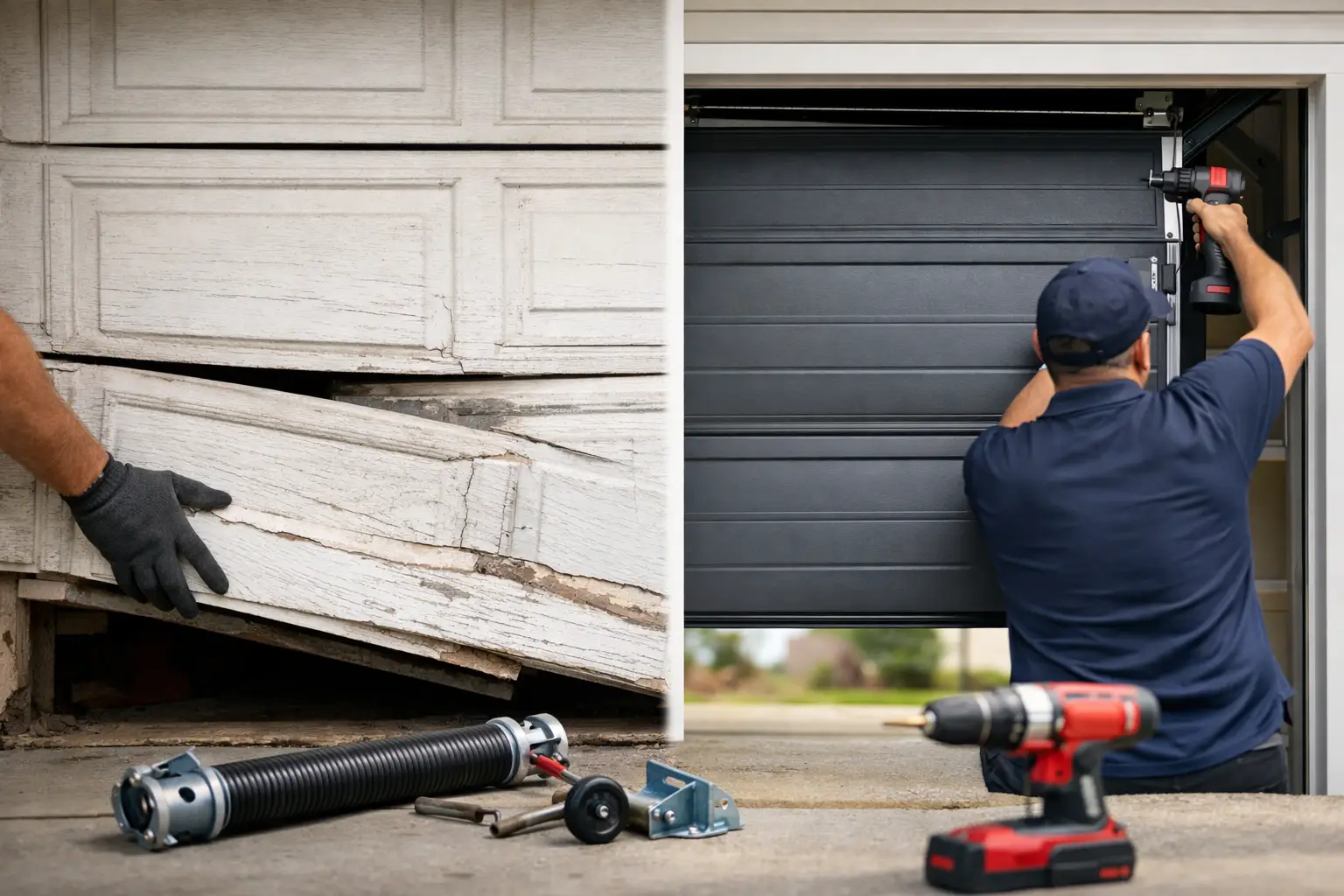
A garage door usually gives you plenty of warning before it quits for good. It may get louder every month, start shaking on the way up, reverse for no clear reason, or leave you wondering if the next repair bill is worth it. If you are asking when should a garage door be replaced, the real answer is not based on age alone. It comes down to safety, reliability, repair history, and whether the door is still doing its job without becoming a constant problem.
For some homeowners, replacement is the smart move after one major failure. For others, a solid door with a minor issue still has years left. The key is knowing the difference between a fixable problem and a door that is costing you more money, more stress, and more risk than it should.
When should a garage door be replaced instead of repaired?
A repair makes sense when the issue is isolated and the rest of the system is in good shape. A broken spring, worn rollers, misaligned sensors, or an opener issue can often be handled without replacing the full door. But when several parts are failing at once, or the door itself is damaged, replacement starts to look a lot more practical.
A good rule of thumb is this: if the door has recurring problems, visible structural damage, outdated safety features, or repair costs that keep stacking up, it is time to seriously consider replacement. The same goes for doors that no longer seal properly, leave your garage exposed to heat and dust, or put strain on the opener because they are no longer balanced.
In Arizona, heat can speed up wear on weather seals, finishes, hardware, and moving parts. That does not mean every older garage door needs to be replaced right away, but it does mean small issues can turn into bigger ones faster if they are ignored.
Clear signs your garage door may need replacement
Some garage doors fail all at once. Most do not. Most become unreliable in ways that are easy to brush off until the problem gets expensive or unsafe.
The door is cracked, bent, warped, or sagging
Cosmetic damage is one thing. Structural damage is another. If sections are bent, panels are separating, the bottom is rotting, or the door looks uneven when closed, replacement is often the safer option. A damaged door can affect track alignment, spring tension, and opener performance.
Wood doors may warp or rot over time. Steel doors can dent or rust. Aluminum can bend. If the damage is limited to one panel and the model is still available, a panel replacement may work. But if matching sections are discontinued or the frame is compromised, a full replacement is usually the better long-term call.
It keeps breaking down
An occasional repair is normal. Repeated service calls are not. If you have already replaced springs, rollers, cables, or opener parts and the door still does not run smoothly, you may be putting money into a system that is near the end of its usable life.
This is especially true when multiple components are wearing out at the same time. Garage door systems work together. When one part fails, it often puts extra stress on the rest.
It is louder than it used to be
Garage doors are not silent, but they should not sound like a fight in your driveway. Grinding, popping, rattling, screeching, and heavy vibration can point to worn hardware, poor balance, track issues, or failing sections.
Sometimes a tune-up solves the noise. Sometimes the noise is a warning that the door is wearing unevenly or the system is no longer moving safely. If the noise is getting worse and repairs only help temporarily, replacement may save you from bigger trouble later.
The door feels unsafe
This is the one sign you should not ignore. If the door drops too fast, reverses unpredictably, gets stuck halfway, or looks like it could come off track, stop using it until it is inspected. Garage doors are heavy, and worn springs, cables, and hardware can become dangerous fast.
Older doors may also lack newer safety features. If your system does not have dependable photo-eye sensors, auto-reverse function, or a modern opener with rolling code security, replacement can improve both safety and peace of mind.
Energy loss and poor sealing are becoming a problem
If your garage is attached to your home, the condition of the garage door matters more than people think. Gaps around the sides, cracked weather stripping, thin uninsulated panels, and poor fit can let in heat, dust, and pests.
In hot areas like Gilbert, Mesa, and Chandler, that extra heat load can make the garage harder to use and put more strain on nearby living spaces. If your current door is older and poorly insulated, replacement can be about comfort as much as function.
How old is too old for a garage door?
There is no single replacement age that fits every door. Many garage doors last 15 to 30 years depending on material, usage, maintenance, and climate. A well-maintained door used lightly may stay in service longer. A heavily used door with deferred maintenance may be ready for replacement much sooner.
Age matters most when it comes with other symptoms. A 20-year-old door that runs well, seals properly, and has solid hardware may still be worth keeping. A 12-year-old door with frequent failures and visible wear may not be.
The opener matters too. If the door is older and the opener is also outdated, replacing both at the same time can make more sense than trying to stretch out two aging systems.
Repair vs. replacement comes down to cost and value
This is where many homeowners get stuck. They do not mind paying for a repair if it solves the problem. What they want to avoid is spending money again and again without getting reliable results.
A simple fix is usually worth doing if the door is otherwise in good condition. But if a major repair is approaching the cost of a replacement, or if you know more repairs are likely soon, replacement often gives you better value.
There is also the issue of appearance. A garage door takes up a large part of your home’s front exterior. If it is badly faded, dented, patched, or outdated, a new door can improve curb appeal right away. That may not be the only reason to replace it, but it can be a worthwhile bonus when the old door is already on the edge.
When should a garage door be replaced for a business?
For small businesses and commercial properties, the standard is usually stricter. If a commercial garage door is affecting security, slowing operations, or becoming unreliable during daily use, replacement may be the safer and more cost-effective decision.
A door that sticks, closes unevenly, or cannot handle frequent cycles can disrupt deliveries, vehicle access, and staff workflows. In a commercial setting, downtime often costs more than the repair itself. That is why business owners usually need to think less about squeezing out a few extra months and more about keeping the property secure and operational.
A professional inspection can save you from the wrong call
Some garage door problems look worse than they are. Others look minor until a trained tech checks spring tension, track wear, panel condition, hardware fatigue, and opener compatibility. That is why a professional inspection is the best next step when you are on the fence.
A trustworthy company should be able to tell you clearly whether your door can be repaired safely, how much life it likely has left, and when replacement makes better sense. No pressure. No surprises. Just honest guidance based on the actual condition of the system.
That is the kind of help homeowners and business owners want when a garage door starts acting up. If you are trying to decide what makes the most sense for your property, Riggs Rescue AZ believes the right answer is the one that keeps you safe, avoids repeat headaches, and fits your budget.
If your garage door has become noisy, unreliable, damaged, or expensive to keep alive, do not wait for a full breakdown to force the decision. A timely replacement is often less stressful than one emergency repair too late.

Leave a Reply