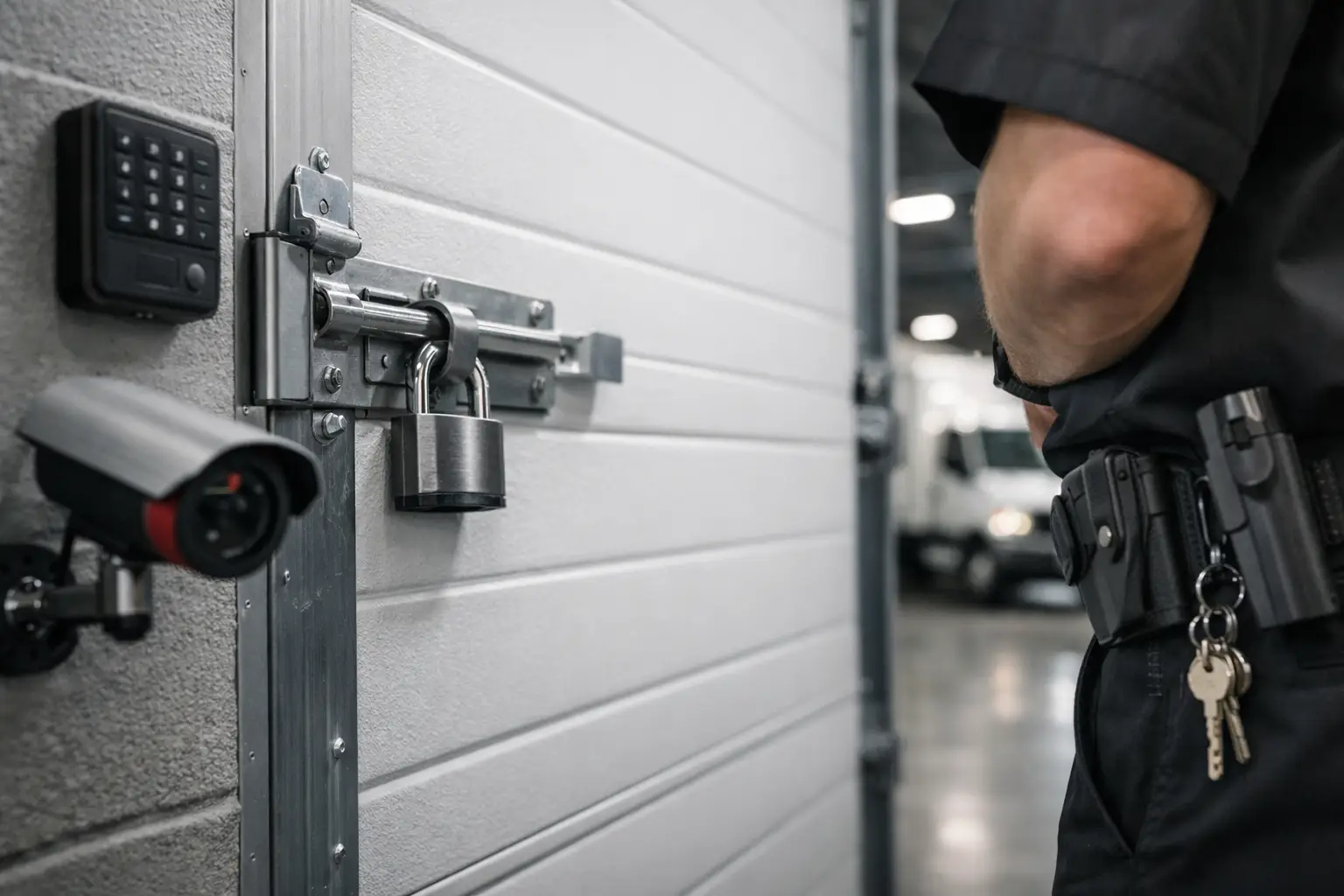
A break-in does not always start with a smashed window or a cut fence. For many businesses, it starts with a garage door that closes unevenly, an opener that skips its lock cycle, or an access code that has not been changed in two years. That is exactly why a commercial garage door security guide matters. Your overhead door is one of the largest access points on the property, and if it is treated like just another piece of equipment, it can become the easiest way in.
For small business owners and property managers, security is rarely about one big upgrade. It is usually about tightening a series of small weak points before they turn into expensive problems. The right plan protects inventory, reduces downtime, and helps your team feel more confident opening up in the morning and locking down at night.
What a commercial garage door security guide should actually cover
A good commercial garage door security guide should go beyond locks. It should look at the full picture – the door itself, the opener, the tracks, the access controls, the daily habits of employees, and the maintenance schedule that keeps all of it working the way it should.
That matters because security failures are often mixed problems. A business may have a strong rolling steel door, but weak keypad management. Another may have modern access control, but worn bottom seals and damaged side gaps that make tampering easier. In other cases, the issue is not forced entry at all. It is employee error, delayed repairs, or a false sense of safety because the system still opens and closes.
If your commercial door is part of daily operations, security has to be practical. The best setup is not necessarily the most expensive one. It is the one that fits your building, your traffic flow, your hours, and your level of risk.
Start with the door itself
Before adding accessories or smart controls, look at the physical condition of the door. If panels are bent, hardware is loose, tracks are out of alignment, or the door does not sit flush when closed, you already have a security problem. A commercial door that looks functional from a distance may still leave enough play for prying, lifting, or repeated impact damage.
Material also matters. Sectional steel doors, rolling steel doors, and insulated commercial doors all offer different advantages. A lighter system may cost less upfront and work well for low-risk use, but high-traffic facilities or buildings storing tools, equipment, or inventory often need something stronger. Thicker materials, reinforced slats, and commercial-grade track systems make forced entry harder, but they can also cost more and require the right opener setup.
This is one of those areas where cheap fixes can backfire. Replacing a lock on a weak door does not solve the real issue. If the structure around the lock is compromised, the lock becomes more of a delay than a defense.
The opener is part of your security system
Many businesses think about the opener as a convenience item. It is more than that. A commercial opener controls how reliably the door secures, how access is managed, and how the system responds during daily use.
If the opener hesitates, reverses unpredictably, or fails to complete a full close cycle, your building may be left exposed longer than you realize. In some cases, the door appears closed but does not fully seat at the ground. In others, an old operator may not integrate well with newer access controls or may lack modern security features.
A commercial-grade opener should match the weight and cycle demands of the door. That sounds basic, but mismatched systems are common. When an opener is undersized or aging out, security and reliability both take a hit. The result is more wear, more service interruptions, and more opportunities for something to be left unsecured.
Access control needs rules, not just devices
Keypads, remotes, card readers, and mobile access tools can all improve security, but only if the business uses them intentionally. One of the biggest risks is not the technology. It is loose control over who has access and when.
If former employees still know entry codes, if shared remotes move from truck to truck without tracking, or if managers never review who can open the door after hours, the system is weaker than it looks. Strong access control means assigning access by role, changing codes when staffing changes, and limiting entry windows when possible.
For some businesses, a basic keypad and updated code policy are enough. For others, especially multi-tenant spaces or properties with several employees, a more advanced system with user-specific credentials makes more sense. The trade-off is cost and complexity. More control usually means more setup, but it also gives you better accountability.
Don’t overlook the simple weak points
A lot of security problems happen in plain sight. Gaps at the bottom of the door, worn weather seals, damaged jambs, manual release vulnerabilities, poor lighting near the opening, and visible interior valuables all make your property easier to target.
These may not sound like major issues, but together they create opportunity. A bottom gap can invite tampering. A damaged side area can make prying easier. A poorly lit service bay gives cover to anyone testing the perimeter after hours.
In Arizona, heat and dust also speed up wear on seals, rollers, and moving components. That means a door can lose its tight fit gradually, without anyone noticing day to day. For business owners in Gilbert, Mesa, Chandler, and nearby areas, climate is not just a maintenance concern. It affects security over time.
Maintenance is one of the cheapest security upgrades
Security and maintenance are closely tied. When a commercial garage door is serviced regularly, technicians can catch loose brackets, frayed cables, worn rollers, alignment issues, failing springs, and opener problems before they create a bigger opening for risk.
This is especially important for high-cycle doors. Warehouses, auto shops, storage facilities, and service businesses may open and close their commercial doors dozens of times a day. Even a well-installed system will wear faster under that kind of use.
A good maintenance schedule helps in three ways. It keeps the door operating correctly, extends equipment life, and gives you a regular chance to spot security concerns early. That is much less expensive than dealing with a failure after a break-in or after the door stops working during business hours.
When repair is enough and when replacement makes more sense
Not every security issue means you need a new door. Sometimes a repair, hardware upgrade, or opener replacement is the smartest move. If the door is structurally sound and the problems are limited to worn components or outdated controls, targeted improvements can make a big difference.
But there is a point where repeated repairs stop making financial sense. If the door has recurring alignment issues, severe panel damage, chronic opener failure, or outdated parts that are hard to source, replacement may be the better long-term investment. That is especially true if the business has grown and the original door was never designed for current traffic or security needs.
Honest guidance matters here. A trustworthy service company should explain what can be repaired, what should be upgraded, and what is likely to keep costing you money if left in place. No surprises, just a clear picture of your options.
A better security plan is usually a layered one
The strongest approach combines physical strength, reliable operation, controlled access, and regular upkeep. That might mean reinforcing the door, upgrading the opener, tightening code management, improving lighting, and scheduling preventive service. No single feature does all the work.
It also depends on your business. A retail stockroom has different priorities than an auto bay or a gated service yard. Some properties need faster entry and exit. Others need tighter after-hours control. Security works best when it supports operations instead of slowing them down so much that staff start bypassing it.
If you are not sure where your weak points are, start with a professional inspection. A local team that works on commercial garage doors every day can usually spot issues quickly and help you prioritize what matters most. Riggs Rescue AZ takes that practical approach – fix what is urgent, recommend what adds value, and keep the process clear.
A secure commercial garage door is not about overbuilding or overspending. It is about making sure one of the biggest openings in your building is not also the easiest one to exploit. A few smart decisions now can save you a lot of stress later, and that kind of peace of mind pays off every day your business opens and closes.

Leave a Reply