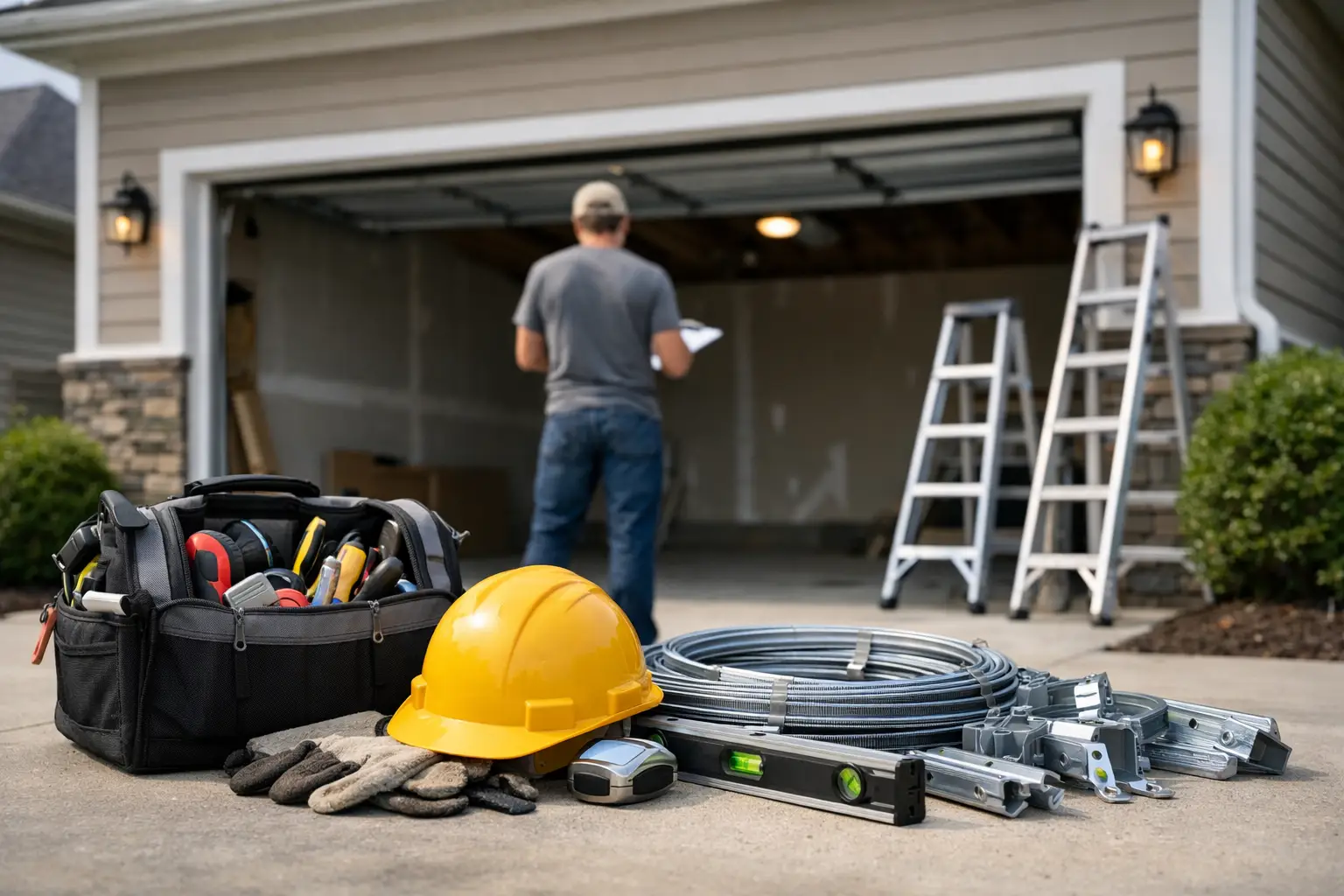
A new garage door can change the way your home looks and works in a single day, but the smoothest installs usually start before the crew ever pulls into the driveway. If you’re wondering how to prepare for garage door installation, the goal is simple: clear the space, confirm the details, and remove anything that could slow the job down or create a safety issue.
That preparation matters more than most homeowners expect. Garage doors are heavy systems with moving parts, tracks, springs, electrical components, and tight clearances. A little planning helps the installation team work faster, helps protect your belongings, and lowers the chance of last-minute delays.
How to Prepare for Garage Door Installation Before Install Day
The first thing to do is make sure everyone is working from the same plan. Confirm the door style, size, color, window layout, insulation level, and opener setup ahead of time. If you’re replacing an older door, this is also the time to ask whether your existing opener is compatible or if it makes more sense to replace it at the same time.
This is where a lot of avoidable stress shows up. Homeowners sometimes assume the new door will work with the old track or opener, but that depends on age, condition, and model compatibility. In some cases, reusing parts can save money. In others, it creates future reliability issues. Honest installers will tell you which route makes sense and why.
You should also ask how long the job is expected to take and whether you need to be home for the full appointment. Most standard residential installations are straightforward, but custom doors, opener upgrades, framing repairs, or uneven garage openings can add time.
Clear the Garage So the Crew Can Work Safely
One of the most helpful things you can do is create working room inside and outside the garage. Installation crews need space to remove the old door, assemble sections, set tracks, connect hardware, and test the system. If the area is cramped, the job gets slower and more complicated.
Move vehicles out of the garage and out of the driveway if possible. That gives the team room to unload materials and work without weaving around obstacles. Inside the garage, clear items away from both side walls and from the area directly under the opener. A few feet of open space around the door opening makes a big difference.
If you use the garage for storage, you do not need to empty the entire thing. You just need enough room for safe access. Bikes, tools, storage bins, ladders, and lawn equipment are common problem areas. If anything is fragile, dusty, or valuable, move it farther back or cover it.
Pay Attention to Ceiling Space
Many homeowners remember the floor but forget the ceiling. If you have hanging storage racks, long light fixtures, or anything suspended near the garage door tracks or opener area, mention it before install day. Some setups are fine as-is, while others may need adjustment.
Low clearance can affect track configuration and opener placement. It does not always stop the installation, but it can change the approach. The earlier that gets addressed, the fewer surprises you deal with.
Protect What Stays in the Garage
Even a careful installation can stir up dust and debris, especially if the old door, hardware, or framing has been in place for years. Cover workbenches, shelves, and stored items that cannot be moved easily. If you keep paint, chemicals, or temperature-sensitive materials in the garage, make sure they are sealed and out of the immediate work zone.
Pets and kids should stay away from the garage during the installation. That is not just for convenience. Door sections, springs, and tools can create serious safety risks while the system is being removed and installed.
If you have an attached garage, think about the door leading into the house too. Installers may need to move in and out to access outlets, breaker panels, or controls. Make sure that route is clear.
Make Sure Power and Access Are Ready
If your new setup includes an automatic opener, the crew will need a working electrical outlet in the right location. If there is no outlet near the opener area, that can delay the job or require additional electrical work. It is worth checking this before the appointment instead of finding out mid-install.
Access matters too. Unlock any side doors, gates, or interior doors the technicians may need to use. If your community has HOA rules, gate codes, or restricted access hours, share that ahead of time. For homeowners in busy East Valley neighborhoods, this can save a lot of back-and-forth on installation day.
If you will not be home, ask whether that is an option before assuming it is fine. Some jobs require someone on-site to approve final placement, test remotes, or go over warranty and safety features.
Think Beyond the Door Itself
A garage door installation often brings up related decisions. If your weather seal is worn, if the bottom rubber has gaps, or if your opener is noisy and inconsistent, replacing only the door may not fully solve the issue. This is one of those it-depends situations.
If the opener is relatively new and working well, keeping it may be reasonable. If it struggles, lacks safety features, or is nearing the end of its life, installing a new opener with the new door can save labor later and give you a more reliable system from day one.
The same goes for insulation. In Arizona, garage heat is not a small issue. An insulated door can help with comfort, noise, and energy performance, especially if the garage is attached to the house or used as a workspace, home gym, or storage area. It usually costs more upfront, so the right choice depends on how you use the space.
Know What to Expect With Removal and Cleanup
If you’re replacing an existing garage door, ask whether haul-away is included. Most homeowners do not want to figure out what to do with old sections, tracks, springs, and packaging after the job is done. A good service company should explain what gets removed, what stays, and what cleanup is included.
It is also smart to ask whether any framing issues could affect the installation. Rotten wood, cracked jambs, or uneven surfaces around the opening may not be obvious until the old door comes down. That does not mean something is wrong with the installation process. It just means older garages sometimes reveal hidden repairs once the hardware is removed.
The best way to handle that is with clear expectations. Ask how change orders are discussed, what additional work might look like, and how pricing is approved if something unexpected comes up. People are usually less frustrated by extra work than by vague communication.
How to Prepare for Garage Door Installation If You Have an HOA
If your neighborhood has HOA guidelines, check them before your install date. Some associations care about panel design, color, window placement, and even decorative hardware. Waiting until the door is ordered or delivered is too late.
This is especially important if you are trying to match an existing exterior style or replace a damaged door quickly. Fast service is great, but HOA approval can still be the thing that slows the process. A few minutes spent reviewing rules can save a much bigger headache later.
Be Ready for the Final Walkthrough
Once the installation is complete, do not rush through the handoff. A proper walkthrough should include how the door opens and closes, how the locks and remotes work, what the safety sensors do, and what normal operation should sound like.
This is also the time to ask about maintenance. Garage doors do not need constant attention, but they do benefit from routine inspection and occasional service. Knowing what to watch for – unusual noises, jerky movement, slow response, or uneven closing – helps you catch small issues before they turn into expensive repairs.
If your installer is replacing both the door and opener, ask them to show you the wall control, remote programming, emergency release, and battery backup if one is included. You do not want to figure those things out during a power outage or when you’re already late for work.
A smooth install usually comes down to simple preparation, not complicated planning. Clear the space, confirm the details, ask good questions, and give the crew room to do the job right. When the setup is ready before installation day, the whole process feels faster, cleaner, and a lot less stressful.

Leave a Reply