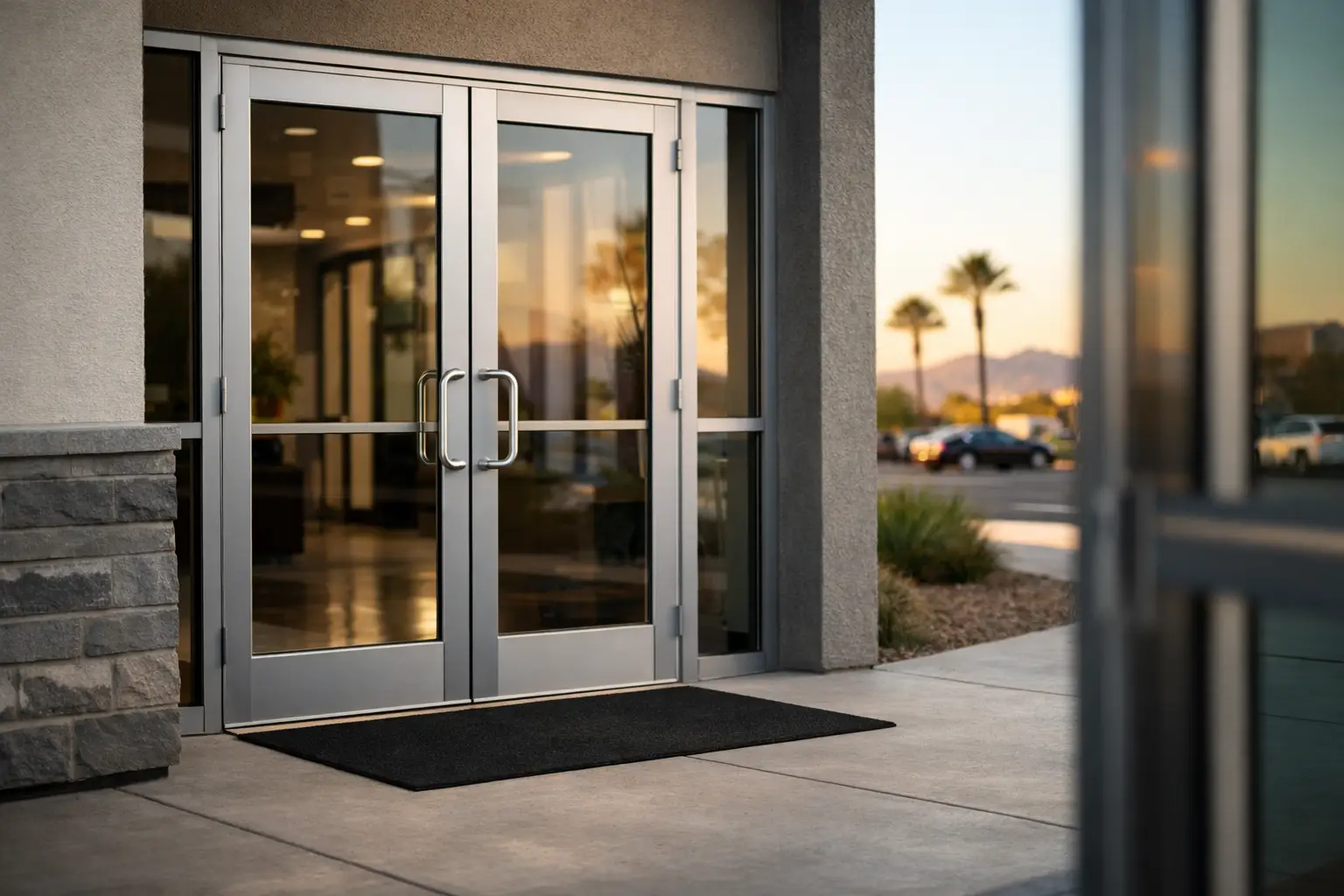
A commercial door that will not open is not a small inconvenience when deliveries are waiting, employees need access, or inventory is sitting behind a locked bay. This Chandler commercial door case study follows a representative local business scenario to show how a clear diagnosis, honest options, and timely service can keep a door problem from turning into a full day of lost productivity.
The details have been generalized to protect the business involved, but the concerns are familiar to many Chandler property managers and business owners: a sectional overhead door was becoming unreliable, the opening cycle was getting louder, and staff had started working around it rather than reporting the issue. By the time the door stopped lifting consistently, the business needed answers quickly.
The Problem: An Unreliable Door at a Busy Service Entrance
The business used its commercial garage door several times a day for deliveries, equipment movement, and secure after-hours access. At first, the problem seemed manageable. The door would hesitate on the way up, make a scraping sound near the tracks, and occasionally require a second attempt from the operator.
Those symptoms can point to several issues. A worn roller, damaged track, loose hardware, failing spring, cable problem, or opener issue can all affect how a commercial door moves. Treating every problem as an opener replacement would be expensive and unnecessary. Treating a mechanical issue as a minor nuisance, however, can lead to a door that comes off track or fails when the business needs it most.
In this case, the owner had a second concern: the door was old enough that replacement had already been discussed. The question was not simply, “Can it be fixed?” It was, “What is the right choice for our budget, safety, and day-to-day operation?”
Chandler Commercial Door Case Study: The Inspection
A proper commercial door inspection starts with the whole system, not just the part that appears to be making noise. The door panels, hinges, rollers, tracks, cables, springs, bottom seal, operator, safety devices, and mounting hardware all work together. If one component is failing, it can put extra strain on others.
The inspection in this scenario found a combination of worn rollers, track alignment concerns, and hardware that had loosened through normal use. The operator was also working harder than it should because the door was no longer moving smoothly. The door had not reached the point where a full replacement was required, but continuing to run it without repair would have increased the risk of a larger breakdown.
This is where a transparent recommendation matters. Commercial door service should not be about pushing the biggest job. A good technician explains what is urgent, what can be planned for later, and what each option means for the business.
For this property, the immediate recommendation was to correct the alignment issue, replace worn moving components, secure the hardware, and test the operator and safety functions after the door was balanced. The owner also received a clear discussion about future replacement planning, including the benefit of choosing a heavier-duty door if traffic increased.
Why Repair Was the Right First Step
Replacement can be the smart call when panels are severely damaged, the door no longer meets operational needs, or repeated repairs are adding up. It can also make sense when insulation, security, appearance, or wind-load requirements have changed.
But replacement is not automatically the best answer. In this case, the door structure was still in serviceable condition. Repairing the mechanical issues restored dependable movement at a lower immediate cost and gave the owner time to budget for a future upgrade on their own schedule.
That trade-off is important for small businesses. A lower-cost repair is only a good value if it addresses the root cause and leaves the system safe to use. On the other hand, a replacement can be a better long-term investment if repairs are becoming frequent, parts are obsolete, or downtime is affecting revenue. The right choice depends on the condition of the door, how often it cycles, and how critical that opening is to the operation.
The Repair Process and Operational Planning
Commercial properties cannot always shut down an entrance for an entire day. Before work begins, the service plan should account for delivery schedules, employee access, customer traffic, and security. In this case, the work was scheduled around the business’s slower operating window so the entrance could be returned to service without disrupting a major delivery period.
The repair involved correcting the track and roller concerns, tightening and replacing affected hardware, checking the lift system, and confirming that the operator was not being overloaded. Once the door moved smoothly by hand, the operator settings and safety features were tested.
That final testing step should never be skipped. A commercial door is more than a large moving panel. It is a heavy access system that needs to reverse or stop appropriately, operate predictably, and close securely. A door that opens again but does not meet basic safety expectations is not a finished repair.
The business also received practical guidance for daily use. Staff were asked to report new noises, slower movement, uneven closing, visible cable wear, or gaps along the bottom seal right away. Those quick observations can help catch an issue before the door becomes stuck during a busy shift.
The Result: Less Guesswork, Better Planning
The biggest benefit was not simply that the door opened again. The business had a clearer picture of the system’s condition and a realistic plan for the future. Instead of reacting to every new sound or temporary failure, the owner knew which repairs had been completed, what components to watch, and when an upgrade might make financial sense.
For many commercial properties, that kind of clarity is just as valuable as the repair itself. Surprise breakdowns create pressure, especially when a door protects tools, vehicles, stock, or a loading area. A documented assessment helps owners make decisions before they are forced into an emergency replacement.
What Local Businesses Can Learn From This Case
Commercial doors often give warning signs before they fail completely. Grinding, rattling, shaking, delayed response, uneven movement, damaged rollers, bent tracks, and a door that will not fully close are all reasons to schedule service. Waiting can turn a manageable repair into a safety issue, a security concern, or an interruption to operations.
It also pays to think beyond the door itself. If your business depends on frequent vehicle access, a commercial-grade operator, properly rated springs, durable hardware, and routine maintenance are part of keeping the opening reliable. A warehouse door, automotive bay door, storage facility door, and retail receiving entrance may look similar from the outside, but their usage demands can be very different.
For Chandler businesses, the best service partner is one that can explain those differences without drowning you in jargon. You should know what failed, why it failed, what the repair will address, and whether replacement is truly necessary. No surprises and no vague recommendations.
Riggs Rescue AZ helps local commercial customers make those decisions with fast, reliable service and straightforward guidance. Whether the issue is a noisy door, damaged track, worn components, an unreliable operator, or a door that will not open at all, getting an experienced technician involved early gives you more options.
A commercial door does not have to fail at the worst possible moment for it to deserve attention. If yours is acting differently than it used to, schedule an inspection while you still have time to choose the repair plan that works best for your business.

Leave a Reply