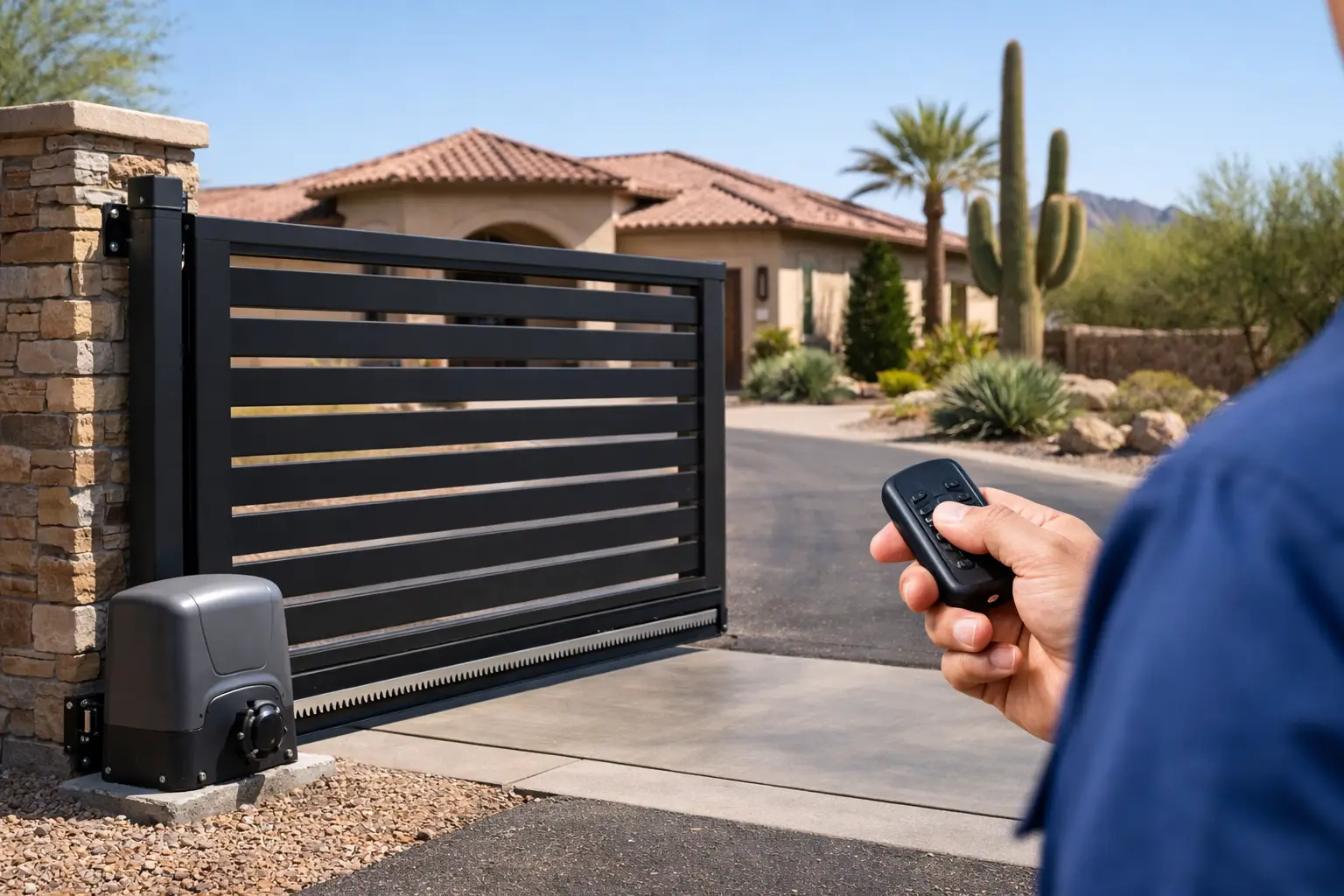
A gate that will not open when you are trying to leave for work is more than an inconvenience. It can trap vehicles, leave a property exposed, or create a real safety concern for children, visitors, and deliveries. When you need automatic gate service Queen Creek property owners can depend on, the goal is not just to get the gate moving again. It is to find the cause, make the right repair, and help prevent the same problem from disrupting your day next week.
Why a Broken Automatic Gate Needs Fast Attention
Automatic gates do serious work every day. They control access, protect vehicles and equipment, and add privacy to homes, neighborhoods, offices, storage yards, and small businesses. When one starts acting up, forcing it open or repeatedly pressing the remote can turn a manageable repair into a larger problem.
A gate that drags, reverses unexpectedly, or closes with too much force may also have a safety issue. Modern automatic gate systems rely on more than a motor. They use photo eyes, control boards, limit switches, wiring, rollers, hinges, chains or belts, and safety devices that all need to work together. One worn or misaligned part can affect the whole system.
Fast service matters, but a quick fix should still be a careful one. A technician should inspect the gate’s movement, hardware, power supply, controls, and safety features before recommending a repair. That approach gives you a clearer answer and helps avoid paying for parts that do not solve the real issue.
Common Signs You Need Automatic Gate Service in Queen Creek
A gate rarely fails without warning. Paying attention to changes in sound, speed, and movement can help you schedule service before the gate stops completely.
The gate moves slowly, shakes, or stops halfway
Slow travel can point to worn rollers, damaged hinges, a dragging track, a weak operator, or an obstruction in the gate path. For swing gates, sagging posts or hinges can put extra strain on the opener. For sliding gates, debris, misaligned rollers, and worn guide hardware are common culprits.
Do not assume a struggling gate simply needs more force from the operator. Increasing force settings without addressing the resistance can strain the motor and reduce the system’s safety.
Your remote, keypad, or phone control works inconsistently
Intermittent access is frustrating, especially when guests, tenants, or employees need reliable entry. The issue may be as simple as a weak remote battery, but it could also involve a failing receiver, damaged antenna, keypad wiring issue, programming error, or control board problem.
If only one remote fails, the remote itself may be the source. If every control works inconsistently, the problem is more likely within the gate system or its power supply.
The gate opens but will not close
This is one of the most common service calls because safety sensors are designed to prevent a gate from closing when they detect an obstruction. Dirt on photo eyes, misalignment, loose wiring, sun glare, or a damaged sensor can keep the gate open.
The safety system should never be bypassed just to get the gate closed. A trained gate technician can identify whether the problem is sensor alignment, a wiring fault, a failing control board, or another issue that needs attention.
You hear grinding, popping, or clicking sounds
New noises are worth checking early. Grinding may come from rollers, gears, chains, or other moving hardware. Clicking can indicate a relay, electrical connection, or operator issue. Popping sounds around a swing gate can be caused by hinges, brackets, or structural movement.
A gate should not need to sound rough to work hard. A prompt inspection can often keep a smaller mechanical repair from becoming an operator replacement.
What a Professional Gate Service Visit Should Include
A quality repair appointment starts with listening. You know when the gate began acting differently, whether the issue happens at certain times, and which controls are affected. Those details help speed up diagnosis.
From there, the technician should check the gate structure and travel path. That means looking at rollers, hinges, tracks, chain tension, guide wheels, brackets, stops, and the condition of the gate itself. The operator must be evaluated too, including the motor, gear system, electrical connections, control board, limits, and backup battery where applicable.
Safety testing is just as important as getting the gate moving. The system should be checked for proper reversing behavior and reliable sensor operation. If the gate is being used at a business, multifamily property, or shared entrance, dependable safety devices and access controls are especially important because more people interact with the system each day.
At Riggs Rescue AZ, the focus is on explaining what is wrong in plain language and giving you practical options before work begins. You should know whether a repair is likely to hold up, what a replacement would change, and what the expected cost includes. No surprises is the standard homeowners and business owners deserve.
Repair or Replace? The Right Answer Depends on the System
Not every gate problem calls for a new operator. Replacing a sensor, remote receiver, roller, hinge, chain, battery, or control component can be a smart and affordable repair when the gate is structurally sound and the operator is in good condition.
Replacement starts making more sense when the operator has repeated failures, replacement parts are no longer available, or the system no longer meets your access and security needs. An older gate opener may also lack the safety features, battery backup, or modern access controls that make daily use easier.
There is a trade-off. Repairing an aging system costs less today, but repeated service calls can add up. Replacing a system costs more upfront, yet it can improve reliability and reduce interruptions. The right choice depends on the condition of the gate, how often it is used, and how much downtime affects your household or business.
Queen Creek Conditions Can Be Tough on Gate Systems
Arizona heat is hard on electronics, batteries, plastic components, and moving metal parts. Dust can build up along sliding gate paths and around sensors. Monsoon winds can shift branches, blow debris into tracks, or expose weak hardware. Even irrigation overspray can contribute to corrosion or electrical problems over time.
That is why routine gate care is not just about appearance. A gate may still open and close while developing resistance that is slowly wearing down the operator. Seasonal checkups are a practical way to catch small issues before a busy morning, a delivery, or a security concern turns into an urgent call.
Simple Gate Care Between Service Visits
Property owners can help protect their equipment without taking on risky repairs. Keep the travel path clear and do not allow rocks, branches, trash, or landscape material to collect in a sliding gate track. Watch for sagging, scraping, or changes in the gate’s travel.
A few habits make a difference:
- Keep photo eyes clean and free of cobwebs, dust, and landscaping.
- Trim plants away from the gate’s travel area and safety sensors.
- Replace remote batteries when range becomes noticeably weaker.
- Avoid hanging items on the gate or leaning heavy objects against it.
- Call for service when you notice new noise, hesitation, or reversing.
Do not attempt to adjust springs, internal operator components, high-voltage wiring, or safety settings unless you are trained for the system. Gates are heavy, and automatic operators can create pinch points and unexpected movement.
Residential and Commercial Gates Need Different Planning
For a home, the priority may be dependable entry, privacy, and a remote or keypad that works every time. Families often benefit from a system that is easy to operate and includes reliable safety features for children, pets, and visitors.
For a small business, property manager, or storage facility, access control and durability can carry more weight. A commercial gate may cycle dozens or hundreds of times each day. It may need stronger hardware, better vehicle detection, multiple user credentials, and a maintenance plan built around heavier use.
The best service provider will not treat every gate the same. They should consider the gate’s size, weight, daily cycles, location, access needs, and current condition before suggesting equipment or repairs.
A dependable automatic gate should make your property easier to manage, not create another item on your stress list. If your gate is slow, noisy, unreliable, or stuck, getting it checked early can protect your safety, security, and budget while helping you get back to your normal routine.

Leave a Reply