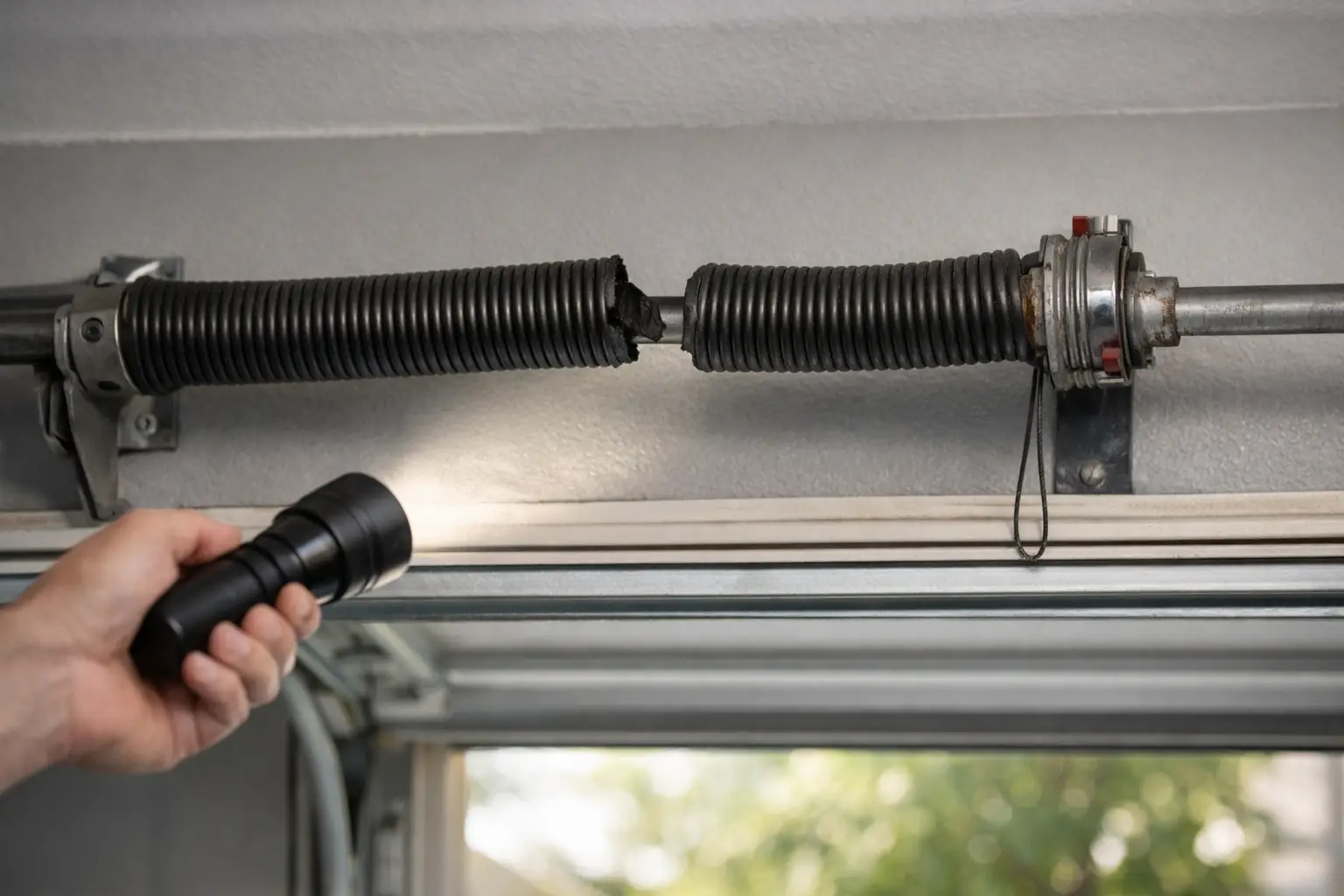
A garage door that suddenly will not open is more than an inconvenience when you need to get to work, pick up the kids, or secure your business. Knowing how to spot broken garage springs can help you avoid forcing the door, damaging the opener, or putting yourself in harm’s way. Garage door springs carry most of the door’s weight, and when one breaks, the system can become unsafe fast.
The good news is that several warning signs are easy to recognize from a safe distance. You do not need to touch the springs or take apart any hardware to know it is time for professional repair.
Why a Broken Garage Spring Is a Big Deal
Your garage door opener is designed to guide the door, not lift its full weight. The springs do the heavy lifting by storing tension as the door closes and releasing that energy as it opens. A typical residential garage door can weigh 150 to 300 pounds or more, depending on its size, material, and insulation.
When a spring breaks, that weight is no longer properly balanced. The opener may strain, the door may stop partway, or the door may come down harder than expected. Trying to operate it repeatedly can turn a spring repair into a more expensive opener, cable, roller, or track repair.
There are two common spring setups. Torsion springs sit on a metal shaft above the garage door opening. Extension springs run along the horizontal tracks on either side of the door. Both types are under extreme tension. That is why spring replacement is not a DIY job, even for a handy homeowner.
How to Spot Broken Garage Springs: The Most Common Signs
A loud bang from the garage is often the first clue. Many homeowners describe it as a gunshot, a firecracker, or a heavy object falling. That sound is frequently a torsion spring snapping under tension. You may hear it even when no one is using the door.
The door may also refuse to open more than a few inches. Modern openers have safety settings that can detect excess weight or resistance. If the opener starts, the door rises slightly, and then reverses or stops, a broken spring is a likely possibility.
Another major sign is a door that looks crooked while moving. If one side rises while the other stays low, stop the door immediately. A broken spring, loose cable, or issue with the lifting system can cause the door to bind. Continuing to run it may pull a cable off the drum or bend a track.
You may also notice that the opener sounds different. A strained motor, humming sound, or repeated clicking without normal door movement can mean the opener is trying to lift a door that has lost spring support. The opener itself may not be the original problem, but it should not be forced to keep trying.
What a Broken Spring Looks Like
A visual check can be useful, as long as you keep your hands away from the spring system. Stand inside the garage with the door closed and look above the opening.
Torsion spring warning signs
A torsion spring normally looks like one continuous, tightly wound coil around a metal bar. When it breaks, there is often a visible gap of about two inches between sections of the coil. This clean separation is one of the clearest signs of a broken torsion spring.
Some doors have two torsion springs. If only one has broken, the door may still move a little, which can be misleading. It is still unsafe to use. The remaining spring is taking more than its intended share of the load and may be near the end of its service life as well.
Extension spring warning signs
Extension springs are usually mounted along the sides of the horizontal tracks. A broken extension spring may hang loosely, appear stretched out, or sit in separate pieces. You may also see a loose cable or pulley nearby.
Do not assume a hanging spring is harmless because it looks slack. The hardware around it can still shift unexpectedly, and extension spring systems should have safety cables running through the center of each spring. If a spring has broken or a cable is loose, keep people, pets, and vehicles clear of the door.
Other Problems That Can Look Like a Broken Spring
Not every door that will not open has a broken spring. A power outage, dead remote battery, misaligned safety sensor, damaged roller, or failed opener can create similar frustration. The difference is often in how the door behaves.
If your opener has power but the door feels extremely heavy, stops after moving a few inches, or has a visible broken coil above it, springs are the most likely issue. If the door is fully closed and the remote does nothing at all, check whether the wall button works and whether the opener has power. That could point to an electrical or opener problem instead.
A door that reverses immediately after closing is often related to photo-eye sensors or travel settings, not necessarily a spring. The sensors near the bottom of the tracks may be blocked, dirty, or out of alignment. Still, if the door is moving unevenly or you heard a loud snap, treat it as a spring concern until a technician can inspect it.
What to Do When You Suspect a Broken Spring
The safest move is simple: stop using the garage door. Do not keep pressing the wall button or remote in hopes that it will push through the problem. A garage door opener can burn out when it is repeatedly asked to lift an unbalanced door.
Leave the door closed if possible. If the door is open or partially open, keep everyone away from the opening and do not walk or drive under it. Avoid pulling the emergency release cord while the door is open. Without spring support, the full weight of the door can drop quickly.
Do not try to lift the door manually unless a trained professional has given you specific guidance for your situation. Even if two adults can lift the door, holding it in place and getting it safely secured is another matter. The door can slam down, and a loose cable can make the situation worse.
For businesses, a disabled garage door can affect deliveries, employee access, and security. Keep the area clear, use another entrance if available, and arrange service as soon as possible. Fast repair protects both your equipment and your daily operations.
Why Springs Break in the First Place
Most garage springs break because they have reached the end of their cycle life. Every time the door opens and closes, the springs complete a cycle. Standard springs are often rated for around 10,000 cycles, though actual lifespan depends on door weight, usage, maintenance, and spring quality.
A family that uses the garage as the main entrance may go through cycles much faster than a household that opens the door only once or twice a day. Heavy insulated doors and doors that are out of balance can also put extra stress on the springs.
Rust, worn bearings, dry moving parts, and poor installation can shorten spring life. In the East Valley, garage doors also see frequent temperature swings and plenty of daily use. A professional check-up can catch worn components before they leave you stuck inside or outside the garage.
Can You Replace Only One Garage Door Spring?
It depends on the system, but replacing both torsion springs is often the smarter choice when they were installed at the same time. If one spring has broken from normal wear, the matching spring may not be far behind. Replacing both can restore balanced lifting force and reduce the chance of another unexpected breakdown soon after the first repair.
That said, the right recommendation should be based on an inspection, not a blanket sales pitch. Spring size, door weight, system condition, and whether the second spring is still in good shape all matter. A trustworthy technician should explain the options, answer questions clearly, and provide pricing before work begins.
Get a Safe, Straightforward Spring Inspection
A broken garage spring is not a problem to wait out, but it does not have to become a stressful ordeal. Riggs Rescue AZ provides clear guidance and garage door repair for homeowners and businesses throughout Gilbert, Mesa, Chandler, Queen Creek, Tempe, Scottsdale, and Phoenix.
If your door is heavy, uneven, stuck, or making a sound that does not seem right, leave it alone and schedule an inspection. A quick professional diagnosis can protect your door, opener, property, and the people who rely on your garage every day.

Leave a Reply