That rattling, grinding garage door usually picks the worst possible time – early morning, late at night, or right when a baby finally falls asleep. If you are looking for the best ways to quiet garage door noise, the good news is that many causes are fixable. The trick is knowing whether the sound is coming from normal wear, loose hardware, a dry system, or a part that is starting to fail.
A garage door is not supposed to be silent. It is a large moving system with rollers, hinges, springs, tracks, and an opener all working together. But it should not sound harsh, shaky, or strained. When the noise changes, that is usually your first warning that something needs attention.
Best ways to quiet garage door noise at home
The fastest improvements usually come from basic maintenance. Dirt, vibration, and dry moving parts add up over time, especially in hot, dusty Arizona conditions. A door that used to hum along can start clanking simply because the system has been neglected for a while.
Tighten loose hardware first
Garage doors move up and down several times a day, and that repeated motion slowly loosens nuts, bolts, and brackets. Even a slightly loose hinge or track fastener can create a surprising amount of rattling.
With the opener unplugged and the door in a safe position, inspect the visible hardware and snug up loose bolts on hinges, roller brackets, and track supports. Do not over-tighten anything, and do not adjust red-painted spring parts or cable components. Those are under tension and should be left to a trained technician.
If the noise is more of a vibration than a squeal, this step alone can make a noticeable difference.
Lubricate the right parts
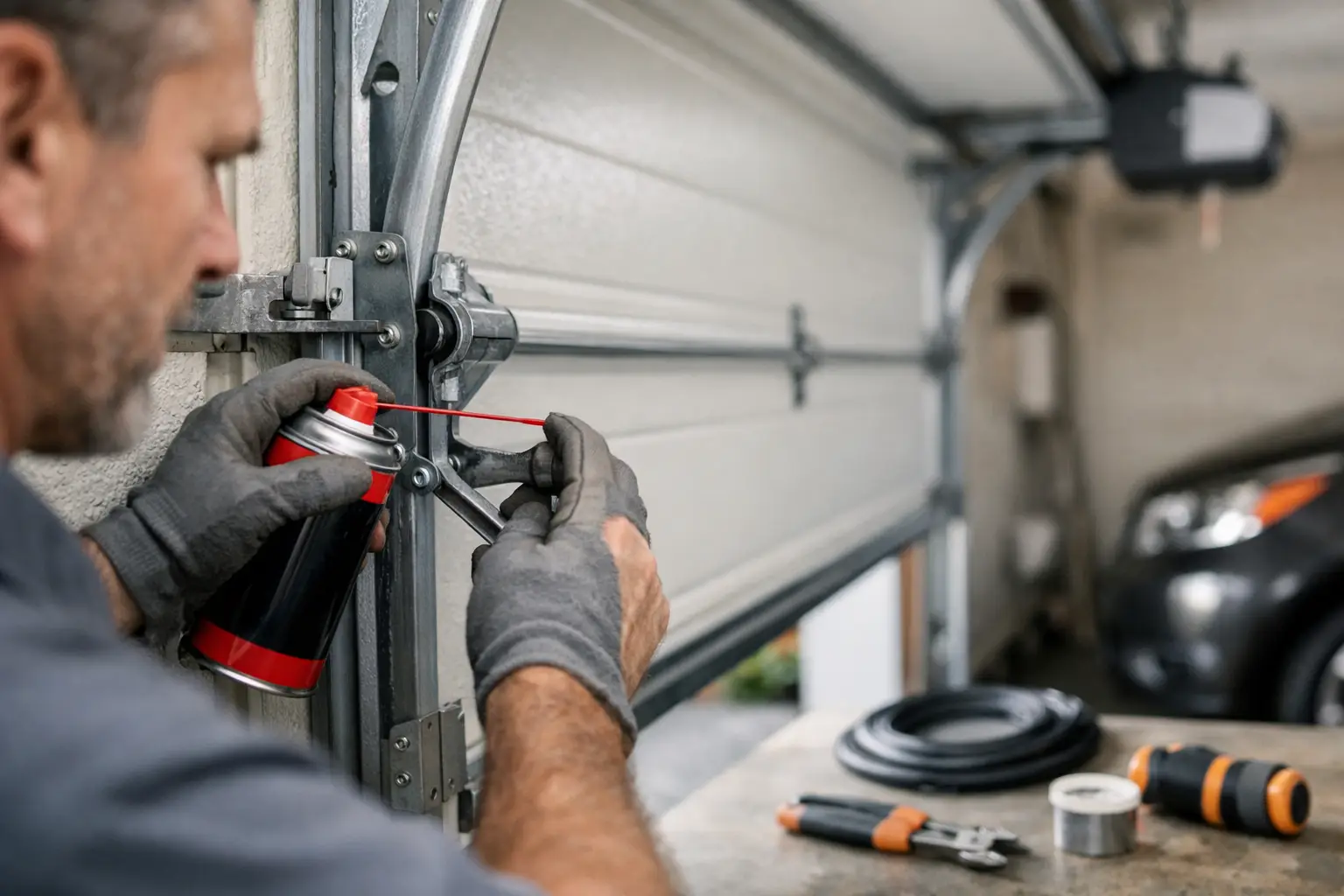
One of the best ways to quiet garage door problems is proper lubrication. Dry metal-on-metal contact is a common reason doors start squeaking, screeching, or chattering.
Use a garage-door-safe lubricant on the rollers, hinges, bearings, and springs if recommended by the manufacturer. A light application is enough. More is not better here. Too much product can attract dust and create buildup.
Do not grease the tracks themselves. Tracks should generally be kept clean rather than slick. If you lubricate everything but the noise stays the same, the issue may be worn parts rather than dry ones.
Clean the tracks and inspect the rollers
Garage door tracks collect dust, debris, and hardened residue. That buildup can cause rollers to bump, drag, or make a scraping sound as the door moves.
Wipe the inside of the tracks with a clean cloth and check for dents or obvious misalignment. Then look at the rollers. Older metal rollers tend to be noisier than nylon rollers, and worn rollers can click or grind each time they pass a hinge point.
If rollers are chipped, wobbling, or sticking, replacement may be the better fix. Swapping worn metal rollers for quality nylon ones is one of the most effective noise-reduction upgrades for many homes.
When the opener is the real problem
Sometimes the door itself is not the loudest part. The opener can be the source of the vibration, humming, or harsh startup noise.
Check the opener mounting and vibration
An opener that is loosely mounted to the ceiling can transfer vibration through the framing and make the whole garage sound louder than it should. This is especially noticeable in attached garages where bedrooms or living spaces are nearby.
Inspect the opener brackets and mounting points for looseness. If everything is secure but the vibration is still strong, adding vibration-isolating hardware can help. This is a good example of where the fix depends on the type of noise. If the door bangs through its travel, the problem is probably not the opener mount alone.
Consider the opener type
Chain-drive openers are durable and common, but they are usually louder than belt-drive models. If your system is older and noisy even after maintenance, the opener itself may simply be dated technology.
A belt-drive opener is often the best upgrade for homeowners who want a noticeably quieter garage door. It tends to run smoother and with less vibration. The trade-off is cost. A tune-up is cheaper than a replacement, so it makes sense to fix maintenance issues first. But if your opener is aging, inconsistent, or already due for replacement, going quieter can be worth it.
Parts that often cause sudden noise changes
A garage door that has always been a little noisy is one thing. A garage door that suddenly gets louder is different. That often points to wear or damage that needs prompt attention.
Worn hinges and bearings
If the sound is a repeating squeak, chirp, or grinding noise during movement, worn hinges or bearings may be the issue. Hinges flex every time the door bends through the track curve. Over time, that motion creates play in the hardware.
In some cases, lubrication helps. In others, the part is simply worn out and needs replacement. If you can see metal shavings, cracking, or uneven movement, that is a sign to stop guessing and have it inspected.
Failing springs
Torsion and extension springs are essential to balancing the weight of the door. When springs wear down, the opener works harder, the door moves less smoothly, and the overall system gets louder.
A spring may not break right away. Sometimes it first shows up as straining sounds, jerky travel, or a door that seems heavier than usual. This is not a DIY area. Spring repair is one of the most dangerous garage door jobs because of the stored tension involved.
Track alignment issues
If the noise sounds like scraping, rubbing, or popping, the tracks may be slightly out of alignment. Rollers need to move cleanly within the track path. When that path shifts, the whole system can get loud fast.
Minor visual issues can sometimes be spotted by homeowners, but track adjustments should be handled carefully. Moving the wrong component the wrong way can create bigger balance and safety problems.
The best ways to quiet garage door systems long term
If you want more than a temporary improvement, think beyond one noisy part. The quietest garage doors come from a combination of maintenance, upgraded components, and correct balance.
Replacing metal rollers with nylon rollers is one of the biggest wins. Keeping hinges, bearings, and springs properly serviced matters too. If the opener is older, a belt-drive model can reduce startup and operating noise. Insulated garage doors can also help soften vibration and reduce the overall sound profile, although insulation alone will not solve mechanical noise.
It also helps to stay ahead of small problems. A tune-up costs less than emergency repair in most cases, and it can catch worn parts before they fail at the worst time.
When to stop troubleshooting and call a pro
There is a difference between helpful maintenance and risky guesswork. If your garage door is making loud popping sounds, slamming shut, hanging unevenly, or struggling to open, it is time for professional service. The same goes for broken springs, frayed cables, bent tracks, or rollers that have come off track.
For many homeowners, the smartest move is to handle simple cleaning and lubrication, then bring in a technician for anything involving balance, spring tension, opener force settings, or part replacement. That keeps the repair safe and gives you a better shot at a lasting fix.
A good technician should be able to tell you whether the problem needs a quick adjustment, a few replacement parts, or a more worthwhile upgrade. That kind of honest guidance matters, especially when you are trying to avoid spending money on the wrong fix.
If the noise is keeping your household up, bothering tenants, or disrupting a small business, getting it checked sooner can save time and frustration. Companies like Riggs Rescue AZ see this all the time – a door that starts as “just noisy” often turns out to be asking for maintenance before it becomes a bigger repair.
A quieter garage door usually comes down to one simple thing: smooth movement. When every part is clean, secure, lubricated, and properly matched to the system, the noise drops fast. And if your door still sounds like it is fighting itself every time it opens, that is your sign to get it looked at before the next loud morning wake-up call.

Leave a Reply