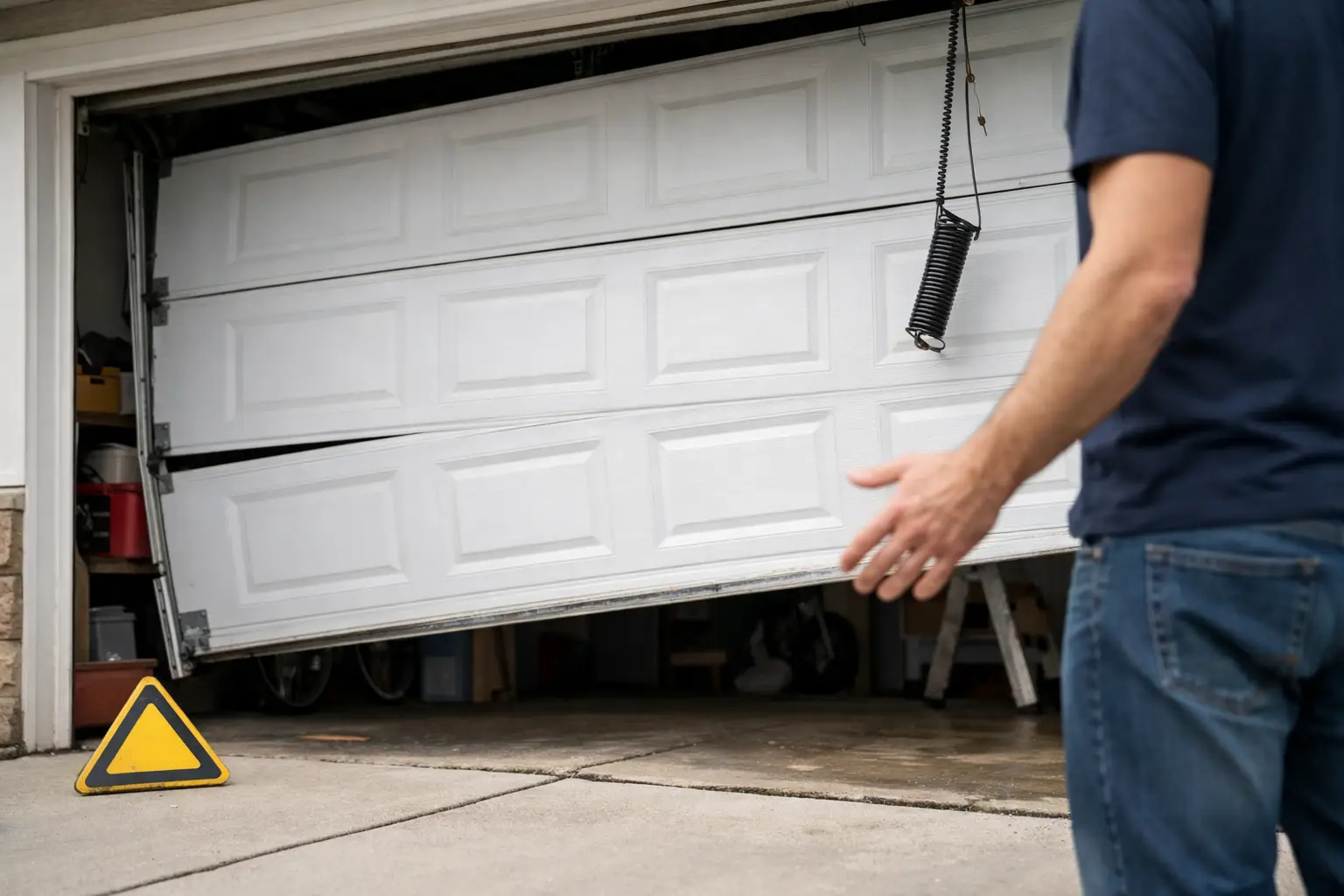
A garage door that groans, shakes, or stops halfway is more than an annoyance when you are trying to leave for work. It can be a warning that a heavy moving system is no longer operating safely. Knowing how to know garage door is unsafe can help you protect your family, vehicles, employees, and property before a minor repair turns into an emergency.
Most garage doors weigh well over 100 pounds, and larger insulated or commercial doors can weigh much more. Springs, cables, rollers, tracks, and the opener must work together every time the door moves. When one part starts failing, the door may become unpredictable quickly.
Warning Signs Your Garage Door May Be Unsafe
Some garage door problems are obvious. Others are easy to dismiss because the door still opens and closes. Pay attention to changes in movement, sound, and balance. A door does not need to be completely stuck to create a safety risk.
It Moves Unevenly or Looks Crooked
A door should rise and lower in a smooth, level line. If one side hangs lower than the other, the door jerks as it travels, or it appears crooked in the opening, stop using it if possible. A loose or broken cable, damaged roller, track issue, or spring problem may be involved.
An uneven door can bind in the tracks or fall suddenly. Never try to pull a crooked door straight by hand, and do not run the opener repeatedly to force it closed. That can create more damage and put anyone nearby at risk.
It Slams Down, Falls, or Will Not Stay Open
A properly working garage door should not race toward the floor or crash shut. It also should remain fully open without drifting down. These symptoms often point to a broken spring or a door that has lost proper counterbalance.
Springs carry a tremendous amount of tension. They are not a homeowner repair, even for someone who is comfortable with basic tools. Keep people and vehicles clear of the opening, and arrange professional service before operating the door again.
The Door Is Extremely Loud or Shakes Hard
Normal garage doors make some sound, especially in a busy household or during Arizona temperature swings. But loud banging, sharp popping, grinding, screeching, or repeated rattling deserves attention. Severe vibration can signal worn rollers, loose hardware, damaged tracks, failing bearings, or an opener working harder than it should.
Noise alone does not always mean the door will fail that day. Still, a new sound paired with rough movement is a reason to schedule a check-up soon. Catching worn parts early is usually safer and more affordable than waiting for a breakdown.
Cables, Springs, or Hardware Look Damaged
With the door closed and the opener disconnected from use, look from a safe distance for frayed cables, loose brackets, bent tracks, gaps in a torsion spring, or hardware pulling away from the wall or ceiling. A broken torsion spring often has a visible gap in the coil. Extension springs may hang loose or appear stretched out.
Do not touch cables, springs, bottom brackets, or any hardware attached to the springs. Those components can release stored energy without warning. If you see damage, keep the door closed if it is safe to do so and call for service.
How to Know Your Garage Door Is Unsafe Around Children and Pets
Garage door safety is not only about broken parts. It is also about whether the system protects people in its path. Children and pets can move through an opening before an adult notices, which is why the door’s safety features need to work every time.
The Auto-Reverse Feature Does Not Respond
Modern automatic openers should reverse when the closing door encounters an object. A simple test is to place a 2-by-4 piece of wood flat on the floor beneath the center of the open door, then close the door using the wall button or remote while staying clear of the opening. When the door touches the wood, it should reverse promptly.
If it continues closing, presses hard on the object, or only reverses after a delay, stop using the automatic function until it is adjusted or repaired. Do not test this feature with a child, pet, hand, foot, or vehicle.
The Photo Eyes Are Blocked, Misaligned, or Unreliable
The photo eyes are the small safety sensors mounted near the bottom of the tracks. They project an invisible beam across the opening. If something breaks that beam while the door is closing, the door should reverse.
Check that both sensors are clean, securely mounted, and facing each other. Boxes, bicycles, landscaping tools, or dirt can interfere with the beam. If the opener closes only when you hold down the wall button, or if it closes inconsistently, the sensors may be misaligned or damaged. A quick adjustment may solve the problem, but recurring sensor trouble should be inspected rather than ignored.
The Remote or Wall Button Behaves Unpredictably
A door that opens on its own, responds intermittently, or will not stop when commanded needs prompt attention. The cause may be as simple as a failing remote battery, but it can also involve wiring, a wall control issue, or an opener malfunction.
Until the issue is identified, keep remotes out of children’s reach and avoid leaving the door open unattended. For businesses, an unreliable door can also leave inventory, equipment, and access points exposed after hours.
When the Opener Is the Problem – and When It Is Not
It is easy to blame the opener whenever a garage door will not move. In many cases, though, the opener is reacting to a mechanical problem with the door. A good opener cannot safely lift a door with a broken spring, damaged cable, or jammed track.
One clue is whether the door feels unusually heavy when the opener is disengaged. Only perform this check when the door is fully closed and you can do so safely. Pull the emergency release cord, then lift the door manually a short distance. A balanced door should feel manageable and stay near the point where you leave it. If it is very heavy, drops, or cannot be moved smoothly, reconnect nothing and call a technician.
Do not keep replacing opener parts to compensate for a door that is out of balance. That can burn out the opener and leave the underlying safety issue unresolved.
What to Do When You Think a Garage Door Is Unsafe
Your next step depends on the condition of the door. If it is hanging crooked, has a broken spring or cable, is off its track, or will not stay open, keep everyone away from the door and do not attempt to operate it. If you can safely keep it closed, do so. If it is stuck open, avoid standing or parking underneath it and secure the area until help arrives.
For less urgent concerns, such as increasing noise, slow travel, or an unreliable sensor, schedule an inspection before the problem progresses. A technician can check spring tension, cable condition, roller wear, track alignment, opener force settings, and safety reversal features. This is especially worthwhile before summer heat puts extra strain on a frequently used door or before a business enters a busy season.
Riggs Rescue AZ provides clear recommendations, fast local service, and no-surprise guidance for homeowners and businesses throughout the East Valley. The goal is not to sell a replacement when a safe repair will do. It is to make sure your door protects the people and property that depend on it.
A garage door should feel routine, not risky. If yours has started acting differently, trust that change and have it checked before the next time you press the button becomes the moment it fails.
Leave a Reply