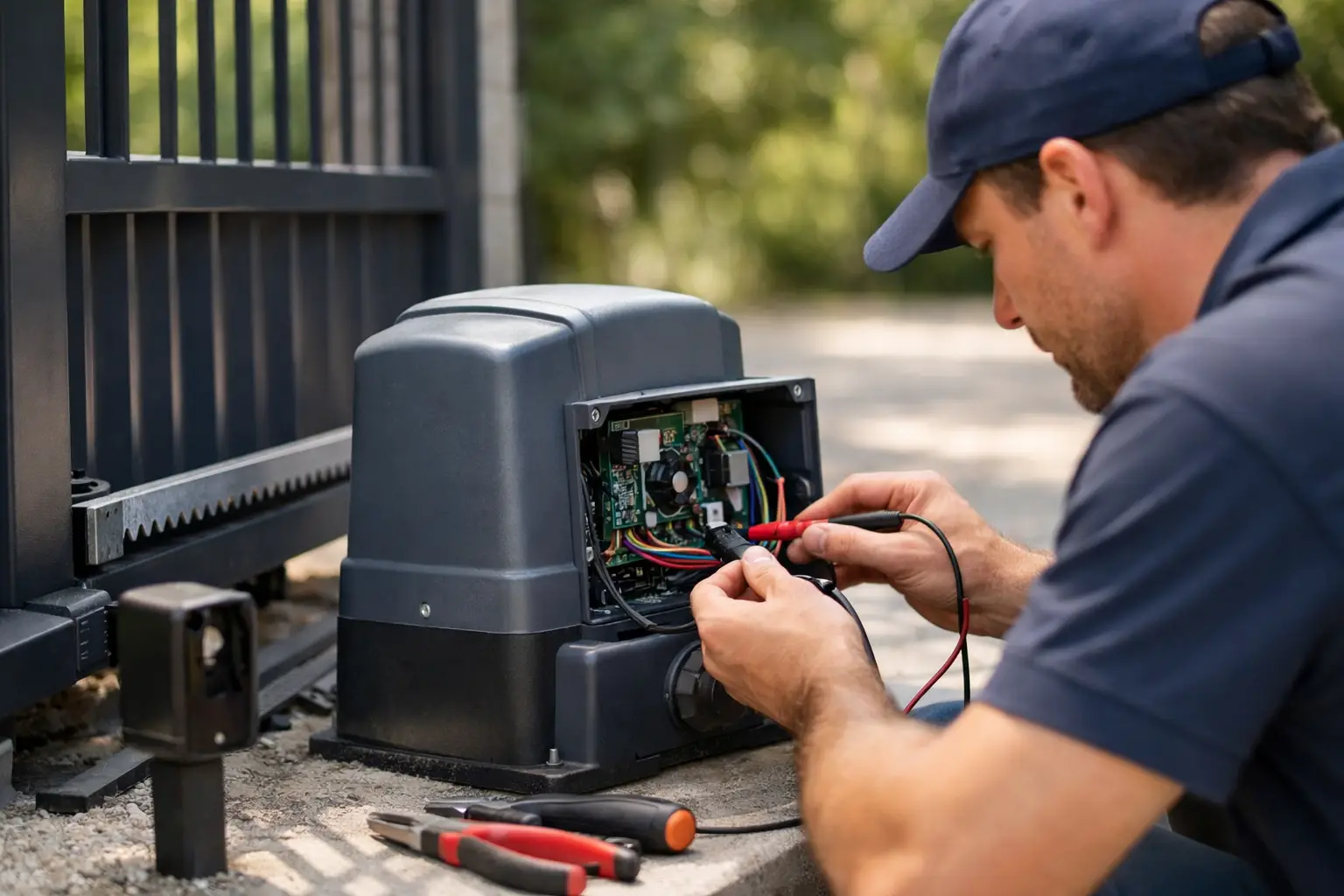
A gate that will not open when you are trying to leave for work, get the kids to school, or let a delivery truck in is more than an inconvenience. Before assuming the opener has failed, there are a few safe checks that can narrow down the problem. Knowing how to troubleshoot gate opener issues can save time, prevent unnecessary damage, and help you recognize when it is time to call for professional service.
Automatic gate systems combine electrical power, moving hardware, safety devices, and access controls. A small issue in any one of those areas can stop the whole system. Start with the simple possibilities, stay clear of moving parts, and do not force a gate that is binding or stuck.
Start With Safety and the Gate’s Current Position
If the gate is partially open, closed on a vehicle path, or moving unpredictably, keep people, pets, and vehicles away from it. Do not stand in the swing path of a swing gate or between a sliding gate and its fence line. These systems are heavy, and an opener can restart unexpectedly after power is restored or a control is activated.
Look for obvious obstructions first. Rocks, branches, trash, landscaping debris, and even a shifted wheel chock can interfere with a sliding gate. For swing gates, check whether a vehicle, planter, or low-hanging branch is blocking the travel path. Arizona monsoon winds can blow debris into tracks and around photo eyes, while summer heat can stress electrical components and dry out moving hardware.
If you can see a clear obstruction, remove it only when the gate is fully stopped and the opener is not trying to run. Never put hands near chains, belts, gears, hinges, rollers, or the gate operator arm.
Check Power Before Assuming the Opener Is Bad
A gate opener that appears completely dead may have a simple power problem. Check whether the breaker serving the gate operator has tripped. If it has, reset it once. A breaker that trips again is a warning sign of an electrical fault, damaged wiring, a failing motor, or another issue that needs a qualified technician.
Next, inspect the operator’s power source. Some systems use a standard outlet, while others are hardwired. If the unit plugs into an outlet, make sure the plug has not come loose and check any nearby GFCI outlet that may have tripped. Gate openers in outdoor locations are exposed to moisture, irrigation overspray, insects, and temperature changes, so power connections deserve a careful look.
Many gate operators also have a backup battery. A dead or weak battery can cause slow operation, inconsistent movement, beeping, or complete failure during an outage. If your operator has a battery indicator or display, check for a low-battery warning. Replacing the battery may be straightforward on some models, but battery type and wiring matter. When in doubt, have the system inspected rather than guessing.
If You Have Solar Power
Solar-powered gate openers need clear, functioning panels and sufficient charging time. Dust, leaves, bird droppings, or shade can reduce charging. Check that the panel is clean and aimed as intended, but do not alter wiring or settings without knowing the system. A gate that works in mild weather but stops after several cloudy days may have a charging or battery-capacity problem rather than a failed opener.
Test the Remote, Keypad, and Other Entry Controls
When the gate responds to one control but not another, the problem is usually with the device that is not working. Start by replacing the remote battery. Confirm you are close enough to the gate for a reliable signal and that the remote has not been damaged by moisture, drops, or extreme heat inside a vehicle.
For a keypad, try entering the code slowly and watch for lights, beeps, or an error message. A keypad that does not light up may have a power issue, while one that lights up but will not activate the gate may need a new code, reprogramming, or service.
Do not erase programming or reset the entire operator as your first move. A factory reset can remove remotes, keypad codes, vehicle-entry settings, and safety configurations. If your remote, keypad, telephone entry system, or app all fail at the same time, focus on the operator power and safety devices instead.
Inspect Safety Sensors and Photo Eyes
Most modern automatic gates use photo eyes or other monitored safety devices to detect a person, vehicle, or object in the path of the gate. If those sensors are blocked, dirty, misaligned, or damaged, the gate may refuse to close, reverse immediately, or stop partway through a cycle.
Look for small sensors positioned across the driveway or near the travel area. Wipe the lenses gently with a clean, soft cloth. Check whether a sensor was bumped by landscaping equipment, a trash bin, or a vehicle. A flashing light on the sensor or operator often indicates misalignment or a wiring problem.
Be careful not to bypass safety devices just to get the gate moving. Disabling or jumping a sensor can create a serious injury risk and may damage the operator. If cleaning and checking for visible alignment issues does not solve the problem, schedule service.
Look for Signs of Mechanical Resistance
A gate opener can only work properly when the gate itself moves freely. If the operator hums, strains, stops, or opens more slowly than usual, mechanical resistance may be the real issue. Sliding gates can develop worn rollers, damaged tracks, loose chains, or ground clearance problems. Swing gates may have sagging hinges, bent arms, shifted posts, or latches that no longer line up.
Many operators have a manual release that disconnects the gate from the motor during an outage or service situation. Only use it if you understand your system’s instructions and can do so safely. With the operator disengaged, a properly balanced gate should move without excessive force. If it is heavy, scraping, dragging, or difficult to move, do not force it. The gate needs repair before the opener can be expected to run reliably.
A quick visual inspection can reveal useful clues. Watch for fresh scrape marks, loose hardware, a leaning gate panel, frayed chain, cracked welds, or rollers that no longer sit correctly. Take note of when the issue happens: only while opening, only while closing, after rain, during hot afternoons, or at certain points in the travel path. That information helps a technician diagnose the problem faster.
Know When Gate Opener Troubleshooting Should Stop
Some gate issues are not safe DIY projects. Call for professional gate repair if you smell burning insulation, see damaged wires, hear grinding from the motor or gearbox, notice a sparking electrical connection, or find that the gate moves on its own. The same applies if the gate has been hit by a vehicle, is off its track, has a broken hinge or weld, or will not stay in a secure position.
Commercial and community gates deserve extra caution. A malfunctioning gate can affect employee access, deliveries, customer traffic, and property security. It may also create liability if it closes unexpectedly or leaves the entrance unsecured. Fast diagnosis is usually less expensive than waiting for a minor alignment, battery, or sensor issue to become a damaged operator.
Riggs Rescue AZ helps homeowners and businesses across the East Valley get gate systems operating safely again with clear recommendations and no-surprise service. Whether the issue is a remote, photo eye, battery, operator, hinge, or sliding gate hardware, a hands-on inspection can identify the cause without unnecessary replacements.
Prevent the Next Gate Opener Problem
A little routine attention goes a long way. Keep the gate path and sliding track clear, clean photo-eye lenses, test remotes before they fail completely, and pay attention to new noises or slower movement. Avoid spraying water directly into the operator housing, and do not use heavy grease or random lubricants on every moving part. The right lubricant and maintenance schedule depend on the gate design and operator model.
If your gate works today but has started hesitating, reversing, or making unusual sounds, treat that as an early warning. Addressing it now can protect the opener, keep your property accessible, and spare you from being stuck at the driveway when you least expect it.

Leave a Reply