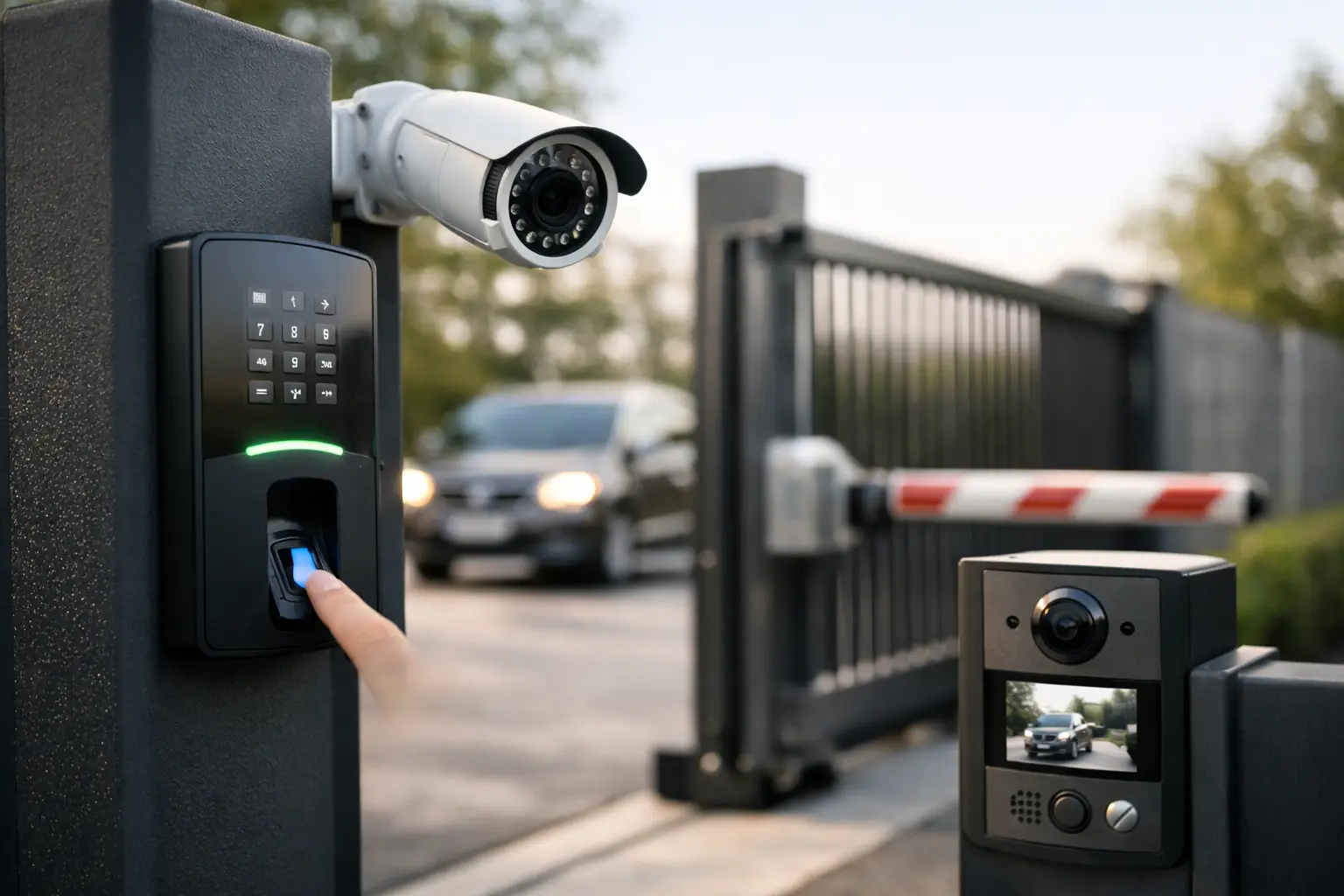
A driveway gate should do more than look good from the street. It should help you control who enters, protect the people using it, and keep working when Arizona heat, monsoon dust, and everyday traffic put it to the test. The best security features for entry gates are the ones that match how your household or business actually uses the property, not just the ones with the longest feature list.
For a family home, that may mean a reliable keypad, camera coverage, and safety sensors. For a small business, it could mean credential-based access, vehicle detection, and a system that records who came through after hours. The right setup creates security without making daily arrivals frustrating for residents, guests, employees, delivery drivers, or customers.
Start With a Gate That Can Resist Forced Entry
Smart accessories are valuable, but the gate itself is still the first line of defense. A gate that sags, has loose hinges, or can be pushed open after the operator disengages gives a false sense of security. Before adding technology, make sure the frame, posts, hinges, rollers, track, latch points, and operator mounting are in good condition.
For swing gates, properly sized hinges and a positive locking point matter. For sliding gates, stable track alignment, quality rollers, and protected gate edges help prevent both breakdowns and easy tampering. A well-installed operator should hold the gate closed rather than relying on a light-duty latch or a worn chain.
Commercial properties may need heavier steel construction, protected operator cabinets, and access hardware designed for frequent cycles. Residential gates often benefit from a clean, durable design that does not create hiding places around the entry. Security works best when the physical gate and the access system support each other.
Access Control Is the Center of Gate Security
The most effective gate security feature is controlled access. You should be able to decide who gets in, how they get in, and when their access ends. The best choice depends on the number of users and how often those users change.
A wireless remote is convenient for household members, but it is not always enough on its own. Remotes can be lost, copied, or left in a vehicle. Rolling-code remotes offer better protection than older fixed-code systems because the access code changes with each use. If a remote goes missing, ask whether it can be removed from the operator memory instead of replacing the entire system.
Keypads are a practical choice for homes, rental properties, and smaller offices. Look for a model that supports multiple user codes. That makes it easier to give a temporary code to a contractor, housekeeper, dog walker, or delivery service without sharing your primary code. Change codes when staff changes or when a tenant moves out.
For properties with more users, key fobs, cards, and mobile-phone credentials offer better control. Many modern systems can show which credential opened the gate and when. That record can be useful for a business owner, community manager, or homeowner who wants more visibility over access.
Use a Video Intercom for Visitor Verification
A video intercom is one of the most practical upgrades for a gate that receives regular visitors. Instead of opening the gate based on a voice alone, you can see who is at the entrance and speak with them before granting access.
For homeowners, this is especially useful when children are home, packages are being delivered, or service professionals arrive while you are away. For a business, a video intercom can help staff verify vendors and visitors without walking to the gate.
Placement matters as much as the equipment. The camera should capture a clear view of a visitor’s face, even in bright afternoon sun or low light. It should also be positioned so someone cannot easily reach around and press the call button while staying outside the camera view.
Cameras Help After the Alert, Not Just During It
A gate camera is not a substitute for a secure gate, but it gives you useful information before, during, and after an access event. Cameras can alert you when someone approaches, record suspicious activity, and help confirm whether a gate was left open.
Choose camera coverage based on the full approach, not only the gate opening. A camera aimed at the entry should capture vehicles pulling up, people using the keypad or intercom, and the gate path. Night vision and motion alerts are helpful, but overly sensitive alerts can become a nuisance when they trigger for passing traffic, blowing plants, or neighborhood animals.
For commercial sites, cameras should cover both the outside approach and the inside exit area. That provides a clearer record if a vehicle tailgates through the gate or someone attempts to leave through an unauthorized exit.
Safety Sensors Are Security Features Too
A gate that closes on a vehicle, person, pet, or bicycle is not secure. It is dangerous, expensive, and likely to be taken out of service when you need it most. Proper safety devices also help prevent the gate from being manipulated or damaged during an attempted entry.
Photo eyes create an invisible beam across the opening. If something breaks that beam while the gate is closing, the operator should stop or reverse. Edge sensors add protection by detecting contact along the moving edge of the gate. Vehicle loops or other presence sensors can keep a gate from closing on a vehicle that is still in the travel path.
These devices need regular testing. Dust, insects, sun glare, damaged wiring, and misalignment can affect performance. A quick check-up is far less costly than a damaged gate, vehicle, or injury. Never bypass a safety sensor because it seems inconvenient. If it is causing false reversals or stopping the gate, the problem needs to be diagnosed and repaired.
Add Vehicle Detection Without Creating an Easy Exit
Exit systems need careful planning. A free-exit loop can open the gate automatically when a vehicle approaches from inside, which is convenient for homes and businesses. But a poorly placed loop may trigger too early or allow someone outside the gate to activate it with a vehicle near the entrance.
A qualified gate technician can position detection equipment to fit the driveway layout and traffic pattern. In some situations, an exit keypad, credential reader, or monitored intercom is a better choice than automatic free exit. The goal is to make departure easy for authorized users while limiting opportunities for unauthorized access.
For properties with frequent deliveries, consider how trucks turn around and where drivers will wait. A secure gate that causes vehicles to block a busy street is not a practical solution. Good gate design accounts for security, traffic flow, and emergency access at the same time.
Protect the Operator and Plan for Power Loss
The gate operator is the working heart of an automatic entry system. It should be mounted securely, protected from weather, and enclosed so wiring and controls are not easy to reach. Exposed wiring, damaged control boxes, and loose chain guards invite trouble and can lead to sudden failures.
Battery backup is worth considering for many properties. A power outage should not leave your family locked out of the driveway or prevent employees from accessing a business. The right backup option depends on the operator, gate size, frequency of use, and local requirements. Backup power does have limits, so it should be tested and maintained rather than assumed to work indefinitely.
You also need to know where the manual release is and how to use it safely. Keep the release key secure, but make sure authorized adults or managers know the procedure. For commercial sites, establish a clear plan for who handles gate access during an outage or equipment failure.
The Best Security Features for Entry Gates Work Together
There is no single best setup for every property. A gated home with two drivers may only need a rolling-code remote, keypad, video intercom, and properly maintained safety sensors. A busy contractor yard may need credential access, cameras, vehicle loops, operator protection, and a detailed access schedule.
The trade-off is usually convenience versus control. The easier it is for anyone to enter or exit, the harder it can be to track access. The more layers you add, the more maintenance and occasional troubleshooting the system will require. That does not mean you should avoid technology. It means every feature should solve a real problem on your property.
If your gate hesitates, reverses unexpectedly, opens without a clear reason, or no longer feels secure, have it checked before a small issue turns into a full failure. Riggs Rescue AZ can help homeowners and business owners assess gate hardware, access options, safety devices, and practical upgrades with clear recommendations and no surprises.
A well-secured entry gate should feel simple when you use it: authorized people get in safely, unwanted visitors have fewer opportunities, and you are not left guessing whether the system will work when it matters.

Leave a Reply