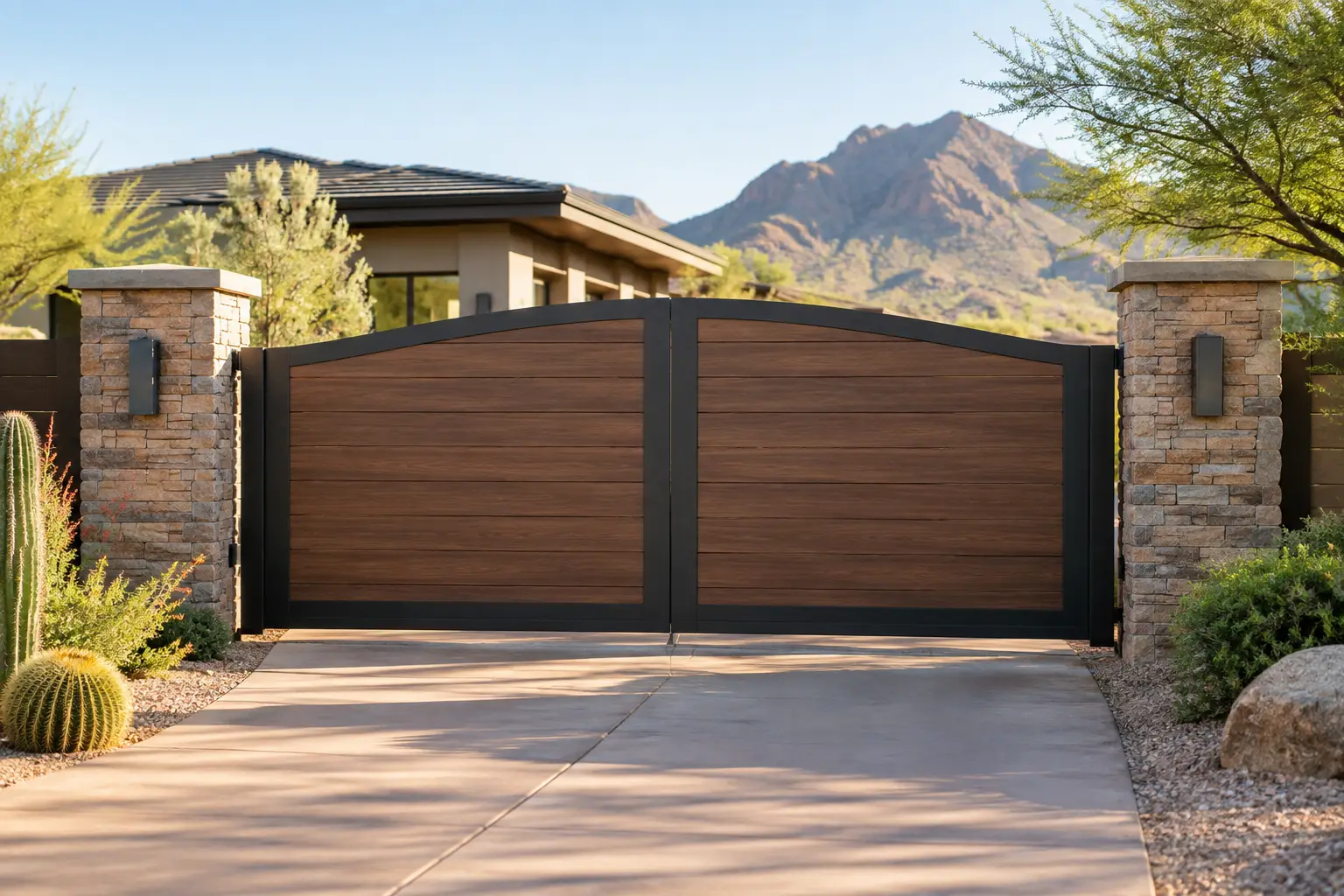
A driveway gate has to do more than look good from the street. It has to handle daily use, protect your property, work with your opener, and stand up to Arizona sun, heat, dust, and monsoon weather. When homeowners ask about the best driveway gate materials, the honest answer is that the right choice depends on the look you want, the level of security you need, and how much maintenance you are willing to take on.
A gate that looks great on installation day can become a source of frustration if its material is not suited to the property or the climate. Here is a clear look at the most common options and what to expect from each one.
What Arizona Weather Demands From a Gate
Gilbert-area gates face conditions that can be hard on finishes, hardware, and moving parts. Long periods of direct sun can fade colors and dry out protective coatings. Summer heat causes materials to expand, while dust and wind can work their way into hinges, tracks, rollers, and gate operators. During monsoon season, strong gusts put extra pressure on large gate panels.
That does not mean one material is automatically off the table. It means material quality, proper fabrication, and correct installation matter. A well-built gate needs sturdy posts, the right hinges or track system, reliable latches, and an operator sized for the gate’s weight and movement. Choosing a beautiful gate that is too heavy for its opener is a costly shortcut.
Best Driveway Gate Materials: How They Compare
Steel: Best for Strength and Security
Steel is often the first choice for homeowners and businesses that want a substantial, secure driveway gate. It can be formed into clean modern panels, traditional wrought-iron-style designs, privacy gates, and ornamental patterns. Because it is strong, steel works especially well for wide openings and properties that need a heavier-duty gate.
The trade-off is weight. A steel gate requires solid structural support and an opener designed to carry the load. Poorly balanced steel gates can wear out hinges, rollers, and operators sooner than expected. Steel also needs a quality protective finish to prevent rust, particularly around welds, scratches, and areas exposed to irrigation.
For a long-lasting finish, powder-coated steel is a strong option. It costs more than a basic painted gate, but it generally provides better protection against sun exposure and everyday wear. If security and durability are at the top of your list, steel is hard to beat.
Aluminum: Best for Low-Maintenance Performance
Aluminum offers a lot of the visual appeal of metal without the same weight. It does not rust like steel, making it a practical option for homeowners who want lower maintenance and a clean, finished appearance. Aluminum gates can also be designed to mimic ornamental iron, horizontal slats, or contemporary privacy panels.
Its lighter weight is a real advantage for automatic gate systems. The operator does not have to work as hard, which can help reduce strain on the system when the gate is correctly installed. Aluminum is also a smart choice for properties where posts or existing structures may not be ideal for a very heavy gate.
The downside is that aluminum is not as resistant to impact as steel. A vehicle bump, a hard hit from equipment, or a major wind event can dent or bend thinner aluminum components. For most residential applications, a quality aluminum gate is an excellent balance of appearance, reliability, and upkeep. For high-security commercial sites, steel may be the better fit.
Wood: Best for Warmth and Privacy
Wood gates bring a natural, high-end look that metal alone cannot duplicate. Cedar, redwood, and properly treated lumber can create a warm entry that complements desert landscaping, stucco homes, and ranch-style properties. Wood is also one of the best options when privacy is the main goal.
Arizona’s dry heat is where wood needs extra attention. Without regular sealing or staining, boards can fade, crack, warp, or split over time. The gate frame matters just as much as the boards themselves. A wood gate should have a properly engineered steel or aluminum frame to reduce sagging and keep the gate aligned.
Wood can be an excellent choice when you are prepared for periodic maintenance. It is less ideal for owners who want a gate they can install and largely forget. If you love the look of wood but want less upkeep, consider a metal frame with composite or wood-look infill panels.
Vinyl and Composite: Best for Simple Privacy
Vinyl and composite gates are often chosen for their clean appearance and limited maintenance needs. They do not need regular painting or staining, and they can work well with privacy fencing around residential properties. Composite materials can offer a more substantial feel and may imitate wood grain without requiring the same level of care as real wood.
However, not all vinyl and composite products perform equally well in intense heat. Lower-quality panels may fade, become brittle, or move more noticeably as temperatures change. These materials also need a strong internal frame, especially for a driveway gate that opens and closes multiple times a day.
Vinyl and composite are typically better for light-to-medium residential use than for large, heavy, or high-security entrances. Ask about UV resistance, reinforcement, warranty coverage, and the gate’s overall weight before making a decision.
Match the Material to How You Use the Gate
The best material is not always the most expensive one. Start with how the gate will serve your property. A decorative entry gate that opens a few times per day has different needs than a security gate at a busy small business or a wide RV entrance.
For a high-traffic or security-focused property, steel provides the strength and presence many owners want. For a residential automatic gate where low maintenance is the priority, aluminum is often the practical favorite. For a private courtyard or a home with a natural exterior style, wood can be worth the maintenance commitment. Vinyl or composite may make sense for lighter-use gates where privacy and easy care come first.
Gate design also affects the choice. Sliding gates place different demands on rollers, tracks, and support structures than swing gates. A double swing gate may be easier to fit in a tight driveway, while a sliding gate can be a better option where a swinging leaf would block a slope, parking area, or walkway. The material and design should be planned together, not selected separately.
Do Not Overlook the Gate Frame and Hardware
Even the best driveway gate material can fail early if the frame, posts, hinges, and operator are not up to the job. A wood gate with a weak frame will sag. An aluminum gate installed on unstable posts will go out of alignment. A heavy steel gate paired with an undersized opener can lead to slow operation, repeated shutdowns, and unnecessary repair calls.
This is also why automatic gate safety matters. Your system should include the right safety devices, such as photo eyes, properly placed controls, and reversal features. The gate should not scrape, bind, drag, or slam at either end of its travel. If it does, the problem should be addressed before it causes more damage to the operator or creates a safety concern.
A professional installer can evaluate driveway width, slope, wind exposure, available power, access-control needs, and the condition of existing posts. That up-front planning helps avoid surprises after the gate is already built.
A Practical Choice for Most Arizona Properties
For many Arizona homeowners, powder-coated aluminum offers the easiest long-term balance of appearance, weather resistance, and manageable weight. For properties where security is the priority, properly finished steel remains the stronger investment. There is no one-size-fits-all answer, and that is a good thing: your gate should fit your home, your daily routine, and your budget.
If you are replacing an aging gate, planning an automatic entry system, or dealing with a gate that drags, sags, or will not open reliably, a local gate professional can help you sort through the options without the guesswork. The right material is only the beginning. A properly sized, safely installed gate gives you dependable access and peace of mind every time you pull into the driveway.

Leave a Reply