Category: Uncategorized

  • How to Tell if Garage Opener Is Failing

    How to Tell if Garage Opener Is Failing

    That moment when your garage door hesitates, groans, or only closes after the second try is usually not a random glitch. If you are wondering how to tell if garage opener is failing, the answer often shows up in small warning signs before the system quits completely. Catching those signs early can save you from a stuck door, a safety problem, or a more expensive repair later.

    A failing opener does not always mean the entire garage door system is bad. Sometimes the opener is the problem. Sometimes the opener is reacting to trouble somewhere else, like the springs, rollers, tracks, or sensors. That is why it helps to know what the opener should sound like, how quickly it should respond, and what changes are worth paying attention to.

    How to tell if garage opener is failing before it stops

    Most garage door openers do not fail all at once. They usually get unreliable first. You may notice the remote works only sometimes, the motor sounds louder than usual, or the door starts and stops in a jerky way. Those are all signs that something is wearing out, going out of adjustment, or being forced to work harder than it should.

    One of the clearest warning signs is inconsistent performance. If the opener works fine in the morning but struggles later in the day, or opens smoothly one day and stutters the next, that is not normal wear you should ignore. Intermittent issues often point to electrical problems, sensor trouble, a weakening motor, or internal gear wear.

    Slower operation can also be a red flag. Garage doors should open and close with a steady, predictable pace. If your opener suddenly feels sluggish, pauses mid-cycle, or sounds strained, the unit may be aging or dealing with excess resistance.

    Strange noises usually mean something changed

    Every opener has its own normal sound. Chain-drive units tend to be louder. Belt-drive systems are usually smoother and quieter. Screw-drive openers can have a distinct mechanical hum. What matters is not whether your opener makes noise, but whether it starts making new noise.

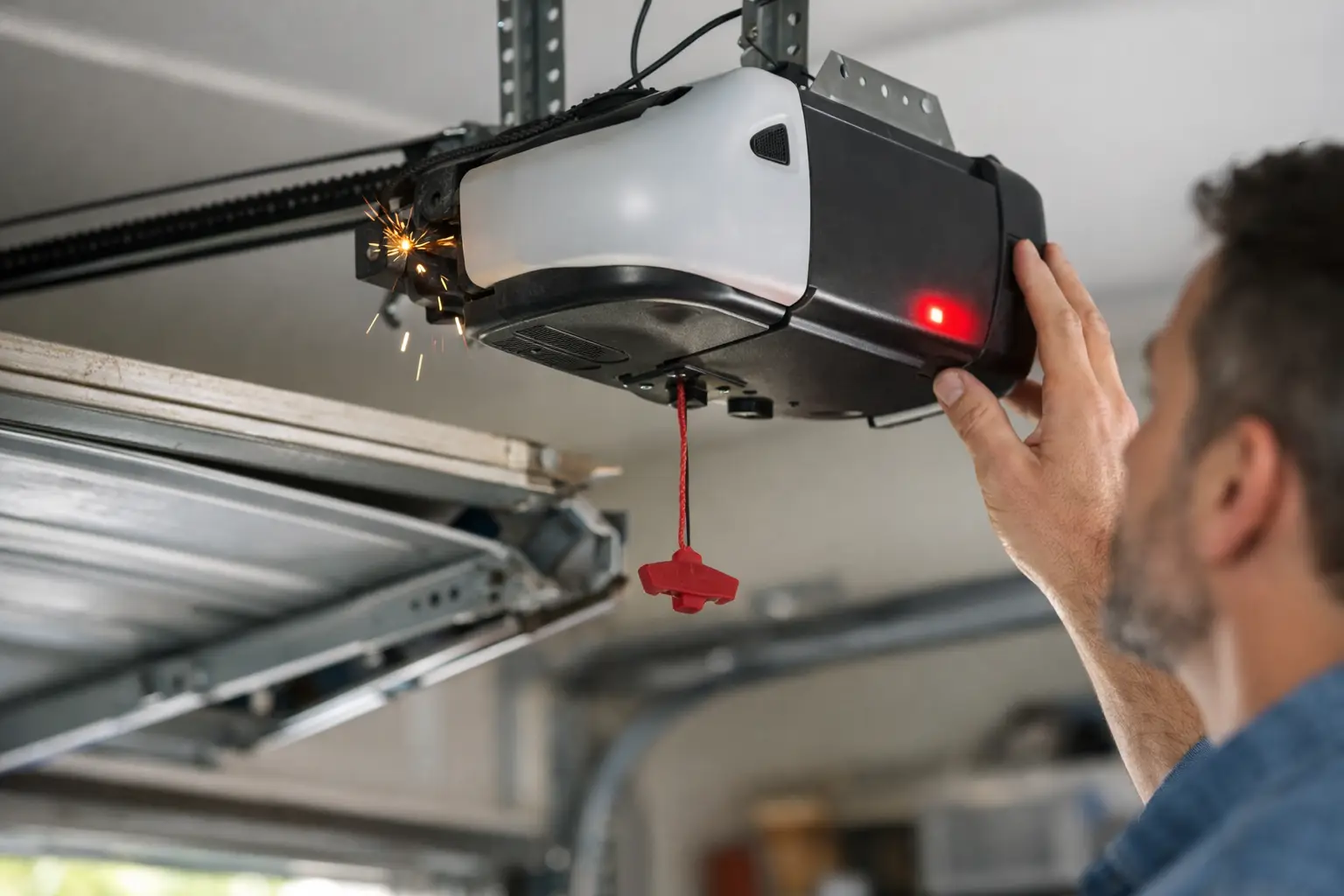
    Grinding, rattling, popping, or buzzing sounds should get your attention. Grinding can point to worn gears inside the opener. Rattling may come from loose hardware or vibration from an overworked system. A loud hum with no door movement can mean the motor is receiving power but cannot move the door properly.

    It depends on what else is happening at the same time. If the opener is noisy but the door still moves evenly, the issue may be limited to the opener housing or drive components. If the noise comes with jerking, reversing, or stopping short, the problem may involve both the opener and the door.

    The remote and wall switch can reveal opener trouble

    Sometimes people assume the opener is failing when the real issue is a dead remote battery or signal interference. That does happen. But if you replace batteries and still have inconsistent response, the opener itself may be the problem.

    Pay attention to how the unit reacts. If the wall button works but the remote does not, you could be dealing with remote programming, frequency interference, or a failing receiver in the opener. If neither control works reliably, the problem is more likely inside the opener or with the power supply.

    Delayed response matters too. If you press the button and the opener takes a second or two to react, that lag can signal electrical wear, a weakening logic board, or a motor that is starting to fail.

    Reversing for no clear reason is not something to brush off

    A garage door that starts down and then reverses without hitting anything is one of the most common service calls. Sometimes the fix is simple, like dirty or misaligned photo-eye sensors. Other times, it points to force setting issues, track resistance, or opener strain.

    If your opener reverses often, especially with no visible obstruction, it is telling you something is off. Safety systems are designed to stop the door when they sense resistance or a problem. That is good. But when false reversals keep happening, the opener may be misreading the load or struggling to complete the cycle.

    This is where guessing can cost you time and money. Repeated reversals are not always an opener replacement issue, but they are a sign the system needs attention.

    A garage door opener that shakes or jerks is under stress

    The opener should guide the door, not fight it. If the rail shakes hard, the opener head vibrates more than usual, or the door moves in a choppy way, something is causing extra strain.

    In some cases, the opener is failing internally. Worn drive gears, loose sprockets, or motor problems can create rough operation. In other cases, the opener is fine but the door is out of balance, the rollers are worn, or the track has resistance. The opener then takes the punishment.

    That distinction matters because replacing the opener without fixing the door problem can lead to the same failure all over again. A healthy opener paired with an unbalanced door will still wear out early.

    How to tell if garage opener is failing or if the door is the issue

    This is where homeowners often get stuck. The opener and the door work together, so symptoms can overlap. A few clues can help narrow it down.

    If the opener motor runs but the door barely moves, internal opener parts may be stripped or damaged. If the door feels unusually heavy when operated manually, the springs may be failing and the opener may only be the victim. If the door sticks in one area of travel, track alignment or roller wear may be creating resistance the opener cannot handle.

    You can also watch for uneven movement. If one side of the door rises faster than the other, that is more likely a door hardware issue than a pure opener problem. If the controls are inconsistent, the motor is noisy, and the opener light flashes error patterns, the opener itself becomes a more likely suspect.

    Because garage doors are heavy and spring systems are under tension, this is not the place for trial-and-error repairs. Basic checks are fine. Disassembly is another story.

    Age still matters, even if it kind of works

    An older opener that still runs is not always a reliable opener. Most units give years of service, but age brings wear to gears, circuit boards, sensors, and motors. Even if the opener has not failed outright, older systems often become less safe, less quiet, and less dependable over time.

    If your opener is well past its prime and starting to act up, repair may not be the best value. It depends on the part that is failing, the overall condition of the unit, and whether replacement gives you better safety features and more reliable daily use.

    For many homeowners, the tipping point is not a dramatic breakdown. It is repeated inconvenience. When you are late for work, trying to get the kids to school, or closing up a business at the end of the day, an opener that only works when it feels like it is already costing you something.

    When to call for service instead of waiting

    If your opener is making new noises, reversing randomly, responding inconsistently, or moving the door in a rough way, it is smart to have it checked before it quits completely. Waiting can turn a manageable repair into a damaged door, a burned-out motor, or a safety issue.

    This is especially true if the door will not close fully, opens on its own, or leaves you stuck inside or outside. Those are not minor annoyances. They affect security, access, and day-to-day safety.

    A professional inspection can tell you whether the fix is a sensor adjustment, a hardware repair, a gear replacement, or a full opener swap. The right answer depends on the condition of the whole system, not just one symptom. A local team like Riggs Rescue AZ can usually spot whether the opener is truly failing or whether another garage door component is causing the opener to struggle.

    The good news is that garage opener problems usually give you some warning. If your system sounds different, reacts differently, or feels less reliable than it used to, trust that change. The best time to deal with a failing opener is before it leaves your door halfway open on a 110-degree Arizona afternoon.
  • Why Does Garage Door Reverse?

    Why Does Garage Door Reverse?

    You press the wall button, the garage door starts closing, and then it heads right back up like it changed its mind. If you’re asking why does garage door reverse, the short answer is that the system thinks something is wrong. Sometimes it is doing exactly what it was designed to do. Other times, it is reacting to a small issue that needs adjustment or repair.

    That reverse feature is a safety function, not a random glitch. Modern garage doors are built to stop and reverse when they detect an obstruction, too much resistance, or a problem with the opener settings. The good news is that many causes are straightforward. The not-so-good news is that a garage door is heavy, under tension, and not something to force when it starts acting up.

    Why does garage door reverse when nothing is there?

    This is the question most homeowners ask. You look under the door, see a clear opening, and still the system reverses. In many cases, the opener is sensing a problem that is not obvious from a quick glance.

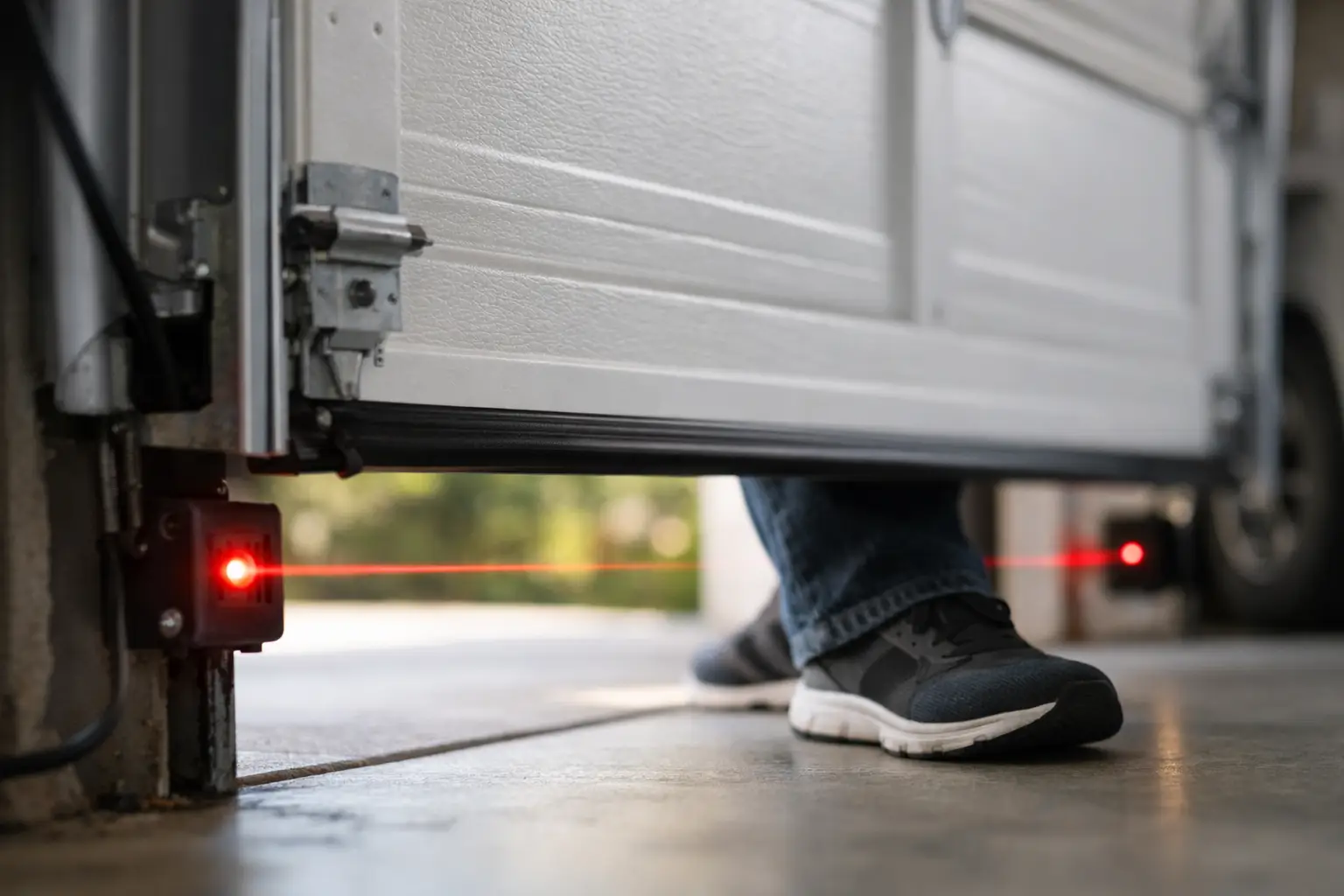
    The most common culprit is the photo-eye sensors near the bottom of the door tracks. These sensors shoot an invisible beam across the opening. If that beam is blocked, misaligned, or weakened by dirt, the opener may assume something is in the way and reverse the door before it fully closes.

    Arizona dust does not help. A little dirt on the sensor lens, a bumped bracket, or direct sunlight at the wrong angle can all interfere with the beam. If the issue seems to come and go, sensor alignment or light interference is often part of the story.

    Another common cause is the close-force or travel setting on the opener. If the opener thinks the door hit something before it reaches the floor, it will reverse to prevent damage or injury. That can happen when settings are slightly off, especially after wear develops in the rollers, springs, or tracks.

    The safety sensors are doing their job

    Garage door sensors are one of the first things to check because they are designed to trigger a reverse. Look at the sensors mounted a few inches off the floor on each side of the opening. Most units have indicator lights that show whether the sensors are aligned and receiving power.

    If one light is off or blinking, that is a clue. The sensor may be dirty, the wiring may be loose, or the bracket may have shifted. Even a small bump from a trash bin, bike tire, or broom can knock a sensor slightly out of line.

    Cleaning the lenses with a soft cloth is a good starting point. After that, check whether both sensors face each other directly. If they are visibly crooked, careful adjustment may solve the issue. If the wires look damaged or the lights still do not behave normally, it is time for a professional to take over.

    When the tracks or rollers create resistance

    Sometimes the opener reverses because the door is not moving smoothly. It starts down, meets extra resistance, and the opener responds by sending it back up. That is a safety response, but the root cause is mechanical.

    Worn rollers, bent tracks, loose hardware, or buildup in the tracks can all make the door bind. You might hear grinding, squeaking, or a jerky movement before the reverse happens. If the door looks uneven as it travels, that is another sign the issue is more than just the opener.

    This is where DIY has limits. You can look for obvious debris in the tracks, but you should not try to bend tracks back into place or keep running the door to see if it clears itself. Repeated use can make a small repair turn into a bigger one.

    Opener settings can be slightly off

    Garage door openers rely on travel limits and force settings to know when the door should stop. If those settings drift out of adjustment, the opener can think the floor arrived too early or that the door hit an object on the way down.

    A door that closes almost all the way and then reverses often points to a travel-limit issue. A door that reverses partway down can be dealing with force sensitivity, sensor trouble, or door resistance.

    The challenge is that these settings are not one-size-fits-all. A very minor adjustment can solve the problem, but too much adjustment can create a safety risk. That is why opener tuning works best when paired with a full look at the door system itself. If the springs, rollers, or balance are off, changing opener settings alone may only mask the real problem.

    A poor seal or floor issue can fool the opener

    Here is one that surprises people. If your garage floor is uneven, the bottom seal may hit one spot before the rest of the door does. The opener can interpret that as an obstruction and reverse. This is more noticeable on doors that almost close fully and then pop back open.

    You may also see this when the bottom seal is stiff, damaged, or folded in a way that creates extra resistance. The opener does not know whether it hit a brick, a bike tire, or a bad seal. It just senses pressure and reacts.

    This kind of issue depends on the condition of the door, the opener settings, and the floor itself. In some cases, a small adjustment is enough. In others, the seal needs replacement or the door needs a better setup for the opening.

    Spring and balance problems can trigger reversing

    If the door is out of balance, the opener has to work harder than it should. That extra strain can cause inconsistent travel and reversal issues. A weak spring, worn spring system, or cable problem can all affect how the door moves.

    You may notice the door feels heavy, slams shut, rises unevenly, or struggles to stay in place when moved manually. Those are strong warning signs. Springs are under high tension and are not safe for homeowners to repair without the right tools and training.

    If the reversing problem started along with loud popping noises, a crooked door, or a gap in the spring, stop using the system and schedule service. This is not the kind of issue to put off.

    What you can safely check first

    If your garage door keeps reversing, a few simple checks make sense before you call. Make sure nothing is stored near the photo eyes, clean both sensor lenses, and look for indicator lights that are blinking or off. Watch the door travel once and listen for scraping or hesitation.

    You can also inspect the area where the door meets the floor and look for leaves, small objects, or hardened debris that may be creating resistance. If your opener has recently been disconnected or reset, the settings may need to be corrected.

    What you should not do is force the door repeatedly, adjust springs, pull apart opener components, or keep overriding the system. A reversing garage door is often warning you about a safety or hardware issue. Ignoring that warning usually does not save money.

    When to call for professional garage door repair

    If cleaning the sensors and clearing the area do not fix it, professional service is the smart move. The same goes for doors that reverse inconsistently, shake during travel, make new noises, or show signs of worn parts.

    A trained technician can tell the difference between a simple sensor alignment and a larger problem with the springs, track, opener logic, or door balance. That matters because replacing the wrong part wastes time and money. Fast, honest diagnosis is usually the most affordable path.

    For homeowners and small businesses, the bigger concern is reliability. A garage door that reverses without warning can leave your home unsecured, interrupt your day, or create a safety issue for kids, pets, vehicles, and employees. If the problem is recurring, it is worth solving correctly instead of working around it.

    Why does garage door reverse only sometimes?

    Intermittent problems are frustrating because they make the system seem fine until it is not. In most cases, a part is starting to fail or conditions are affecting the door at certain times of day.

    Sun glare on sensors, temperature changes, shifting brackets, a door that binds only during part of its travel, or an opener that is becoming more sensitive with age can all cause on-and-off reversing. That is why a quick test run is not always enough to identify the issue. You need the whole system checked, not just the obvious part.

    At Riggs Rescue AZ, we see this a lot with doors that have more than one small issue happening at once. The sensor may be a little off, and the rollers may be adding resistance, and the opener settings may already be right on the edge. Each problem alone seems minor. Together, they cause the reverse cycle.

    A garage door that reverses is not trying to be difficult. It is telling you the system needs attention. The best next step is to treat it early, before a minor adjustment turns into a major repair.

  • Best Garage Doors for Hot Climates

    Best Garage Doors for Hot Climates

    Step into an Arizona garage in July and you can feel the difference between a door that fights the heat and one that absorbs every bit of it. If you’re shopping for the best garage doors for hot climates, the right choice can make your garage more usable, protect what’s stored inside, and reduce strain on rooms next to the garage.

    Hot weather is hard on garage doors. Constant sun exposure can fade finishes, warp lower-quality materials, dry out seals, and turn your garage into an oven by late afternoon. That means the best option is rarely just the cheapest door on the shelf. It needs to handle heat, sun, and daily use without becoming a maintenance problem a year later.

    What makes garage doors perform better in extreme heat

    In hot climates, three things matter most: material, insulation, and exterior finish. Material affects how well the door resists warping, cracking, denting, and sun damage. Insulation helps slow heat transfer into the garage. The finish and color determine how much solar heat the door absorbs throughout the day.

    The tricky part is that no single garage door is perfect for every home or business. A detached garage has different needs than an attached garage. A west-facing door in full sun needs more protection than one shaded most of the day. If your garage is used as a workshop, gym, or storage area for temperature-sensitive items, investing in a better-performing door usually pays off faster.

    Best garage doors for hot climates by material

    Insulated steel garage doors

    For most homeowners, insulated steel is the strongest all-around choice. Steel holds up well in intense heat, does not warp like wood, and comes in a wide range of styles and price points. When paired with quality insulation, it helps block a significant amount of heat from entering the garage.

    This is often the sweet spot between durability, appearance, and cost. Steel doors can still get hot to the touch in direct sun, but insulation inside the door panels helps reduce how much of that heat transfers inward. If your priority is practical performance without overspending, insulated steel is hard to beat.

    The trade-off is that thinner steel doors can dent more easily, especially in busy households or commercial settings. Not all steel doors are built the same, so gauge, insulation type, and panel construction matter.

    Aluminum and glass garage doors

    Aluminum doors are lightweight, rust-resistant, and a popular modern design option. In dry desert climates, aluminum can be a smart material because it resists corrosion and usually requires less upkeep than wood. But by itself, aluminum is not the best insulator.

    If you’re considering an aluminum and glass door, be careful. These doors look sharp, but large glass sections can let in a lot of heat unless the glass is insulated or specially treated. For a climate like Arizona, this style works best when appearance is a top priority and the product is built with heat control in mind.

    Faux wood composite doors

    If you want the look of wood without the maintenance headaches, composite or faux wood doors are worth a close look. They can stand up better to sun exposure than real wood and usually require less refinishing over time. Many are built over an insulated core, which is helpful in hotter regions.

    This option can be a good fit for homeowners who want strong curb appeal but do not want to deal with the cracking, fading, and upkeep that real wood often brings in extreme heat.

    Real wood garage doors

    Wood doors can be beautiful, but they are usually not the first recommendation for hot, sunny climates. Dry heat and direct sun can cause wood to dry out, fade, crack, or warp over time if it is not maintained carefully. That does not mean wood is always a bad choice. It means you should go in knowing it will likely need more attention and more money over its lifespan.

    For most homeowners looking for long-term value and low stress, wood is more of a style-driven choice than a practical one.

    Why insulation matters more than many people think

    People often assume insulation only matters in cold weather. In Arizona, the opposite is just as true. An insulated garage door helps slow the movement of heat into your garage, especially during the hottest parts of the day.

    That matters if your garage shares walls with your home, has a bedroom above it, or stores paint, tools, electronics, or anything sensitive to extreme temperatures. A well-insulated door can also help your garage door opener work under less strain, since intense heat can affect moving parts and electronics over time.

    When comparing doors, ask about the insulation type and the R-value. Higher R-values generally mean better thermal resistance, but the best choice depends on your setup. A detached garage used only for parking may not need top-tier insulation. An attached garage with heavy sun exposure probably should not settle for a basic non-insulated door.

    Color and finish can change how hot your garage gets

    Color is not just a design decision in hot climates. Dark garage doors absorb more heat, especially on south- and west-facing homes. Lighter colors reflect more sunlight and usually stay cooler.

    If you love a darker look, that does not automatically rule it out. It just means insulation and finish quality become even more important. Factory finishes designed for UV resistance tend to hold up better against fading, peeling, and surface breakdown.

    This is one of those areas where appearance and performance need to be balanced. The best-looking door on day one is not always the one that still looks good after several Arizona summers.

    Features that matter in hot climates

    A garage door built for heat should have more than just the right material. Weather seals around the perimeter help reduce hot air and dust entering the garage. Quality bottom seals are especially important because desert heat often comes with blowing dirt and debris.

    Heavy-duty hardware also matters. Rollers, hinges, tracks, and springs all deal with repeated expansion, contraction, and use in high temperatures. A door may look great, but if the hardware is low quality, you may end up dealing with noisy operation, premature wear, or repair calls sooner than expected.

    If you have an automatic opener, make sure the opener and door are matched correctly. A heavier insulated door may need a stronger opener or upgraded components. That is not a reason to avoid insulation. It is simply something to plan for so the system works reliably.

    The best garage doors for hot climates depend on how you use the space

    If your garage is attached to your home and gets full afternoon sun, an insulated steel or insulated composite door is usually the most sensible option. It offers durability, better heat control, and lower maintenance.

    If your garage is detached and mainly used for vehicle storage, you may be able to prioritize budget a little more, though insulation can still help. If your garage doubles as a workspace, home gym, or storage area, it makes sense to invest in a better-insulated door with strong seals and a UV-resistant finish.

    For commercial properties, durability and cycle life become even more important. A small business with frequent daily door use needs something that can handle heat and repetition without constant downtime.

    Don’t overlook installation quality

    Even the best door can underperform if it is installed poorly. Gaps, uneven tracks, weak seals, and improper spring setup all affect how the door handles heat, dust, and daily operation. In a hot climate, those small issues tend to show up fast.

    Professional installation also gives you a better chance of getting the door size, insulation level, and hardware package that actually fits your property. A good installer should explain your options clearly, point out trade-offs, and avoid pushing features you do not need.

    That kind of honest guidance matters, especially when you want a door that lasts instead of one that just looks good for a few months. For homeowners and business owners around Gilbert, Mesa, and Chandler, choosing the right product upfront can save a lot of frustration later.

    What we’d recommend for most Arizona properties

    For most homes in hot, sunny areas, the safest recommendation is a double-layer or triple-layer insulated steel garage door in a lighter color with strong perimeter seals. It gives you the best mix of affordability, durability, and heat resistance.

    If curb appeal is a big priority, an insulated faux wood composite door can be a strong upgrade. If you want a modern look, aluminum can work well, but be careful with large glass sections unless the door is designed to limit heat gain.

    A garage door should make life easier, not add another problem to your to-do list. If you’re weighing options, focus less on showroom looks and more on how the door will perform after years of sun, heat, and daily use. That is usually where the right choice becomes clear.

  • Best Garage Doors for Desert Homes

    Best Garage Doors for Desert Homes

    By mid-afternoon in Arizona, your garage door is taking a beating. Sun cooks the surface, heat builds inside the garage, and every moving part has to keep working through dust, dry air, and big temperature swings. That is why choosing the best garage doors for desert homes is less about looks alone and more about picking a door that can handle harsh conditions without turning into a constant repair bill.

    A garage door in the desert has a tougher job than most homeowners realize. It is one of the largest moving parts of your home, and it sits exposed to direct sun day after day. The wrong material can fade, warp, dent too easily, or transfer too much heat into the garage. The right one gives you better durability, quieter operation, and fewer surprises when summer hits hard.

    What makes a garage door desert-ready?

    In a mild climate, you can get away with more style-first decisions. In the desert, performance matters first. Heat resistance, UV durability, insulation, and low-maintenance finishes all deserve a close look.

    You also have to think about how you use your garage. If it is attached to the house, insulation matters more because heat in the garage can affect nearby rooms. If the garage faces west, the afternoon sun will be brutal, so color and material become even more important. If the space doubles as a workshop, gym, or storage area, that changes what door makes sense too.

    The best garage doors for desert homes usually balance four things well: they resist sun damage, help control heat, hold up under daily use, and fit the budget without creating future headaches.

    Best materials for garage doors in desert homes

    Steel is the most practical choice for many homes

    For a lot of Arizona homeowners, insulated steel is the safest bet. Steel doors are durable, widely available, and easier to maintain than wood. They also come in a broad range of styles, from clean modern panels to carriage-house looks.

    The key is not just choosing steel, but choosing the right kind of steel door. A thin, non-insulated builder-grade door may be cheaper upfront, but it will not do much to slow heat transfer. In desert conditions, an insulated steel door usually offers better long-term value. It can help stabilize garage temperatures and often runs quieter than a basic hollow door.

    There are trade-offs. Steel can dent if it takes a hit from a basketball, bike, or bumper. Lower-quality finishes may also fade faster under intense sun. But overall, for cost, durability, and performance, insulated steel is hard to beat.

    Aluminum can work, but quality matters

    Aluminum doors are lightweight and naturally rust-resistant, which sounds great in a dry climate. They are often used for contemporary designs, especially full-view doors with glass panels.

    The downside is strength. Aluminum dents more easily than steel, so it may not be the best fit for busy households or high-use commercial settings. In hot climates, a full-view glass-heavy aluminum door can also let in a lot of heat unless the glass is upgraded appropriately. If style is the top priority, aluminum can be a good option, but it needs to be chosen carefully.

    Wood looks great, but the desert is not easy on it

    Wood garage doors have real curb appeal. They can make a home look high-end and warm in a way that metal sometimes cannot match. But desert weather is demanding, and wood demands attention right back.

    Sun exposure dries wood out over time. Finishes need regular upkeep, and without maintenance, cracking, fading, and warping become more likely. For homeowners who love the look and are willing to stay on top of refinishing, wood can still be an option. For most people who want low maintenance and predictable costs, it is usually not the best fit.

    Faux wood gives you the look without as much upkeep

    If you like the appearance of wood but do not want the maintenance schedule that comes with it, faux wood or wood-look steel doors make a lot of sense. These doors are especially popular in desert neighborhoods where homeowners want strong curb appeal but also want something practical.

    They are not all equal, though. Some finishes hold up better in UV-heavy environments than others. A quality product with a durable exterior finish will generally perform far better than a cheap imitation.

    Why insulation matters more in the desert

    A lot of people assume insulation is mainly for cold climates. In Arizona, it matters for the opposite reason. Insulation helps slow down heat transfer, which can make a big difference when your garage door is exposed to extreme sun.

    An insulated door will not turn your garage into an air-conditioned room by itself, but it can help reduce the oven effect. That matters if your garage shares walls with bedrooms, a laundry room, or a living area. It also helps protect items stored in the garage from the worst of the heat.

    Best garage doors for desert homes usually have insulated cores

    When comparing doors, pay attention to construction. A single-layer door is the most basic option. It is usually the least expensive, but it also offers the least protection from heat and noise. Double-layer and triple-layer doors add insulation and backing materials that improve performance.

    Polyurethane insulation often provides a higher insulating value and a sturdier feel than polystyrene. That does not mean every homeowner needs the highest available rating, but in the desert, stepping up from a basic non-insulated door is often money well spent.

    Color, finish, and sun exposure

    Color is not just a design choice in hot climates. It affects surface temperature too. Dark colors absorb more heat, which can raise door temperatures and put more stress on finishes and components. Lighter colors generally reflect more sunlight and tend to stay somewhat cooler.

    That does not mean you have to avoid darker tones completely. It means you should be realistic about the exposure your door gets. A west-facing garage in full afternoon sun may do better with lighter shades or with a high-quality finish specifically designed for UV resistance.

    The finish itself matters just as much as the color. Factory-finished doors often outperform field-painted doors over time, especially in direct sun. If repainting is part of your plan, using the right exterior-grade products is important.

    Hardware and operation matter in desert conditions

    Homeowners often focus on panels and overlook the working parts. Springs, rollers, seals, tracks, and openers all deal with heat and dust too. If those components are low quality or already worn out, even a good new door can disappoint.

    Weather seals are especially important. In the desert, they help keep out dust, debris, and blowing rain during monsoon season. Bottom seals and perimeter seals wear down over time, and when they do, your garage becomes easier for heat and dirt to invade.

    Openers also need to match the door. A heavier insulated door may need a stronger opener than an older lightweight model. Belt-drive openers are often a good choice for attached garages because they run quieter, while wall-mount systems can be useful when ceiling space matters.

    Matching the door to the home and budget

    The best choice is not always the most expensive door on the showroom floor. It is the one that fits your home, your usage, and your budget without creating regret six months later.

    If you want the most practical all-around option, an insulated steel door with a durable finish is often the winner. If curb appeal is a major priority, a faux wood insulated steel door can deliver a strong look with less maintenance than real wood. If you own a modern home and love clean lines, an aluminum and glass door may work well, but only if heat gain and durability are addressed.

    For business owners, the calculation can be a little different. A commercial or mixed-use property may need heavier-duty construction, more frequent cycle ratings, and stronger security features. Appearance still matters, but downtime matters more.

    When to replace instead of repair

    Sometimes a homeowner starts by shopping for repairs and ends up realizing replacement makes more sense. If your current door is badly faded, uninsulated, noisy, frequently off-track, or showing panel damage, putting more money into it may only delay the inevitable.

    A replacement can improve curb appeal, reduce maintenance, and make the garage more usable during hot months. It can also solve compatibility problems with older openers and worn hardware. A good local garage door company should be willing to explain both options clearly instead of pushing a replacement when a repair would do.

    That honest guidance matters. In places like Gilbert, Mesa, and Chandler, where summer heat is not a short season but a long reality, the right recommendation should hold up long after the service truck leaves.

    If you are choosing a new garage door for a desert home, think beyond the brochure photo. Ask how the material handles direct sun, whether the door is insulated, how the finish is expected to wear, and what kind of maintenance it will need. A door that looks good on day one is nice. A door that still performs after years of Arizona heat is the one you will actually be glad you bought.

  • Broken Garage Door Spring Repair Basics

    Broken Garage Door Spring Repair Basics

    A garage door that suddenly feels impossibly heavy usually points to one thing: a spring problem. Broken garage door spring repair is one of those issues that can turn a normal morning into a real hassle fast, especially when your car is trapped inside or the door won’t close securely.

    Springs do the hard work every time your garage door opens and closes. They carry most of the door’s weight so the opener does not have to. When a spring breaks, the whole system gets thrown off. The opener may strain, the door may sit crooked, and trying to force it can create a bigger repair bill than you started with.

    What a garage door spring actually does

    Most people never think about garage door springs until one fails. That is understandable. They are not the most visible part of the system, but they are one of the most important.

    Your garage door likely uses either torsion springs or extension springs. Torsion springs sit above the garage door opening and twist to store energy. Extension springs run along the sides of the door tracks and stretch as the door moves. Both types are designed to counterbalance the door’s weight, which is why a properly working door feels relatively smooth and controlled.

    When a spring wears out or snaps, the door can become dangerous in a hurry. A garage door can weigh well over a hundred pounds. Without spring tension to support that weight, lifting it safely is no small task.

    Signs you need broken garage door spring repair

    Sometimes a spring breaks with a loud bang that sounds like something hit the garage wall. Other times the damage is more gradual, and the signs show up before a complete failure.

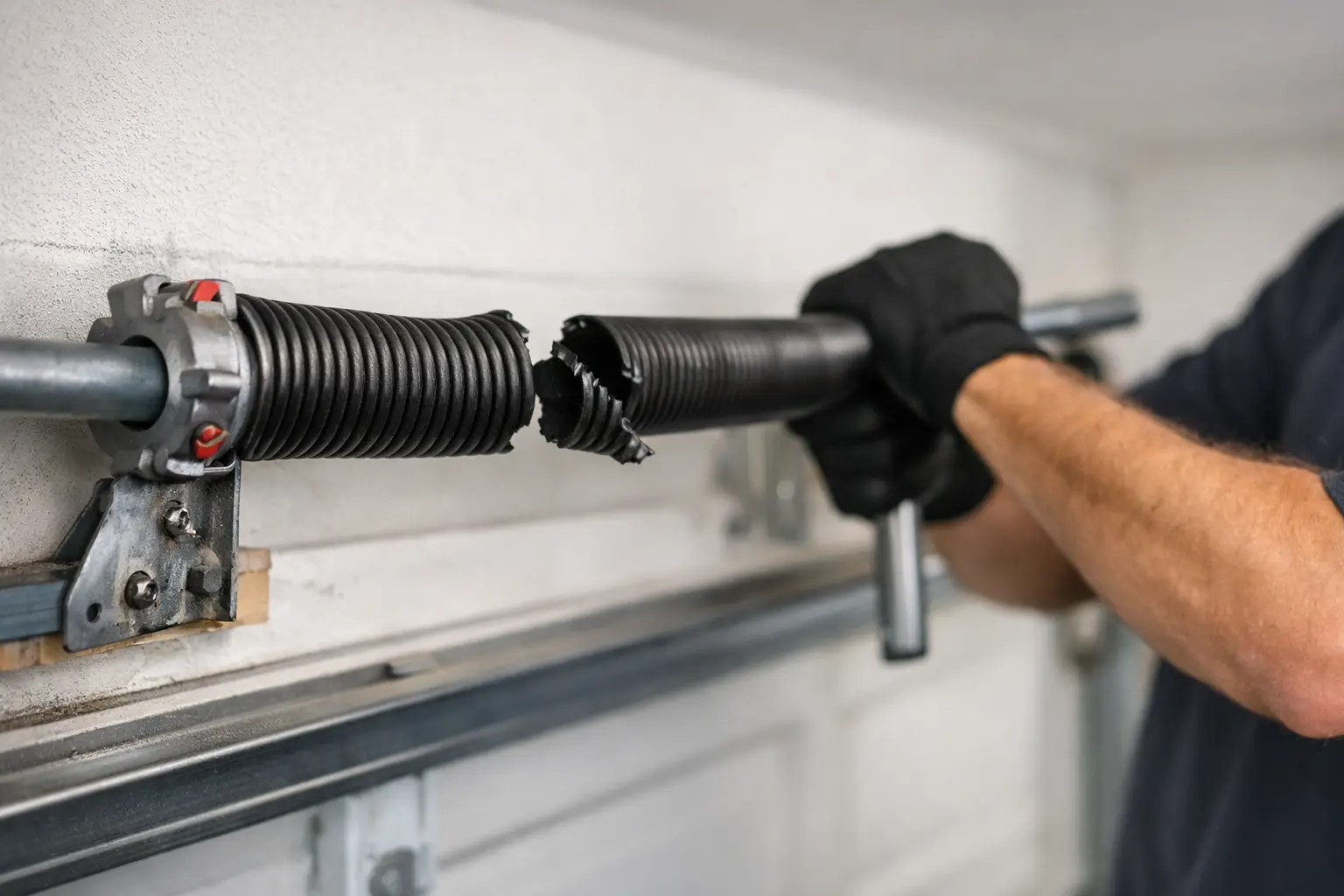
    If your garage door only opens a few inches and then stops, the spring may no longer be supporting the load. If the door looks uneven, closes too fast, or feels unusually heavy when you try to lift it manually, that is another red flag. You may also notice a visible gap in a torsion spring, stretched-out extension springs, or cables that look loose because the spring system is no longer holding proper tension.

    The opener itself can also start acting like the problem is electrical when it is really mechanical. Straining noises, jerky movement, or a motor that hums without lifting the door can all point back to a failed spring.

    Why this is not a casual DIY repair

    There are some garage door fixes a handy homeowner can handle. Lubricating hinges, replacing weather seal, or tightening a loose bracket are usually manageable. Spring work is different.

    Broken garage door spring repair involves stored tension that can cause serious injury if released the wrong way. Torsion springs are tightly wound and require specific tools and training to adjust or replace. Extension springs can also whip unexpectedly if they are disconnected without the right safety steps.

    There is also the issue of diagnosing the full problem. A broken spring may be the obvious failure, but the event can also affect cables, rollers, bearings, or the opener. Replacing the spring without checking the rest of the system can leave you with another breakdown a week later.

    That is why most homeowners are better off treating spring repair as a professional service call, not a weekend experiment.

    What to do right after a spring breaks

    The first move is simple: stop using the door. Do not keep pressing the wall button to see if the opener can muscle through it. That can burn out the motor or damage the top section of the door.

    If the door is stuck open, keep people and pets away from it until it can be secured. If it is closed, avoid trying to force it open unless there is a true emergency. In some cases, a trained technician can help you safely access the garage and stabilize the door before completing the repair.

    If you need service quickly, this is the kind of issue where same-day response matters. A garage door that will not function properly is not just inconvenient. It can affect security, safety, and your schedule for the entire day.

    How professional broken garage door spring repair works

    A proper repair starts with identifying the spring type, door weight, and overall condition of the system. Springs are not one-size-fits-all. The wrong spring size can lead to poor door balance, premature wear, and opener problems.

    A technician will usually inspect the lift cables, center bearing, drums, rollers, hinges, and opener settings at the same time. That matters because springs often fail after years of wear, and other parts may be close behind.

    For torsion systems, the broken spring is removed and replaced with a correctly matched new spring. In many cases, both springs should be replaced together if the door uses a two-spring system. That may feel like an upsell at first, but it is often the smarter value. If one spring has failed after years of use, the second is usually not far behind.

    After installation, the door is balanced, tested, and fine-tuned so it opens smoothly and stays aligned. The opener may also need adjustment once the spring tension is restored.

    Should you replace one spring or both?

    This is one of the most common questions homeowners ask, and the honest answer is: it depends. If your system has two springs and one breaks, replacing both is often the better long-term move because both springs usually have similar wear. You reduce the chance of another breakdown soon after the first repair and avoid paying for a second service visit.

    That said, there are situations where a single spring replacement makes sense, especially if the other spring was installed much more recently. A trustworthy company should explain the condition of both springs clearly, not pressure you into work you do not need.

    What affects the cost of spring repair

    People usually want a number right away, and that makes sense. Still, spring repair pricing depends on a few practical factors.

    The type of spring matters. Torsion and extension systems are priced differently. Door size and weight matter too, since heavier doors require different spring specifications. A standard residential door is one thing. A wood overlay door or commercial door is another.

    Cost can also go up if other worn parts need attention, such as frayed cables or damaged bearings. The key is transparency. You should know what is being replaced, why it is needed, and what the total cost is before the work begins. No surprises is how this kind of repair should be handled.

    Can a broken spring damage other garage door parts?

    Yes, and that is one reason quick service matters. When a spring fails, the opener may take on more weight than it was built to handle. That can stress the motor, gear assembly, rail, and arm. Cables can come loose, rollers can wear unevenly, and the door itself can shift if it keeps operating out of balance.

    In Arizona, heat can also shorten the life of components over time. Dry conditions, temperature swings, and daily use all add up. If your garage door is one of the main entry points to your home, the wear tends to show up faster than many people expect.

    How to help your springs last longer

    No spring lasts forever, but maintenance can help you get more life out of the system. Annual inspections are worth it because they catch wear before a full failure leaves you stuck. A technician can check spring tension, door balance, hardware condition, and opener performance in one visit.

    Homeowners can help by paying attention to changes in sound and movement. If the door starts jerking, squealing, or feeling heavy, do not ignore it. Small symptoms often show up before a major break.

    Regular lubrication on moving metal parts can also reduce strain, though springs themselves still wear out from cycle use over time. If your family uses the garage door constantly, your springs may simply reach the end of their service life sooner.

    Choosing the right company for the job

    Not all repair calls are handled the same way. For spring work, you want a company that responds quickly, explains the problem in plain language, and gives transparent pricing before starting. Fast service matters, but so does doing the job right.

    Look for a local team that understands both emergency repairs and full system checks. That balance is important. You do not just want someone to swap a part and leave. You want the door tested for safe, reliable operation before the truck pulls away.

    For homeowners and small businesses, that peace of mind matters almost as much as the repair itself. If a company can offer honest recommendations, affordable service, and real responsiveness, that is usually the right fit when your day gets interrupted by a broken spring.

    If your garage door suddenly feels heavy, sounds wrong, or stops opening the way it should, trust that instinct and get it checked before the problem spreads. A fast repair today is usually easier, safer, and more affordable than waiting for the whole system to fail.

  • Garage Door Repair vs Replacement

    Garage Door Repair vs Replacement

    A garage door that hesitates, bangs, or stops halfway usually raises one question fast: should you fix it or start over? That is exactly where the garage door repair vs replacement decision gets real. For most homeowners, it is not just about price. It is about safety, reliability, appearance, and whether today’s fix turns into next month’s bigger bill.

    If your garage door is the main way you enter the house, a breakdown is more than an inconvenience. It throws off your whole day. For small business owners, a bad door can slow operations, create a security problem, or leave vehicles and equipment exposed. The right call depends on what failed, how old the system is, and whether the door still makes sense to invest in.

    How to think about garage door repair vs replacement

    The easiest mistake is focusing only on the cheapest number in front of you. A repair almost always costs less upfront, but that does not always make it the better value. Replacement costs more on day one, yet it can solve repeat issues, improve safety, and give you years of dependable use.

    A good way to look at it is this: if the problem is isolated and the rest of the system is in solid shape, repair often makes sense. If the door has multiple aging parts, visible damage, or a history of repeat service calls, replacement may save money and stress over time.

    That is why honest diagnosis matters. Springs, rollers, cables, tracks, panels, and openers all wear differently. One broken part does not automatically mean the whole door is done. On the other hand, replacing one part on a worn-out system can feel like putting fresh tires on a car with a failing engine.

    When repair is usually the smart move

    Repair is often the right answer when the issue is mechanical and limited to a specific component. Broken springs, worn rollers, misaligned tracks, frayed cables, failing sensors, and opener problems are common fixes. If the door itself is structurally sound and the hardware matches the system, a professional repair can get you back up and running quickly without overspending.

    This is especially true if your door is relatively new. A door that is only a few years old and has one failed part usually does not need full replacement. In many cases, a targeted repair restores safe operation and gives you plenty of life left.

    Cosmetic damage can also fall into the repair category, depending on the material and extent. A minor dent in one section of a steel door might be manageable. Some hardware upgrades, like quieter rollers or a new opener, can also improve performance without replacing the entire door.

    For business owners, repair often makes sense when downtime is the top concern and the core door system is still dependable. A same-day fix on a commercial spring or opener issue can keep operations moving without the cost of a full system change.

    When replacement makes more sense

    There comes a point when repairing a door stops being practical. If the door is older and has frequent breakdowns, replacement usually becomes the more affordable long-term choice. The same goes for doors with major structural damage, severe rust, cracked panels, wood rot, or bent tracks that affect safe operation.

    Safety is a major reason to replace. A garage door is heavy, and the system works under high tension. If multiple components are worn, the door may become unpredictable. That is not something to gamble on, especially if kids, pets, or daily vehicle traffic are involved.

    Replacement is also worth considering if parts are obsolete or hard to match. Older doors and opener systems can become expensive to keep alive simply because compatible components are no longer easy to source. At that point, the repair bill may not tell the full story.

    There is also the curb appeal factor. If your garage door takes up a large part of your home’s front view, replacing an outdated or damaged door can make a noticeable difference. For homeowners thinking about resale, that matters more than people expect.

    The cost question: cheap now or better later?

    Most people start here, and that is understandable. But garage door repair vs replacement is really a cost-over-time decision, not just a cost-today decision.

    A repair is usually easier on the budget in the short term. If the problem is straightforward, that can be the right move. But if you are paying for repeated visits, replacing one worn part after another, the total can add up fast. That is where a bigger investment in replacement can actually be the more affordable option.

    Think about the age of the system, the number of recent repairs, and how critical the door is to your routine. If you depend on it multiple times a day, reliability has real value. A door that works consistently saves time, prevents lockouts, and reduces the risk of emergency service later.

    Transparent pricing matters here. You should know what the repair solves, what it does not solve, and whether other parts are likely to fail soon. No surprises is the standard you want.

    Signs your door is telling you it is time

    Some garage doors make the decision pretty obvious. Others sit in that gray area where a trained eye makes the difference. A few signs tend to point toward replacement more than repair.

    If the door shakes hard during travel, sounds unusually loud even after maintenance, or struggles to open and close evenly, the issue may go beyond one bad part. Sagging sections, recurring balance problems, and visible panel separation are also red flags.

    Energy efficiency can be another factor. An older, uninsulated garage door may let in more heat than you want, especially in Arizona. If your garage is attached to the home or used as a workspace, a newer insulated door can improve comfort and cut down on temperature swings.

    Appearance matters too. Faded, cracked, dented, or mismatched sections can make the front of the property feel tired. If several panels are damaged, replacing the whole door often looks better than patching pieces together.

    Don’t forget the opener

    Sometimes the door is fine and the opener is the problem. Other times, both are aging together. If your opener lacks basic safety features, reverses inconsistently, or struggles with a heavy older door, replacing the opener alone might solve the issue.

    But if the opener is working overtime because the door is unbalanced or the hardware is worn out, a new opener will not fix the bigger problem. It may even wear out faster. The system has to be evaluated as a whole.

    For homeowners who want quieter operation, smart access, battery backup, or improved security, opener replacement can be a great middle-ground solution. It gives you modern convenience without changing the entire door if the door itself is still in good shape.

    Repair vs replacement for Arizona homes

    In places like Gilbert, Mesa, Chandler, and nearby communities, garage doors deal with intense sun, dust, and heat for long stretches of the year. That can speed up wear on seals, finishes, moving parts, and electronics. A door that looks fine from a distance may have hidden wear that shows up in noisy operation, slower response, or uneven movement.

    That does not mean every older door needs replacement. It does mean regular wear can stack up faster than some homeowners realize. If your door has been through years of heat and heavy daily use, the right decision should account for the full condition of the system, not just the one part that failed today.

    The best next step is an honest inspection

    The right answer is not always repair, and it is not always replacement. It depends on the door’s condition, the urgency of the issue, your budget, and how long you plan to stay in the property. A good service company will walk you through those trade-offs clearly instead of pushing the bigger sale.

    That is what local homeowners and business owners need most when a garage door fails: fast help, straightforward advice, and pricing that makes sense. Riggs Rescue AZ built its service around that kind of experience because people should not have to guess whether they are fixing a small problem or sinking money into the wrong door.

    If your garage door is acting up, do not wait until it quits completely. A timely inspection can tell you whether a repair will truly buy you more life or whether replacement is the smarter move before the next breakdown picks the timing for you.

  • Garage Door Service Pricing Guide

    Garage Door Service Pricing Guide

    A garage door usually picks the worst possible time to act up – when you are late for work, trying to park before a storm, or closing up your business for the night. That is exactly why a garage door service pricing guide matters. If you know what typically affects cost before you call, you can make faster decisions, avoid surprise charges, and tell the difference between a fair quote and one that leaves out half the job.

    The hard part is that garage door pricing is not one flat number. A noisy door, a snapped spring, an opener that only works sometimes, and a full door replacement may all sound like “garage door service,” but they involve very different labor, parts, and safety risks. The best way to look at pricing is by understanding what is being fixed, what parts are involved, and whether the issue is simple wear or a larger system problem.

    What changes the price of garage door service

    Most service calls are built around two things – labor and parts. Labor covers diagnosis, adjustment, repair work, testing, and making sure the system is safe before the technician leaves. Parts can vary a lot depending on the size of the door, the brand of opener, spring type, cable strength, roller material, and whether the door is residential or commercial.

    Urgency also matters. A scheduled maintenance visit is usually more straightforward than an emergency call for a door that will not close. The type of property matters too. A standard residential sectional door is generally simpler and less expensive to service than a heavy commercial roll-up door with higher cycle demands.

    There is also a big difference between a true repair and a temporary patch. A company may be able to get a failing part working again, but if the system has multiple worn components, the better value may be replacing the weak points now instead of paying for another visit a few weeks later.

    Garage door service pricing guide by common job type

    For homeowners and small business owners, most quotes fall into a few common categories. While exact pricing depends on the door and the repair, understanding these categories helps you know what to expect.

    Service call and inspection

    A basic service visit usually covers travel, inspection, diagnosis, and a written or verbal recommendation. Some companies charge a trip fee or service fee before any repair work begins. Others apply that fee toward the repair. This is one area where asking the right question upfront can save you money.

    If a company offers no residential trip charge or a free check-up, that changes the value of the quote significantly. A low advertised repair price can stop looking low once extra fees are added.

    Spring repair or replacement

    Garage door spring work is one of the most common and most important repairs. Springs do the heavy lifting. When one breaks, the door may become extremely heavy, stop opening, or open unevenly. This is not a small issue, and it is not a safe DIY repair for most people.

    Pricing depends on whether the system uses torsion springs or extension springs, how many springs are being replaced, and the door weight. Replacing only one spring may look cheaper today, but if the second spring is the same age, it may be close behind. In many cases, replacing both together is the smarter long-term call.

    Cable, roller, and track repairs

    These are often mid-range repairs, but the final number depends on whether the problem is isolated or tied to something bigger. A worn roller replacement is one thing. A door that came off track because of broken hardware, bent track sections, or spring failure is a different job entirely.

    Roller upgrades can also affect cost. Nylon rollers are often quieter than standard metal rollers, which may be worth it if your garage is attached to the home and noise is a daily frustration.

    Garage door opener service or replacement

    Opener pricing depends on whether the issue is electrical, mechanical, or related to accessories. A photo-eye alignment, remote programming, or limit adjustment is usually less expensive than replacing a burned-out motor or installing a new opener system.

    If the opener is older, the quote may include a repair option and a replacement option. That is not upselling by itself. Sometimes an aging unit can be repaired, but it may still lack modern safety features, battery backup, smartphone control, or the lifting power needed for a heavier insulated door.

    Panel repair versus door replacement

    This is where pricing can get tricky. A single damaged panel may be replaceable, but only if the model is still available and the rest of the door is in good shape. If the door is older, faded, dented in multiple spots, or structurally compromised, replacing the full door may actually be the better use of your money.

    Panel-only repairs can sound less expensive, but matching color, finish, insulation, and style is not always easy. If the repaired door ends up with one new-looking panel and several aging ones, the result may be functional but not ideal.

    Why two quotes for the same problem can look very different

    This is one of the biggest reasons customers get frustrated. Two companies may inspect the same door and give very different prices. That does not always mean one is honest and the other is not. It often means they are quoting different scopes of work.

    One company may price only the broken part. Another may include balancing the door, lubricating moving parts, checking opener force settings, inspecting cables, and replacing hardware that shows obvious wear. The lower quote can be perfectly real, but if it leaves out the work needed to make the system safe and reliable, it may not be the better deal.

    It also comes down to parts quality. Economy springs, rollers, or opener components may reduce the upfront number, but higher cycle parts may last longer and reduce future service calls. That trade-off matters, especially for households that use the garage as the main entry point or businesses that open and close multiple times a day.

    How to read a garage door service pricing guide the right way

    The best quote is not always the cheapest one. It is the quote that clearly explains what is included, what is optional, and what problem is actually being solved.

    Ask whether the price includes labor, parts, testing, and haul-away if something is being replaced. Ask whether there is a separate trip fee. Ask what warranty applies to both parts and labor. If the technician recommends additional work, ask what needs immediate attention and what can reasonably wait.

    This matters a lot in Arizona, where heat can wear on weather seals, electronics, and moving parts faster than many people expect. A door that technically still works may already be stressing the opener or wearing through rollers and hinges faster than it should.

    When repair is the smart choice and when replacement makes more sense

    A good company should be able to walk you through both options without pressure. Repair is usually the right move when the door is structurally sound and the issue is isolated – a spring, cable, roller, sensor, or opener component. Replacement makes more sense when the system has repeated failures, major panel damage, outdated safety features, or parts that are becoming hard to source.

    For business owners, downtime plays a major role in this decision. A repair that buys only a short amount of time may not be worth it if it risks interrupting deliveries, security, or access for staff. For homeowners, replacement often becomes the better value when energy efficiency, noise reduction, curb appeal, and reliability all need improvement at once.

    How to avoid hidden costs

    The easiest way to avoid pricing surprises is to ask for clear, plain-language estimates. You should know what the technician found, what they recommend, and what the total cost covers before the work starts.

    Be careful with pricing that sounds unusually low but is missing basic details. If a company cannot clearly explain the diagnosis or will not break down what is included, that is usually a warning sign. Honest pricing does not have to be complicated. It should be direct, clear, and easy to compare.

    This is where a local company with transparent service policies can make the whole process less stressful. Riggs Rescue AZ has built its reputation around fast response, affordable service, and no-surprise pricing, which is exactly what most customers want when the garage door stops cooperating.

    What a fair garage door service experience should feel like

    You should not need to become a garage door expert just to book a repair. A fair service experience means the technician shows up ready to diagnose the issue, explains the problem in plain English, gives you options, and respects your budget. If there is a lower-cost safe fix, you should hear it. If replacement is the wiser call, you should hear that too.

    Garage door service pricing is never one-size-fits-all, and that is normal. What matters is clarity. When you know what affects the price, what the quote includes, and whether the fix is built to last, it becomes much easier to make a decision without second-guessing every line item.

    If your door is noisy, uneven, slow, stuck, or simply overdue for a professional look, getting answers early is usually cheaper than waiting for a full breakdown.

  • Garage Door Weather Seal Replacement Tips

    Garage Door Weather Seal Replacement Tips

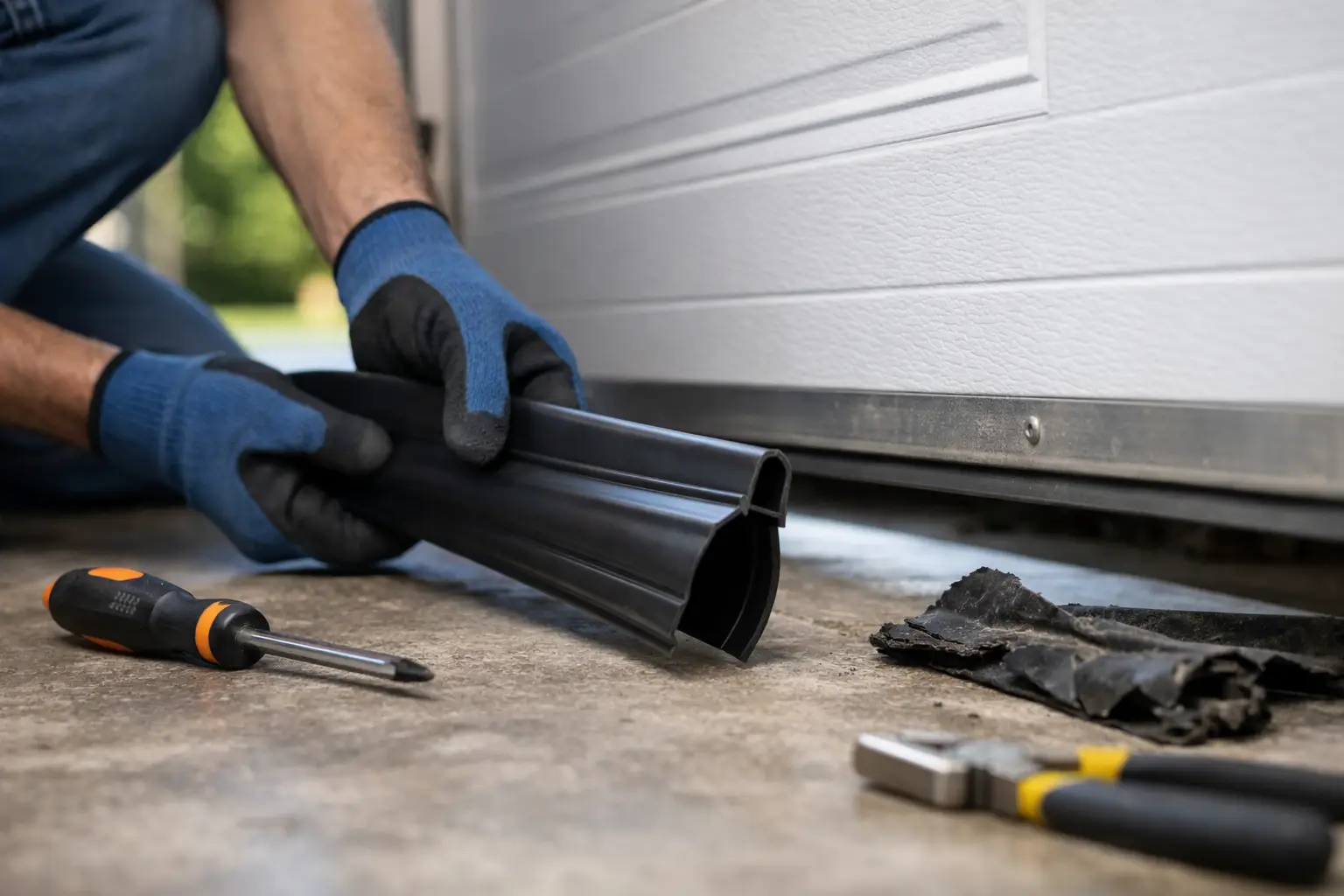
    You usually notice a bad seal after the garage starts feeling hotter, dirtier, or louder than it should. If daylight is showing under the door or leaves and dust keep blowing in, garage door weather seal replacement is not a cosmetic fix – it is one of the simplest ways to protect the space and help your door work the way it should.

    In Arizona, that matters more than people think. A worn seal can let in dust, monsoon runoff, insects, and a lot of outside heat. For homeowners who use the garage for storage, laundry, tools, or daily parking, that extra exposure adds up fast. For small businesses with service bays or storage areas, a weak seal can also affect cleanliness and security.

    What a garage door weather seal actually does

    The weather seal is the flexible barrier that closes the small gaps around your garage door. The bottom seal sits against the floor when the door is closed, while perimeter seals run along the sides and top of the opening. Together, they help keep out wind, debris, moisture, pests, and outside air.

    They also support quieter operation. When seals are in decent shape, the door closes with a more controlled contact instead of rattling against uneven edges or leaving open gaps. That does not mean seals fix every noise problem, but they do play a part.

    A lot of people assume the bottom seal is the only one that matters. In reality, side and top seals can wear out too, especially under strong sun exposure. If your garage door closes fully but you still see light along the edges, the issue may not be the door itself. It may be the surrounding seal material that has become brittle, flattened, or torn.

    Signs you need garage door weather seal replacement

    Some signs are obvious. Others show up slowly enough that people put them off for months.

    If you can see daylight under the bottom of the door, that is the clearest sign. Cracks in the rubber, hardened sections, missing chunks, and corners that no longer touch the floor are also strong indicators. Along the sides and top, you may notice warped vinyl, loose mounting, or visible gaps when the door is shut.

    There are indirect signs too. Your garage may feel noticeably hotter in the afternoon, or you might find more dust than usual on stored items. Water marks near the threshold after rain can point to a bottom seal that no longer makes proper contact. If bugs keep showing up inside, damaged weather sealing is often part of the problem.

    The trick is not to wait until the seal is completely gone. Once a seal starts failing, the door system has to work around changing resistance, uneven contact, and environmental buildup around the opening.

    Why worn seals can lead to bigger problems

    A bad seal is not the same as a broken spring or failing opener, but it can still create avoidable wear. Dirt and debris get pushed into the garage more easily, and that debris often ends up near tracks, rollers, and the door’s bottom edge. Moisture intrusion can also affect whatever is stored close to the floor.

    There is also the issue of comfort. Attached garages can transfer heat toward nearby rooms, especially when the garage acts like an oven all afternoon. A fresh seal will not turn your garage into conditioned space, but it can reduce some of that constant air exchange.

    Security matters too. Weather seals are not a primary security feature, but large gaps make it easier to peek inside and easier for pests to get in. For some homeowners and property managers, that is reason enough to stop putting the job off.

    Can you replace the weather seal yourself?

    Sometimes, yes. Sometimes, it is better not to force it.

    If the bottom seal is a standard style and the retainer is in good shape, a capable DIYer may be able to swap it out. The basic idea is simple: remove the old seal, clean the channel or retainer, slide in the new material, trim it properly, and test door closure. Side and top seals can also be straightforward if the frame is square and the mounting surface is sound.

    Where people run into trouble is misidentifying the seal type, buying the wrong size, or assuming the seal is the only issue. If the floor is uneven, the retainer is bent, or the door is out of alignment, a new seal alone may not solve the gap. In some cases, it can even create drag that affects how the door closes.

    That is why this job is not always just about replacing rubber. It is about making sure the door, floor contact, and surrounding frame all work together.

    Choosing the right seal material

    Not all weather seals wear the same way. Rubber and vinyl are common, but quality varies a lot.

    A softer material may create a better initial seal on uneven concrete, but it may also wear faster under heat and daily use. A firmer material can last longer in some settings, but if it is too rigid for the floor condition, gaps can remain. Bottom seals also come in different profiles, and the correct one depends on the door’s retainer design.

    For Arizona properties, sun exposure and heat resistance matter. Materials that look fine on the shelf can dry out quickly if they are not made for harsh conditions. That is one reason professional replacement often saves time – the right seal is matched to the door and environment instead of guessed at.

    What to check before replacing anything

    Before starting a garage door weather seal replacement, look at the whole opening.

    Check whether the door sits level when closed. Look at the concrete where the bottom seal lands. Floors often settle, and even a small low spot can leave a visible gap. Inspect the aluminum retainer on the bottom of the door for bends, rust, or damage. On the frame, make sure the side and top trim is secure and not pulling away.

    It also helps to watch how the door closes. If it jerks, stops unevenly, or does not rest naturally at the floor, the problem may involve door adjustment rather than seal condition alone. That is especially true if the door recently started behaving differently.

    When professional replacement makes more sense

    If the seal is old but the door is also noisy, uneven, or hitting the floor awkwardly, it is smart to have the full system checked. Replacing the seal without addressing alignment can be a short-term fix at best.

    This is also a better pro job when the retainer is damaged, the bottom panel has corrosion, or the door serves a commercial space where performance matters every day. Business owners usually cannot afford repeated trial and error on access points that need to open and close reliably.

    A good technician can tell whether the fix is as simple as new perimeter material or whether the door needs adjustment, panel repair, or threshold correction too. That kind of honest guidance matters because the cheapest part is not always the cheapest repair once repeat visits are factored in.

    For local homeowners who want fast, straightforward help, this is the kind of service call that should come with clear pricing and no runaround. Companies like Riggs Rescue AZ understand that a small issue in the garage can still be disruptive, especially when it affects daily access, cleanliness, or security.

    How long a new weather seal should last

    It depends on use, material quality, sun exposure, and how well the door is adjusted. A garage door that cycles several times a day on hot concrete will wear a bottom seal faster than a lightly used door in a shaded spot. Side and top seals may last longer, but they can still harden and crack over time.

    The best approach is to treat weather seals like maintenance items instead of one-time parts. A quick visual check every few months can help you catch damage early. If you already schedule garage door tune-ups, ask for the seals to be inspected at the same time.

    A small repair that protects more than the door

    Garage door weather seal replacement is one of those jobs that seems minor until you see what changes after it is done. Less dust. Fewer gaps. Better protection from water, bugs, and heat. And if the door has been struggling against a worn-out seal or leaving your garage exposed, fixing it can make the whole setup feel tighter and more dependable.

    If your garage is letting the outside in, you do not have to wait for the next storm or heat wave to deal with it. A good seal is a small detail, but it does a lot of work every single day.

  • Chain Drive vs Belt Opener: Which Fits?

    Chain Drive vs Belt Opener: Which Fits?

    If your garage opener is shaking the ceiling, waking up a bedroom, or simply giving up after years of use, the chain drive vs belt opener question matters more than most homeowners expect. The right opener affects noise, reliability, maintenance, and how your garage feels every single day – especially when you use it as the main entrance to your home.

    For most homes in Gilbert, Chandler, Mesa, Queen Creek, and nearby areas, the choice comes down to two solid options. Both can work well. Both can last for years. But they are not the same, and the better pick depends on your door, your budget, and how much noise you are willing to live with.

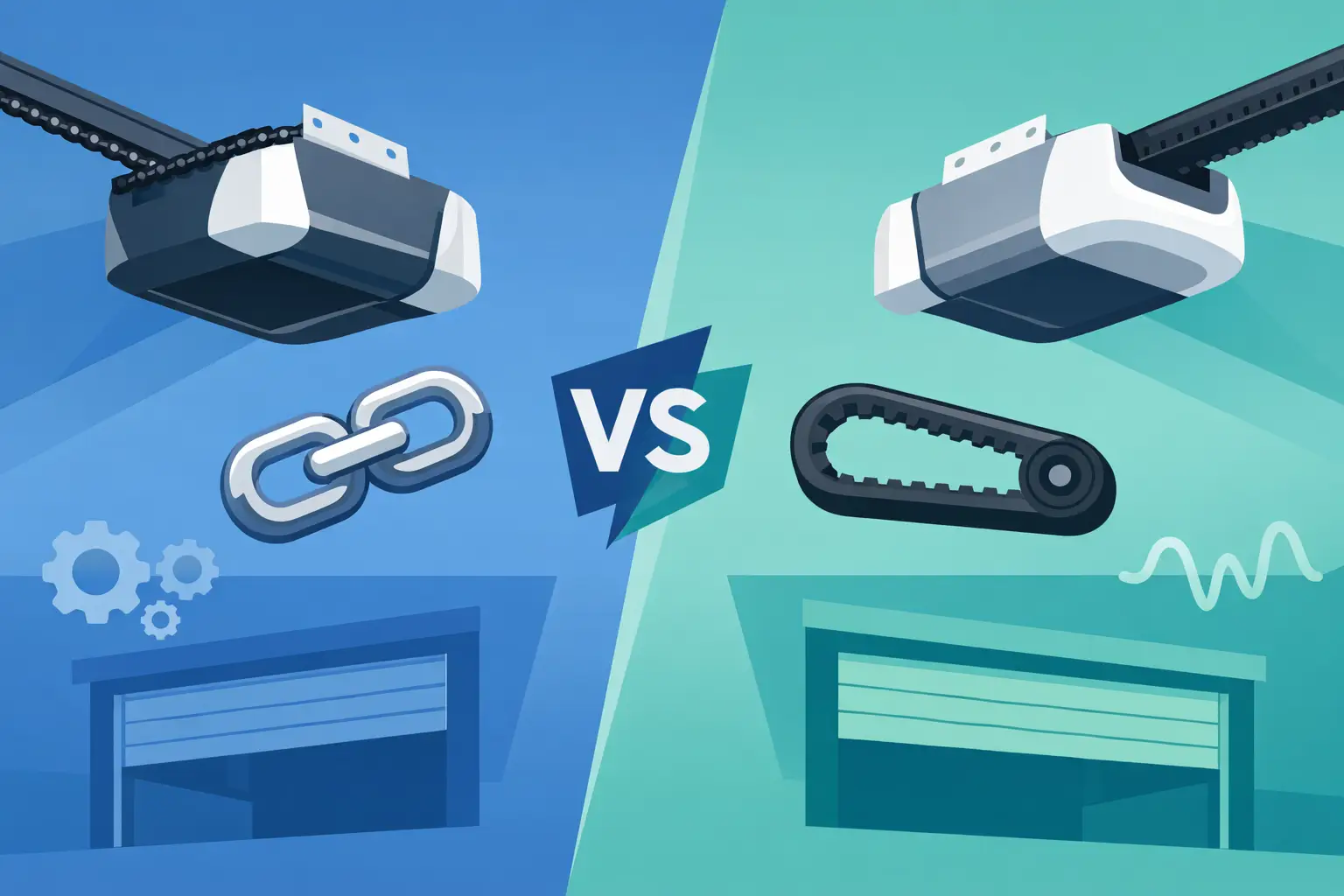
    Chain drive vs belt opener: the basic difference

    A chain drive opener uses a metal chain to move the garage door along its track. Think of it like a bicycle chain. It is strong, proven, and usually the more budget-friendly option.

    A belt opener uses a reinforced rubber, fiberglass, or polyurethane belt instead of a metal chain. It does the same job, but with less vibration and far less noise. That smoother performance is the main reason many homeowners choose it.

    If you just want the short answer, here it is: chain drive openers are usually better for lower upfront cost and heavier lifting, while belt openers are usually better for quiet operation and day-to-day comfort.

    When a chain drive opener makes more sense

    Chain drive systems have been around for a long time because they work. They are dependable, widely available, and often cost less than a comparable belt model. If you are replacing a broken opener and want a practical solution without stretching the budget, chain drive is often the first option people look at.

    They also tend to be a smart fit for heavier garage doors. A solid wood door, an oversized door, or a commercial-style setup may benefit from the strength and straightforward design of a chain system. That does not mean belt openers are weak, because many modern belt units are powerful, but chain drive still has a reputation for handling demanding jobs well.

    The trade-off is noise. Metal-on-metal movement creates more sound and vibration. In a detached garage, that may not matter much. In an attached garage under a bedroom or next to a nursery, it usually matters a lot.

    Chain drives may also need a little more attention over time. They can require adjustment and lubrication, and as parts wear, they may get louder. None of that makes them a bad choice. It just means they are often chosen for practicality over refinement.

    When a belt opener is worth the extra cost

    A belt opener is usually the better choice when quiet matters. If someone leaves for work early, comes home late, or uses the garage as the primary entrance, that smoother and quieter operation is hard to ignore. In many homes, the garage sits right below living space. Reducing vibration can make the whole house feel less rattled.

    That is the biggest selling point, but it is not the only one. Belt drive openers also tend to feel more polished in everyday use. The motion is smoother, and many homeowners simply prefer how they perform over time.

    They do usually cost more upfront. For some homeowners, that extra cost is easy to justify because they use the garage several times a day. For others, especially if the garage is detached or rarely used, it may feel like paying extra for a feature they will not fully appreciate.

    Modern belt drives are also very capable. They are not just for lightweight doors. In many standard residential applications, they deliver plenty of lifting power along with the quieter ride homeowners want.

    Noise is not a small detail

    One of the biggest mistakes people make is treating noise like a minor feature. It is not. If your garage is attached to the house, noise becomes part of your daily routine.

    A loud opener can echo through walls, shake framing, and make early mornings more annoying than they need to be. If your kids’ rooms are above the garage, or if someone in the home works odd hours, a quieter belt system can improve more than convenience. It can improve sleep and reduce frustration.

    On the other hand, if you have a detached garage or a workshop building away from the house, the sound difference may not be worth paying extra for. In that situation, chain drive often wins on value.

    Cost, repairs, and long-term value

    The upfront cost difference between chain and belt openers is real, but it should not be the only factor. A lower price today does not always mean better value over the next 10 to 15 years.

    Chain drive openers are usually less expensive to buy, and many homeowners like that straightforward affordability. If you need a reliable opener now and want to keep costs under control, chain drive can be a smart move.

    Belt openers often cost more, but many homeowners feel the quieter operation is worth every dollar. If the garage is attached to your home and the opener gets heavy daily use, the added comfort can pay off in a way that is hard to measure on paper.

    Repair costs depend on the brand, motor, installation quality, door balance, and how well the system has been maintained. An opener that is forced to lift a poorly balanced door will wear out faster no matter what drive type you choose. That is why the opener itself is only part of the equation.

    Which opener is better for Arizona homes?

    In Arizona, garages put in real work. They are not just for parking. They are storage space, entry points, workshops, and daily traffic zones. Heat also plays a role, especially in garages that get intense afternoon sun.

    For most residential homes in the East Valley, both chain and belt systems can perform well if they are installed correctly and matched to the door. The bigger issue is choosing the opener that fits how you actually use the space.

    If your garage is attached and your family is in and out constantly, a belt opener often makes the most sense. If you want something dependable and cost-conscious for a detached garage or a property where noise is less of a concern, chain drive is often a practical choice.

    For small businesses or heavier-duty setups, the answer may lean toward strength and cycle demands rather than household comfort. In those cases, it helps to have a technician look at the full system, not just the opener brochure.

    What matters more than chain or belt

    The chain drive vs belt opener debate is useful, but there is a bigger truth: the best opener is the one properly matched to your garage door and installed the right way.

    A quiet belt opener will not perform well if the springs are worn, the tracks are misaligned, or the door is too heavy for the operator. A chain drive will not feel dependable if it is installed poorly or paired with outdated safety components. Even the best opener can struggle when the rest of the system is off.

    That is why homeowners should think beyond just the drive type. Horsepower, door weight, insulation, usage frequency, smart features, battery backup, and safety sensors all matter. The opener should fit the whole system, not just your price range.

    So, which one should you choose?

    Choose a chain drive if your top priorities are affordability, durability, and solid lifting power, and if some extra noise is not a dealbreaker. It is a reliable workhorse and still a very good option for many homes.

    Choose a belt opener if you want a quieter garage, smoother operation, and better comfort in an attached home. If your garage is under a bedroom or next to a living area, this is often the upgrade people appreciate right away.

    If you are still unsure, that usually means you should look at your home layout first. Where is the garage? How often do you use it? Does the current opener wake people up? Is your door standard, oversized, insulated, or unusually heavy? Those answers usually point you in the right direction faster than a sales pitch ever will.

    At Riggs Rescue AZ, we see homeowners feel a lot better about opener replacement once the decision gets framed around real use instead of guesswork. You do not need the most expensive option. You need the one that fits your door, your home, and your budget without surprises.

    A good opener should make your day easier every time you leave and every time you come home. That is the choice worth getting right.

  • 7 Best Garage Door Opener Brands

    7 Best Garage Door Opener Brands

    A garage door opener usually gets your attention at the worst possible time – when it starts grinding at 6 a.m., refuses to close in the summer heat, or leaves you stuck outside after a long day. If you’re comparing the best garage door opener brands, the right choice is less about picking the most expensive name and more about matching the opener to your door, your garage, and how you actually use it.

    For homeowners and small business owners around Gilbert, Chandler, Mesa, Queen Creek, San Tan Valley, and Phoenix, that matters. A heavy insulated door, an attached garage near bedrooms, or a property that depends on reliable daily access will all change what “best” really means. Brand reputation matters, but so do motor type, parts availability, warranty support, and whether the unit can hold up in real-world conditions.

    What makes the best garage door opener brands stand out

    The brands that consistently rise to the top tend to do a few things well. They build dependable motors, offer solid safety features, and make replacement parts and accessories easy to find. That last part gets overlooked until something small fails and you learn your opener is hard to service.

    Quiet performance is another big one. Belt-drive systems are usually the better fit for homes with living space near or above the garage. Chain-drive models still have a place because they are durable and often more budget-friendly, but they can be noisier. For some homeowners, that trade-off is perfectly fine. For others, especially families with bedrooms over the garage, it gets old fast.

    Smart features can be useful too, but they should not be the main reason you choose a brand. App control, alerts, keypad access, battery backup, and camera add-ons are convenient, but reliability comes first. A fancy opener that gives you phone notifications is not much help if it struggles to lift your door consistently.

    Best garage door opener brands to consider

    LiftMaster

    LiftMaster is one of the most recognized names in the industry, and for good reason. It has a strong reputation for reliability, wide model selection, and professional-grade performance. If you want a brand that covers everything from basic openers to quiet smart systems with battery backup and advanced security features, LiftMaster is often near the top of the list.

    One of its strengths is consistency. Parts are widely available, and many garage door professionals know the product line well, which can make repairs and replacements easier down the road. LiftMaster is often a smart fit for homeowners who want long-term value more than the lowest upfront price.

    The trade-off is cost. In many cases, LiftMaster models run higher than entry-level brands. Still, for people who want dependable daily use and fewer headaches, that extra cost can make sense.

    Chamberlain

    Chamberlain is closely tied to LiftMaster, and the two share a lot of technology. Chamberlain openers are popular with homeowners because they combine solid performance with user-friendly smart features. For many households, Chamberlain hits a nice middle ground between price and convenience.

    If app control matters to you, Chamberlain is usually easy to live with. Many models offer strong Wi-Fi integration and straightforward setup. They also tend to be available in a range of drive types and horsepower levels, which helps if you’re trying to stay on budget.

    The main thing to keep in mind is that some homeowners assume all Chamberlain models are heavy-duty just because the brand is familiar. That is not always the case. As with any brand, the specific model matters.

    Genie

    Genie has been around a long time and remains a strong option for homeowners who want a dependable opener without overspending. The brand is known for practical designs, solid value, and good choices in both chain-drive and belt-drive systems.

    Genie can be especially appealing if you want modern features at a more approachable price point. Some models offer battery backup, Aladdin Connect smart access, and quiet performance that works well in attached garages. For many homes, Genie gives you enough technology without pushing you into premium pricing.

    That said, not every Genie model is built for heavier or oversized doors. If your door is large, heavily insulated, or used many times a day, it is worth checking motor strength and duty cycle before assuming a lower-cost unit will keep up.

    Craftsman

    Craftsman has name recognition that a lot of homeowners trust, especially those who have used the brand’s tools over the years. Garage door openers under the Craftsman name can be a good fit for people looking for familiar branding and straightforward operation.

    The challenge with Craftsman is that product generations and manufacturing partnerships have varied over time. That means one homeowner may have a great long-term experience while another struggles to find compatible parts for an older unit. The newer models can still be a reasonable option, but this is one brand where model-by-model research matters more than brand reputation alone.

    Sommer

    Sommer is not always the first brand people mention, but it has a loyal following for one clear reason – quiet operation. Its direct-drive systems are known for smooth performance and fewer moving parts than traditional chain or belt setups. If garage noise is your biggest complaint, Sommer deserves a look.

    For attached garages, home offices near the garage, or households with light sleepers, that quieter design can be a real benefit. Sommer also has a reputation for good build quality.

    The downside is that Sommer is less common than some major brands, so local familiarity and parts availability may vary depending on your area. For some homeowners, that is no issue. For others, choosing a more common brand makes service easier later.

    Marantec

    Marantec is another quieter, more premium-leaning brand that often appeals to homeowners who want sleek performance and modern features. These openers are often designed with a polished feel and solid safety features.

    Marantec can be a good fit for people who prioritize low noise and smooth operation over bargain pricing. Some models also have a compact design that works well in certain garage layouts.

    As with Sommer, availability can be more limited than the biggest national names. That does not make it a bad choice, but it does mean you should think beyond the purchase and ask how easy future service will be.

    Guardian

    Guardian is often considered a value-oriented brand. It may not have the same household recognition as LiftMaster or Chamberlain, but it can be a practical option when budget is a major factor.

    For standard residential doors and straightforward use, Guardian can do the job well. It may appeal to property owners who need a reliable opener without paying for every extra feature on the market.

    The trade-off is that premium smart features, ultra-quiet performance, and broader ecosystem support may be more limited depending on the model. If your needs are simple, that may be perfectly fine.

    How to choose between the best garage door opener brands

    Start with the door, not the logo. A lightweight single garage door does not need the same opener as a heavy double door with insulation, decorative hardware, or frequent daily cycles. If the opener is underpowered, it will wear out faster and may struggle from the beginning.

    Then think about noise. If your garage is detached, a chain-drive model may be a smart way to save money. If the garage shares walls with living space, a belt-drive or direct-drive opener is usually worth the extra investment.

    Next, be honest about features you will actually use. Smartphone control is convenient, especially if you travel, manage deliveries, or want alerts when the door is left open. Battery backup is a strong plus as well, particularly when you do not want to be locked out during a power outage. But if you just want dependable open-and-close performance, you may not need every high-end add-on.

    Serviceability matters too. One reason many professionals lean toward established opener brands is that support tends to be better over time. When remotes fail, logic boards go bad, or sensors need replacement, common brands are often easier and faster to fix.

    A local, practical way to make the right choice

    If you are replacing an opener because the old one failed, it is tempting to shop by brand name alone. But the best result usually comes from matching the opener to your specific setup, your budget, and how much reliability matters in your day-to-day routine. A quiet belt-drive Chamberlain may be perfect for one family, while a heavier-duty LiftMaster makes more sense for another. A budget-friendly Genie may be all one homeowner needs, while a quieter direct-drive Sommer is worth it for someone tired of garage noise.

    That is why honest guidance matters. A good installer will explain what fits your door, what features are worth paying for, and where you can save money without creating problems later. At Riggs Rescue AZ, that kind of clear, no-surprise advice is what local customers count on.

    The right opener brand should make life easier, not add another item to your repair list. If you focus on door size, noise level, features you will really use, and long-term service support, the best choice gets a lot clearer.

man-in-blue-shirt

Exclusive Residential Service Offer 🏷️

For a limited time, homeowners can enjoy exclusive savings with a FREE Service Call, No Trip Charge, and a FREE Garage Door Safety Inspection on qualifying services.

Offer Includes :