Category: Uncategorized

  • Whales: Giants of the Ocean

    Whales: Giants of the Ocean

    Whales are among the largest and most remarkable animals on Earth. These marine mammals live in oceans around the world, from warm tropical waters to the cold seas surrounding the poles.

    Life Beneath the Surface

    Although whales spend their lives in water, they breathe air through blowholes located on top of their heads. They must regularly return to the surface to breathe before diving again in search of food or traveling through the ocean.

    Whales are warm-blooded, give birth to live young, and nurse their calves with milk. A thick layer of fat called blubber helps protect them from cold water and stores energy during long migrations.

    Two Main Groups

    Whales are generally divided into baleen whales and toothed whales. Baleen whales filter small animals from the water using flexible plates inside their mouths. This group includes blue whales, humpback whales, and gray whales.

    Toothed whales use teeth to catch fish, squid, and other prey. Many of them also use echolocation, producing sounds and listening for returning echoes to understand their surroundings. Sperm whales, belugas, and orcas belong to this group.

    The Blue Whale

    The blue whale is the largest known animal to have ever lived. An adult can grow longer than a city bus and weigh well over one hundred tonnes. Despite its enormous size, it feeds mainly on tiny crustaceans called krill.

    Communication and Migration

    Whales communicate using clicks, whistles, pulses, and complex songs. Some sounds can travel across great distances underwater. Humpback whales are especially famous for their long, patterned songs.

    Many species migrate thousands of kilometres each year. They often feed in cold, nutrient-rich waters before traveling to warmer regions where they mate and give birth.

    Protecting Whales

    Commercial hunting once caused severe declines in many whale populations. Today, whales also face threats from fishing gear, ship collisions, underwater noise, pollution, and changes to ocean ecosystems.

    Conservation programs, safer fishing practices, protected habitats, and international cooperation can help whale populations recover. Protecting whales also supports healthier oceans because these animals play an important role in marine food webs and nutrient cycles.

  • Garage Door Service Tempe Homeowners Can Trust

    Garage Door Service Tempe Homeowners Can Trust

    A garage door rarely chooses a convenient time to stop working. It may stick halfway open before work, reverse unexpectedly when you are trying to leave, or make a sharp grinding sound late at night. When you need garage door service Tempe homeowners can rely on, the goal is not just getting the door moving again. It is getting a clear answer, a safe repair, and pricing that does not come with surprises.

    Arizona heat, daily use, dust, and worn moving parts all take a toll on a garage door system. A small issue can become a larger one quickly, especially when the door is forced to operate with a damaged spring, frayed cable, failing opener, or misaligned track. Knowing what to watch for helps you make a smart decision before a minor repair turns into a stressful emergency.

    When a Garage Door Problem Needs Fast Attention

    Some garage door issues are inconvenient. Others can create a real safety or security concern. If the door will not close, has come off its track, hangs unevenly, or has a broken spring, stop using it and call a professional. Trying to force a heavy garage door closed can damage the opener, bend hardware, or put someone nearby at risk.

    A loud bang from the garage is often a broken torsion or extension spring. Springs carry the weight of the door, and they are under significant tension. Once one breaks, the opener may strain, the door may feel extremely heavy, and manual operation may not be safe. This is not a do-it-yourself repair.

    The same applies to loose or broken cables. Cables can snap or come off their drums when a spring fails or the door becomes unbalanced. A cable problem may cause one side of the door to lift higher than the other, leaving the door crooked in the opening. Shut off use until the system can be inspected.

    Common Repairs That Keep Doors Running Safely

    Most service calls do not require a new garage door. In many cases, a trained technician can restore dependable operation by repairing the part that has failed and checking the rest of the system for related wear.

    Springs, Cables, Rollers, and Tracks

    Your garage door is a balanced system, not just a panel that goes up and down. Springs offset the door’s weight. Cables transfer that lifting force. Rollers guide the door through the tracks. When one component wears out, the others often work harder.

    Worn rollers may cause rattling, jerky movement, or excessive noise. Bent tracks can make the door drag or bind. Loose hardware can create vibration that gets worse over time. Replacing the right worn components and making proper adjustments can make a door quieter, safer, and easier on the opener.

    Garage Door Opener Problems

    An opener that hums but will not move the door is not always an opener failure. The door may be too heavy because of a broken spring, or the safety sensors may be blocked or out of alignment. Sensor issues are common in garages where dust, storage items, or a bumped sensor bracket interrupt the beam.

    If the opener runs but the door reverses, stops short, or will not respond consistently to remotes, a service check can identify whether the issue is the motor, drive system, force settings, wall control, sensors, or the door itself. Replacing an opener can be the right answer when an older unit has repeated problems, lacks current safety features, or no longer fits how you use the garage. But it should be a recommendation based on the condition of the full system, not a default sales pitch.

    Repair or Replace? The Right Answer Depends

    A repair is usually the practical choice when the door is structurally sound and the problem is limited to springs, rollers, cables, sensors, hardware, or an opener component. It is often faster and more affordable than replacement, particularly when the door panels, tracks, and insulation are in good shape.

    Replacement becomes worth considering when the door has extensive panel damage, severe rust, repeated track damage, poor insulation, or a history of frequent repairs. A damaged section can sometimes be replaced, but matching an older door’s color, design, and panel profile is not always possible. If multiple sections are compromised, replacing the full door may provide a better long-term result.

    Tempe homeowners may also choose a new garage door for curb appeal, quieter operation, better insulation, or updated wind and safety features. Insulated doors can be especially helpful when the garage shares a wall with living space or is used as a workshop. They will not turn an unconditioned garage into a cooled room, but they can reduce heat transfer and help moderate temperature swings.

    What Professional Garage Door Service in Tempe Should Include

    A dependable service visit should start with an inspection, not a guess. The technician should check the door’s balance, springs, cables, tracks, rollers, hinges, brackets, safety sensors, opener operation, and weather seal as needed. The goal is to find the underlying cause, not simply quiet the symptom for a few days.

    You should also receive straightforward options. For example, a worn roller may be a simple targeted repair, while several worn rollers and loose hardware may make a more complete tune-up the better value. Both approaches can be reasonable depending on the age, condition, and use of your door. Clear explanations let you decide with confidence.

    At Riggs Rescue AZ, that customer-first approach means honest guidance, transparent pricing, and service designed to get your day back on track. For residential customers, no service or trip charges can remove one more concern when an unexpected repair is already disrupting the day.

    Do Not Ignore a Noisy or Slow Garage Door

    A garage door does not need to be fully stuck to need attention. Squeaking, grinding, popping, shaking, or slowing down are early warnings. The cause might be simple lubrication needs, but it could also point to worn rollers, loose hardware, track alignment issues, or spring fatigue.

    A door that suddenly feels heavier than usual, opens only a few feet, or closes with a hard impact deserves prompt service. Continuing to run an unbalanced door can overload the opener. What begins as a spring or roller repair can become an opener replacement if the system is pushed too long.

    Homeowners can safely keep the area around the tracks clear and wipe sensor lenses clean. Beyond that, avoid adjusting springs, cables, or bottom brackets. Those parts are under tension and require the right tools and training.

    Maintenance Helps Prevent the Worst Timing

    Garage doors are often the largest moving object in a home, yet they are easy to overlook until something fails. A periodic professional check-up can catch loose hardware, worn rollers, weakening springs, and opener issues before they interrupt your schedule.

    Between visits, listen to the door and watch how it moves. It should travel smoothly without excessive shaking, scraping, or hesitation. Test the photo-eye sensors by closing the door with the opener and passing an object in front of the beam. The door should reverse. If it does not, stop using the opener until the safety system is repaired.

    For households that use the garage as the main entry, maintenance is even more valuable. More cycles mean more wear, and small changes in sound or motion are often the first sign that the system needs care.

    Commercial Doors Need a Different Level of Planning

    For a small business, warehouse, auto shop, or property manager, a malfunctioning commercial garage door can affect deliveries, security, employee access, and daily operations. Commercial doors are heavier and may operate more frequently than residential systems, so repairs need to account for the door’s size, cycle demands, operator type, and safety requirements.

    Fast service matters, but so does choosing parts and equipment that fit the application. A low-use storage door and a busy loading-area door do not have the same needs. The right repair or replacement plan should balance immediate uptime with long-term reliability.

    Choose a Local Team That Explains the Fix

    When comparing providers, look for more than the fastest promise. Ask whether the company will inspect the full system, explain what failed, provide pricing before work begins, and offer options when replacement is not the only answer. Local experience also matters because technicians familiar with East Valley conditions understand how heat, dust, and heavy daily use affect doors and openers.

    If your door is making new noises, moving unevenly, or refusing to close securely, do not wait for a complete breakdown. A quick professional check can protect your home, your schedule, and the people who depend on that door working safely.

  • Warehouse Door Options for Safer, Faster Work

    Warehouse Door Options for Safer, Faster Work

    A warehouse door can either keep your operation moving or become the weak point that slows everything down. When deliveries stack up, forklifts are waiting, or a door will not close securely at the end of the day, the right equipment matters fast. Choosing among warehouse door options is not just about filling an opening – it is about protecting inventory, controlling energy costs, improving safety, and keeping your team productive.

    For business owners and property managers, the best choice depends on what happens at that opening every day. A climate-controlled storage space has different needs than an active loading dock, auto shop, distribution center, or agricultural building. Here is how to narrow down the options without paying for features your facility does not need.

    Start With How the Door Will Be Used

    Before comparing materials or door styles, look at traffic. How often will the door open each day? Will people walk through it, forklifts pass beneath it, or delivery trucks back up to the opening? Is the door exposed to direct sun, dust, wind, or monsoon rain?

    A door that opens a few times each week can often use a standard commercial sectional system. A busy loading area may need a high-cycle door built for hundreds of open-and-close cycles each day. Installing a light-duty door in a high-traffic opening may save money upfront, but frequent spring, cable, roller, and operator repairs can quickly erase that savings.

    Also consider what happens if the door is out of service. If one opening is your only receiving point, reliability should carry more weight than the lowest initial price. A second door, a manual release plan, or a faster commercial operator may be a practical investment when downtime affects deliveries and payroll.

    Common Warehouse Door Options

    Sectional Steel Doors

    Sectional steel doors are one of the most common warehouse door options because they are versatile, dependable, and available in many sizes. They are built in horizontal panels that travel on tracks and sit overhead when open. This gives trucks and employees a clear opening without requiring extra space in front of the building.

    Steel sectional doors can be non-insulated or insulated. For warehouses in Gilbert, Mesa, Chandler, and other hot Arizona areas, insulated panels are often worth serious consideration. They can reduce heat transfer, help stabilize interior temperatures, and make a noticeable difference in a warehouse that is cooled or that stores temperature-sensitive materials.

    The trade-off is that insulated doors cost more than basic single-layer steel. Still, they are a smart fit for many facilities because they balance security, durability, appearance, and repairability. If a panel is damaged by a forklift or vehicle, it may be possible to replace the affected section instead of the entire door.

    Rolling Steel Doors

    Rolling steel doors coil into a compact roll above the opening. They are a strong choice where headroom is limited, where security is a major concern, or where the opening needs a tough, simple design.

    These doors are common at warehouses, storage rooms, service counters, and loading areas. Their steel slats create a durable barrier when closed, and the compact coil keeps ceiling space clear. That can be especially helpful in facilities with overhead piping, lights, or equipment that makes traditional horizontal tracks difficult.

    Rolling doors are not always the best answer for every opening. They can be louder than sectional doors, and some models may not offer the same insulation value. For an exterior opening that sees frequent traffic and Arizona heat, ask about insulated rolling steel models and high-cycle components rather than assuming all rolling doors perform the same way.

    High-Speed Doors

    High-speed doors are designed for active facilities where every second the opening stays exposed affects traffic flow, security, dust control, or indoor temperature. Depending on the model, these doors may use fabric, rubber, vinyl, or specialized slats and can open much faster than a conventional commercial door.

    They are often a good fit for distribution spaces, refrigerated areas, manufacturing facilities, and busy internal passages where forklifts move constantly. Faster operation means less waiting, less opportunity for unauthorized entry, and less hot outdoor air entering a cooled building.

    The upfront investment is higher, and the door needs the right operator, safety devices, and maintenance plan. But for a high-volume operation, speed can pay off through better workflow and reduced energy loss. The key question is simple: does the facility move enough people, equipment, or product through that opening to justify it?

    Full-View Aluminum and Glass Doors

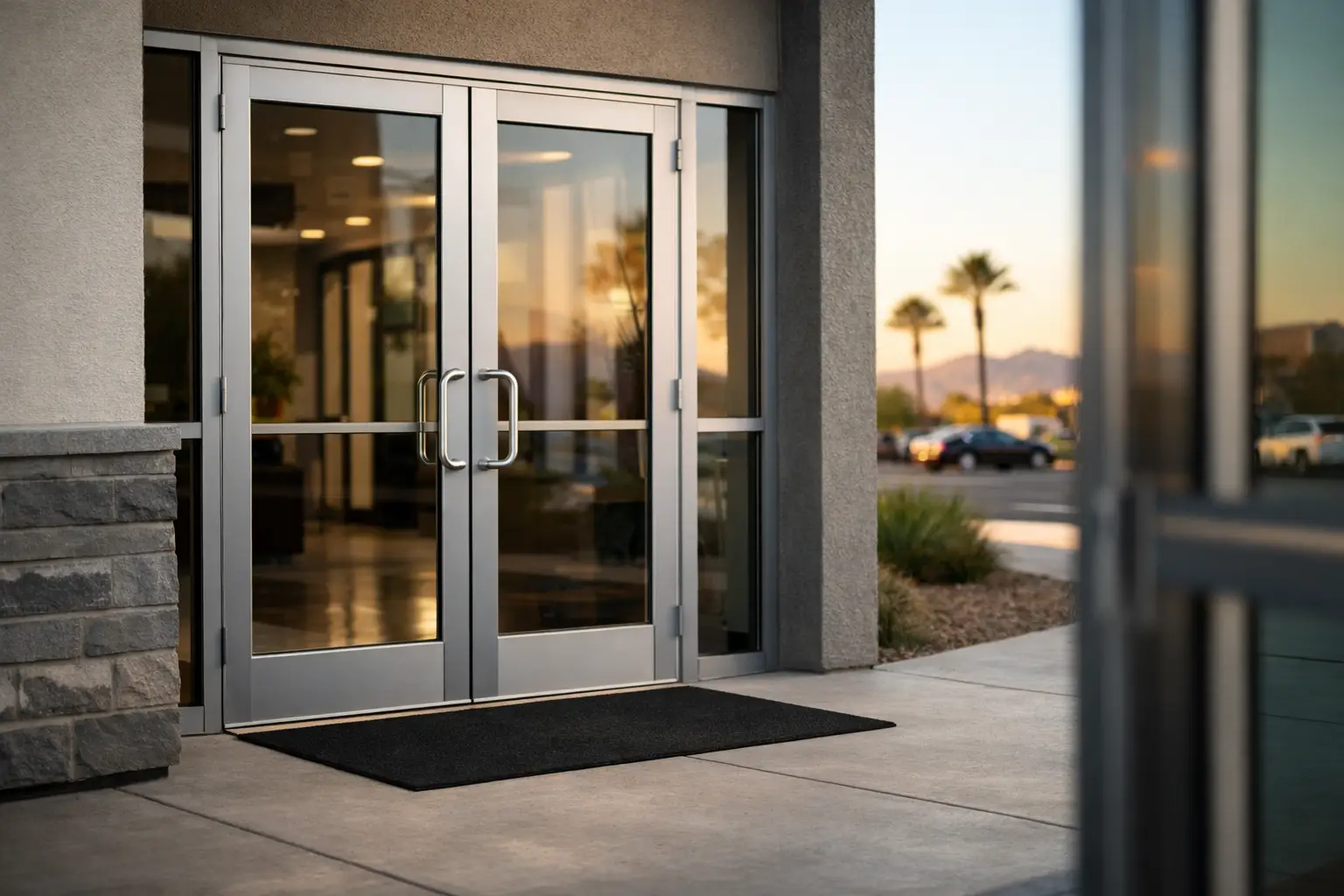
    Full-view doors use aluminum framing with glass or polycarbonate panels. They are not usually the first choice for a rough loading dock, but they work well for showrooms, service departments, vehicle bays, breweries, equipment facilities, and businesses that benefit from natural light and visibility.

    These doors give a commercial space a clean, modern look while allowing employees to see activity on the other side of the opening. The right glazing can provide privacy, impact resistance, or better thermal performance.

    Appearance is a real benefit, but it should not override function. Glass panels require cleaning, and a full-view door may not provide the same level of insulation or impact tolerance as a heavy-duty steel door. It is best used where visibility and customer-facing presentation matter.

    Fire-Rated Doors

    Some warehouse openings require fire-rated doors to help compartmentalize a building and slow the spread of fire and smoke. These may be rolling steel doors or specialized sectional systems designed to meet applicable fire-rating requirements.

    This is not an area for guesswork. Fire doors must be properly specified, installed, tested, and maintained. A door that is blocked open, damaged, or disconnected from its closing system may fail when it is needed most. If your facility has a fire door, schedule regular inspections and make sure employees understand that the opening must stay clear.

    Do Not Overlook the Operator and Safety Equipment

    A commercial door is only as dependable as the system moving it. The operator should match the door’s size, weight, use frequency, and mounting requirements. A standard operator may be fine for a low-traffic bay, while a busy warehouse often needs a heavier-duty unit designed for frequent cycling.

    Safety equipment is just as important. Photo eyes, monitored reversing devices, warning lights, vehicle detection, and pedestrian controls can reduce the risk of a door closing on a person, pallet jack, or forklift. For loading areas, clear traffic patterns and controls placed where operators can safely access them make a real difference.

    Security deserves attention too. Consider locks, access controls, keypads, remote controls, and integration with your gate system if the property has one. The goal is to make daily access convenient for authorized staff without leaving a vulnerable entry point after hours.

    Measure the Whole Opening, Not Just Width and Height

    Door size matters, but it is not the entire measurement. A commercial door professional should also look at headroom, side room, backroom, ceiling obstructions, dock layout, wall condition, and the path of the door when open. A door that fits the opening on paper may still require a different track setup or mounting approach.

    If trucks back into the area, check whether dock bumpers, seals, levelers, and shelters are working with the door rather than against it. A poorly matched setup can create gaps that let in heat, pests, dust, and water. It can also increase the chance of impact damage during deliveries.

    Plan for Maintenance Before There Is a Problem

    Commercial doors work hard, and small issues become expensive when they are ignored. Loose hardware, worn rollers, frayed cables, damaged panels, and an operator that starts hesitating are all signs that service should not wait.

    Regular maintenance helps catch those problems early and can extend the life of the door, springs, and operator. It also gives you a chance to confirm that safety devices are working correctly. For businesses that rely on daily access, a planned checkup is far easier to schedule than an emergency repair during a delivery rush.

    The best warehouse door is the one that fits your operation, protects your people and property, and stays dependable when the workday gets busy. If you are weighing an upgrade or replacing a failing commercial door, Riggs Rescue AZ can help you compare practical options, explain the costs clearly, and get the right system in place without surprises.

  • Choosing Driveway Gates for Arizona Homes

    Choosing Driveway Gates for Arizona Homes

    A driveway gate should make arriving home feel easier, not turn every trip into a struggle with a remote, keypad, or stubborn latch. The right driveway gates add a clear layer of privacy and access control, but they also need to stand up to Arizona heat, monsoon dust, daily vehicle traffic, and the way your household actually comes and goes.

    For homeowners, business owners, and property managers, choosing a gate is about more than curb appeal. It is a decision about safety, convenience, maintenance, and long-term cost. A good system fits the property, opens reliably, and has service options you can count on when something goes wrong.

    Start With How the Property Needs to Work

    The first question is not, “What style looks best?” It is, “How will people and vehicles use this entrance every day?” A gate that works beautifully for a quiet residential driveway may not be the right choice for a small business, shared private road, rental property, or home with frequent deliveries.

    Think through who needs access. Family members may use remotes or a smartphone app, while guests need a keypad or call box. Landscapers, pool technicians, and delivery drivers may need temporary codes. If the property has a separate pedestrian entrance, that gate should be planned as part of the full access system rather than treated as an afterthought.

    Also consider the driveway itself. Measure the opening, available side room, slope, turning space, and distance from the street. A gate placed too close to the road can leave a vehicle waiting in traffic while the gate opens. On a busy street, that is more than an inconvenience.

    Swing or Sliding Driveway Gates?

    Most automatic driveway gates fall into two basic categories: swing gates and sliding gates. Both can be dependable when they are sized, installed, and maintained correctly. The better choice depends on the layout of your property.

    Swing gates

    A swing gate opens inward or outward on hinges, much like a large door. It is often a natural fit for level residential driveways with adequate room behind the gate. Single-swing gates work well for narrower openings, while dual-swing gates can cover wider entrances without requiring a very large single panel.

    Swing gates can offer a classic, clean appearance and may be less visually intrusive than a slide gate. The trade-off is clearance. They need room to travel, and a sloped driveway, uneven ground, wind exposure, or parked vehicles can interfere with operation. In most cases, an automatic swing gate should open inward so it does not extend into a public street or sidewalk.

    Sliding gates

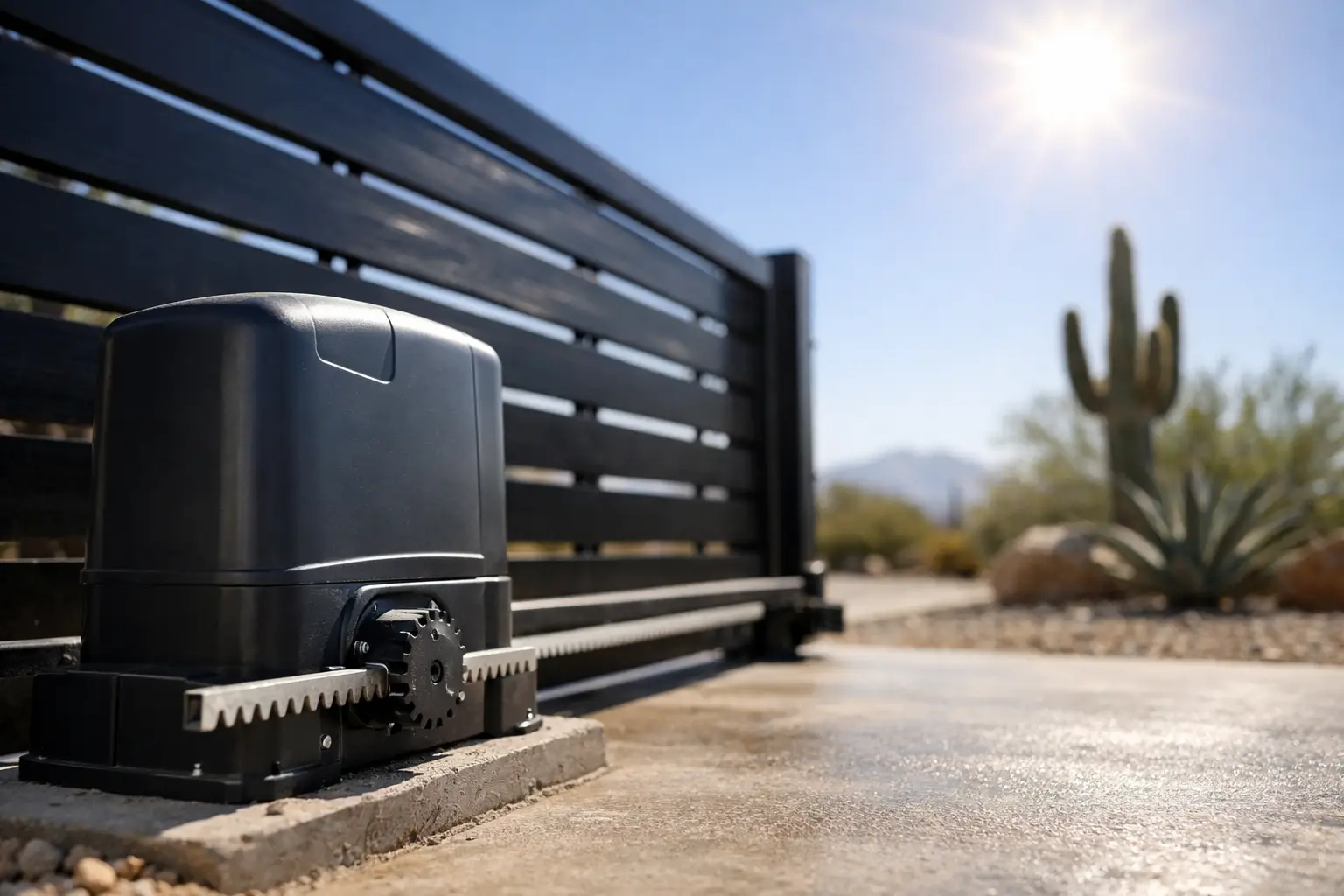
    A sliding gate moves sideways along the fence line or driveway edge. This design is often the better answer for properties with limited depth, uphill driveways, wider openings, or areas where wind is a concern. Commercial properties frequently use slide gates because they can handle larger, heavier gate panels and higher traffic when paired with the correct operator.

    The trade-off is that a slide gate needs enough horizontal room beside the opening for the entire gate panel. It also needs a stable track or properly engineered cantilever system. Dirt, small rocks, leaves, and monsoon debris can affect a tracked gate, so regular cleaning matters.

    Choose a Material That Handles Arizona Conditions

    The material affects the gate’s appearance, weight, maintenance needs, and performance. In Gilbert, Chandler, Mesa, Queen Creek, and nearby communities, extreme sun and dry conditions should be part of the decision from day one.

    Steel is strong and highly customizable. It can support decorative designs, privacy panels, and heavier security-focused construction. However, steel needs quality coating and occasional inspection for chips, scratches, and early signs of corrosion. A properly finished steel gate can last for years, but neglecting damaged paint can create a repair issue later.

    Aluminum is lighter and naturally resistant to rust. That lighter weight can reduce strain on hinges and operators, making it a practical option for some residential gates. It is not always the best fit for a location needing heavy-duty impact resistance, but it can provide a sharp look with less upkeep.

    Wood brings warmth and privacy, especially when paired with a steel frame. The downside is maintenance. Arizona sun can dry, fade, crack, or warp wood without regular sealing and care. Composite panels may offer a similar look with fewer maintenance demands, though they should still be selected for outdoor heat exposure.

    For many properties, the best answer is a combination: a durable metal frame with infill panels that deliver the desired level of privacy and style.

    The Operator Matters as Much as the Gate

    A beautiful gate is only half the system. The operator, controls, safety devices, wiring, and hardware determine whether it opens consistently and safely. Choosing an operator based only on the lowest upfront price often leads to poor performance, especially with a heavy gate or frequent daily cycles.

    The operator must match the gate’s size, weight, travel path, and expected use. A residential gate that opens a few times each day has different needs than a commercial entry serving employees, customers, vendors, and deliveries. An undersized operator can wear out quickly, while the wrong installation can create binding, excessive noise, or premature part failure.

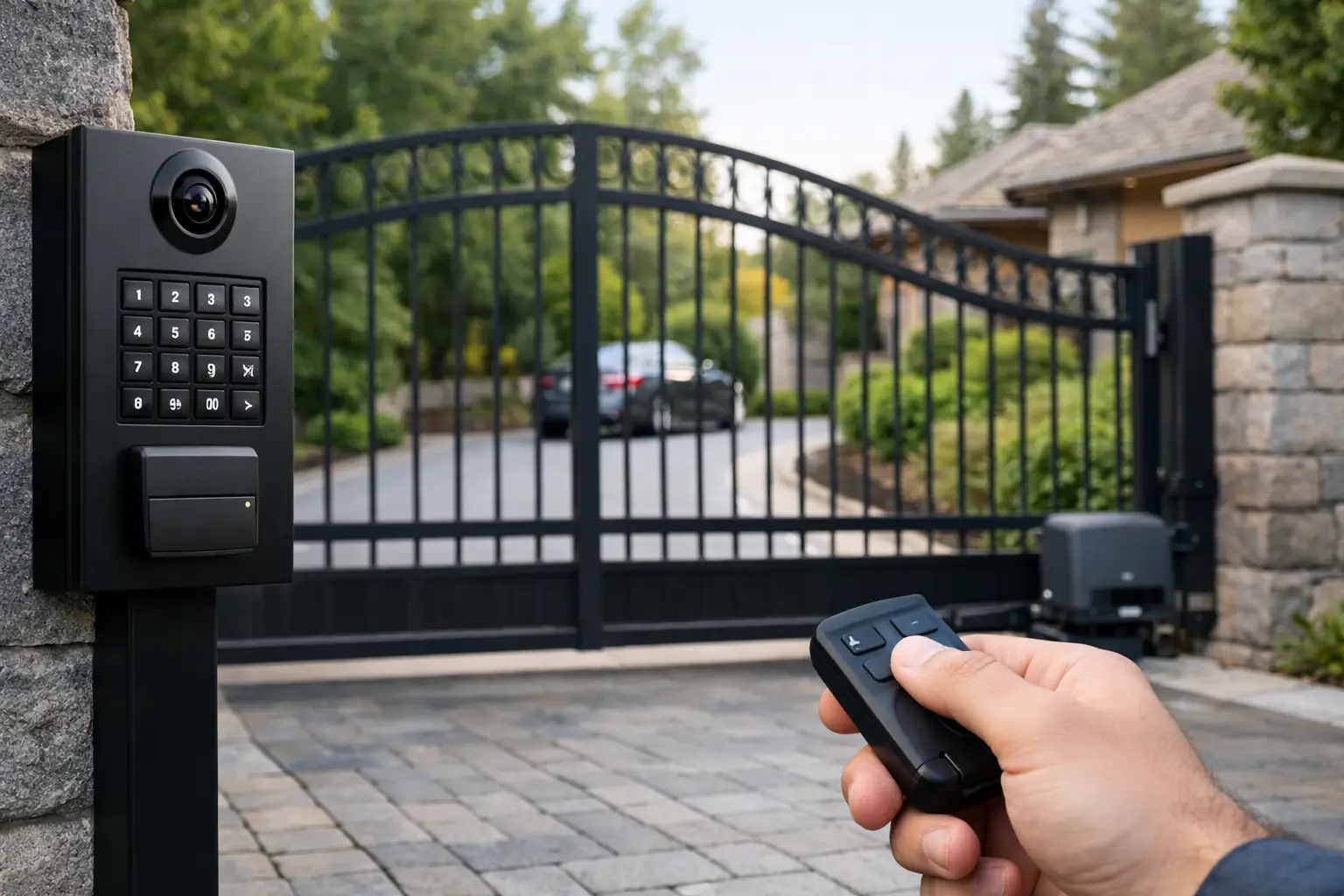
    Access controls are worth planning carefully, too. Remote controls are simple and familiar. Keypads allow code-based entry and make it easy to change access when needed. Telephone entry systems, card readers, and app-enabled controls can make sense for multi-user properties or small businesses that need more control over who enters.

    Power also deserves attention. A hardwired system is common, but battery backup can keep the gate working during an outage. Solar power may be an option where trenching electrical lines is difficult, although panel placement, shade, gate usage, and battery capacity all affect whether it will be reliable.

    Safety Features Are Not Optional

    Automatic gates move large, heavy objects. That is why gate safety needs to be built into the system, not added later after an incident or malfunction.

    A professionally installed automatic gate should include properly placed photo eyes, monitored safety edges where appropriate, and an operator designed to stop or reverse when it detects an obstruction. The gate must have safe gaps around hinges, rollers, and moving panels, particularly where children or pets could reach through. Manual release access is also essential in case of power loss or operator failure.

    Do not rely on a remote control as a safety device. Never let children play on, climb, or ride a driveway gate. If the gate starts reversing unexpectedly, fails to close, drags on the ground, makes grinding noises, or opens more slowly than usual, stop using it until a qualified technician can inspect it.

    Plan for Maintenance Before There Is a Problem

    Like a garage door, an automatic gate works best when small issues are handled early. Dust buildup, loose hardware, worn rollers, misaligned photo eyes, damaged hinges, and aging batteries can all turn into a no-access situation if ignored.

    A simple monthly check can help. Watch the gate complete a full open-and-close cycle. Listen for new noises, look for sagging or rubbing, test the keypad and remotes, and make sure safety sensors are clean and aligned. Keep the gate path clear of rocks, branches, and stored items. For tracked slide gates, remove debris from the track carefully and consistently.

    Leave spring tension, operator adjustments, electrical work, and major alignment repairs to a trained gate technician. These systems can carry significant stored energy and electrical risk. A professional inspection can catch worn parts before they strand your vehicle inside or outside the property.

    Know When Repair Makes Sense and When Replacement Is Better

    Many gate problems can be repaired without replacing the whole system. A worn remote receiver, failing battery, damaged photo eye, loose chain, bent roller, broken hinge, or tired operator component may have a straightforward fix. Repair is often the practical choice when the gate frame is solid and the system has otherwise performed well.

    Replacement may make more sense when the gate is severely rusted, structurally sagging, repeatedly damaged, improperly sized for the entrance, or paired with an obsolete operator that no longer meets current safety expectations. The same is true if repair calls are becoming frequent enough that you are spending money without gaining reliable operation.

    Honest guidance matters here. The cheapest fix is not always the most affordable choice over the next few years, and replacement should not be pushed when a safe, durable repair will do the job.

    A driveway gate should protect your space without adding stress to your day. If yours is noisy, slow, damaged, or unreliable, Riggs Rescue AZ can help you sort through the options, explain the work clearly, and get your access system back on track with no surprises.
  • Choosing Driveway Gates for Arizona Homes

    Choosing Driveway Gates for Arizona Homes

    A driveway gate should make arriving home feel easier, not turn every trip into a struggle with a remote, keypad, or stubborn latch. The right driveway gates add a clear layer of privacy and access control, but they also need to stand up to Arizona heat, monsoon dust, daily vehicle traffic, and the way your household actually comes and goes.

    For homeowners, business owners, and property managers, choosing a gate is about more than curb appeal. It is a decision about safety, convenience, maintenance, and long-term cost. A good system fits the property, opens reliably, and has service options you can count on when something goes wrong.

    Start With How the Property Needs to Work

    The first question is not, “What style looks best?” It is, “How will people and vehicles use this entrance every day?” A gate that works beautifully for a quiet residential driveway may not be the right choice for a small business, shared private road, rental property, or home with frequent deliveries.

    Think through who needs access. Family members may use remotes or a smartphone app, while guests need a keypad or call box. Landscapers, pool technicians, and delivery drivers may need temporary codes. If the property has a separate pedestrian entrance, that gate should be planned as part of the full access system rather than treated as an afterthought.

    Also consider the driveway itself. Measure the opening, available side room, slope, turning space, and distance from the street. A gate placed too close to the road can leave a vehicle waiting in traffic while the gate opens. On a busy street, that is more than an inconvenience.

    Swing or Sliding Driveway Gates?

    Most automatic driveway gates fall into two basic categories: swing gates and sliding gates. Both can be dependable when they are sized, installed, and maintained correctly. The better choice depends on the layout of your property.

    Swing gates

    A swing gate opens inward or outward on hinges, much like a large door. It is often a natural fit for level residential driveways with adequate room behind the gate. Single-swing gates work well for narrower openings, while dual-swing gates can cover wider entrances without requiring a very large single panel.

    Swing gates can offer a classic, clean appearance and may be less visually intrusive than a slide gate. The trade-off is clearance. They need room to travel, and a sloped driveway, uneven ground, wind exposure, or parked vehicles can interfere with operation. In most cases, an automatic swing gate should open inward so it does not extend into a public street or sidewalk.

    Sliding gates

    A sliding gate moves sideways along the fence line or driveway edge. This design is often the better answer for properties with limited depth, uphill driveways, wider openings, or areas where wind is a concern. Commercial properties frequently use slide gates because they can handle larger, heavier gate panels and higher traffic when paired with the correct operator.

    The trade-off is that a slide gate needs enough horizontal room beside the opening for the entire gate panel. It also needs a stable track or properly engineered cantilever system. Dirt, small rocks, leaves, and monsoon debris can affect a tracked gate, so regular cleaning matters.

    Choose a Material That Handles Arizona Conditions

    The material affects the gate’s appearance, weight, maintenance needs, and performance. In Gilbert, Chandler, Mesa, Queen Creek, and nearby communities, extreme sun and dry conditions should be part of the decision from day one.

    Steel is strong and highly customizable. It can support decorative designs, privacy panels, and heavier security-focused construction. However, steel needs quality coating and occasional inspection for chips, scratches, and early signs of corrosion. A properly finished steel gate can last for years, but neglecting damaged paint can create a repair issue later.

    Aluminum is lighter and naturally resistant to rust. That lighter weight can reduce strain on hinges and operators, making it a practical option for some residential gates. It is not always the best fit for a location needing heavy-duty impact resistance, but it can provide a sharp look with less upkeep.

    Wood brings warmth and privacy, especially when paired with a steel frame. The downside is maintenance. Arizona sun can dry, fade, crack, or warp wood without regular sealing and care. Composite panels may offer a similar look with fewer maintenance demands, though they should still be selected for outdoor heat exposure.

    For many properties, the best answer is a combination: a durable metal frame with infill panels that deliver the desired level of privacy and style.

    The Operator Matters as Much as the Gate

    A beautiful gate is only half the system. The operator, controls, safety devices, wiring, and hardware determine whether it opens consistently and safely. Choosing an operator based only on the lowest upfront price often leads to poor performance, especially with a heavy gate or frequent daily cycles.

    The operator must match the gate’s size, weight, travel path, and expected use. A residential gate that opens a few times each day has different needs than a commercial entry serving employees, customers, vendors, and deliveries. An undersized operator can wear out quickly, while the wrong installation can create binding, excessive noise, or premature part failure.

    Access controls are worth planning carefully, too. Remote controls are simple and familiar. Keypads allow code-based entry and make it easy to change access when needed. Telephone entry systems, card readers, and app-enabled controls can make sense for multi-user properties or small businesses that need more control over who enters.

    Power also deserves attention. A hardwired system is common, but battery backup can keep the gate working during an outage. Solar power may be an option where trenching electrical lines is difficult, although panel placement, shade, gate usage, and battery capacity all affect whether it will be reliable.

    Safety Features Are Not Optional

    Automatic gates move large, heavy objects. That is why gate safety needs to be built into the system, not added later after an incident or malfunction.

    A professionally installed automatic gate should include properly placed photo eyes, monitored safety edges where appropriate, and an operator designed to stop or reverse when it detects an obstruction. The gate must have safe gaps around hinges, rollers, and moving panels, particularly where children or pets could reach through. Manual release access is also essential in case of power loss or operator failure.

    Do not rely on a remote control as a safety device. Never let children play on, climb, or ride a driveway gate. If the gate starts reversing unexpectedly, fails to close, drags on the ground, makes grinding noises, or opens more slowly than usual, stop using it until a qualified technician can inspect it.

    Plan for Maintenance Before There Is a Problem

    Like a garage door, an automatic gate works best when small issues are handled early. Dust buildup, loose hardware, worn rollers, misaligned photo eyes, damaged hinges, and aging batteries can all turn into a no-access situation if ignored.

    A simple monthly check can help. Watch the gate complete a full open-and-close cycle. Listen for new noises, look for sagging or rubbing, test the keypad and remotes, and make sure safety sensors are clean and aligned. Keep the gate path clear of rocks, branches, and stored items. For tracked slide gates, remove debris from the track carefully and consistently.

    Leave spring tension, operator adjustments, electrical work, and major alignment repairs to a trained gate technician. These systems can carry significant stored energy and electrical risk. A professional inspection can catch worn parts before they strand your vehicle inside or outside the property.

    Know When Repair Makes Sense and When Replacement Is Better

    Many gate problems can be repaired without replacing the whole system. A worn remote receiver, failing battery, damaged photo eye, loose chain, bent roller, broken hinge, or tired operator component may have a straightforward fix. Repair is often the practical choice when the gate frame is solid and the system has otherwise performed well.

    Replacement may make more sense when the gate is severely rusted, structurally sagging, repeatedly damaged, improperly sized for the entrance, or paired with an obsolete operator that no longer meets current safety expectations. The same is true if repair calls are becoming frequent enough that you are spending money without gaining reliable operation.

    Honest guidance matters here. The cheapest fix is not always the most affordable choice over the next few years, and replacement should not be pushed when a safe, durable repair will do the job.

    A driveway gate should protect your space without adding stress to your day. If yours is noisy, slow, damaged, or unreliable, Riggs Rescue AZ can help you sort through the options, explain the work clearly, and get your access system back on track with no surprises.
  • How Long Gate Motors Last in Arizona Heat

    How Long Gate Motors Last in Arizona Heat

    A gate that opens slowly, stops halfway, or needs a second click from the remote is more than an inconvenience when you are trying to leave for work or secure your property at night. Homeowners often ask how long gate motors last after the first signs of trouble appear. The honest answer is that it depends on the motor, the gate, the installation, and how much Arizona heat and daily use the system handles.

    Most residential gate motors last about 10 to 15 years. A well-matched, properly maintained operator on a lightly used gate can sometimes serve a property for 15 to 20 years. On the other hand, a motor working hard to move a heavy, misaligned, or frequently used gate may need major repair or replacement in 7 to 10 years.

    How Long Gate Motors Last Depends on the Whole System

    The term “gate motor” usually refers to the automatic gate operator: the powered unit that moves the gate. But the operator is only one part of the system. Tracks, rollers, hinges, chains, gears, safety sensors, control boards, remotes, batteries, and the gate itself all affect how long it lasts.

    Think of it like a vehicle engine. Even a quality engine wears out early if it is forced to pull a heavy load with bad tires and poor alignment. A gate operator faces the same problem when the gate drags, binds, sags, or catches on the ground. The motor has to work longer and draw more power every time it opens and closes.

    For a typical single-family home with a swing or sliding driveway gate used a few times each day, 10 to 15 years is a reasonable expectation. For apartment communities, warehouses, storage facilities, or busy commercial properties, the lifespan can be shorter because the operator may cycle dozens or hundreds of times each day. Commercial-grade equipment is designed for heavier duty, but it still needs service to keep up with that workload.

    Arizona Heat Can Shorten Motor Life

    Gilbert, Mesa, Chandler, and nearby East Valley communities get long stretches of extreme summer heat. That heat affects more than the metal gate. It can put steady stress on the electrical and mechanical parts inside an operator.

    Control boards, capacitors, wiring insulation, batteries, and plastic components can all deteriorate faster when exposed to high temperatures. Direct sun also raises the temperature inside an operator housing well above the outdoor air temperature. Dust and monsoon debris can enter vents or moving parts, while sudden rain can expose weak seals, damaged conduit, or corroded connections.

    Heat alone does not mean a gate motor will fail early. A properly installed operator with the right enclosure, ventilation, wiring, and surge protection can hold up well. The trouble starts when heat combines with neglected maintenance, an undersized motor, poor drainage, or a gate that is difficult to move by hand.

    Battery backup systems deserve special attention in Arizona. Batteries are helpful during a power outage, but they generally wear out much sooner than the gate operator itself. Many gate backup batteries need replacement every two to five years, depending on the battery type, heat exposure, charging system, and how often the system runs on backup power.

    What Wears Out a Gate Motor Faster?

    Daily cycles matter, but they are not the only issue. A gate that opens four times a day under ideal conditions can outlast a gate that opens twice a day but strains on every cycle.

    Common lifespan killers include:

    • A gate that drags, sticks, or has worn rollers, hinges, or wheels
    • An operator that is undersized for the gate’s weight, length, or wind load
    • Power surges, failing electrical connections, or water intrusion
    • Lack of lubrication and adjustment on moving gate hardware
    • Constant use at a commercial property without a maintenance plan

    Sliding gates can develop problems with rollers, track alignment, chain tension, and debris in the travel path. Swing gates may put extra force on hinges, arms, brackets, and underground components. Wooden gates can become heavier over time, while solid metal gates may catch more wind. Each of these conditions changes the workload placed on the motor.

    A skilled technician should check whether the gate moves smoothly by hand with the operator disengaged. If it does not, replacing the motor alone may only provide a temporary fix. Correcting the gate’s movement first protects the investment in the new operator.

    Signs Your Gate Operator Needs Attention

    Gate motors rarely quit without warning. Small changes in speed, sound, and reliability often show up before a complete failure. Addressing them early can mean a straightforward repair instead of an after-hours access problem.

    Watch for four common warning signs: the gate moves slower than usual, the motor hums or strains without moving the gate properly, the gate reverses or stops randomly, or it only works intermittently with the remote or keypad. Grinding noises, repeated tripped breakers, a burned smell, or visible damage around the operator should be checked promptly.

    Safety issues deserve immediate attention. If photo-eye sensors are misaligned, safety edges are damaged, or the gate closes when it should reverse, stop using the automatic function until the system has been inspected. Automatic gates are heavy, and their safety devices are not optional extras.

    Repair or Replace: Which Choice Makes Sense?

    A repair is often the right call when the operator is relatively new and the problem is isolated. A failed capacitor, worn gear, damaged remote receiver, faulty limit switch, weak battery, or wiring issue may be repairable at a reasonable cost. Repairs can also make sense when a quality commercial operator has plenty of useful life left.

    Replacement becomes more practical when the operator is near or beyond its expected service life, has recurring electrical or control-board failures, or no longer has available replacement parts. It may also be time to replace the unit if the current motor was never properly sized for the gate.

    Newer gate operators can offer better safety features, more dependable controls, battery backup options, and app-based access features. Those upgrades can be useful, but they should not be pushed on every repair call. The right choice depends on the condition of the gate, the age of the operator, the cost of the repair, and how much reliability your home or business needs.

    For a business with deliveries, employees, tenants, or customers coming through all day, downtime can cost more than a replacement. For a homeowner with a repairable operator and a smooth-running gate, a targeted repair may be the more affordable, sensible option.

    Maintenance That Helps Gate Motors Last Longer

    A little preventive care can add years to an automatic gate system. Keep the travel path clear of rocks, leaves, branches, and blown-in debris. Do not let landscaping grow into photo eyes, moving arms, or the operator housing. If your gate uses a track, inspect it regularly for buildup and damage.

    It also helps to listen to the gate. A quiet, steady movement is usually a good sign. New squeaks, popping, grinding, or a noticeable slowdown are reasons to schedule service before the operator is forced to work harder.

    Professional maintenance should include checking gate balance and movement, inspecting rollers or hinges, testing safety devices, examining wiring and controls, verifying limits, and looking for early signs of wear. Lubrication should be done with the correct product and in the right places. Too much grease in the wrong area can attract Arizona dust and create a bigger problem.

    Get an Honest Answer Before the Gate Stops Working

    If your automatic gate is aging, acting unpredictably, or struggling in the heat, do not wait for it to fail when you need access most. Riggs Rescue AZ can inspect the operator and the gate hardware together, explain what is causing the issue, and give you clear repair or replacement options with no surprises.

    A gate motor does not need to be brand-new to be dependable. With the right diagnosis and timely care, you can keep your gate moving safely and avoid turning a small warning sign into a locked-out driveway or disrupted business day.

  • A Chandler Commercial Door Case Study That Matters

    A Chandler Commercial Door Case Study That Matters

    A commercial door that will not open is not a small inconvenience when deliveries are waiting, employees need access, or inventory is sitting behind a locked bay. This Chandler commercial door case study follows a representative local business scenario to show how a clear diagnosis, honest options, and timely service can keep a door problem from turning into a full day of lost productivity.

    The details have been generalized to protect the business involved, but the concerns are familiar to many Chandler property managers and business owners: a sectional overhead door was becoming unreliable, the opening cycle was getting louder, and staff had started working around it rather than reporting the issue. By the time the door stopped lifting consistently, the business needed answers quickly.

    The Problem: An Unreliable Door at a Busy Service Entrance

    The business used its commercial garage door several times a day for deliveries, equipment movement, and secure after-hours access. At first, the problem seemed manageable. The door would hesitate on the way up, make a scraping sound near the tracks, and occasionally require a second attempt from the operator.

    Those symptoms can point to several issues. A worn roller, damaged track, loose hardware, failing spring, cable problem, or opener issue can all affect how a commercial door moves. Treating every problem as an opener replacement would be expensive and unnecessary. Treating a mechanical issue as a minor nuisance, however, can lead to a door that comes off track or fails when the business needs it most.

    In this case, the owner had a second concern: the door was old enough that replacement had already been discussed. The question was not simply, “Can it be fixed?” It was, “What is the right choice for our budget, safety, and day-to-day operation?”

    Chandler Commercial Door Case Study: The Inspection

    A proper commercial door inspection starts with the whole system, not just the part that appears to be making noise. The door panels, hinges, rollers, tracks, cables, springs, bottom seal, operator, safety devices, and mounting hardware all work together. If one component is failing, it can put extra strain on others.

    The inspection in this scenario found a combination of worn rollers, track alignment concerns, and hardware that had loosened through normal use. The operator was also working harder than it should because the door was no longer moving smoothly. The door had not reached the point where a full replacement was required, but continuing to run it without repair would have increased the risk of a larger breakdown.

    This is where a transparent recommendation matters. Commercial door service should not be about pushing the biggest job. A good technician explains what is urgent, what can be planned for later, and what each option means for the business.

    For this property, the immediate recommendation was to correct the alignment issue, replace worn moving components, secure the hardware, and test the operator and safety functions after the door was balanced. The owner also received a clear discussion about future replacement planning, including the benefit of choosing a heavier-duty door if traffic increased.

    Why Repair Was the Right First Step

    Replacement can be the smart call when panels are severely damaged, the door no longer meets operational needs, or repeated repairs are adding up. It can also make sense when insulation, security, appearance, or wind-load requirements have changed.

    But replacement is not automatically the best answer. In this case, the door structure was still in serviceable condition. Repairing the mechanical issues restored dependable movement at a lower immediate cost and gave the owner time to budget for a future upgrade on their own schedule.

    That trade-off is important for small businesses. A lower-cost repair is only a good value if it addresses the root cause and leaves the system safe to use. On the other hand, a replacement can be a better long-term investment if repairs are becoming frequent, parts are obsolete, or downtime is affecting revenue. The right choice depends on the condition of the door, how often it cycles, and how critical that opening is to the operation.

    The Repair Process and Operational Planning

    Commercial properties cannot always shut down an entrance for an entire day. Before work begins, the service plan should account for delivery schedules, employee access, customer traffic, and security. In this case, the work was scheduled around the business’s slower operating window so the entrance could be returned to service without disrupting a major delivery period.

    The repair involved correcting the track and roller concerns, tightening and replacing affected hardware, checking the lift system, and confirming that the operator was not being overloaded. Once the door moved smoothly by hand, the operator settings and safety features were tested.

    That final testing step should never be skipped. A commercial door is more than a large moving panel. It is a heavy access system that needs to reverse or stop appropriately, operate predictably, and close securely. A door that opens again but does not meet basic safety expectations is not a finished repair.

    The business also received practical guidance for daily use. Staff were asked to report new noises, slower movement, uneven closing, visible cable wear, or gaps along the bottom seal right away. Those quick observations can help catch an issue before the door becomes stuck during a busy shift.

    The Result: Less Guesswork, Better Planning

    The biggest benefit was not simply that the door opened again. The business had a clearer picture of the system’s condition and a realistic plan for the future. Instead of reacting to every new sound or temporary failure, the owner knew which repairs had been completed, what components to watch, and when an upgrade might make financial sense.

    For many commercial properties, that kind of clarity is just as valuable as the repair itself. Surprise breakdowns create pressure, especially when a door protects tools, vehicles, stock, or a loading area. A documented assessment helps owners make decisions before they are forced into an emergency replacement.

    What Local Businesses Can Learn From This Case

    Commercial doors often give warning signs before they fail completely. Grinding, rattling, shaking, delayed response, uneven movement, damaged rollers, bent tracks, and a door that will not fully close are all reasons to schedule service. Waiting can turn a manageable repair into a safety issue, a security concern, or an interruption to operations.

    It also pays to think beyond the door itself. If your business depends on frequent vehicle access, a commercial-grade operator, properly rated springs, durable hardware, and routine maintenance are part of keeping the opening reliable. A warehouse door, automotive bay door, storage facility door, and retail receiving entrance may look similar from the outside, but their usage demands can be very different.

    For Chandler businesses, the best service partner is one that can explain those differences without drowning you in jargon. You should know what failed, why it failed, what the repair will address, and whether replacement is truly necessary. No surprises and no vague recommendations.

    Riggs Rescue AZ helps local commercial customers make those decisions with fast, reliable service and straightforward guidance. Whether the issue is a noisy door, damaged track, worn components, an unreliable operator, or a door that will not open at all, getting an experienced technician involved early gives you more options.

    A commercial door does not have to fail at the worst possible moment for it to deserve attention. If yours is acting differently than it used to, schedule an inspection while you still have time to choose the repair plan that works best for your business.

  • Garage Door Spring Replacement Example Explained

    Garage Door Spring Replacement Example Explained

    A garage door that suddenly will not open is often more than an inconvenience. If the opener hums, the door lifts only a few inches, or you hear a sharp bang from the garage, a broken spring may be the reason. This garage door spring replacement example shows what a typical service call looks like, what a qualified technician checks, and why spring work is not a repair to gamble on.

    For homeowners in Gilbert and across the East Valley, the goal is simple: get the door working safely again without surprise recommendations or confusing technical talk. The right repair starts with an honest inspection, not a guess.

    A Garage Door Spring Replacement Example From Start to Finish

    Imagine a homeowner leaves for work one morning and finds that the garage door will not rise. The wall button activates the opener, but the door moves an inch or two before stopping. Looking up, they notice a visible gap in one of the springs above the door.

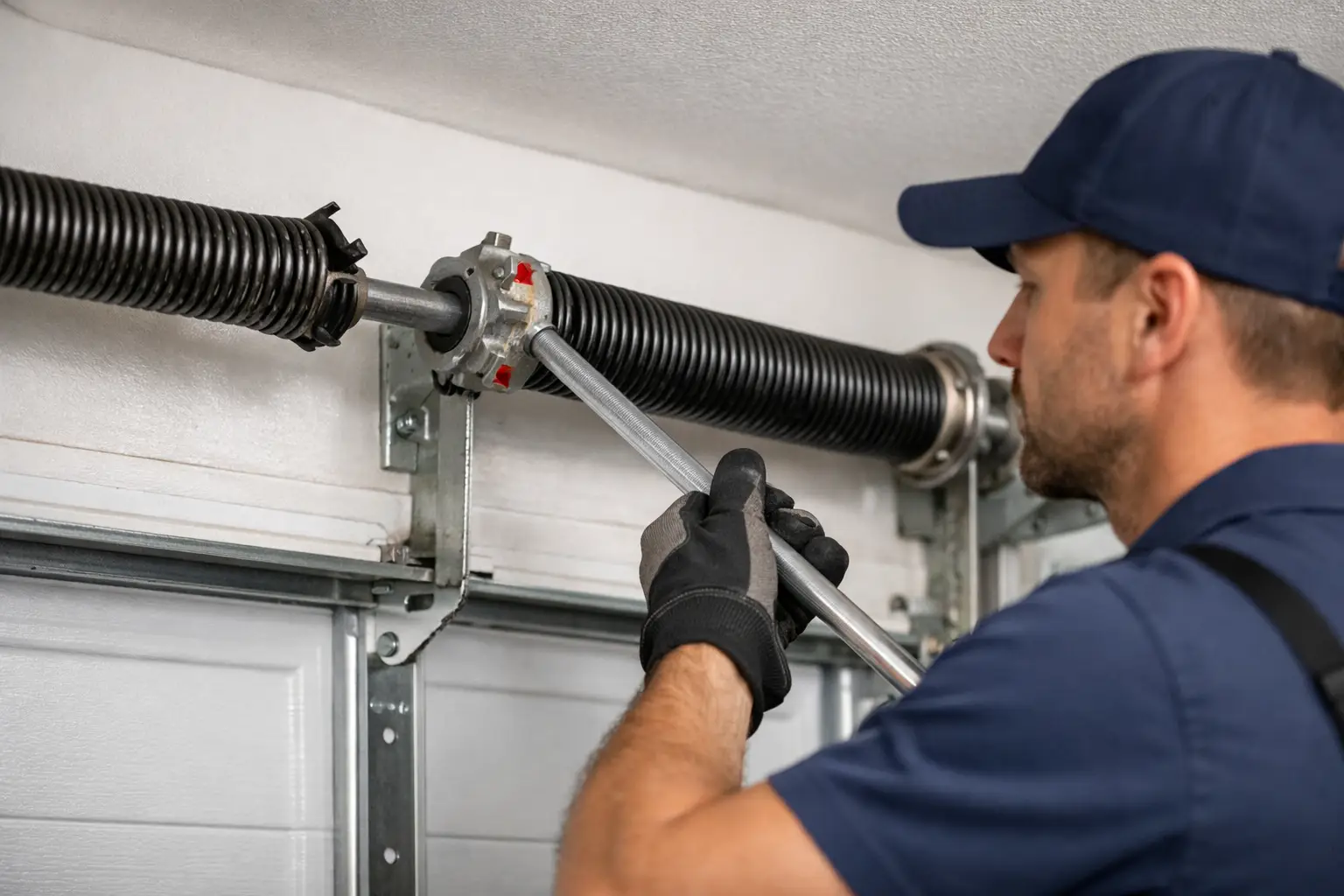
    That gap is a common sign of a broken torsion spring. Torsion springs are mounted on a metal shaft above the garage door opening. They store energy while the door closes, then release that energy to help lift the weight of the door. When a spring breaks, the opener is suddenly trying to move a very heavy door with little or no counterbalance.

    At the appointment, a technician first disconnects the opener and confirms whether the door can be moved by hand. They inspect the spring system, cables, drums, bearings, center bracket, tracks, rollers, and bottom brackets. This matters because a broken spring can be the obvious problem while worn cables or damaged hardware may be contributing to unsafe operation.

    In this example, the door uses two torsion springs. One is broken, and the second has reached a similar point in its life cycle. Since both springs have worked through the same number of door cycles, replacing them together is usually the practical choice. Replacing only the broken one may cost less today, but the older matching spring could fail soon after, leading to another service call and another interruption.

    The technician measures the existing springs and door weight to select properly rated replacements. Spring size is not based on a quick visual estimate. Wire diameter, inside diameter, length, winding direction, and the door’s actual weight all affect the correct setup. A spring that is too weak can leave the door heavy and strain the opener. One that is too strong can cause the door to rise unexpectedly or fail to close correctly.

    Once the correct springs are installed, the technician sets the tension, reconnects the system, and checks door balance. A properly balanced door should stay near the halfway point when operated manually, rather than slamming down or shooting upward. The opener’s force settings and safety reversal system should also be tested before the job is finished.

    Why Spring Replacement Is a Safety Job

    Garage door springs are under extreme tension. That tension is what allows a 150-pound or 300-pound door to feel manageable when lifted by hand. It is also why a slipping tool, incorrect winding procedure, or damaged component can cause serious injury.

    Online videos can make this work look straightforward, but they cannot evaluate the condition of your specific door, the correct spring rating, or whether related hardware is safe to reuse. Extension springs, which run along the horizontal tracks, have different risks and should have safety cables in place. Torsion springs require specialized winding bars and precise handling.

    A homeowner can safely observe warning signs, keep people clear of the door, and arrange service. The repair itself is best left to a trained professional with the right tools and experience. Do not try to force the door open with the opener after a spring breaks. That can burn out the opener motor, damage gears, bend the top section, or pull cables off the drums.

    What Affects the Cost of Spring Replacement?

    There is no one-price answer because garage doors and spring systems vary. A transparent estimate should explain what is being replaced and why. In most cases, pricing is affected by the type of spring system, whether one or two springs are needed, the size and weight of the door, spring cycle rating, and the condition of surrounding hardware.

    Standard springs are designed for a certain number of open-and-close cycles. A higher-cycle spring may cost more upfront but can make sense for a busy household where the garage is the primary entrance. A family that opens the door eight or ten times per day puts very different wear on a spring than a household that uses it twice daily.

    The door itself also matters. An insulated steel door, a custom wood door, or an oversized commercial-style residential door may require heavier-duty springs. If cables are frayed, rollers are failing, or the shaft is worn, a technician may recommend additional repairs. Those recommendations should be specific, easy to understand, and tied directly to safety or reliable operation – not vague add-ons.

    Signs Your Garage Door Spring May Be Failing

    Springs do not always break without warning. A door may begin to feel heavier, move unevenly, or make more noise than usual. The opener may struggle, the door may not open fully, or it may close with a hard impact. A visible gap in a torsion spring is one of the clearest signs of failure.

    You may also notice loose or hanging cables. While cables do not always mean the spring is broken, they are a reason to stop using the door until it can be inspected. Do not touch the cables, bottom brackets, or springs. Those parts are connected to the door’s lifting system and can move suddenly under tension.

    If the door is stuck closed, use another entrance to the home rather than forcing it. If it is stuck open, keep vehicles, children, and pets away from the opening and schedule service as quickly as possible. A door that cannot close affects both security and weather protection.

    Should You Replace One Spring or Both?

    For a two-spring torsion system, replacing both is often the better long-term decision. The springs were installed at the same time and have carried the same workload. When one breaks, the other is commonly near the end of its service life.

    There are exceptions. If one spring was replaced recently and the other was not, or if the system uses mismatched springs for a particular door design, a technician may recommend a different approach. The point is not to sell more parts. It is to match the repair to the door’s condition, usage, and safe operating needs.

    A reliable technician should explain the options clearly: replace the failed spring only, replace the pair, or upgrade to higher-cycle springs if your household uses the door frequently. You should know the trade-off between immediate cost and avoiding another likely breakdown before any work begins.

    Protecting Your New Springs

    Spring life depends mostly on use, but regular garage door maintenance can prevent avoidable stress on the system. Keep tracks clear, listen for new grinding or squealing sounds, and have the door checked if it becomes uneven or difficult to operate. Springs should not be coated with heavy grease, but other moving components may need the appropriate lubrication as part of professional maintenance.

    Balance is especially important. When a door is out of balance, the opener has to work harder every time it runs. That extra load can shorten the life of the opener, cables, rollers, and springs. A quick check-up can catch small issues before they turn into a door that will not open on a busy morning.

    Riggs Rescue AZ provides clear, local help for garage door spring problems, with a focus on fast response, honest guidance, and repairs that make sense for your home. If your door is heavy, stuck, noisy, or showing a broken spring, treat it as a safety concern and get it inspected. A properly balanced garage door should feel dependable every time you press the button.

  • Driveway Gate Access Control That Fits Your Property

    Driveway Gate Access Control That Fits Your Property

    A gate that opens only when it feels like it is not providing much security or convenience. The right driveway gate access control gives your household, employees, visitors, and deliveries a clear way in while keeping unapproved traffic out. For properties across Gilbert and the East Valley, the goal is simple: dependable entry without creating a daily hassle.

    The best system is rarely the one with the most features. It is the one that matches how people actually use your property, works with your gate operator, and can handle intense Arizona sun, dust, and everyday wear.

    Start With How People Enter Your Property

    Before choosing a keypad, remote, phone app, or card reader, think about who needs access and when. A residential household may need a simple setup for family members, dog walkers, and occasional guests. A small business, HOA, rental property, or service yard may need a more controlled system with individual credentials and a record of who entered.

    Ask a few practical questions. Do visitors arrive frequently? Is the gate far enough from the house that a wireless remote has limited range? Do employees come and go on different shifts? Will delivery drivers need a temporary code? The answers narrow down the best options quickly.

    A good access control setup should also account for the gate itself. Sliding gates, swing gates, dual gates, and heavy commercial gates each place different demands on the operator and safety equipment. Access controls tell the operator when to open, but the operator, photo eyes, loops, and reversing systems must all be in good working order for the gate to move safely.

    Common Driveway Gate Access Control Options

    Keypads: A practical choice for regular visitors

    Keypads are one of the most common choices for homes and small commercial properties. A visitor enters a code, and the gate opens. They are easy to understand, do not require someone to carry a remote, and work well for guests, landscapers, cleaners, and delivery access.

    The trade-off is code management. If one shared code gets passed around, it becomes difficult to know who has access. A keypad with multiple user codes is a better fit when you want separate codes for family, vendors, or tenants. Change codes when a relationship or service arrangement ends, especially after a tenant moves out or staff changes occur.

    For Arizona properties, choose an exterior-rated keypad designed for heat and direct sun. Faded buttons, cracked housings, and intermittent performance are common signs that an older unit has reached the end of its useful life.

    Remotes: Fast and familiar for daily use

    Remotes remain a reliable option for household members and employees who enter by vehicle every day. They are convenient, quick to use, and familiar to anyone with a garage door opener.

    Their limitation is control. A lost remote should be removed from the system as soon as possible. If remotes have been handed out over the years with no record of who has them, reprogramming the receiver and issuing new remotes may be the safer move. For a business or community gate, remotes alone may not provide enough accountability.

    Telephone and video entry systems: Better for guest screening

    Telephone entry systems let a visitor call a resident or office from the gate. The person inside can speak with the visitor and release the gate remotely. Video entry adds a live image, giving you more information before allowing someone onto the property.

    These systems are especially helpful for long driveways, gated homes, multi-tenant properties, and businesses that receive vendors or customers throughout the day. A video system can provide peace of mind, but it depends on dependable power, a good communication connection, and equipment positioned to see the approach clearly.

    If the gate entrance has poor cellular coverage or weak Wi-Fi, that should be addressed before relying on an app-based or video-based system. Convenience is only helpful when it works consistently.

    Smartphone access: Useful when credentials change often

    Smartphone-based access control can allow you to open the gate from an app, share temporary access, and remove a user without collecting a remote or changing a physical key. For busy homeowners and property managers, that flexibility can be a major advantage.

    It is not always the best standalone solution. Phones run out of battery, apps need updates, and visitors may not be comfortable with a digital invitation process. Many properties benefit from combining smartphone access with a keypad or call box so there is a straightforward backup method.

    Card readers, fobs, and tags: Strong options for managed properties

    Card, fob, and proximity-tag systems are common for commercial sites, private communities, and facilities where access needs to be assigned by person. They offer more control than a shared keypad code and can be easier to manage than dozens of remotes.

    For a small business with a limited team, this can be a clean and practical solution. For a property with frequent turnover, it is particularly useful because credentials can be deactivated when an employee, vendor, or tenant no longer needs entry.

    Do Not Overlook Safety and Emergency Access

    Access control is only one part of a properly functioning automatic gate system. A gate must be able to detect obstructions and reverse when necessary. Photo eyes, vehicle detection loops, monitored safety edges, warning devices, and properly adjusted operator settings all play a role.

    Do not disable safety devices because the gate is acting up. A gate that will not close, reverses unexpectedly, or closes too aggressively needs professional attention. Bypassing a sensor may seem like a quick fix, but it can create a serious risk for children, pets, visitors, vehicles, and your property.

    Emergency access matters, too. Your gate design should allow approved emergency responders to enter when needed. Depending on the property and local requirements, that may involve a Knox device, fire department access method, or another approved solution. This is worth discussing during installation rather than after an urgent situation exposes a problem.

    Plan for Arizona Heat, Dust, and Monsoon Weather

    Driveway gates in Arizona work hard. Electronics sit in heat, components collect dust, and monsoon storms can expose weak wiring, worn seals, and poor drainage. The access device may be the visible part of the system, but its reliability often comes down to the condition of the wiring, enclosure, battery backup, and operator.

    A few maintenance habits can prevent avoidable access problems:

    • Keep keypad faces, photo eyes, and call-box cameras clean and free of spider webs or debris.
    • Test remotes, keypads, safety sensors, and manual release functions regularly.
    • Replace weak remote batteries before they leave someone stuck outside the gate.
    • Inspect the gate track, hinges, rollers, and latch area for dirt, wear, or misalignment.
    • Have damaged conduit, exposed wires, or water-prone enclosures repaired promptly.

    Battery backup deserves special attention. A power outage should not leave you trapped inside or locked out of your own driveway. Backup power may be essential for a home gate and is often even more valuable for businesses that need to maintain access during an outage.

    When to Repair, Upgrade, or Replace Your Access System

    A repair may be enough if the gate operator is in good condition and one component has failed, such as a keypad, receiver, remote, photo eye, or wiring connection. Replacing only the failed part can be the most affordable path when the rest of the system is safe and compatible.

    An upgrade makes sense when your needs have changed. Perhaps you have added employees, started managing a rental, want temporary visitor codes, or need better visibility at the entrance. In those cases, adding a multi-code keypad, call box, video entry system, or app-enabled controller can improve daily use without replacing the entire gate.

    Replacement may be smarter when the operator is outdated, parts are difficult to find, the system has repeated electrical issues, or the gate no longer meets current safety expectations. Honest guidance should include the cost of repeated repairs versus installing equipment that will serve the property more reliably for years.

    Choose a Setup You Can Actually Manage

    The most secure access system can still create headaches if no one knows how to update codes, deactivate a lost fob, or release the gate during an emergency. Make sure the owner, manager, or designated staff member understands the basics. Keep a secure record of user codes and credentials, and avoid leaving remotes in unattended vehicles.

    For homes and businesses, a professional gate technician can help match the controls to the operator, wiring layout, traffic level, and safety needs. Riggs Rescue AZ can inspect an existing gate system, explain your options in plain language, and help you avoid paying for features that do not fit your property.

    A dependable gate should make arrival feel routine, not stressful. Choose access controls that are easy for the right people to use, difficult for the wrong people to bypass, and supported by a gate system that is maintained before a small issue becomes an inconvenient lockout.

  • Garage Door Installer Review Checklist for Homeowners

    Garage Door Installer Review Checklist for Homeowners

    A new garage door can change the look, security, and day-to-day convenience of your property. But a door that is measured poorly, installed without proper safety checks, or paired with the wrong opener can create expensive problems fast. This garage door installer review checklist helps homeowners and business owners compare companies based on the details that actually protect their investment.

    The lowest quote is not always the best value. In the East Valley, heat, dust, wind, and frequent use can be hard on garage doors and automatic systems. You need an installer who recommends the right setup, explains the price clearly, and stands behind the work after the truck pulls away.

    Start Your Garage Door Installer Review Checklist Before Calling

    Before requesting estimates, take a few minutes to define what you need. Is your existing door damaged beyond repair? Are you upgrading for curb appeal, insulation, security, or quieter operation? Do you need an opener, new tracks, reinforced hardware, or removal of the old door included in the project?

    Knowing your priorities makes it easier to compare quotes fairly. One company may quote a basic non-insulated steel door, while another may recommend an insulated door with stronger hardware and better long-term performance. Neither option is automatically wrong. The right choice depends on your budget, whether the garage is attached to the home, how much direct sun the door receives, and how you use the space.

    For a business, clarify the operating demands. A commercial door used several times each day needs a different conversation than a residential door that opens twice a day. Ask about cycle ratings, security needs, operator type, and downtime planning before approving the work.

    Check the Company, Not Just the Star Rating

    Online reviews are useful, but they should be the starting point rather than the whole decision. A long list of five-star ratings matters more when reviewers mention specific experiences: prompt arrival, accurate estimates, professional installation, clean work areas, and dependable follow-up.

    Read a mix of recent reviews and lower-rated reviews. Pay attention to how the company responds when a customer is unhappy. A local service provider will occasionally face a scheduling issue, supplier delay, or misunderstanding. What separates a dependable company is whether it communicates clearly and works to make things right.

    Look for a consistent record of serving customers in your area. A company familiar with Gilbert, Chandler, Mesa, Queen Creek, and nearby communities understands local home styles, common door sizes, heat exposure, and the urgency of a garage that will not secure. Local experience should come with local accountability, not vague promises.

    Confirm licensing, insurance, and real business details

    Ask whether the installer is properly licensed for the work they perform and carries appropriate insurance. This is not an awkward question. A professional should answer it directly and provide documentation when requested.

    Also verify that the company has a working local phone number, a clear service area, and a legitimate business presence. Be cautious with companies that use only generic call centers, cannot identify who will perform the installation, or seem to change names frequently. You want to know who is coming to your property and who will answer if you need help later.

    Ask What the Estimate Actually Includes

    A clear written estimate is one of the strongest signs of a customer-first installer. It should identify the door style, material, color, insulation level if applicable, hardware, windows, opener, labor, removal, and any expected permit or disposal costs. If something is optional, it should be labeled as optional.

    Be especially careful when comparing an unusually low price. Sometimes it excludes haul-away, new tracks, weatherstripping, reinforcement brackets, spring work, electrical work for an opener, or warranty coverage. Those items can change the final price significantly.

    A trustworthy installer will explain why certain parts are recommended. For example, replacing old tracks during a new door installation may cost more upfront, but using worn or mismatched tracks can affect smooth operation and safety. On the other hand, not every upgrade is necessary. Ask the technician to separate must-have safety items from comfort or appearance upgrades so you can make an informed decision.

    Get answers to these pricing questions

    You do not need a complicated contract to get clarity. Ask whether the quote is all-inclusive, what could cause the price to change, how much deposit is required, and when the remaining balance is due. Ask whether there is a trip charge for an estimate or service visit and whether it is applied to the work.

    For emergency repairs that lead to replacement, request a clear explanation before authorizing a new door. A broken spring or damaged panel does not always mean the entire system must be replaced. Honest guidance includes discussing repair when it is safe and practical, along with replacement when repair would only delay a larger problem.

    Make Safety Part of Every Installer Review

    Garage doors are heavy moving systems, and their springs, cables, rollers, and openers must work together correctly. A good installer treats safety as part of the job, not an add-on.

    Ask how the company handles spring tension, cable alignment, track mounting, bottom brackets, and door balance. You do not need to know the technical steps yourself. What you are listening for is a confident, plain-English explanation that shows the technician has a process.

    If an opener is being installed or replaced, ask whether the team will test the photo-eye sensors, auto-reverse function, wall controls, remote controls, and emergency release. The door should reverse when it encounters an obstruction, and the safety sensors should prevent it from closing when the beam is blocked. These checks are especially important for homes with children, pets, or frequent foot traffic near the garage.

    For wind-prone openings or heavier insulated doors, ask whether reinforcement is needed. The opener must be properly matched to the door weight and use level. A stronger opener is not always better if the door itself is unbalanced. Proper balance and installation come first.

    Review Product Options Without Getting Sold What You Do Not Need

    The best garage door is not necessarily the most expensive model in the showroom. Steel doors are popular because they are durable, versatile, and available in many styles. Insulated doors can help reduce heat transfer and outside noise, particularly when the garage connects to living space or doubles as a workspace.

    Wood-look finishes offer visual appeal with less maintenance than real wood in many cases. Glass and modern aluminum designs can create a clean, contemporary look, but they may offer less privacy and can affect heat performance depending on the glass choice. Your installer should explain those trade-offs instead of steering every customer toward the same product.

    Ask to see samples, photos of completed work, and available warranty information. Color can look different outdoors than it does on a screen, especially under Arizona sunlight. If your neighborhood has an HOA, confirm style and color requirements before ordering. A professional installer can help you identify practical options, but final approval is still your responsibility.

    Evaluate Communication and Scheduling

    The installation experience often tells you what future service will be like. Notice whether the company returns your call, arrives within the promised window, answers questions without pressure, and follows up with a written estimate. Clear communication is not a bonus when your garage will be unsecured during a replacement project. It is part of reliable service.

    Ask how long the door will take to arrive, how long installation should take, and what you need to do before the crew arrives. Most residential installations can be completed efficiently once the correct door is on hand, but custom doors, specialty windows, and commercial systems may require more lead time. A good company will set realistic expectations rather than promise a date it cannot keep.

    If you need fast help because a door is stuck open, off track, or will not close, ask about same-day availability and the immediate plan to secure the property. Riggs Rescue AZ believes urgent garage door problems deserve straightforward answers, transparent pricing, and a practical solution without unnecessary delays.

    Do Not Skip the Final Walk-Through

    Before the installer leaves, operate the door several times with the technician present. Listen for grinding, scraping, or excessive vibration. Check that the door sits evenly when closed, moves smoothly, and does not slam to the ground or strain to open.

    Have the technician show you how to use the wall button, remotes, keypad, and emergency release. If you have a smart opener, make sure the app and user access are set up correctly. Confirm that old remotes are removed from the system if security is a concern.

    Finally, get the warranty details in writing and save the invoice, product information, and technician contact details. Ask what maintenance is recommended and when to schedule a check-up. Simple preventive care can catch worn rollers, loose hardware, or balance issues before they turn into a door that will not open when you are trying to leave for work.

    A garage door should feel dependable every time you use it. Choose an installer who earns that confidence with clear answers, careful work, and service that does not disappear once the installation is complete.

man-in-blue-shirt

Exclusive Residential Service Offer 🏷️

For a limited time, homeowners can enjoy exclusive savings with a FREE Service Call, No Trip Charge, and a FREE Garage Door Safety Inspection on qualifying services.

Offer Includes :