Category: Uncategorized

  • How to Spot Broken Garage Springs Safely

    How to Spot Broken Garage Springs Safely

    A garage door that suddenly will not open is more than an inconvenience when you need to get to work, pick up the kids, or secure your business. Knowing how to spot broken garage springs can help you avoid forcing the door, damaging the opener, or putting yourself in harm’s way. Garage door springs carry most of the door’s weight, and when one breaks, the system can become unsafe fast.

    The good news is that several warning signs are easy to recognize from a safe distance. You do not need to touch the springs or take apart any hardware to know it is time for professional repair.

    Why a Broken Garage Spring Is a Big Deal

    Your garage door opener is designed to guide the door, not lift its full weight. The springs do the heavy lifting by storing tension as the door closes and releasing that energy as it opens. A typical residential garage door can weigh 150 to 300 pounds or more, depending on its size, material, and insulation.

    When a spring breaks, that weight is no longer properly balanced. The opener may strain, the door may stop partway, or the door may come down harder than expected. Trying to operate it repeatedly can turn a spring repair into a more expensive opener, cable, roller, or track repair.

    There are two common spring setups. Torsion springs sit on a metal shaft above the garage door opening. Extension springs run along the horizontal tracks on either side of the door. Both types are under extreme tension. That is why spring replacement is not a DIY job, even for a handy homeowner.

    How to Spot Broken Garage Springs: The Most Common Signs

    A loud bang from the garage is often the first clue. Many homeowners describe it as a gunshot, a firecracker, or a heavy object falling. That sound is frequently a torsion spring snapping under tension. You may hear it even when no one is using the door.

    The door may also refuse to open more than a few inches. Modern openers have safety settings that can detect excess weight or resistance. If the opener starts, the door rises slightly, and then reverses or stops, a broken spring is a likely possibility.

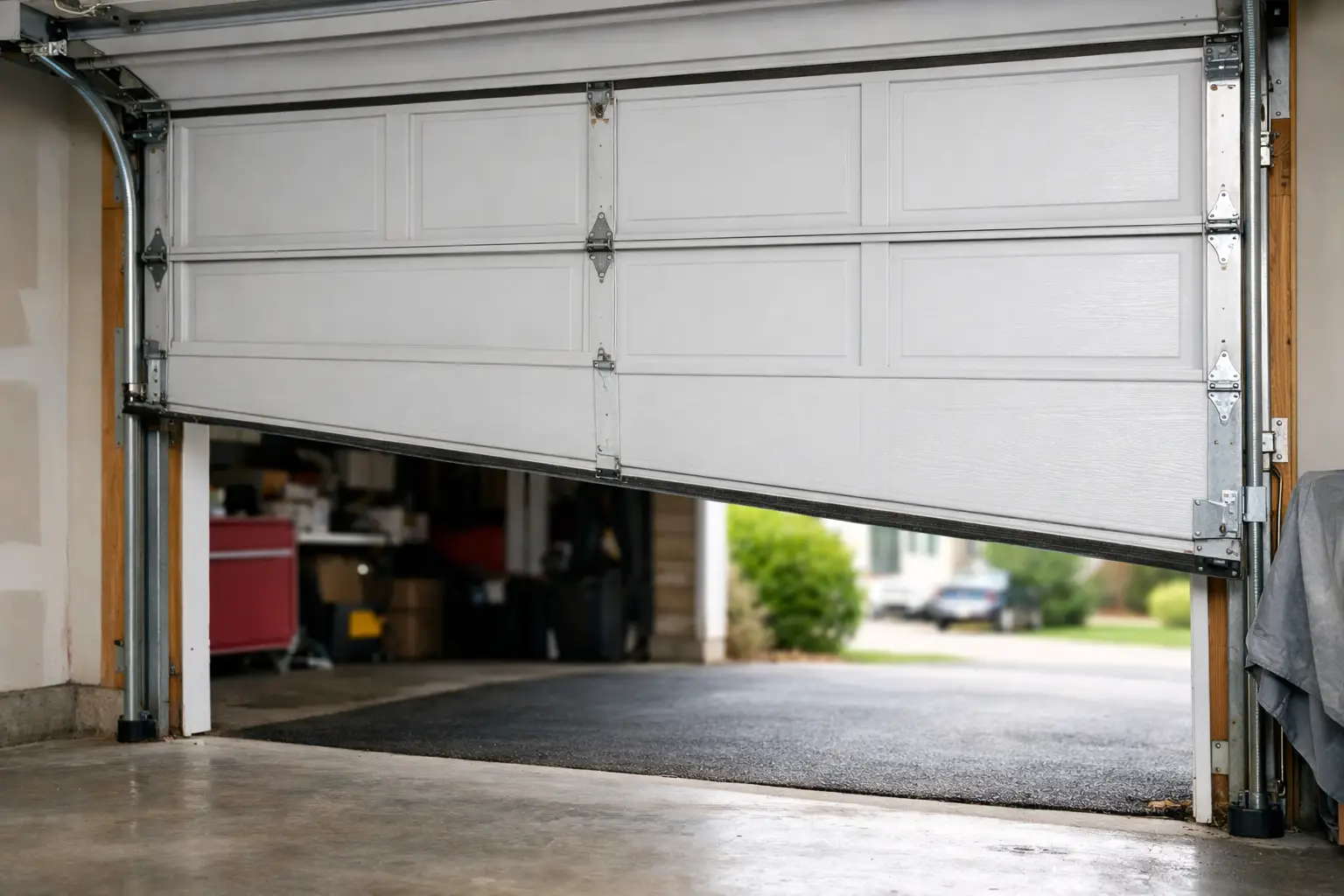
    Another major sign is a door that looks crooked while moving. If one side rises while the other stays low, stop the door immediately. A broken spring, loose cable, or issue with the lifting system can cause the door to bind. Continuing to run it may pull a cable off the drum or bend a track.

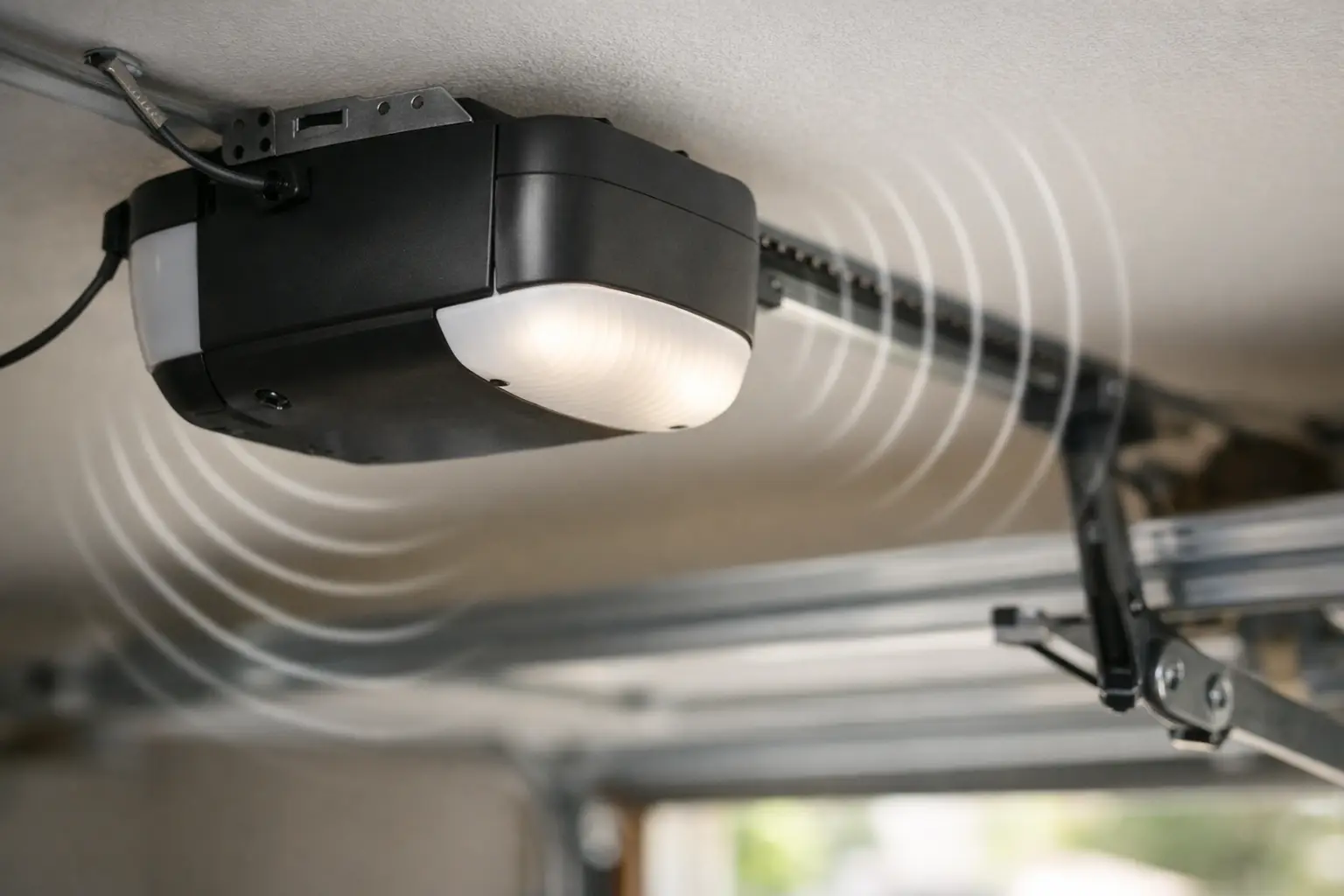
    You may also notice that the opener sounds different. A strained motor, humming sound, or repeated clicking without normal door movement can mean the opener is trying to lift a door that has lost spring support. The opener itself may not be the original problem, but it should not be forced to keep trying.

    What a Broken Spring Looks Like

    A visual check can be useful, as long as you keep your hands away from the spring system. Stand inside the garage with the door closed and look above the opening.

    Torsion spring warning signs

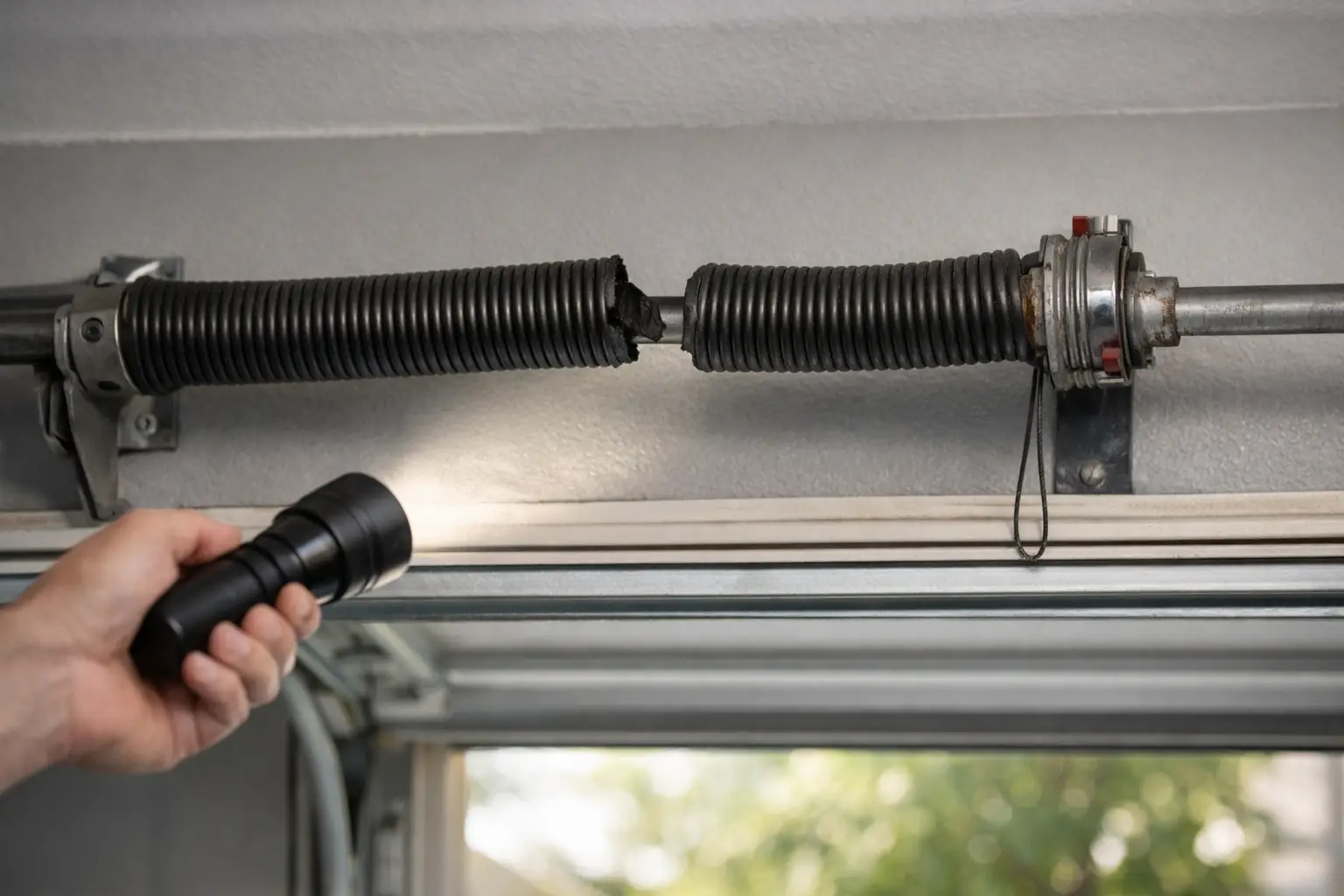
    A torsion spring normally looks like one continuous, tightly wound coil around a metal bar. When it breaks, there is often a visible gap of about two inches between sections of the coil. This clean separation is one of the clearest signs of a broken torsion spring.

    Some doors have two torsion springs. If only one has broken, the door may still move a little, which can be misleading. It is still unsafe to use. The remaining spring is taking more than its intended share of the load and may be near the end of its service life as well.

    Extension spring warning signs

    Extension springs are usually mounted along the sides of the horizontal tracks. A broken extension spring may hang loosely, appear stretched out, or sit in separate pieces. You may also see a loose cable or pulley nearby.

    Do not assume a hanging spring is harmless because it looks slack. The hardware around it can still shift unexpectedly, and extension spring systems should have safety cables running through the center of each spring. If a spring has broken or a cable is loose, keep people, pets, and vehicles clear of the door.

    Other Problems That Can Look Like a Broken Spring

    Not every door that will not open has a broken spring. A power outage, dead remote battery, misaligned safety sensor, damaged roller, or failed opener can create similar frustration. The difference is often in how the door behaves.

    If your opener has power but the door feels extremely heavy, stops after moving a few inches, or has a visible broken coil above it, springs are the most likely issue. If the door is fully closed and the remote does nothing at all, check whether the wall button works and whether the opener has power. That could point to an electrical or opener problem instead.

    A door that reverses immediately after closing is often related to photo-eye sensors or travel settings, not necessarily a spring. The sensors near the bottom of the tracks may be blocked, dirty, or out of alignment. Still, if the door is moving unevenly or you heard a loud snap, treat it as a spring concern until a technician can inspect it.

    What to Do When You Suspect a Broken Spring

    The safest move is simple: stop using the garage door. Do not keep pressing the wall button or remote in hopes that it will push through the problem. A garage door opener can burn out when it is repeatedly asked to lift an unbalanced door.

    Leave the door closed if possible. If the door is open or partially open, keep everyone away from the opening and do not walk or drive under it. Avoid pulling the emergency release cord while the door is open. Without spring support, the full weight of the door can drop quickly.

    Do not try to lift the door manually unless a trained professional has given you specific guidance for your situation. Even if two adults can lift the door, holding it in place and getting it safely secured is another matter. The door can slam down, and a loose cable can make the situation worse.

    For businesses, a disabled garage door can affect deliveries, employee access, and security. Keep the area clear, use another entrance if available, and arrange service as soon as possible. Fast repair protects both your equipment and your daily operations.

    Why Springs Break in the First Place

    Most garage springs break because they have reached the end of their cycle life. Every time the door opens and closes, the springs complete a cycle. Standard springs are often rated for around 10,000 cycles, though actual lifespan depends on door weight, usage, maintenance, and spring quality.

    A family that uses the garage as the main entrance may go through cycles much faster than a household that opens the door only once or twice a day. Heavy insulated doors and doors that are out of balance can also put extra stress on the springs.

    Rust, worn bearings, dry moving parts, and poor installation can shorten spring life. In the East Valley, garage doors also see frequent temperature swings and plenty of daily use. A professional check-up can catch worn components before they leave you stuck inside or outside the garage.

    Can You Replace Only One Garage Door Spring?

    It depends on the system, but replacing both torsion springs is often the smarter choice when they were installed at the same time. If one spring has broken from normal wear, the matching spring may not be far behind. Replacing both can restore balanced lifting force and reduce the chance of another unexpected breakdown soon after the first repair.

    That said, the right recommendation should be based on an inspection, not a blanket sales pitch. Spring size, door weight, system condition, and whether the second spring is still in good shape all matter. A trustworthy technician should explain the options, answer questions clearly, and provide pricing before work begins.

    Get a Safe, Straightforward Spring Inspection

    A broken garage spring is not a problem to wait out, but it does not have to become a stressful ordeal. Riggs Rescue AZ provides clear guidance and garage door repair for homeowners and businesses throughout Gilbert, Mesa, Chandler, Queen Creek, Tempe, Scottsdale, and Phoenix.

    If your door is heavy, uneven, stuck, or making a sound that does not seem right, leave it alone and schedule an inspection. A quick professional diagnosis can protect your door, opener, property, and the people who rely on your garage every day.
  • Automatic Gate Service Queen Creek Homeowners Trust

    Automatic Gate Service Queen Creek Homeowners Trust

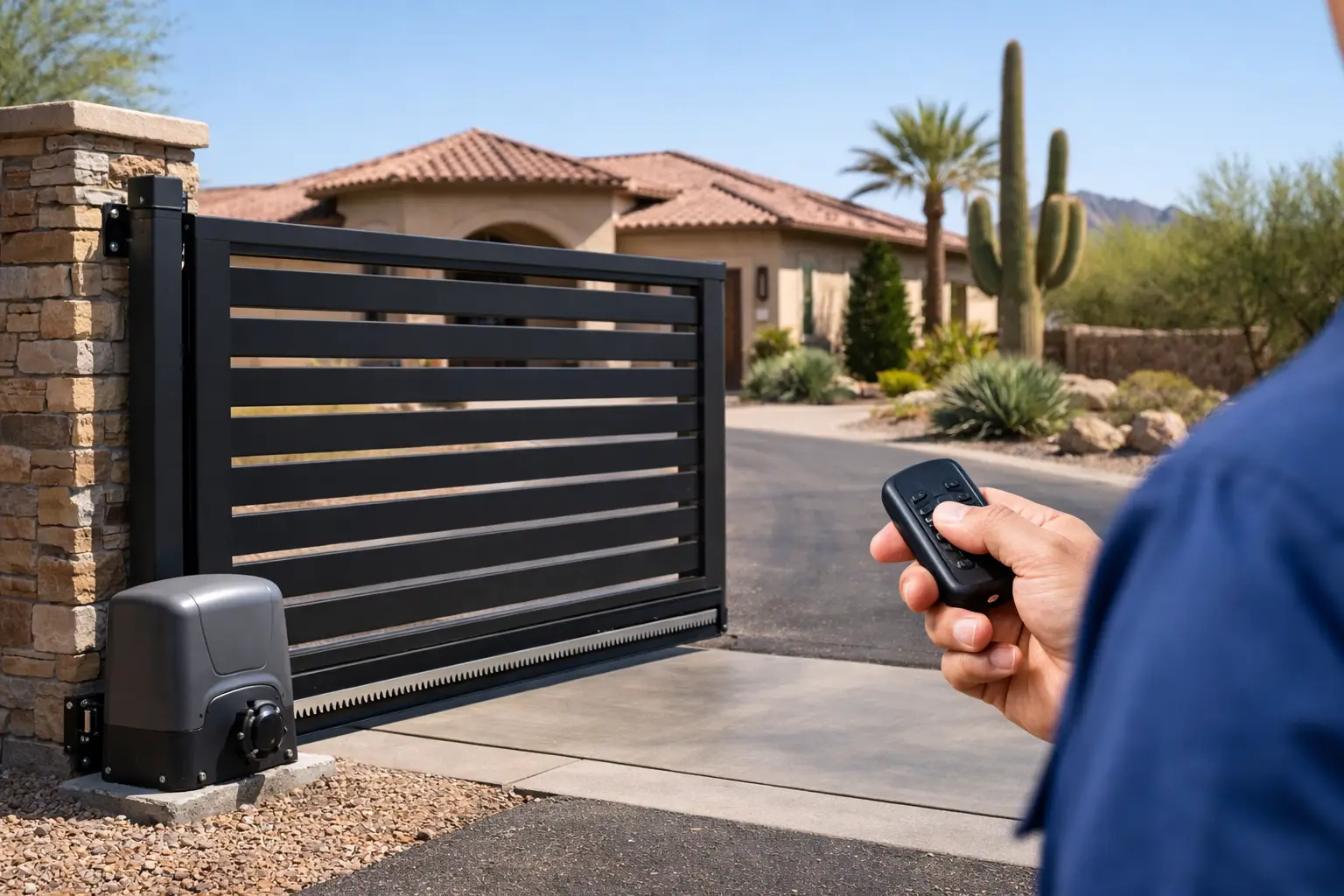
    A gate that will not open when you are trying to leave for work is more than an inconvenience. It can trap vehicles, leave a property exposed, or create a real safety concern for children, visitors, and deliveries. When you need automatic gate service Queen Creek property owners can depend on, the goal is not just to get the gate moving again. It is to find the cause, make the right repair, and help prevent the same problem from disrupting your day next week.

    Why a Broken Automatic Gate Needs Fast Attention

    Automatic gates do serious work every day. They control access, protect vehicles and equipment, and add privacy to homes, neighborhoods, offices, storage yards, and small businesses. When one starts acting up, forcing it open or repeatedly pressing the remote can turn a manageable repair into a larger problem.

    A gate that drags, reverses unexpectedly, or closes with too much force may also have a safety issue. Modern automatic gate systems rely on more than a motor. They use photo eyes, control boards, limit switches, wiring, rollers, hinges, chains or belts, and safety devices that all need to work together. One worn or misaligned part can affect the whole system.

    Fast service matters, but a quick fix should still be a careful one. A technician should inspect the gate’s movement, hardware, power supply, controls, and safety features before recommending a repair. That approach gives you a clearer answer and helps avoid paying for parts that do not solve the real issue.

    Common Signs You Need Automatic Gate Service in Queen Creek

    A gate rarely fails without warning. Paying attention to changes in sound, speed, and movement can help you schedule service before the gate stops completely.

    The gate moves slowly, shakes, or stops halfway

    Slow travel can point to worn rollers, damaged hinges, a dragging track, a weak operator, or an obstruction in the gate path. For swing gates, sagging posts or hinges can put extra strain on the opener. For sliding gates, debris, misaligned rollers, and worn guide hardware are common culprits.

    Do not assume a struggling gate simply needs more force from the operator. Increasing force settings without addressing the resistance can strain the motor and reduce the system’s safety.

    Your remote, keypad, or phone control works inconsistently

    Intermittent access is frustrating, especially when guests, tenants, or employees need reliable entry. The issue may be as simple as a weak remote battery, but it could also involve a failing receiver, damaged antenna, keypad wiring issue, programming error, or control board problem.

    If only one remote fails, the remote itself may be the source. If every control works inconsistently, the problem is more likely within the gate system or its power supply.

    The gate opens but will not close

    This is one of the most common service calls because safety sensors are designed to prevent a gate from closing when they detect an obstruction. Dirt on photo eyes, misalignment, loose wiring, sun glare, or a damaged sensor can keep the gate open.

    The safety system should never be bypassed just to get the gate closed. A trained gate technician can identify whether the problem is sensor alignment, a wiring fault, a failing control board, or another issue that needs attention.

    You hear grinding, popping, or clicking sounds

    New noises are worth checking early. Grinding may come from rollers, gears, chains, or other moving hardware. Clicking can indicate a relay, electrical connection, or operator issue. Popping sounds around a swing gate can be caused by hinges, brackets, or structural movement.

    A gate should not need to sound rough to work hard. A prompt inspection can often keep a smaller mechanical repair from becoming an operator replacement.

    What a Professional Gate Service Visit Should Include

    A quality repair appointment starts with listening. You know when the gate began acting differently, whether the issue happens at certain times, and which controls are affected. Those details help speed up diagnosis.

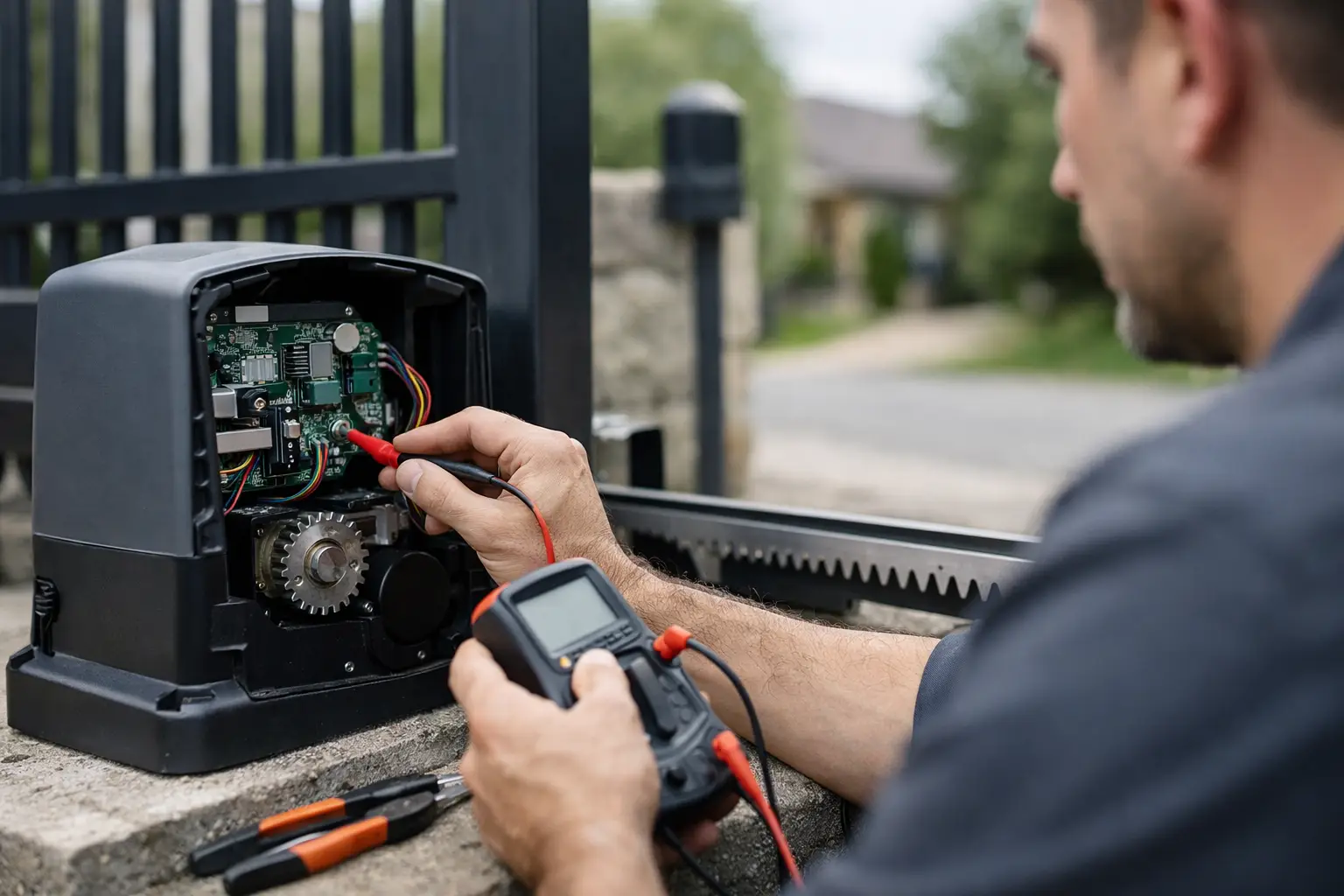
    From there, the technician should check the gate structure and travel path. That means looking at rollers, hinges, tracks, chain tension, guide wheels, brackets, stops, and the condition of the gate itself. The operator must be evaluated too, including the motor, gear system, electrical connections, control board, limits, and backup battery where applicable.

    Safety testing is just as important as getting the gate moving. The system should be checked for proper reversing behavior and reliable sensor operation. If the gate is being used at a business, multifamily property, or shared entrance, dependable safety devices and access controls are especially important because more people interact with the system each day.

    At Riggs Rescue AZ, the focus is on explaining what is wrong in plain language and giving you practical options before work begins. You should know whether a repair is likely to hold up, what a replacement would change, and what the expected cost includes. No surprises is the standard homeowners and business owners deserve.

    Repair or Replace? The Right Answer Depends on the System

    Not every gate problem calls for a new operator. Replacing a sensor, remote receiver, roller, hinge, chain, battery, or control component can be a smart and affordable repair when the gate is structurally sound and the operator is in good condition.

    Replacement starts making more sense when the operator has repeated failures, replacement parts are no longer available, or the system no longer meets your access and security needs. An older gate opener may also lack the safety features, battery backup, or modern access controls that make daily use easier.

    There is a trade-off. Repairing an aging system costs less today, but repeated service calls can add up. Replacing a system costs more upfront, yet it can improve reliability and reduce interruptions. The right choice depends on the condition of the gate, how often it is used, and how much downtime affects your household or business.

    Queen Creek Conditions Can Be Tough on Gate Systems

    Arizona heat is hard on electronics, batteries, plastic components, and moving metal parts. Dust can build up along sliding gate paths and around sensors. Monsoon winds can shift branches, blow debris into tracks, or expose weak hardware. Even irrigation overspray can contribute to corrosion or electrical problems over time.

    That is why routine gate care is not just about appearance. A gate may still open and close while developing resistance that is slowly wearing down the operator. Seasonal checkups are a practical way to catch small issues before a busy morning, a delivery, or a security concern turns into an urgent call.

    Simple Gate Care Between Service Visits

    Property owners can help protect their equipment without taking on risky repairs. Keep the travel path clear and do not allow rocks, branches, trash, or landscape material to collect in a sliding gate track. Watch for sagging, scraping, or changes in the gate’s travel.

    A few habits make a difference:

    • Keep photo eyes clean and free of cobwebs, dust, and landscaping.
    • Trim plants away from the gate’s travel area and safety sensors.
    • Replace remote batteries when range becomes noticeably weaker.
    • Avoid hanging items on the gate or leaning heavy objects against it.
    • Call for service when you notice new noise, hesitation, or reversing.

    Do not attempt to adjust springs, internal operator components, high-voltage wiring, or safety settings unless you are trained for the system. Gates are heavy, and automatic operators can create pinch points and unexpected movement.

    Residential and Commercial Gates Need Different Planning

    For a home, the priority may be dependable entry, privacy, and a remote or keypad that works every time. Families often benefit from a system that is easy to operate and includes reliable safety features for children, pets, and visitors.

    For a small business, property manager, or storage facility, access control and durability can carry more weight. A commercial gate may cycle dozens or hundreds of times each day. It may need stronger hardware, better vehicle detection, multiple user credentials, and a maintenance plan built around heavier use.

    The best service provider will not treat every gate the same. They should consider the gate’s size, weight, daily cycles, location, access needs, and current condition before suggesting equipment or repairs.

    A dependable automatic gate should make your property easier to manage, not create another item on your stress list. If your gate is slow, noisy, unreliable, or stuck, getting it checked early can protect your safety, security, and budget while helping you get back to your normal routine.

  • Can a Bent Garage Door Be Repaired? Know the Signs

    Can a Bent Garage Door Be Repaired? Know the Signs

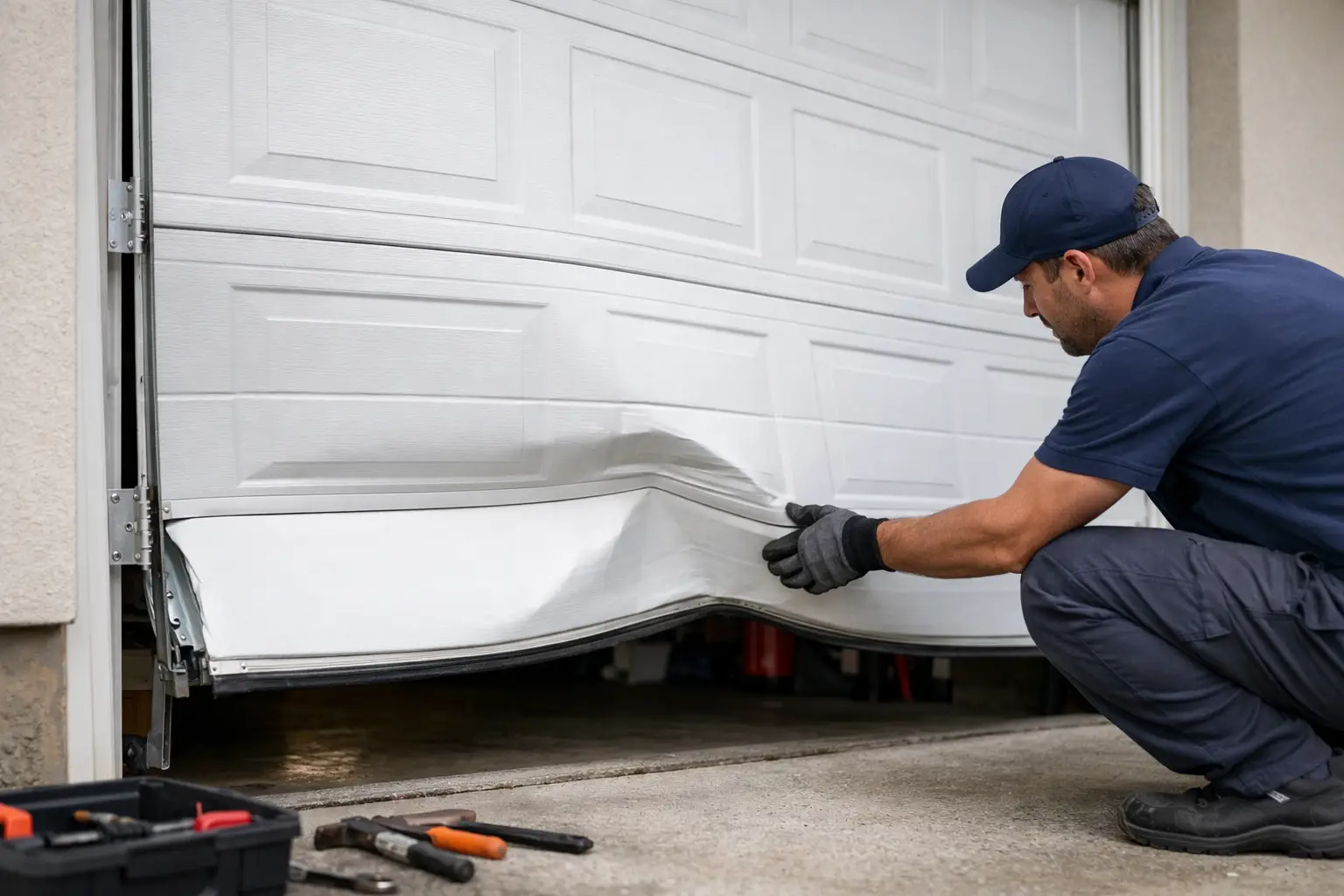
    A garage door can get bent in seconds. A car backs into it, a basketball hits the wrong spot, strong wind catches a weakened panel, or the door keeps running after something blocks its path. The immediate question is understandable: can a bent garage door be repaired without replacing the whole thing?

    Sometimes, yes. A small dent or slight bend may be repairable, especially when the door still opens, closes, and seals correctly. But a bend can also signal damage to the door’s structure, tracks, rollers, cables, or opener. Trying to force a damaged door back into shape can turn a manageable repair into a larger safety issue.

    The right answer comes down to where the damage is, how severe it is, and whether the door is still operating safely.

    Can a Bent Garage Door Be Repaired Safely?

    A bent garage door is often repairable when the damage is limited to one area and has not changed the way the door moves. For example, a shallow dent in an aluminum or steel panel may be mostly cosmetic. A technician may be able to straighten the section, reinforce it, or replace that individual panel if a repair will not restore its strength.

    The situation changes when the bend affects the door’s frame or movement. Garage doors are heavy, and they rely on balanced springs, properly aligned tracks, cables, rollers, and hinges to move safely. If one panel is bowed, a track is bent, or the bottom of the door no longer sits level, the door can bind or come off track.

    A repair is usually a good option when the door still has a solid structure, replacement parts are available, and the repair will return it to safe operation. Replacement is often the better investment when several sections are damaged, the door is older and weakened, or the impact has affected more than the visible panel.

    The Location of the Bend Matters

    Not all bends carry the same risk. Damage near the center of a door panel is different from damage at the bottom section, along an edge, or near the track system.

    A Small Dent in One Panel

    A minor dent is the most repairable type of damage. It may not interfere with the door’s movement at all, particularly on a lightweight steel or aluminum door. Still, look closely for cracked paint, torn insulation, loose hardware, or a panel that has started to bow outward.

    A dent that looks minor from the driveway can be more than cosmetic if it weakens a reinforced section. This is especially true on insulated doors, where a hard impact can separate the outer skin from the insulation and internal support.

    A Bent Bottom Panel

    The bottom panel takes a lot of abuse. It is exposed to moisture, dust, pets, lawn equipment, and the occasional vehicle bumper. If it is bent, the door may no longer make a proper seal against the floor, which can let in heat, pests, and Arizona dust.

    Bottom-panel damage can also affect the bottom brackets and lift cables. Those parts are under significant tension. Do not loosen, remove, or adjust bottom brackets yourself. A trained garage door technician should inspect that area before the door is used again.

    Bent Tracks or Misaligned Rollers

    A bent track is not just a cosmetic problem. Tracks guide the entire door, and even a small bend can make rollers drag, pop out, or stop moving smoothly. If you hear grinding, scraping, or a sharp bang as the door operates, stop using it.

    In some cases, a track can be carefully realigned or replaced without replacing the door. If the door has come off track, though, avoid pulling on it or using the opener. The door may be unstable and could shift suddenly.

    Damage Near Hinges, Reinforcement Struts, or the Opener Arm

    Hinges connect each door section, while reinforcement struts help keep wide doors from flexing. Damage in these areas deserves prompt attention because it can spread quickly as the door cycles.

    If the top section is bent where the opener arm connects, disconnecting or repeatedly running the opener can make the damage worse. The opener is designed to lift a balanced door, not force a bent or binding door through its travel.

    Signs You Should Stop Using the Door

    A garage door that is only slightly dented may still be usable until it is inspected. But certain warning signs mean it is safer to stop operating it and arrange professional service.

    • The door is hanging crooked, sitting unevenly, or visibly sagging.
    • It has come off its track or rollers are popping out.
    • The opener strains, reverses unexpectedly, or makes loud grinding noises.
    • Cables are loose, frayed, or no longer wrapped properly on the drum.
    • A panel is cracked, split, severely creased, or separating from another panel.
    • The door will not close fully or leaves a large gap at the floor.

    Do not try to straighten a severely bent section with a hammer, pry bar, or vehicle. That can weaken the metal, damage the finish, and put more pressure on the springs and tracks. A quick-looking fix may leave the door less safe than before.

    Repair or Replacement: How to Make the Call

    The most affordable choice is not always the lowest upfront price. A targeted repair can be the right solution when one panel, hinge, roller, or track is the problem. It keeps a sound door in service and can restore reliable operation without the cost of a full replacement.

    Replacement begins to make more sense when the door has multiple bent sections, extensive rust, old damaged hardware, or recurring problems. It can also be the better choice if matching replacement panels are no longer available. Garage door designs, colors, window layouts, and insulation options change over time, so a new panel may not match an older door.

    For business owners, the decision also involves security and downtime. A bent commercial door that does not close securely can affect inventory, employee access, deliveries, and daily operations. In that case, the priority is getting the opening safe and functional quickly, then deciding whether a repair will hold up to regular use.

    A good technician should explain the condition of the door, show you the damaged parts, and give you clear options. You deserve to know whether a repair is a practical long-term fix or simply a short-term patch before you approve the work.

    What to Do Right After Your Garage Door Is Bent

    First, move vehicles and people away from the door’s travel path. If the door is open and looks unstable, do not stand beneath it or attempt to pull it down manually. Keep children and pets clear of the area.

    Next, avoid pressing the opener button again and again. Repeated attempts can bend the top panel, strip opener gears, or pull the door farther out of alignment. If the door is closed and secure, leave it closed until it can be checked. If it is open, crooked, or partially off track, do not force it shut.

    Take a few photos of the damage from a safe distance. Photos can help a repair professional understand what happened before arriving, and they may be useful if the damage was caused by a vehicle or other insured incident.

    For homeowners in Gilbert, Mesa, Chandler, Queen Creek, and nearby East Valley communities, a fast inspection can prevent a bent door from becoming a failed spring, damaged opener, or unsafe opening. Riggs Rescue AZ can assess the full system, explain the repair and replacement options clearly, and help you get back to a secure, smoothly operating garage door without surprises.

    Keep a Repaired Door From Bending Again

    Some impacts cannot be prevented, but regular care reduces the chance that normal operation will create or worsen a bend. Keep the track area clear, watch for rollers that wobble, and pay attention when the door starts sounding different. A door that shakes, jerks, or moves unevenly needs attention before the strain damages panels and hardware.

    It also helps to test the opener’s safety reversal system and make sure the photo-eye sensors remain clean and aligned. If your door has been repaired after an impact, ask whether the hinges, struts, rollers, and opener settings were checked as part of the service. The visible panel is only one part of the system.

    A bent garage door does not automatically mean you need a new one. But it does deserve a careful look before the next time you press the opener. A prompt, honest assessment can protect your home, your vehicle, and the people who use that garage every day.

  • Warehouse Door Security Solutions That Work

    Warehouse Door Security Solutions That Work

    A warehouse door that does not close fully at the end of a shift is more than a maintenance issue. It is an open invitation to theft, weather damage, pests, and a costly interruption the next morning. The right warehouse door security solutions protect inventory while keeping deliveries, staff, and daily operations moving on schedule.

    For Arizona business owners and property managers, security has to work through intense heat, dust, frequent use, and the pressure of a busy loading dock. That usually means looking beyond a padlock or an alarm sticker. A secure facility starts with a door system that is in good condition, correctly matched to the opening, and backed by access controls your team can actually use.

    Start With the Door Itself

    Security upgrades work best when the commercial door is structurally sound. A worn track, damaged bottom seal, bent panel, failing spring, or unreliable operator can leave a door partially open or make employees avoid closing it properly. Even a high-quality lock cannot do much if the door can be forced out of its tracks or does not sit flush against the floor.

    Inspect loading dock doors, warehouse roll-up doors, sectional doors, and personnel doors for visible gaps, corrosion, damage around the lock area, and hardware that has loosened over time. Pay close attention to the bottom corners and side guides. These are common weak points on doors that see forklifts, pallet jacks, and constant traffic.

    A door that shakes, jerks, reverses unexpectedly, or makes grinding sounds deserves prompt service. Waiting until it fails can create a security problem at the worst possible time, such as after hours or during a delivery rush. Regular commercial door maintenance is often the most affordable first step because it identifies problems before they become an emergency replacement.

    Warehouse Door Security Solutions for Real Risks

    There is no one setup that fits every warehouse. A small storage facility with a few employees has different needs than a high-volume distribution space with multiple dock doors and drivers arriving throughout the day. The goal is to match protection to the risk, without paying for features that do not solve a real problem.

    Heavy-duty locking systems

    Manual roll-up doors and certain commercial sectional doors may benefit from slide locks, interior deadbolts, or reinforced hasps. These options add a physical barrier when the building is closed. For doors with electric operators, use locking hardware designed to work with the door system. Adding the wrong lock to an automatic door can damage the opener or create a safety hazard when someone tries to operate it.

    For higher-risk locations, an interior locking system is usually preferable because it is harder to reach or tamper with from outside. The trade-off is that your opening and closing procedure needs to be clear. If the first employee arriving cannot unlock the door safely and quickly, the system may be ignored when it matters most.

    Commercial operators with controlled access

    A commercial door operator gives you more control than a door that is opened by hand or left unattended. Keypads, key switches, remotes, and smart access controls can limit who can operate each entrance. Instead of passing one physical key around the team, you can assign access codes or credentials and remove access when an employee leaves.

    For some facilities, a keypad is plenty. For others, especially locations with valuable equipment or frequent vendor access, a managed access system provides better accountability. You can set schedules, track entries, and avoid changing locks every time staffing changes. Keep in mind that more advanced controls require proper setup and occasional maintenance. Convenience should never come at the expense of a door that employees cannot operate during a time-sensitive delivery.

    Sensors and door-position monitoring

    A door-position sensor tells you whether a door is open, closed, or left open too long. This can be one of the most practical upgrades for a warehouse, particularly when teams are busy loading trucks and moving inventory between areas.

    A monitored system can alert a manager if a door stays open after a set period or opens outside approved hours. That notification gives you a chance to act before an exposed opening turns into a theft or weather-loss event. It also helps identify workflow problems. If the same dock door is regularly left open, the issue may be training, a faulty closer, or a door that is too slow for the pace of the operation.

    Better perimeter protection

    Warehouse door security is strongest when the door and the property perimeter support each other. An automatic gate can control vehicle entry before anyone reaches the loading area. Well-placed lighting reduces blind spots, while cameras aimed at entrances help document activity and discourage opportunistic theft.

    This does not mean every business needs a full gate, camera, and access-control overhaul. A smaller operation may get excellent results from improved exterior lighting, a properly secured back door, and an operator with a dependable keypad. A larger yard with trailers, equipment, or after-hours deliveries may need gate access and monitored entry points. The right answer depends on what you store, who needs access, and when the property is active.

    Do Not Overlook Emergency Access and Safety

    Security should make it harder for unauthorized people to enter, not harder for authorized people to exit. Warehouse doors and gates must be installed and configured with safe emergency procedures in mind. Employees should know how to use manual releases, where keys or controls are stored, and who to call if an operator fails.

    Avoid makeshift solutions such as chaining a door shut, blocking an exit with equipment, or disabling safety features to keep a door from opening. Those shortcuts can expose your business to injury, property damage, and code issues. They may also make a minor repair much more expensive later.

    For powered commercial doors, photo eyes, reversing systems, and safety edges need routine checks. A secure door that closes on a person, forklift, or delivery load is not a secure solution. Good security protects people as well as property.

    Build a Closing Routine Your Team Will Follow

    The best equipment still relies on daily habits. A simple closing routine prevents many security gaps. Before the last person leaves, confirm each warehouse door is fully closed and locked, access controls are secured, and no remotes or keys are left in vehicles or unsecured desks.

    For businesses with several shifts, assign responsibility by role rather than assuming someone will handle it. A short checklist near the exit can help, but it should be practical. If it takes 20 minutes to complete, people will find ways around it. If it takes two minutes and the system is easy to use, it is far more likely to become part of the routine.

    Review access when employees change roles or leave the company. Reprogramming a keypad code is easier and less expensive than dealing with an unauthorized entry. The same applies to lost remotes. Treat them like keys to the building, because that is exactly what they are.

    When Repair Is Enough and When to Upgrade

    Not every security concern requires a new door. Replacing damaged rollers, repairing a track, adjusting an operator, adding a lock, or installing new weather seals may restore protection at a reasonable cost. If the door is in otherwise good shape and still fits your operation, repair can be the smart move.

    Replacement becomes more worthwhile when the door has repeated failures, serious structural damage, outdated controls, or a design that no longer supports your security needs. A newer commercial door and operator can improve reliability, access control, and energy efficiency at the same time. The key is getting an honest assessment of what is failing and what can safely be repaired.

    Riggs Rescue AZ helps local businesses evaluate commercial doors, operators, and gate systems without the runaround. Whether you need a quick repair after a door will not close or a longer-term plan for stronger access control, clear options and dependable service make the decision easier.

    A secure warehouse should not depend on luck, a temporary chain, or the hope that everyone remembers to close up perfectly. Start with the door that gives you the most trouble, fix the weak point, and build outward from there. Small, well-chosen improvements can protect your inventory and give you one less thing to worry about when the lights go out.

  • Why Is Garage Door Opening Unevenly?

    Why Is Garage Door Opening Unevenly?

    You hit the opener, the garage door starts moving, and one side suddenly lifts faster than the other. That is usually the moment homeowners ask, why is garage door opening unevenly, and is this something minor or something dangerous? The honest answer is that an uneven garage door is never something to ignore. Sometimes the fix is simple, but in many cases it points to a worn or failing part that can put extra strain on the whole system.

    A garage door is supposed to rise evenly because the springs, cables, rollers, tracks, and opener all work together to keep the weight balanced. When one part falls out of sync, the door can twist, bind, drag, or lift crooked. That can lead to louder operation, faster wear, and in some cases a door that gets stuck halfway or drops unexpectedly.

    Why is garage door opening unevenly in the first place?

    In most cases, the problem comes down to balance. Garage doors are heavy, and the system is designed to spread that weight evenly across both sides. If one cable loosens, one spring weakens, one roller binds, or one track shifts out of position, the door may start lifting unevenly.

    The tricky part is that the symptom looks simple, but the cause is not always obvious from the ground. A crooked door can be caused by a small alignment issue, but it can also be the first visible sign of a spring or cable problem. That is why uneven movement deserves a closer look sooner rather than later.

    A worn or damaged lift cable

    Lift cables do a lot of the heavy work every time the door opens and closes. If one cable starts fraying, stretches out, or slips off the drum, one side of the door may rise differently than the other. You might notice one corner lagging behind, the door tilting as it opens, or the bottom section looking crooked.

    This is one of the more urgent causes because a damaged cable can fail completely. If that happens, the door can jam or drop on one side. Cables are under high tension, so this is not a good DIY repair.

    A broken or weakening spring

    Torsion and extension springs counterbalance the weight of the garage door. When a spring is worn out or breaks, the door may no longer have equal support across its width. Sometimes the opener still tries to lift the door, but the movement becomes jerky, heavy, or uneven.

    If you have a two-spring setup, one spring may weaken before the other fails completely. That can create an uneven lift even before you hear the classic loud snap of a broken spring. In Arizona heat, springs can wear faster over time, so age and climate both matter.

    Bent tracks or loose track hardware

    The tracks guide the rollers as the door moves. If a track gets bumped, bent, or pulled out of alignment, the rollers may not travel smoothly. That can make one side hesitate or bind while the other keeps moving.

    Loose brackets can cause similar trouble. Even a small track shift can throw off the path of the door enough to create an uneven opening. This is one of those problems that may start small and get worse as the door continues to force itself through each cycle.

    Other reasons a garage door opens crooked

    Not every uneven door is caused by a major failure. There are a few smaller issues that can create the same symptom.

    Worn rollers

    Rollers help the door move smoothly through the tracks. If one or more rollers are worn, cracked, or seized up, that side of the door may drag. Nylon rollers can wear down over time, and metal rollers may become noisy or rough if they lose lubrication or develop damage.

    A bad roller can make the whole system look more dramatic than it is, but it still should not be ignored. One failing roller puts extra stress on nearby hardware.

    Door sections shifting or warping

    If the door itself has taken an impact or has age-related wear, one section may no longer sit square. That can make the door appear to open unevenly even if the tracks and springs are still mostly doing their job.

    Wood doors can warp. Steel doors can bend. Section joints can loosen. When the panels do not line up correctly, the whole door may rack during operation.

    Opener force or travel issues

    Sometimes the opener is not the root cause, but it can add to the problem. If the opener settings are off, the motor may strain against a door that is already unbalanced. In some cases, worn gears or a stressed rail can make the movement look rougher or less controlled.

    That said, if the door is truly opening unevenly, the opener is often reacting to another mechanical issue rather than creating it alone.

    Signs the problem is getting more serious

    An uneven garage door rarely fixes itself. Usually, it gets louder, rougher, and less reliable. If you notice any of these signs, it is smart to stop using the door until it is checked:

    • The door looks slanted when opening or closing
    • One side lifts higher or faster than the other
    • The cables appear loose, frayed, or off the drum
    • The rollers are popping or jumping in the track
    • The opener sounds strained or the door reverses unexpectedly
    • The door feels unusually heavy in manual mode

    If the door is severely crooked or appears stuck under tension, do not keep cycling it. That can turn a repair into a much bigger problem.

    Can you troubleshoot it yourself?

    There are a few safe things you can observe, but there is a big difference between checking and repairing. You can look for obvious track obstructions, listen for grinding or popping, and inspect the rollers and hinges for visible wear. If the door is closed, you can also check whether the bottom sits evenly on the floor.

    What you should not do is loosen springs, remove cables, or attempt to reset major hardware under tension. Those parts store enough force to cause serious injury. If you disconnect the opener to test balance, do it only if the door is fully closed and appears stable.

    For many homeowners, the best move is to stop at inspection. Once the door is moving unevenly, the safest and most cost-effective choice is usually a professional diagnosis before another part gives out.

    Why fast service matters

    Garage door issues have a way of becoming urgent at the worst time. Maybe the car is trapped inside before work, or the door will not close evenly at night. An uneven door is not just annoying. It affects safety, security, and daily routine.

    Quick service matters because the underlying cause often affects more than one part. A weak spring can wear out the opener. A bad roller can damage the track. A loose cable can twist the door and stress the panels. Catching the issue early usually means fewer parts, less downtime, and a lower overall repair bill.

    That is also where honest guidance matters. Not every uneven door needs full replacement. Sometimes the right repair is a cable reset, roller replacement, track adjustment, or spring repair. The key is getting a clear answer without guesswork or surprise pricing.

    Why is garage door opening unevenly after years of working fine?

    Most of the time, it comes down to wear. Garage doors open and close thousands of times over their lifespan, and the system slowly drifts out of perfect balance. Heat, dust, vibration, and daily use all take a toll. In places like Gilbert, Chandler, and the surrounding area, intense summer temperatures can also speed up wear on metal parts and lubrication.

    That is why a door can seem fine one week and crooked the next. The failure often builds gradually, but the symptom appears all at once when one part finally slips past its limit.

    If your door has started lifting unevenly, making new noises, or looking crooked in the tracks, getting it checked now is a lot easier than dealing with a stuck or fallen door later. A dependable local team like Riggs Rescue AZ can pinpoint the cause, explain the fix clearly, and get your door back to moving safely without adding stress to your day.

    When a garage door starts opening unevenly, trust what it is telling you. It is asking for attention before a small repair turns into a bigger rescue.

  • How to Choose Garage Door Size Right

    How to Choose Garage Door Size Right

    A garage door that looks fine on paper can become a headache the moment you try to park, store tools, or fit a taller vehicle inside. That is why knowing how to choose garage door size before you order matters. The right size gives you safe clearance, smoother daily use, and fewer expensive surprises during installation.

    For most homeowners, this decision is not just about the opening width. It is about the full picture – what you drive now, what you may drive later, how much headroom your garage has, and whether the space is strictly for parking or doing double duty as storage, a workshop, or both. For small business owners, the stakes can be even higher because the wrong size can slow down operations and create avoidable wear on the door system.

    How to choose garage door size without guessing

    The fastest way to get this wrong is to measure only the existing door and stop there. Older doors are not always ideal, and some garages were built around smaller vehicles than what many people drive today. If you are replacing a door, your current size is a starting point, not the final answer.

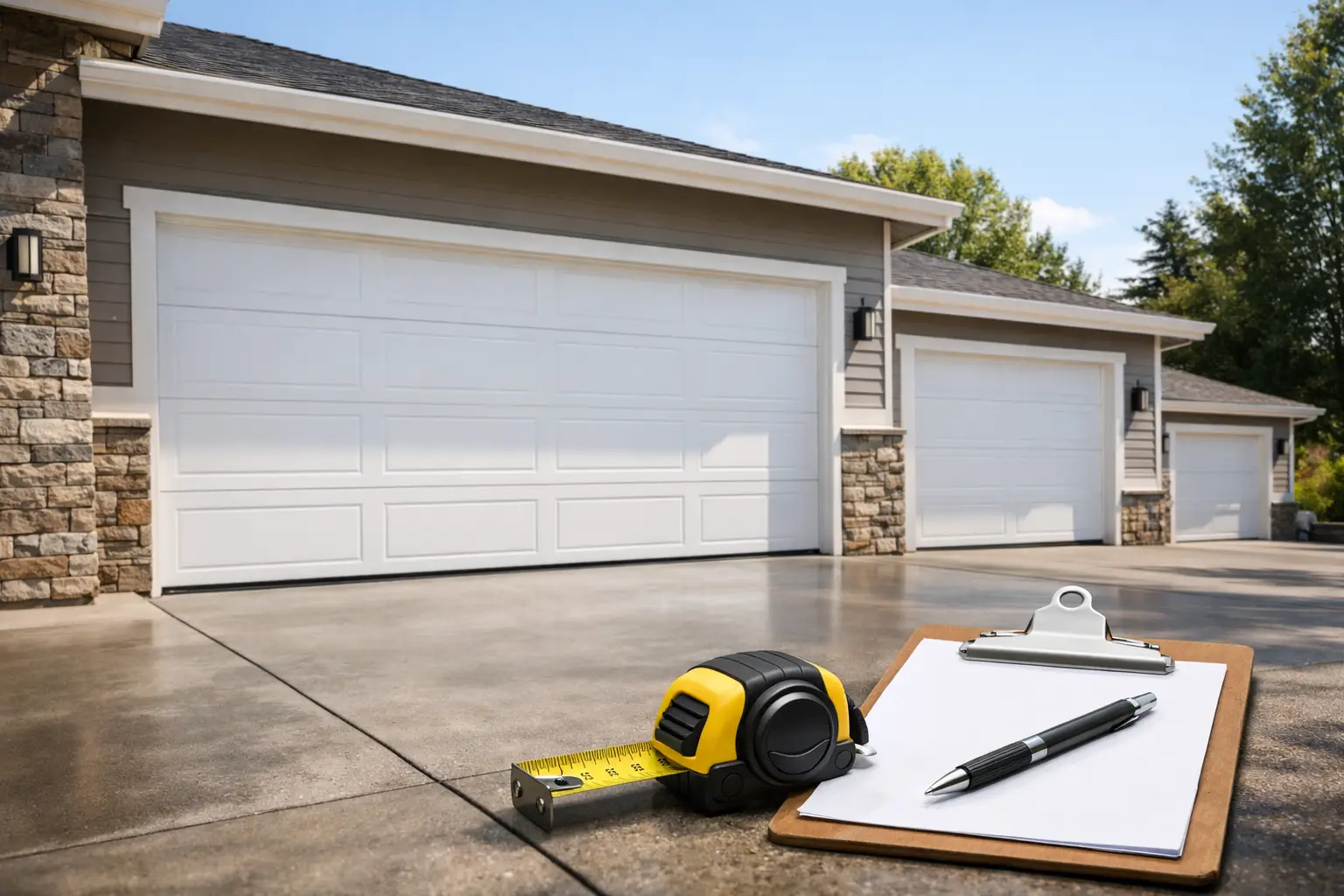
    Begin with the rough opening. Measure the width and height of the finished opening in several spots to confirm it is consistent. Then measure the side room, headroom, and backroom. Side room is the space on each side of the opening for track and hardware. Headroom is the area above the opening. Backroom is the depth from the opening to the rear wall. All three affect what kind of door and track system can actually fit.

    That matters because two garages with the same opening size may need different solutions. A low ceiling, a beam above the opening, or an opener setup can limit your options. This is one of those areas where a quick professional measurement can save a lot of frustration.

    Standard garage door sizes and when they work

    Many residential garages follow standard sizing, which keeps replacement simpler and more affordable. A single garage door is commonly 8, 9, or 10 feet wide and 7 or 8 feet tall. A double garage door is often 16 feet wide and 7 or 8 feet tall.

    For a standard sedan or small SUV, a 9-by-7 single door usually works well. If you have a wider truck, a full-size SUV, or you simply want easier entry without hugging the mirrors every day, a 10-foot-wide option can feel much more comfortable. Double doors offer more flexibility for two vehicles, but the larger span means the door system has to work harder and stay properly balanced.

    Commercial sizes vary much more. A service garage, warehouse, or gated storage area may need taller doors for vans, trailers, or delivery vehicles. In those cases, choosing a size based on current traffic alone can be shortsighted. If your business may upgrade vehicles or equipment, it makes sense to build in room now rather than replace the door again later.

    Single vs. double garage doors

    This is often less about style and more about how you use the space. Two single doors can give you better energy control, less wear per cycle on each door, and more flexibility if one side needs service. One double door gives you a wider opening and can make parking easier, especially for larger vehicles.

    There are trade-offs. A double door can be convenient, but if it goes down unexpectedly, your entire opening is affected. Two singles cost more in hardware and installation, but some homeowners prefer the reliability and control. If your garage layout allows it, think about how often both bays are used at the same time.

    Choosing height for trucks, SUVs, and lifted vehicles

    Width gets most of the attention, but height is where people often run into trouble. A standard 7-foot-tall door may be enough for many vehicles, but roof racks, ladder racks, lifted suspensions, and larger trucks can change that fast. An 8-foot door may be a better fit if you want more breathing room.

    Do not measure your vehicle once and assume you are done. Measure its highest point, then add reasonable clearance. You want room for daily use, not a tight squeeze that forces you to crawl in every time. If you plan to buy a different vehicle in the next few years, factor that in now.

    The measurements that matter most

    When homeowners ask how to choose garage door size, the real answer is that the door has to fit both the opening and the way the garage functions. A good measurement includes more than width and height.

    Start with the opening itself. Measure the width from finished jamb to finished jamb, and the height from floor to header. Then check the side room. Most standard track setups need enough space on both sides for vertical tracks and spring hardware. Limited side room can affect door style and hardware choices.

    Next, look at headroom. This is especially important if you want an automatic opener. Standard systems need enough space above the opening for tracks, springs, and opener clearance. If your garage has low headroom, special track systems may still work, but they can change the install plan and cost.

    Finally, measure backroom. The horizontal tracks need room to extend into the garage, and openers also require depth. If you use overhead storage, hanging shelves, or ceiling racks, make sure those are not competing for the same space.

    Don’t forget your garage use beyond parking

    A lot of garages in Arizona are doing more than storing cars. Some hold freezers, tools, bikes, home gym equipment, or workbenches. Others serve as part-time hobby spaces or storage hubs. That changes what size feels practical.

    If your vehicle barely fits and you have to shuffle around it to reach everything else, the garage may technically work but still be frustrating every day. In some cases, a wider or taller door can improve access enough to make the whole space more usable. In other cases, the opening is fixed and the smarter move is adjusting storage layout instead.

    This is also where insulation and door weight can come into play. A larger door gives easier access, but it may cost more, weigh more, and require a stronger opener. Bigger is not automatically better if the gain in clearance is minor and the cost jump is significant.

    New construction vs. replacement doors

    If you are building a new garage, you have more freedom. This is the best time to think ahead. Plan for the vehicles you own now, but also consider resale value and future needs. Slightly increasing width or height during construction is often easier than modifying the opening later.

    If you are replacing an existing door, your options depend on the current structure. Changing the opening size may require framing, exterior finish work, and updated track or spring systems. Sometimes it is worth it. Sometimes staying with a standard size is the more affordable path. The right answer depends on how badly the current setup limits you.

    For homeowners trying to balance budget and long-term value, standard sizes usually offer the best pricing and fastest installation. Custom sizes solve specific problems, but they can mean longer lead times and higher material costs.

    Common mistakes that lead to the wrong size

    One common mistake is measuring the old door instead of the opening. Another is forgetting to account for trim, uneven floors, or low ceiling clearance. Some people also choose a size based only on today’s smallest vehicle, then regret it after buying a truck or adding roof storage.

    There is also the issue of convenience. A door can technically fit your garage and still be annoying to use. If you are folding mirrors every day, backing in at an angle, or avoiding overhead storage because clearance is too tight, the size may not be working as well as you think.

    For commercial properties, underestimating traffic needs is a big one. If deliveries, service vehicles, or equipment movement are part of the job, the door should support efficient operation, not slow it down.

    When it makes sense to get a pro involved

    If your garage is straightforward, measuring can be simple. But if the opening is older, the ceiling is tight, or you are considering changing sizes, it helps to have an experienced installer look at it. A professional can spot issues with framing, spring clearance, track setup, and opener compatibility before you order the wrong door.

    That kind of guidance can be especially useful in places like Gilbert, Mesa, and Chandler, where garages often carry a heavy load as storage space in addition to parking. A quick site check can tell you whether a standard size will work or whether a custom approach is worth the extra cost.

    At Riggs Rescue AZ, this is the kind of problem-solving we like – straightforward advice, no surprises, and a clear path to the right fit.

    The best garage door size is the one that fits your opening, your vehicles, and your daily routine without making life harder. If you are stuck between two options, lean toward the one that gives you practical clearance and room to grow, not just the one that barely works today.

  • What Causes Garage Opener to Hum?

    What Causes Garage Opener to Hum?

    You press the wall button, the motor makes a humming sound, and the garage door does not move. If you are wondering what causes garage opener to hum, the short answer is this: the opener is getting power, but something is keeping that power from turning into motion. Sometimes the fix is simple. Sometimes it is a warning sign that a part is close to failing.

    A humming opener is one of those problems that homeowners tend to ignore for a little too long because it sounds like the system is trying to work. In reality, that hum often means the opener is under strain. The sooner you figure out what is holding it back, the better your chances of avoiding a more expensive repair.

    What causes garage opener to hum but not open?

    In most cases, the hum comes from the motor. The opener is being told to run, and electricity is reaching the unit, but the door is not lifting. That usually points to a mechanical issue, a stuck component, or a failed internal part.

    The exact cause depends on the type of opener, the age of the system, and whether the problem started suddenly or got worse over time. A chain-drive opener with worn gears can hum for one reason. A newer belt-drive opener with a seized door can hum for another. The sound itself is just the symptom. The real issue is the resistance behind it.

    The most common reasons a garage opener hums

    One of the most common causes is a disconnected or engaged manual release. If the red emergency cord was pulled, the opener may run without actually lifting the door. In that case, you might hear the motor hum or operate, but the trolley is no longer engaged with the door arm. This is usually easy to check, especially if the door suddenly stopped moving after a power outage or after someone tried to open it manually.

    Another frequent issue is a broken garage door spring. This is a big one. Springs do the heavy lifting, not the opener. When a torsion or extension spring breaks, the opener may still try to move the door, and you may hear a hum, but the motor often cannot lift the full weight on its own. If the door feels extremely heavy or only lifts a few inches before stopping, a broken spring is a strong possibility.

    A locked garage door can create the same symptom. Some doors have manual slide locks that can accidentally get engaged. If the opener tries to lift a locked door, the motor may hum while the door stays put. This is more common than people think, especially on older doors or homes where multiple family members use the garage.

    Worn-out internal gears are another likely cause. Many garage door openers have plastic drive gears inside the motor housing. Over time, those gears wear down, strip, or break. When that happens, the motor may still hum because it is receiving power, but it cannot transfer that power to the drive system. This kind of failure often shows up in older openers and usually requires repair or replacement of the internal gear assembly.

    A seized capacitor can also be the problem. The capacitor helps start and run the motor. If it fails, the opener may hum without fully starting. This tends to happen more often in older units, and Arizona heat can be especially rough on electrical components over time.

    Then there is the door itself. If the rollers are jammed, the track is bent, or the door is binding, the opener may hum because it is trying to move a door that cannot travel freely. This is where the problem shifts from opener repair to door repair. The opener may be doing its job, but the door is fighting it.

    What you can safely check first

    Start with the simple things. Look at the manual lock on the inside of the door and make sure it is not engaged. Then check whether the opener has been disconnected from the door by the emergency release cord. If it has, reconnecting the trolley may solve the issue.

    Next, try opening the door manually, but only if the springs appear intact and the door is fully closed. If the door is extremely heavy, stuck, or crooked, stop there. That usually means the system has a spring or track issue, and forcing it can make things worse.

    You can also look for obvious signs of damage. A gap in the torsion spring above the door is a classic sign of a broken spring. Bent tracks, hanging cables, or rollers off track are also clear indicators that the opener is not the main problem.

    If the opener hums for a second or two and then stops, that may point to a capacitor or motor issue. If it hums continuously but the chain, belt, or screw drive does not move, internal gear damage is more likely.

    What causes garage opener to hum after a power issue?

    Power interruptions can trigger opener problems in a few different ways. If the power went out and someone used the manual release, the opener may simply need to be re-engaged. If there was a surge when power returned, an internal electrical component like the capacitor or logic board may have been damaged.

    This is one of those situations where the timing matters. If the opener was working fine, then started humming right after an outage or storm, electrical damage becomes more likely. If it had been sluggish for weeks and then finally stopped moving, wear and tear is probably the bigger factor.

    When the opener is not the real problem

    A lot of people assume a humming sound means they need a new opener. Sometimes that is true. But often, the opener is reacting to a door problem, not causing it.

    A garage door should move smoothly and stay balanced. If the door is too heavy, dragging in the tracks, or dealing with damaged rollers, the opener has to work harder than it should. Over time, that extra strain can lead to humming, overheating, and complete motor failure.

    This is why a proper diagnosis matters. Replacing the opener without fixing the broken spring or jammed track will not solve the issue for long. It just puts the same stress on a new unit.

    Should you keep trying to use it?

    Usually, no. If your garage opener is humming and the door is not moving, repeated attempts can burn out the motor, strip more gears, or damage the door further. That is especially true if a spring is broken or the door is stuck in the tracks.

    There is also a safety factor. Garage doors are heavy, and the system is under tension. Springs and cables are not DIY-friendly parts. If you are dealing with anything beyond a basic lock check or trolley reset, it is smarter to have it inspected.

    Repair or replace?

    It depends on the age of the opener and what failed. If the issue is a capacitor, gear assembly, or reconnecting the trolley, repair is often the practical choice. If the opener is older, struggling regularly, or missing modern safety features, replacement may make more sense.

    For many homeowners, the tipping point is reliability. If your opener has started humming, reversing, stalling, and acting unpredictable, that is usually a sign the system is wearing out. A newer opener can give you quieter operation, better safety features, and fewer service calls.

    On the other hand, if the opener is in decent shape and the real problem is a broken spring or damaged roller, a targeted repair can get everything back to normal without replacing the whole unit.

    Why fast service matters

    A humming garage opener rarely fixes itself. What starts as a small problem can turn into a stuck car, a door that will not secure properly, or an opener that burns out completely. For families heading to work, school, or appointments, that is more than an inconvenience.

    If you are in Gilbert, Chandler, Mesa, Queen Creek, or nearby areas, getting the system checked quickly can save money and frustration. At Riggs Rescue AZ, we see this issue often, and the fix is not always as major as homeowners fear. The key is catching the real cause before more parts get dragged into the problem.

    If your garage opener hums, take it as a sign to pause, check the basics, and avoid forcing the system. A little attention now can keep a small repair from turning into a full replacement later.

  • 7 Best Commercial Overhead Door Options

    7 Best Commercial Overhead Door Options

    A warehouse door that sticks, slams, or lets heat pour in can cost more than most owners expect. Delays at the loading area, rising energy bills, and security headaches all add up fast. If you are weighing the best commercial overhead door options for your building, the right choice usually comes down to how your space works day to day, not just which door has the lowest price tag.

    For a small business, auto shop, storage facility, or service building, a commercial door has one job – keep operations moving without becoming a constant repair problem. That means looking at traffic volume, insulation needs, opening speed, security, and how much abuse the door will take in Arizona heat.

    How to choose the best commercial overhead door options

    The biggest mistake business owners make is picking a door style before they define the job the door needs to do. A door for a climate-sensitive warehouse is not the same as a door for a busy mechanic shop or a self-storage facility.

    Start with a few practical questions. How often will the door open and close each day? Does the space need temperature control? Is visibility important for safety or customer presentation? Do you need a tighter seal against dust and heat? And if the door goes down, how much does that interrupt your business?

    Those answers usually narrow the field quickly. In some cases, the best option is a heavier insulated steel sectional door. In others, a rolling steel sheet door or a high-speed door makes more sense. It depends on whether you are prioritizing durability, security, efficiency, or upfront cost.

    1. Insulated sectional steel doors

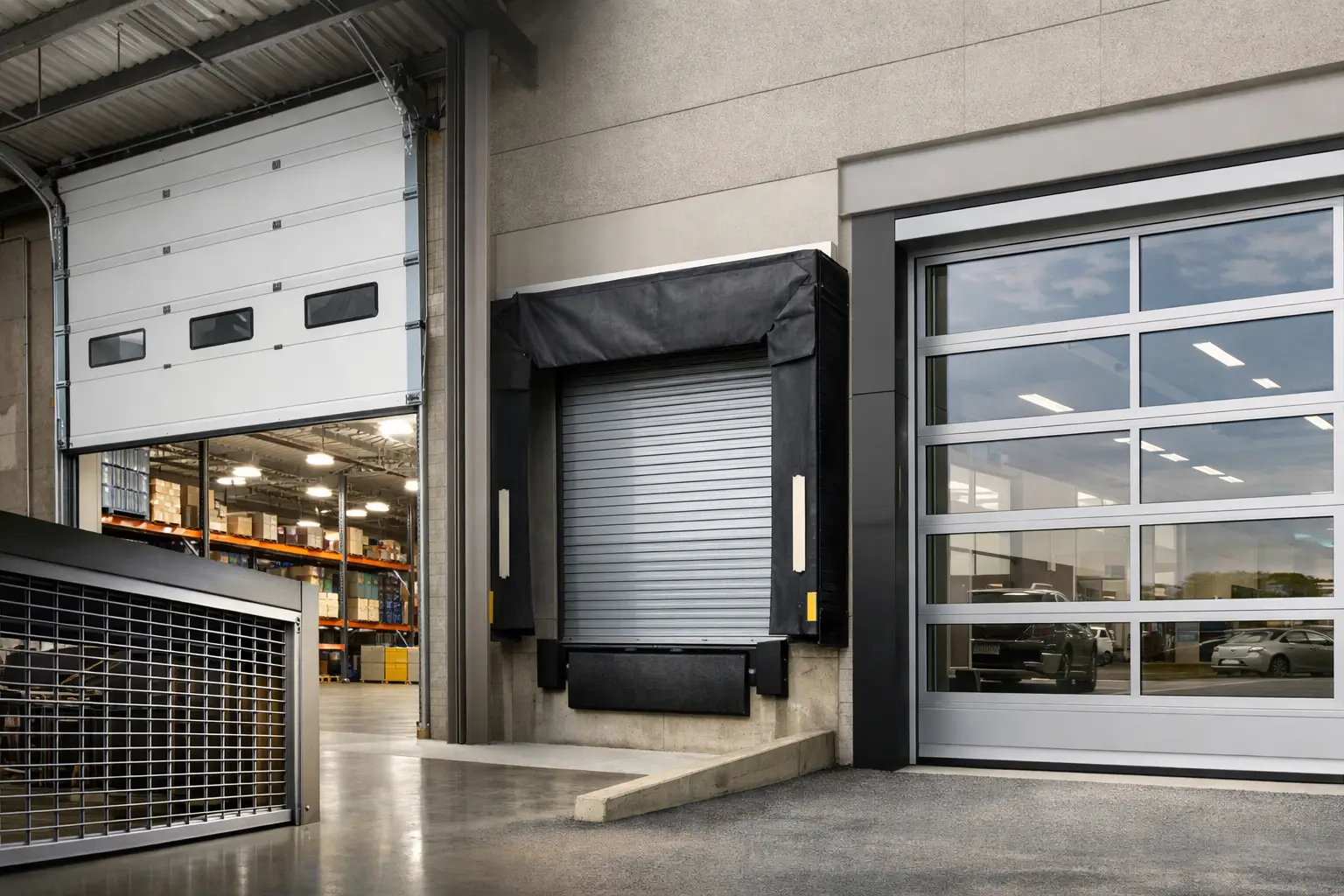
    For many businesses, this is the most balanced choice. Insulated sectional steel doors work well for warehouses, service bays, commercial shops, and buildings where temperature swings matter. They offer solid strength, dependable operation, and better energy performance than non-insulated models.

    In Arizona, insulation matters more than some owners think. Even if you are not trying to keep the building cold, reducing heat transfer can help protect equipment, improve comfort, and cut strain on HVAC systems. These doors also tend to run quieter and feel sturdier than lighter alternatives.

    The trade-off is cost. Insulated sectional doors usually cost more upfront than basic non-insulated doors, but they often pay that back through longer service life and improved efficiency.

    2. Non-insulated steel sectional doors

    If budget is the main concern and climate control is not a priority, non-insulated steel sectional doors are still a practical option. They are commonly used on detached commercial storage spaces, basic warehouse openings, and facilities where the interior is not conditioned.

    These doors are simpler and less expensive, which makes them attractive for owners trying to control project costs. They also hold up well when properly installed and maintained.

    The downside is comfort and efficiency. In hot climates, a non-insulated door can allow significant heat into the building. They also tend to be noisier and offer less protection against dents and daily wear than thicker insulated doors.

    3. Rolling steel doors

    Rolling steel doors are one of the best commercial overhead door options when security and compact design matter most. Instead of moving on overhead tracks like sectional doors, they coil into a roll above the opening. That makes them a smart fit for tight spaces, service counters, warehouses, and industrial facilities.

    Many owners like rolling steel doors because they are strong, simple, and built for demanding use. They are especially useful where ceiling space is limited or where a more tamper-resistant design is needed.

    Not every rolling door is made for high-cycle use, though. Some are designed for moderate traffic, while others are built for heavy daily operation. This is where a professional recommendation matters. Choosing the wrong spring cycle or door gauge can lead to faster wear and more downtime than expected.

    4. High-speed doors

    If your operation depends on fast movement of vehicles, equipment, or staff, a high-speed door may be worth the investment. These doors open and close much faster than standard commercial overhead doors, which helps reduce wait times, energy loss, and internal climate disruption.

    They are often used in distribution spaces, food-related facilities, manufacturing environments, and busy commercial buildings with frequent traffic. In the right setting, they improve workflow in a very noticeable way.

    The trade-off is that they are not the cheapest option, and they are not necessary for every business. If your door only cycles a handful of times per day, the return may not justify the higher upfront cost. But if your team is constantly moving in and out, speed can save real time and reduce wear on the system.

    5. Aluminum full-view doors

    For businesses that want visibility and a cleaner modern look, aluminum full-view doors are a strong option. These doors use aluminum frames with large glass panels, making them popular for auto shops, fire stations, restaurants, showrooms, and service spaces where natural light or customer-facing appearance matters.

    They can make a building feel brighter and more open, and they give customers a better view inside. For some businesses, that curb appeal is part of the brand.

    Still, they are not always the best fit for every property. Glass can reduce privacy, and depending on the glazing and construction, thermal performance may not match a well-insulated steel door. If security and insulation are higher priorities than appearance, another door type may be the better move.

    6. Fire-rated overhead doors

    Some facilities need more than convenience and durability. They need code-compliant fire protection. Fire-rated overhead doors are designed to help contain fire and smoke for a specified period, and they are often required in certain commercial and industrial settings.

    This is less about preference and more about building requirements. If your property needs a fire-rated opening, the door has to meet the proper rating and installation standards. There is very little room for guesswork here.

    Because these systems are specialized, maintenance matters just as much as installation. A fire door that has been damaged, altered, or improperly serviced can create serious safety and compliance issues.

    7. Counter shutters and security grilles

    These are not the right fit for large loading openings, but they are worth mentioning for commercial properties with smaller access points. Counter shutters and security grilles are commonly used in retail, concessions, pharmacies, and service windows.

    They add security while allowing quick open-and-close access during business hours. Security grilles are especially useful where visibility matters after hours, since they secure the opening without fully blocking the interior view.

    For storefront and interior security applications, these can be smarter and more cost-effective than trying to adapt a standard overhead door to a smaller opening.

    What matters most beyond the door itself

    Even the best commercial overhead door options can turn into expensive problems if the hardware, opener, and installation are not matched to the building. A high-quality door with an undersized operator or incorrect track setup will not perform the way it should.

    Cycle rating is a big one. If your door opens dozens or hundreds of times per day, standard springs may wear out quickly. Wind load is another factor in some commercial applications. So is the quality of the perimeter seal, especially in dusty or hot environments.

    You also want to think about serviceability. A door is not just a product you install and forget. Parts wear out. Rollers need attention. Springs break. Openers fail. Choosing a door system with reliable parts availability and clear maintenance requirements can save you stress later.

    The best commercial overhead door options for Arizona businesses

    For many businesses in Gilbert, Mesa, Chandler, and the surrounding area, insulated steel sectional doors are the default recommendation because they handle heat, daily use, and general security well. Rolling steel doors are a smart step up when space is tight or security is a top concern. High-speed doors make sense when lost time at the opening affects your workflow. Full-view aluminum doors are often best when appearance and visibility matter just as much as function.

    That said, there is no single best door for every building. A machine shop, climate-controlled warehouse, and storefront all have very different needs. The right recommendation should come from how your property operates, what your opening requires, and how much downtime your business can afford.

    A good commercial door should make your day easier, not give you one more thing to worry about. If you are replacing an aging system or planning a new installation, honest guidance matters just as much as the door itself. The right team will help you sort through the options, explain the trade-offs clearly, and make sure the final setup fits the way your business actually works.

  • Gate Opener Troubleshooting That Makes Sense

    Gate Opener Troubleshooting That Makes Sense

    A gate that stops opening when you are late for work is not just annoying. It can leave your home exposed, block deliveries, or trap a vehicle inside when you need to get out fast. That is why gate opener troubleshooting matters most in the moment, when you need clear answers and a fix that is safe, fast, and affordable.

    The good news is that many gate opener problems follow a pattern. The bad news is that the symptoms can look similar even when the cause is completely different. A gate that will not move at all might have a dead remote battery, a tripped breaker, a photo eye issue, or a failed motor. A gate that starts and stops could be dealing with obstruction, track resistance, hinge wear, or limit setting problems. Getting the diagnosis right saves time and helps you avoid paying for parts you do not need.

    Start gate opener troubleshooting with the basics

    Before assuming the opener has failed, check the simple items first. This is the fastest way to rule out easy fixes.

    If your remote is not working, replace the battery and test again from a normal operating distance. If the wall control or keypad works but the remote does not, the opener itself may be fine. If nothing responds, look at the power supply next. A tripped GFCI outlet, a breaker that has flipped, or a disconnected transformer can shut the whole system down.

    Then look at the gate path. Small rocks, desert debris, sticks, or even hardened dirt can stop a sliding gate from moving freely. On swing gates, worn hinges or sagging alignment can make the opener strain or stop halfway. In Arizona, dust and heat make these issues more common than many people expect.

    This first pass is not about being overly technical. It is about separating a small issue from a bigger repair.

    What different gate opener symptoms usually mean

    One of the most useful parts of gate opener troubleshooting is matching the symptom to the likely cause. That helps you narrow the problem quickly.

    If the gate opener hums but the gate does not move, the motor may be getting power but the drive components are not transferring movement. That can point to a worn gear, a disconnected arm, a chain issue, or a seized gate. If the opener is completely silent, power loss, a blown board, or a failed capacitor may be more likely.

    If the gate opens but will not close, safety devices are often the first place to look. Photo eyes can become dirty or misaligned. Some systems reverse automatically when they sense resistance, so a dragging wheel, hinge friction, or a slightly blocked path can make the gate act like something is in the way.

    If the gate opens only partway or closes and reverses, limit settings may be off. Some systems lose proper calibration over time, especially after a power outage, a storm, or prior repair work. In other cases, the operator is trying to protect itself from strain because the gate itself is too heavy to move smoothly.

    If the keypad works sometimes but not others, heat, wiring age, battery issues, and signal interference all come into play. Intermittent problems are frustrating because they make the system seem fine until the worst possible time.

    Power issues are more common than most people think

    A surprising number of service calls come down to power. That includes hardwired openers, low-voltage setups, and solar gate systems.

    For standard electric gate openers, check whether the outlet is live and whether any breaker has tripped. If there is a backup battery, it may be weak enough to cause strange behavior without being fully dead. The gate may move slower than usual, stop mid-cycle, or fail under a heavier load.

    For solar-powered systems, battery health is critical. A solar panel can be intact and still not provide enough charging if it is dirty, shaded, misaligned, or connected to an aging battery. In extreme heat, batteries can degrade faster than expected. If your gate has gotten less reliable during long stretches of hot weather, the battery and charging system deserve a close look.

    Power problems can look like motor failure, but replacing the opener before checking the electrical side is a costly mistake.

    Safety sensors and obstruction settings can stop a healthy opener

    Modern gate systems are designed to stop or reverse when something is in the way. That is a good thing for safety, but it can also create confusion when the opener itself is not actually broken.

    Dirty photo eyes, spider webs, sun glare, loose wiring, and alignment drift can all interrupt the beam. If your gate refuses to close but opens normally, sensor trouble is a strong possibility. On systems without photo eyes, obstruction sensitivity settings may be too high or the gate may be meeting more resistance than the opener expects.

    This is where it depends on the type of gate. A sliding gate may be fighting track debris or worn rollers. A swing gate may be dealing with hinge drag, post movement, or arm geometry that has shifted over time. The opener reacts to that resistance by stopping, even though the real issue is mechanical.

    When the problem is not the opener at all

    Homeowners often assume the operator is the problem because that is the powered component. But in many cases, the gate itself is what needs attention.

    A gate opener is only as reliable as the gate it is moving. If the frame is bent, the hinges are worn, the rollers are failing, or the track is out of alignment, the opener has to work harder every cycle. That extra strain shortens the life of motors, control boards, and drive parts.

    You can sometimes spot this by disconnecting the opener and moving the gate manually, if your system allows safe manual release. The gate should move smoothly without excessive force. If it binds, drags, or feels heavy, that points to a gate hardware issue rather than an opener issue.

    This matters because replacing an opener on a dragging gate may get it working briefly, but the new unit will wear out faster too.

    DIY fixes that are reasonable and safe

    Some troubleshooting steps are homeowner-friendly. Cleaning sensors, replacing remote batteries, checking breakers, clearing debris, and confirming that the gate path is unobstructed are all reasonable first steps.

    Lubrication can also help, but only in the right places and with the right product. Hinges, chains, and some moving joints may benefit from proper lubricant, while tracks on certain systems should be kept clean rather than heavily greased. Too much product can attract dirt and make the problem worse.

    If your opener manual explains how to reprogram a remote or reset a keypad, that can also be worth trying. Just avoid guessing with force settings, limit adjustments, or board wiring unless you know the system. Small changes can create bigger safety problems.

    When to stop troubleshooting and call for service

    If the gate is making grinding noises, moving unevenly, reversing unexpectedly, or showing signs of electrical failure, it is time to stop experimenting. The same is true if the operator housing smells burnt, the battery is swelling, the arm is bent, or the gate is physically off track.

    Commercial properties and multi-user gates deserve even less trial and error. A malfunctioning access gate can affect deliveries, employee entry, tenant access, and site security. The cost of downtime often outweighs the cost of a prompt repair.

    A professional can tell whether the issue is electrical, mechanical, or both, and that saves you from replacing the wrong part. A good service visit should include a full check of the operator, controls, safety devices, and the gate structure itself. That is the difference between a quick patch and a repair that actually lasts.

    For local property owners, that is where a responsive company matters. If you are in Gilbert, Mesa, Chandler, Queen Creek, San Tan Valley, Tempe, Scottsdale, or Phoenix, fast help matters a lot more when your gate is stuck closed after dark or standing open when it should be secure.

    How to prevent repeat gate opener problems

    Most opener failures do not happen all at once. They build up through drag, heat, vibration, battery decline, and neglected wear points.

    A little maintenance goes a long way. Keep the gate path clean. Watch for slower movement, unusual sounds, or intermittent remote response. Replace weak batteries before they fail completely. If the gate starts needing a second press on the remote or seems less consistent, take that as an early warning instead of waiting for a full breakdown.

    Routine service is especially helpful for gates that cycle often or carry a lot of weight. Families with multiple drivers, rental properties, and small businesses usually put more stress on these systems than they realize.

    When a gate opener starts acting up, the goal is not to guess better. It is to catch the real issue before it turns into a security problem, a safety risk, or a bigger repair bill. If the basics do not solve it, getting honest help early is usually the quickest way back to a gate that works like it should.

  • How to Lubricate Garage Door Rollers Right

    How to Lubricate Garage Door Rollers Right

    That grinding, squeaking sound from the garage usually starts small, then gets louder fast. If you are wondering how to lubricate garage door rollers, the good news is that this is one of the simplest maintenance jobs you can do to help your door run quieter and last longer.

    The key is doing the right maintenance in the right places. A little lubricant can reduce friction, cut down on wear, and help rollers move smoothly through the tracks. Too much lubricant, or the wrong kind, can make a mess and attract dirt that creates more problems than it solves.

    Why garage door roller lubrication matters

    Garage door rollers do a lot of work every day. Every time the door opens or closes, the rollers guide that weight through the track while dealing with vibration, dust, heat, and general wear.

    When rollers dry out, they can start squealing, chattering, or dragging. That extra friction does not just create noise. It can also put more stress on the opener, strain other moving parts, and wear down the roller bearings sooner. In Arizona, dry conditions and blowing dust can make that wear show up faster.

    Lubrication helps, but it is not a fix for every roller problem. If a roller is cracked, bent, badly worn, or wobbling on the stem, lubricant will not repair it. In that case, replacement is the safer move.

    What kind of lubricant to use

    Before getting into how to lubricate garage door rollers, it helps to know what belongs on a garage door and what does not.

    A garage-door-specific spray lubricant or a silicone-based lubricant is usually the best choice. These products are designed to reduce friction without turning into a sticky grime magnet. A lithium-based spray can also work well on metal moving parts, depending on the product label.

    What you want to avoid is standard grease for this job and household products that are not made for garage doors. Heavy grease can collect dust and debris. WD-40 is a common mistake. It is better known as a cleaner and water displacer than a long-term lubricant for rollers.

    How to lubricate garage door rollers safely

    This is a quick job, but safety comes first. A garage door has a lot of tension in its system, especially around the springs. Lubricating rollers is a DIY-friendly task. Adjusting or removing spring components is not.

    Step 1: Close the garage door

    Start with the door in the fully closed position. This gives you better stability and easier access to most roller stems and bearings.

    If your opener has been running rough, unplug it or disconnect power before you begin. You do not want the door moving while your hands are near the tracks and rollers.

    Step 2: Inspect the rollers before spraying anything

    Look closely at each roller on both sides of the door. You are checking for chips, cracks, flat spots, rust, looseness, or rollers that do not spin freely.

    If you have nylon rollers, pay attention to whether they have exposed bearings. Some nylon rollers are quieter than steel, but they can still wear out. If the wheel itself looks damaged, lubrication is not enough.

    Step 3: Apply lubricant to the roller bearings

    This is the part many people miss. You do not need to soak the whole wheel or flood the track. The focus should be on the bearings, where the roller stem meets the wheel.

    Spray a small amount directly on the bearings of each roller. If the roller has visible ball bearings, aim there. Then move to the next one and repeat on both sides of the door.

    For nylon rollers, avoid spraying lubricant all over the nylon wheel unless the manufacturer specifically recommends it. The bearing area matters more than the outer wheel.

    Step 4: Open and close the door to spread the lubricant

    Once all rollers are treated, manually lift and lower the door a few times if it is safe to do so, or reconnect the opener and run a full cycle. This helps distribute the lubricant through the moving parts.

    Listen as it moves. In many cases, the door should sound noticeably quieter right away. If you still hear scraping or popping, there may be another issue beyond dry rollers.

    Step 5: Wipe away excess

    If lubricant drips or builds up, wipe it off with a clean rag. A light application is better than an overdone one.

    Too much product can collect dirt over time, especially in dusty areas. That dirt can end up working against the smooth motion you were trying to create.

    Where not to put lubricant

    One of the biggest mistakes in garage door maintenance is spraying everything in sight. More is not better here.

    Do not lubricate the tracks themselves. The rollers are supposed to roll along the track, not slide through a greasy channel. Spraying the tracks can attract dust and grime and make operation worse.

    You also want to stay away from the torsion spring and any parts you are not comfortable identifying. Some metal components may benefit from lubrication, but if you are unsure what you are looking at, it is better not to guess.

    How often should you lubricate garage door rollers?

    For most homes, about twice a year is a good starting point. If your garage door gets heavy daily use, or if you notice noise returning sooner, you may need to check it more often.

    In dry, dusty conditions, regular inspection matters just as much as a set schedule. A quick look and listen every few months can help you catch wear before it turns into a repair call.

    If the door suddenly gets much louder, jerks while moving, or feels uneven, do not just keep adding lubricant. That usually means something else needs attention.

    Signs the rollers need more than lubrication

    Knowing how to lubricate garage door rollers is useful, but it is just as important to know when not to force a DIY fix.

    If the door shakes during travel, a roller comes off line, or one side seems to lag behind the other, there could be a bigger hardware issue. Worn hinges, bent track sections, failing bearings, or balance problems can all create similar symptoms.

    A door that sticks halfway, reverses unexpectedly, or puts extra strain on the opener should be checked professionally. The same goes for visible damage near springs or cables. Those are not parts to troubleshoot casually.

    A few practical tips for better results

    Less spray is usually better than more. You want enough to coat the moving bearing surfaces, not enough to drip across the entire assembly.

    Use a product with a narrow straw applicator if possible. It gives you better control and helps keep lubricant off surfaces that do not need it.

    And if your door has older metal rollers and still sounds rough even after lubrication, that could be a sign it is time for an upgrade. Nylon rollers are often quieter and smoother, though the right choice depends on the door weight and hardware setup.

    When it makes sense to call a pro

    Routine lubrication is a smart homeowner task. But if the rollers are worn, the tracks are bent, or the door is making more than simple squeaks, having it inspected can save money in the long run.

    A service visit can identify whether the noise is really from the rollers or from hinges, bearings, springs, or opener strain. That matters because replacing the wrong part does not solve the problem. It just delays it.

    For homeowners who want fast, reliable, and affordable help without the runaround, this is the kind of issue a local garage door company can usually sort out quickly. If your door is noisy, shaky, or overdue for maintenance, Riggs Rescue AZ has you covered with honest recommendations and no surprises.

    A quiet garage door is not just nicer to live with. It is often a sign that the whole system is moving the way it should, and that is worth staying ahead of.

man-in-blue-shirt

Exclusive Residential Service Offer 🏷️

For a limited time, homeowners can enjoy exclusive savings with a FREE Service Call, No Trip Charge, and a FREE Garage Door Safety Inspection on qualifying services.

Offer Includes :