A garage door can look like a simple choice until you are standing in the driveway deciding what will fit your home, budget, and daily routine. The single panel versus sectional garage door decision affects more than curb appeal. It changes how the door moves, how much driveway clearance you need, what repairs may cost, and how well the garage handles Arizona heat.
For most East Valley homeowners, a sectional garage door is the practical choice. That does not mean a single-panel door is always wrong. Older homes, specific architectural styles, and tight replacement budgets can all make a one-piece door worth considering. The right answer comes down to the space around your garage, the condition of the existing system, and what you expect from the door over time.
What Is the Difference Between a Single-Panel and Sectional Garage Door?
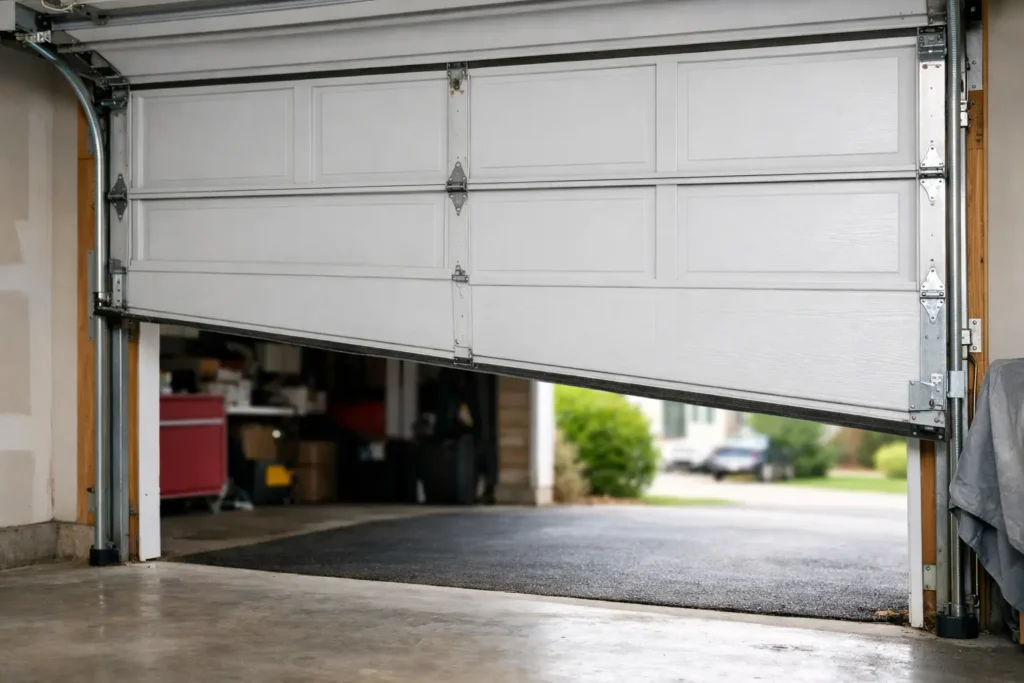
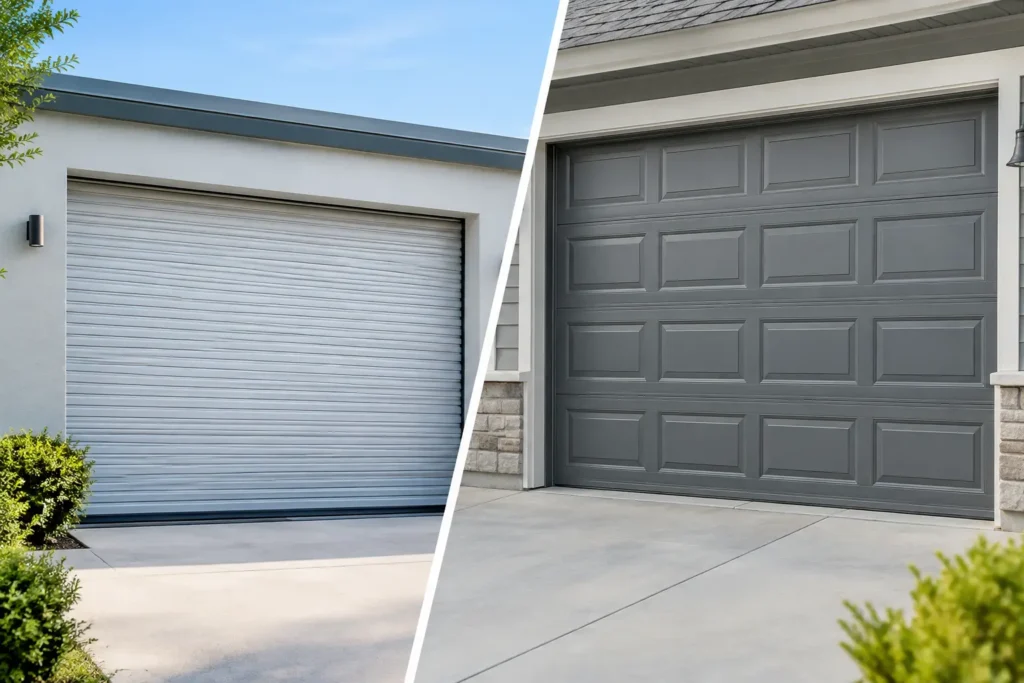
A single-panel garage door, often called a one-piece or tilt-up door, is one solid door slab. It pivots outward and upward on a hinge system, usually using jamb hardware, extension springs, or counterbalance arms. As it opens, the bottom section swings out into the driveway before moving overhead.
A sectional garage door is made of separate horizontal panels connected with hinges. Rollers on each side travel through vertical and horizontal tracks, allowing the door to rise straight up and then curve back along the garage ceiling. This is the style most homeowners see on newer homes throughout Gilbert, Chandler, Mesa, and surrounding areas.
Both types can be automated with an opener, and both can be attractive when installed correctly. Their operation, space needs, and long-term service requirements are very different.
Single Panel Versus Sectional Garage Door: Space and Convenience
Driveway clearance is one of the biggest differences. A single-panel door needs room in front of the garage to swing outward as it opens. If you park close to the door, have a short driveway, or regularly pull up close while unloading groceries, that swing can quickly become inconvenient. A vehicle parked too close can also prevent the door from opening fully.
A sectional door travels vertically first, so it does not swing into the driveway. You can park much closer to it and still operate the door. For busy families and homeowners with limited driveway space, this convenience is hard to beat.
Inside the garage, the trade-off shifts slightly. Sectional doors use overhead tracks, which take up ceiling space. If you have tall storage racks, a car lift, or an unusual ceiling layout, track placement needs to be planned carefully. A one-piece door may leave more of the ceiling open, although its pivot hardware still requires proper side clearance and structural support.
Safety Matters More Than Most Homeowners Expect
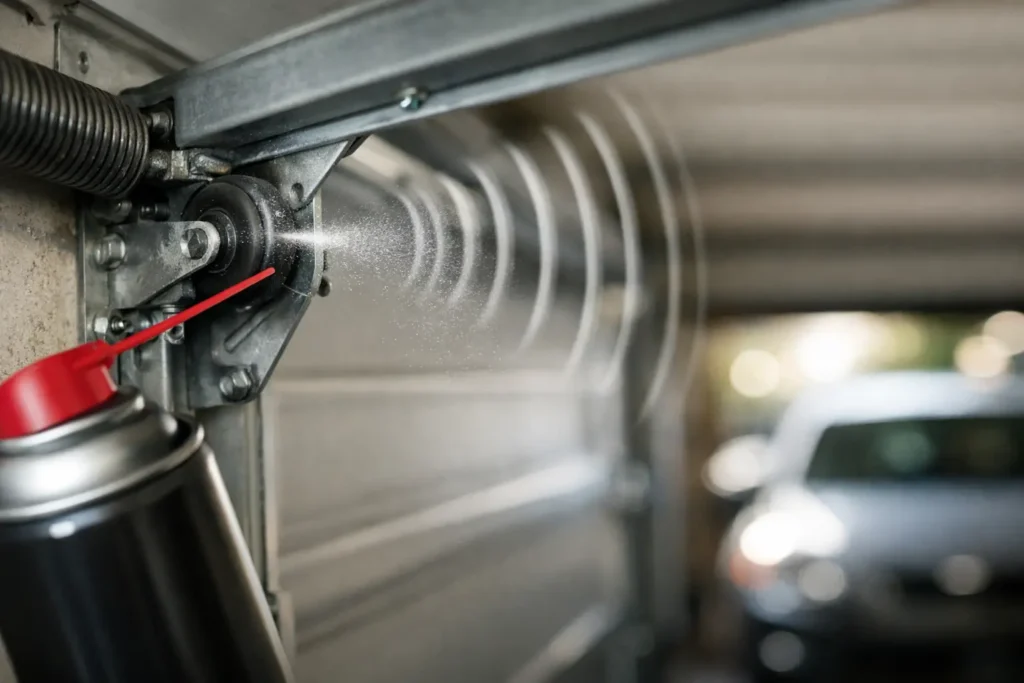
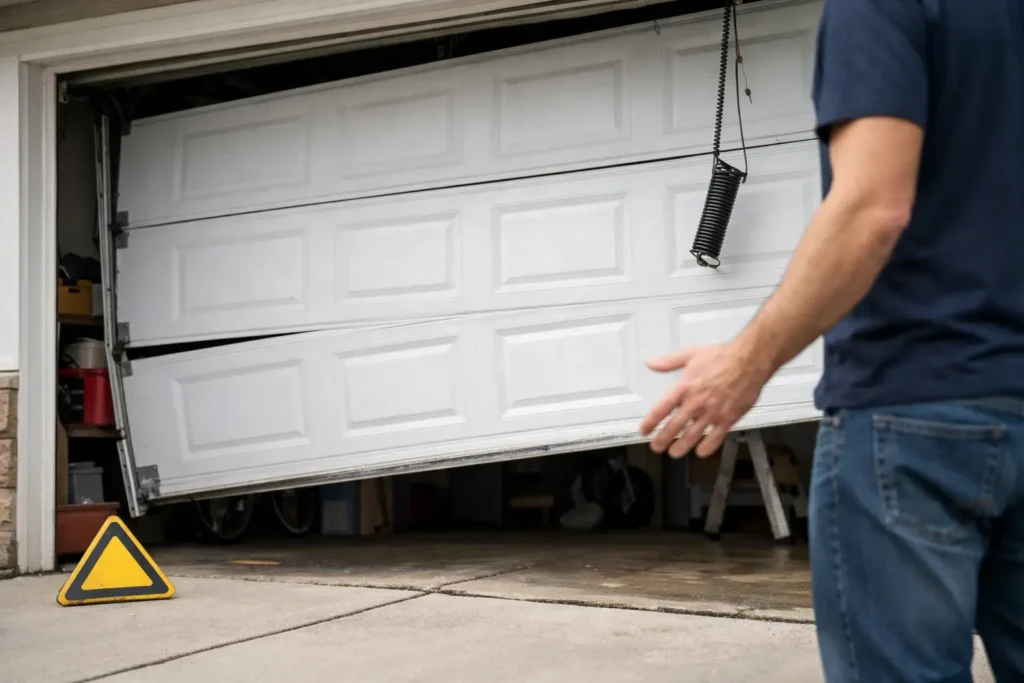
Garage doors are heavy moving systems, and safe operation depends on correctly matched springs, cables, tracks, and hardware. This is especially true with older single-panel doors, where worn pivot arms or improperly tensioned springs can create unpredictable movement.
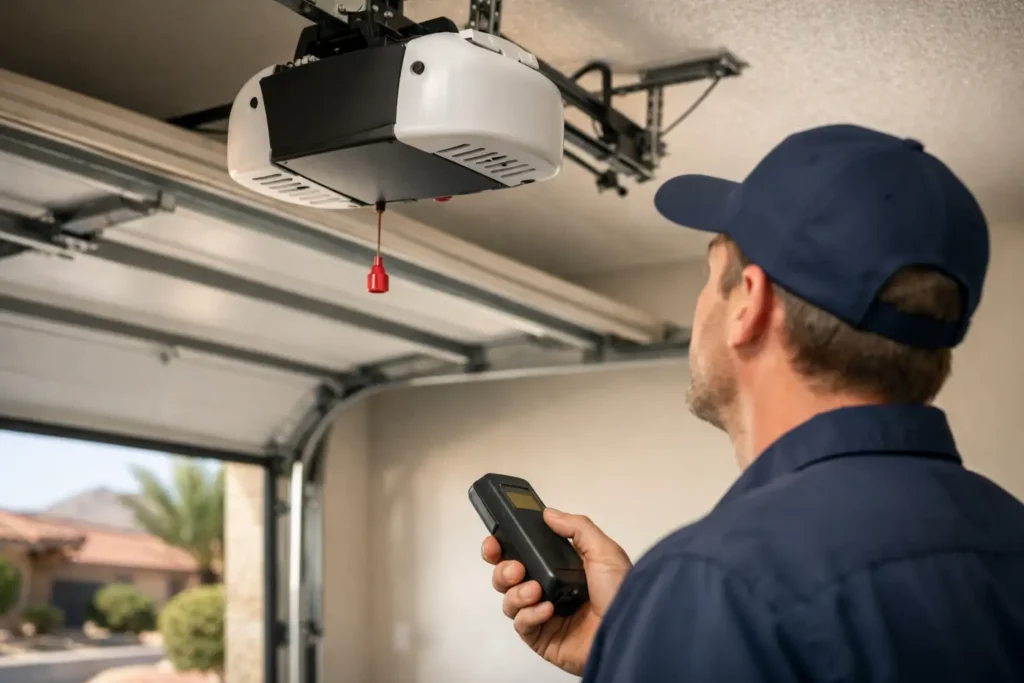
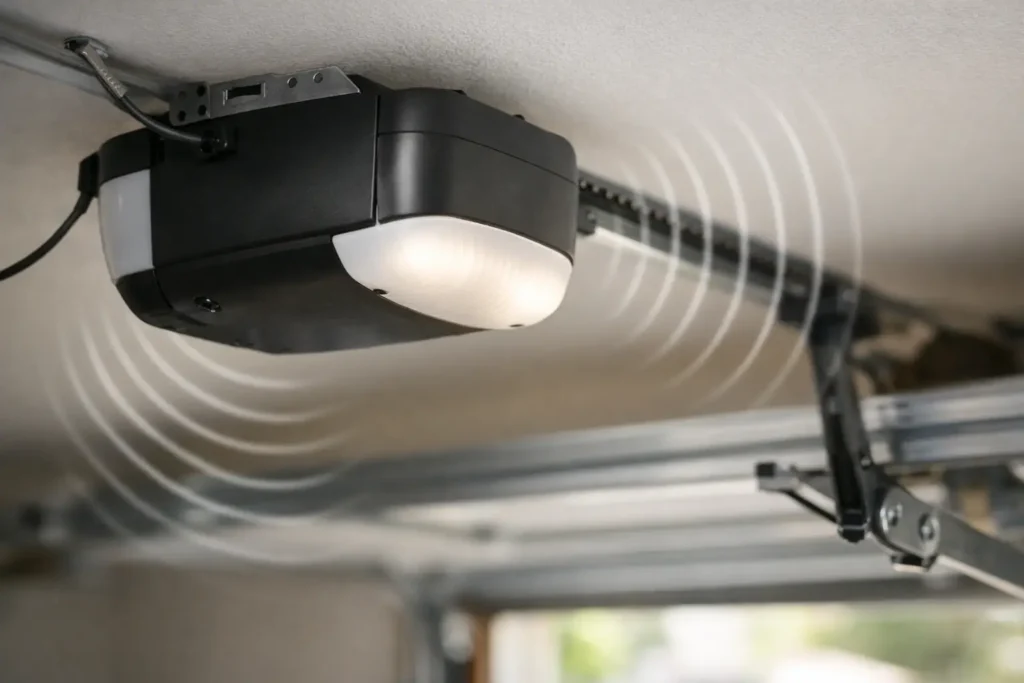
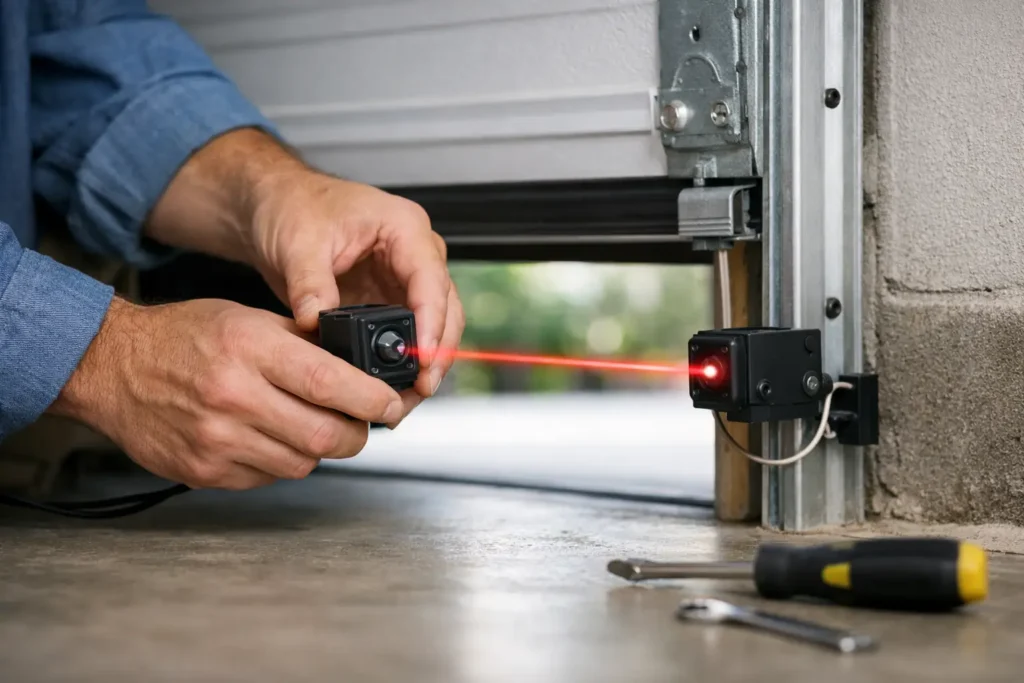
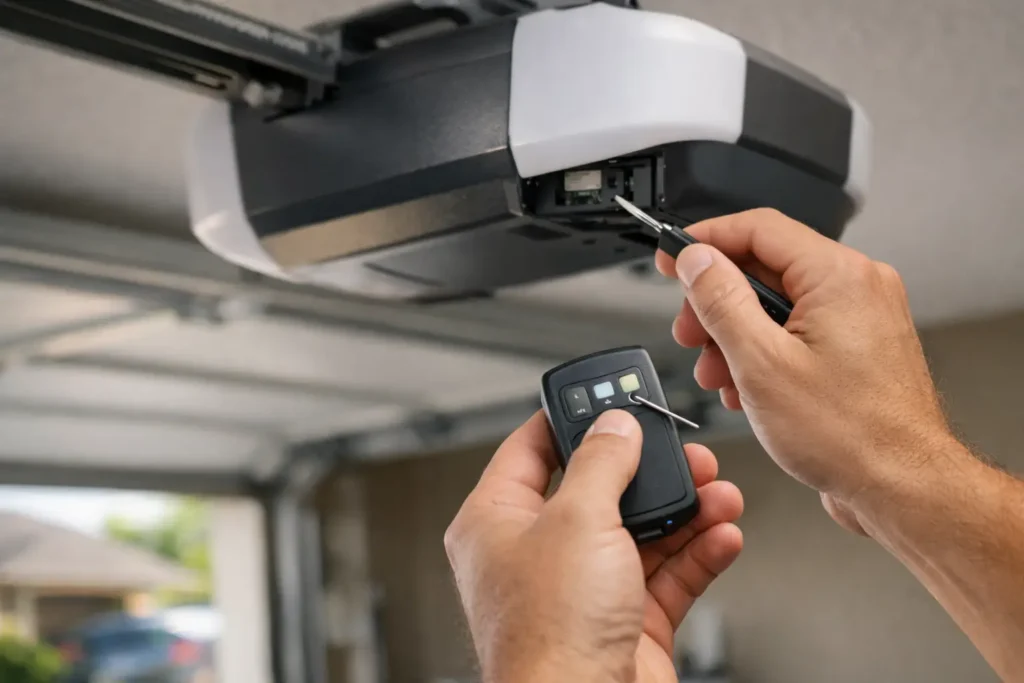
Sectional doors are generally considered the safer and more common modern option because the door travels within a guided track system. When maintained properly, the panels move in a controlled path and modern openers add photo-eye sensors and auto-reverse protection. Sectional doors can still cause injuries or property damage when springs break, rollers come out of track, or safety sensors are ignored, but replacement parts and service procedures are widely available.
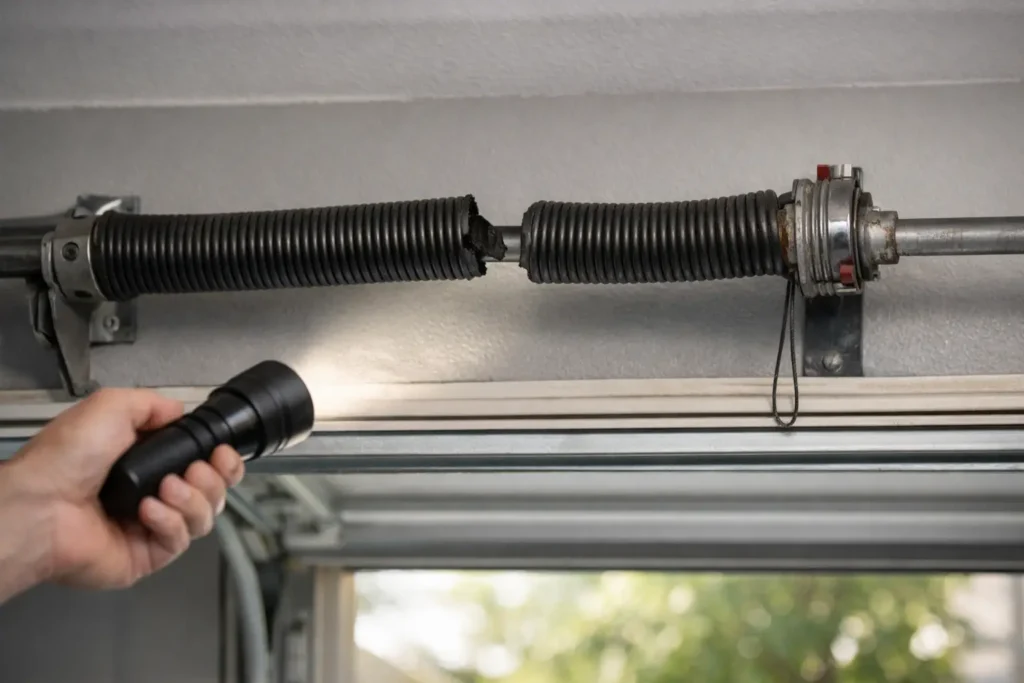
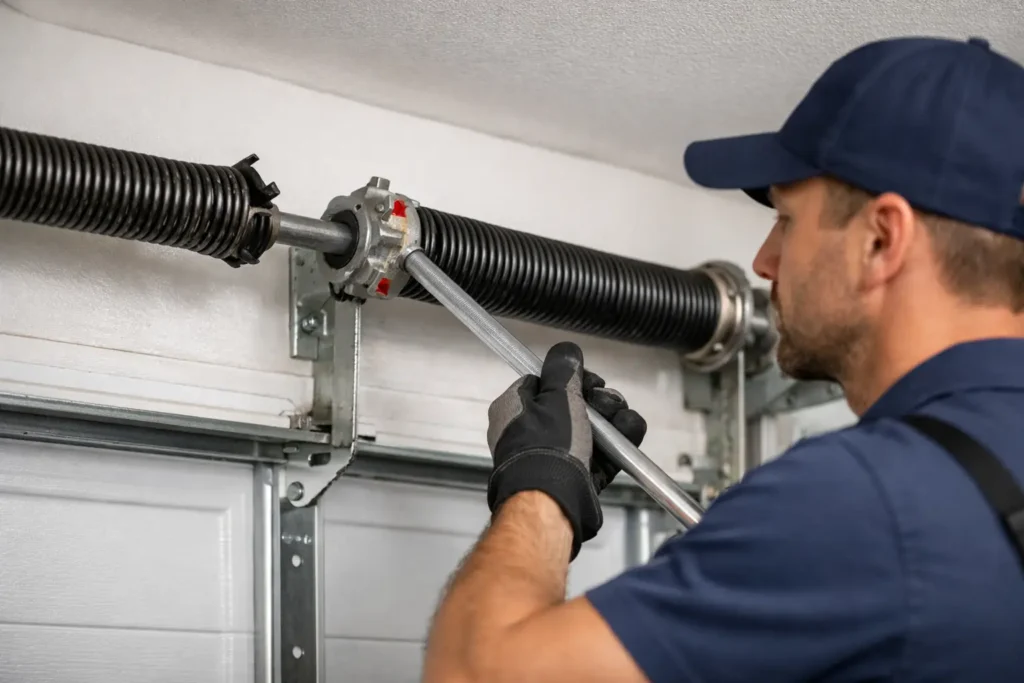
A single-panel door can be safe as well, but it deserves a closer inspection before repair or automation. The hardware may be older, parts may be harder to source, and a technician should confirm that the door is balanced before connecting or replacing an opener. Never attempt spring adjustments yourself. Springs store enough force to cause serious injury when handled incorrectly.
Cost: Look Beyond the Initial Price
A basic single-panel door can sometimes cost less upfront than a comparable sectional model. It uses fewer panels and may have a simpler appearance. However, the total price depends on material, insulation, hardware, custom sizing, windows, decorative details, and whether the existing opening needs modifications.
Sectional doors come in far more styles, materials, and insulation levels. That variety means you can find an economical option, but you can also spend more for steel construction, wood-look finishes, glass sections, high insulation values, or wind-rated reinforcement.
Repair costs are also worth considering. A sectional door has more individual components, including rollers, hinges, cables, tracks, and panels. The good news is that many of those parts can be replaced independently. If one panel is damaged, replacement may be possible without changing the entire door, depending on the age and availability of the model.
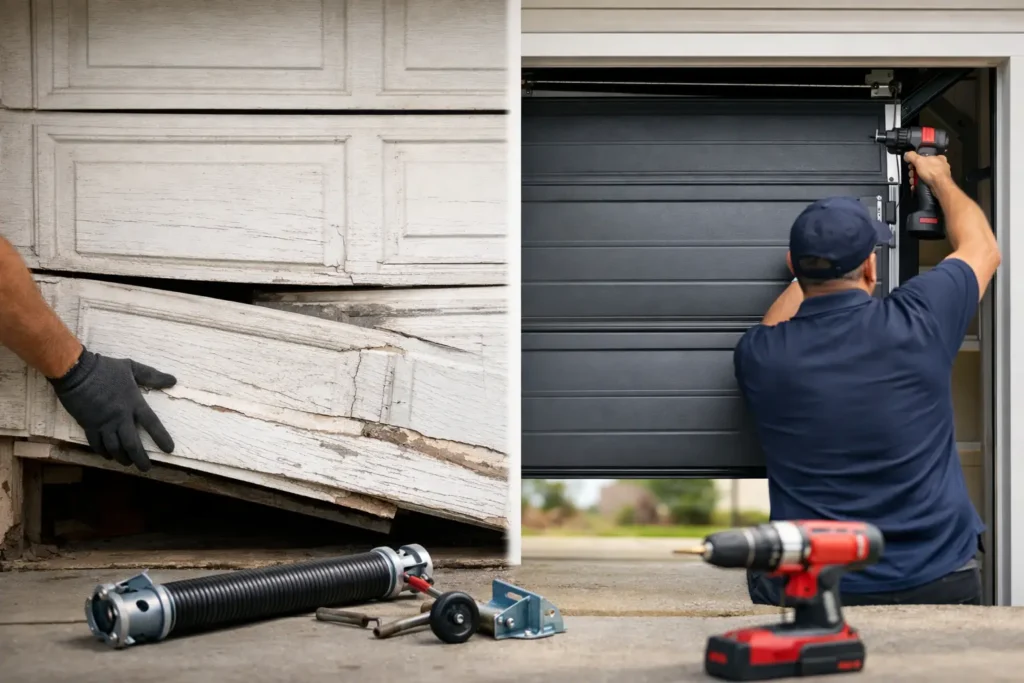
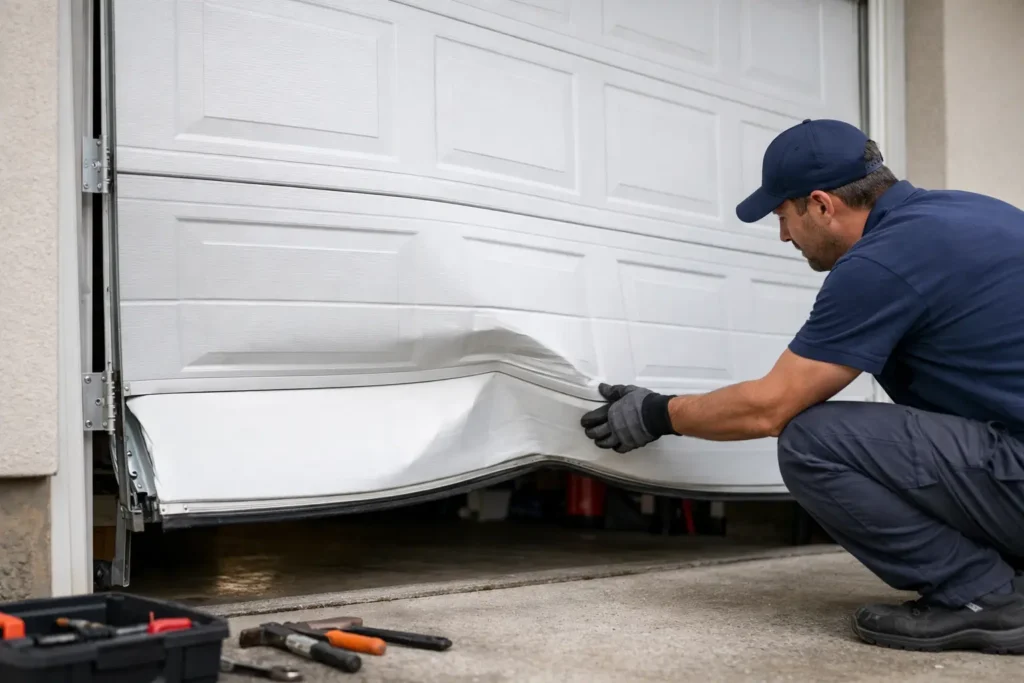
With a single-panel door, damage to the slab itself may be harder to isolate. Warping, cracking, rot in a wood door, or collision damage can make full replacement more practical than a small repair. Older one-piece hardware may also require specialty parts or an updated conversion approach.
Insulation and Arizona Heat
In Arizona, a garage door is a large exterior surface facing intense sun and summer temperatures. If your garage connects to the home, houses a laundry area, or serves as a workshop, insulation should be part of the conversation.
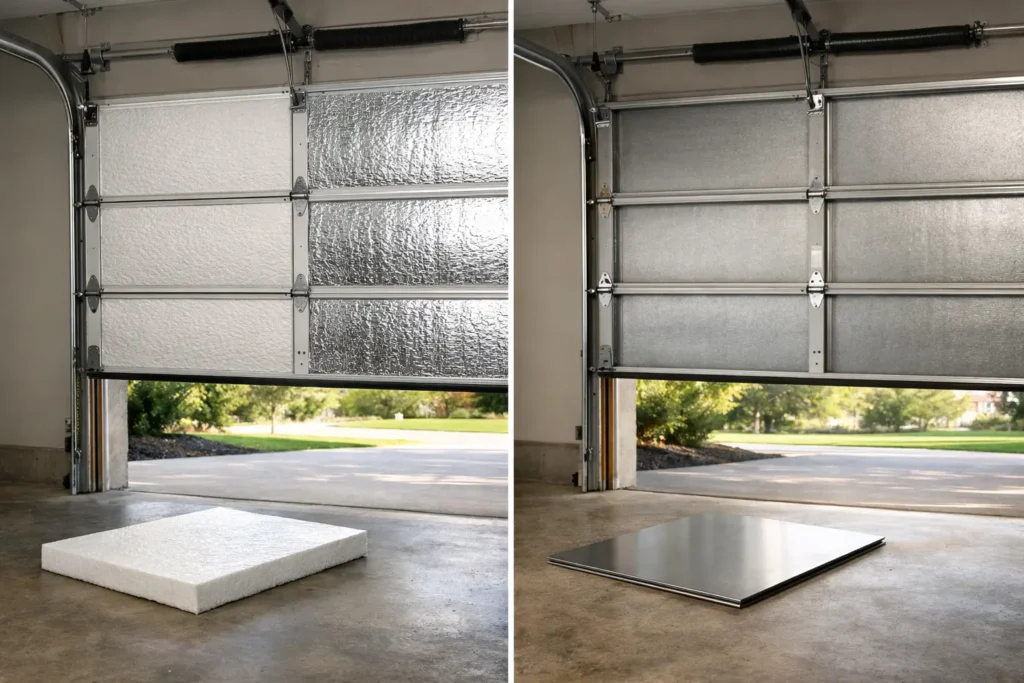
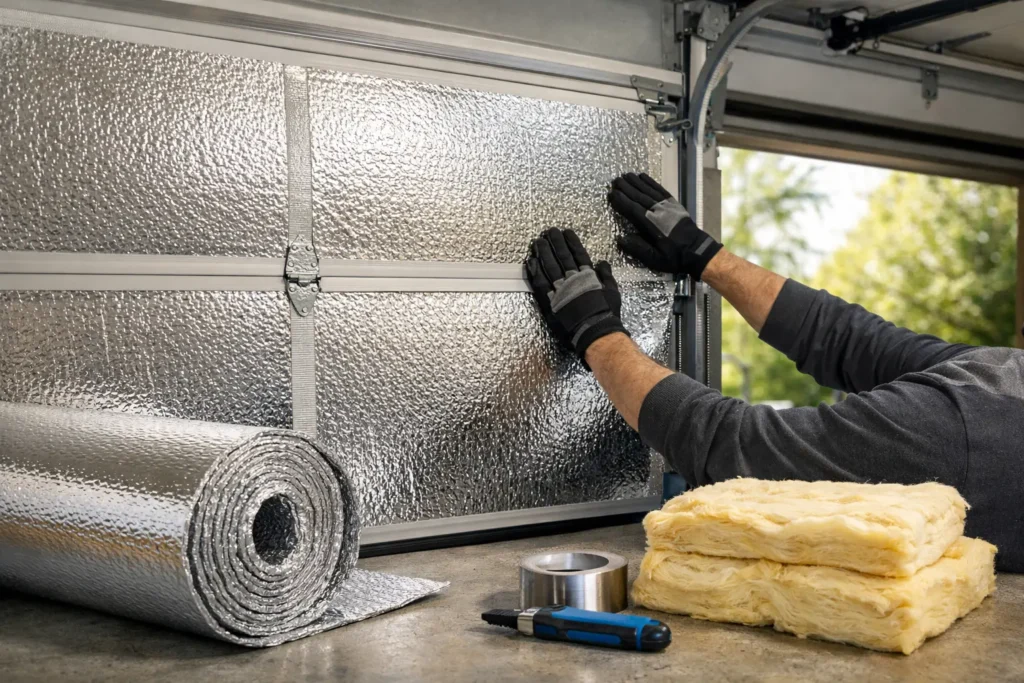
Sectional doors offer more insulated options, including steel doors with insulated cores and weather seals between panels. Better insulation will not turn an unconditioned garage into a cooled living space, but it can help reduce heat transfer and make the area more comfortable. It may also reduce strain on rooms next to or above the garage.
Single-panel doors can be insulated, but options may be more limited, particularly for an older door. Adding insulation to an existing one-piece door also changes its weight. That added weight must be accounted for when balancing springs and hardware. A door that is too heavy for its counterbalance system can wear out an opener and become unsafe.
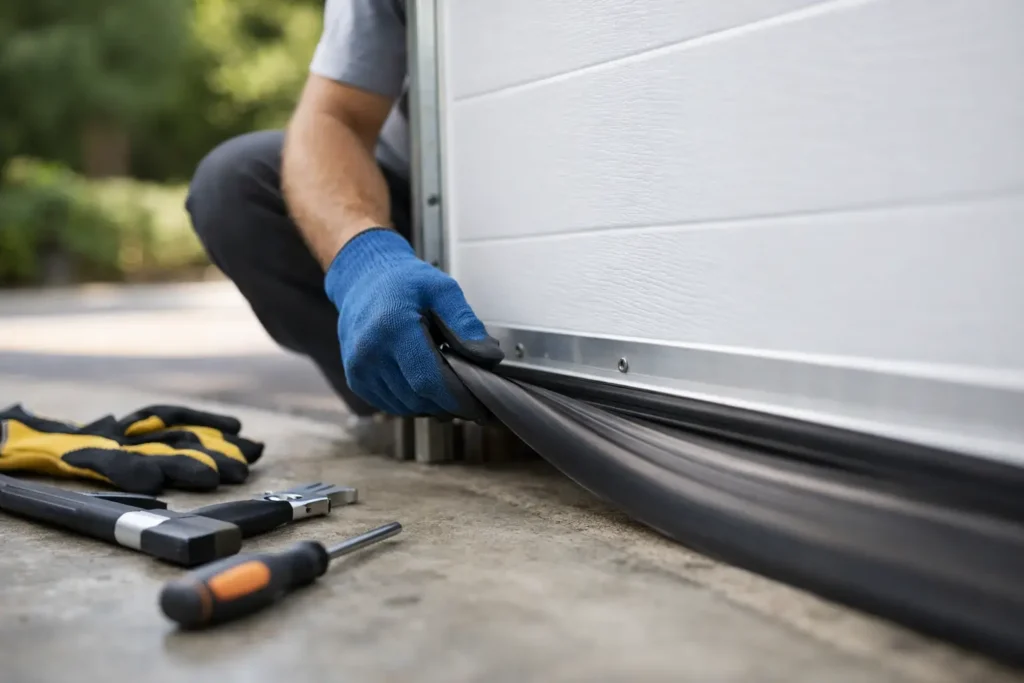
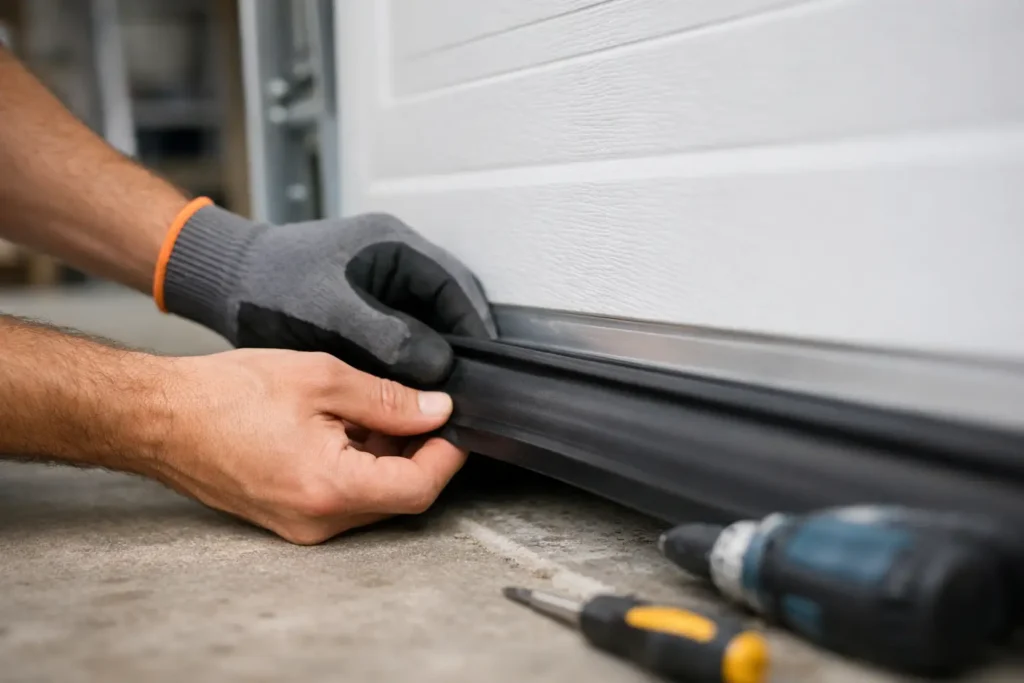
No matter which style you choose, check the bottom seal, perimeter weatherstripping, and condition of the door itself. Even a well-insulated door will not perform as expected if there are large gaps around the opening.
Curb Appeal and Home Style
A single-panel door has a clean, uninterrupted face that works well on some mid-century, ranch, and older Arizona homes. It can create a distinctive look, especially with wood, flush-panel, or custom designs. If preserving the character of an older property matters to you, keeping or replacing a one-piece door may make sense.
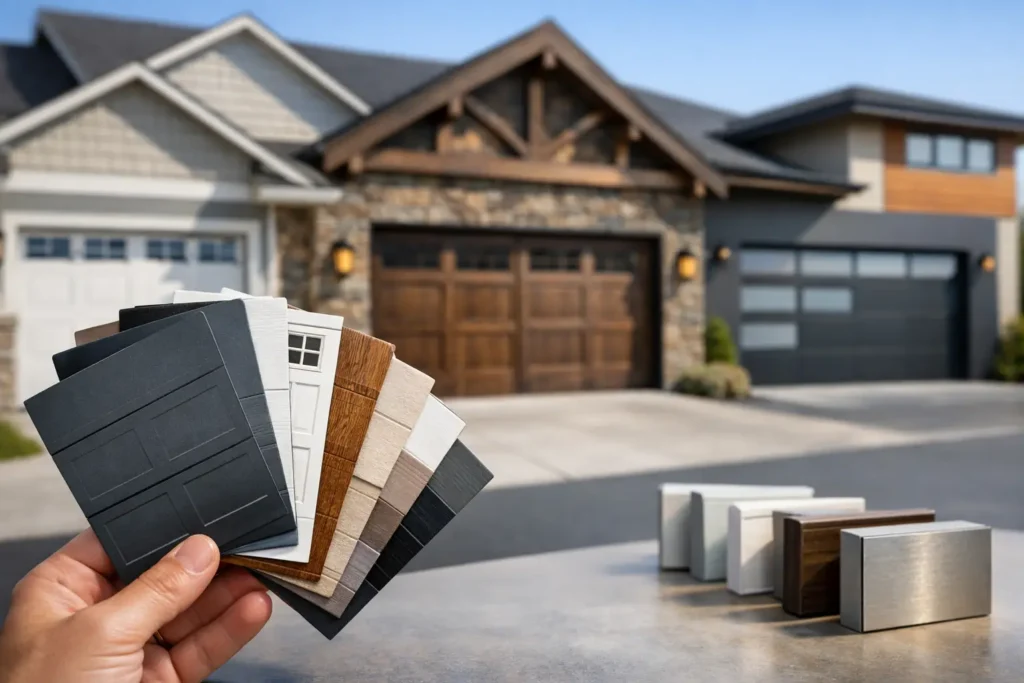
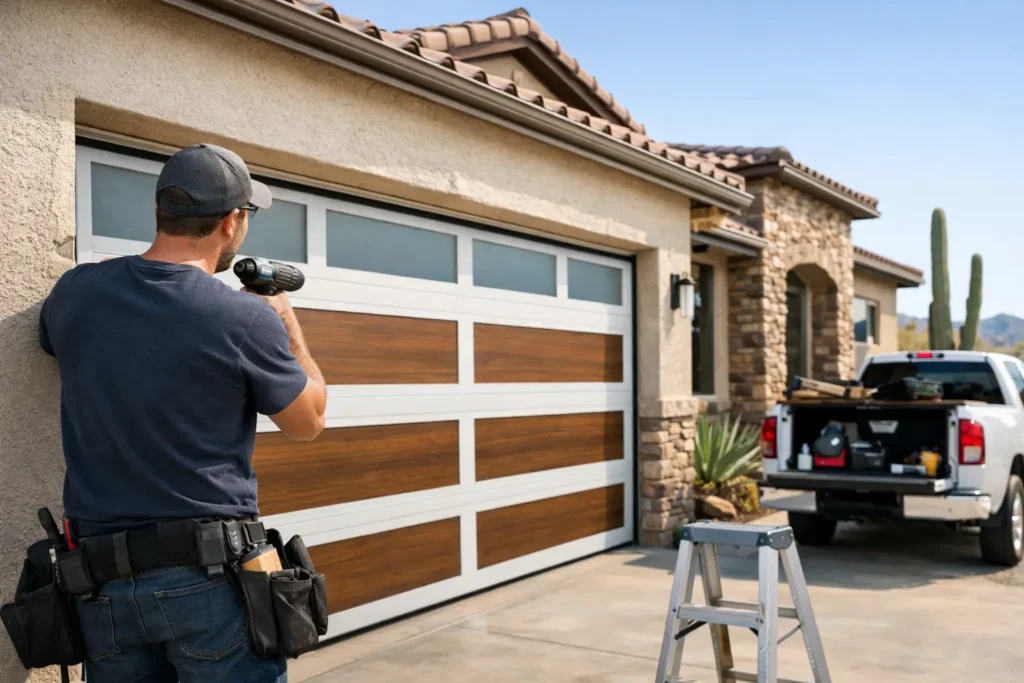
Sectional doors have come a long way from plain raised panels. They are available in modern flush styles, carriage-house designs, wood-grain steel, contemporary glass-and-aluminum looks, and many colors. Because sectional doors are so common, homeowners have more options to match trim, entry doors, gates, and exterior finishes.
Appearance should not be the only deciding factor, but it should not be dismissed either. A garage door takes up a major portion of the front of many homes. Choosing a style that suits the property can make a noticeable difference.
When a Single-Panel Door Still Makes Sense
A single-panel garage door can be a good fit when the home already has one in good condition, the driveway provides adequate swing clearance, and the homeowner likes the architectural style. It may also be appropriate when ceiling space is limited or when a custom one-piece design is the best match for the home.
Before investing in repairs, ask whether the door is structurally sound, whether replacement hardware is available, and whether it can safely work with your preferred opener. If the door has repeated balance issues, deteriorated wood, bent pivot hardware, or an opener that struggles to lift it, replacement may be the more affordable path over time.
Why Sectional Doors Work for Most Homes
For most homeowners, sectional doors offer the best balance of convenience, safety, insulation choices, and design flexibility. They are easier to use with a short driveway, easier to match with modern garage door openers, and supported by widely available replacement parts.
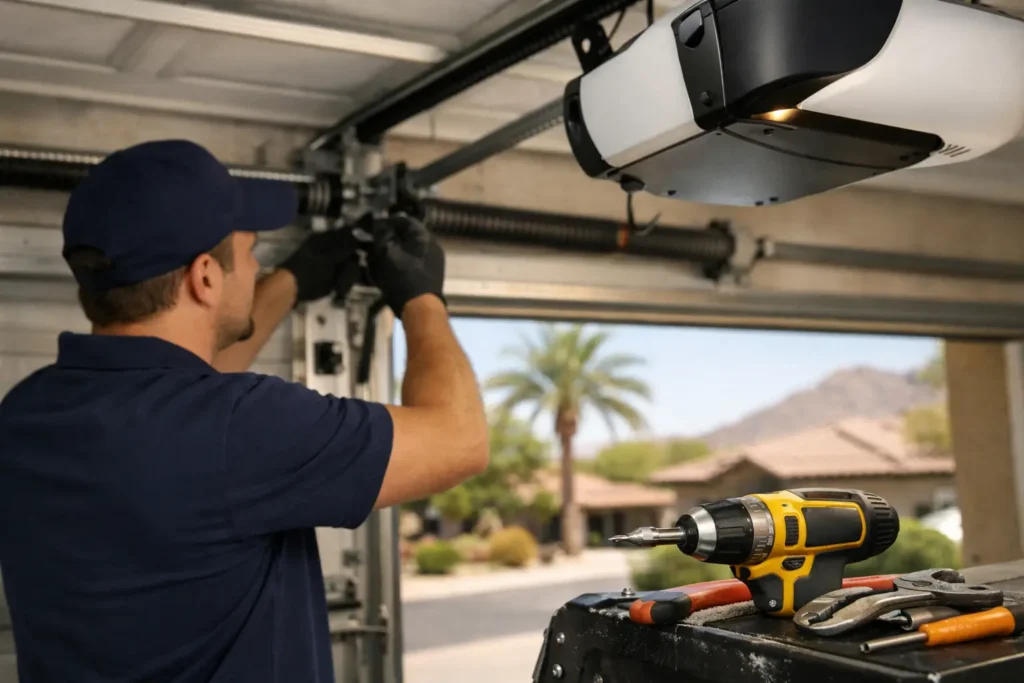
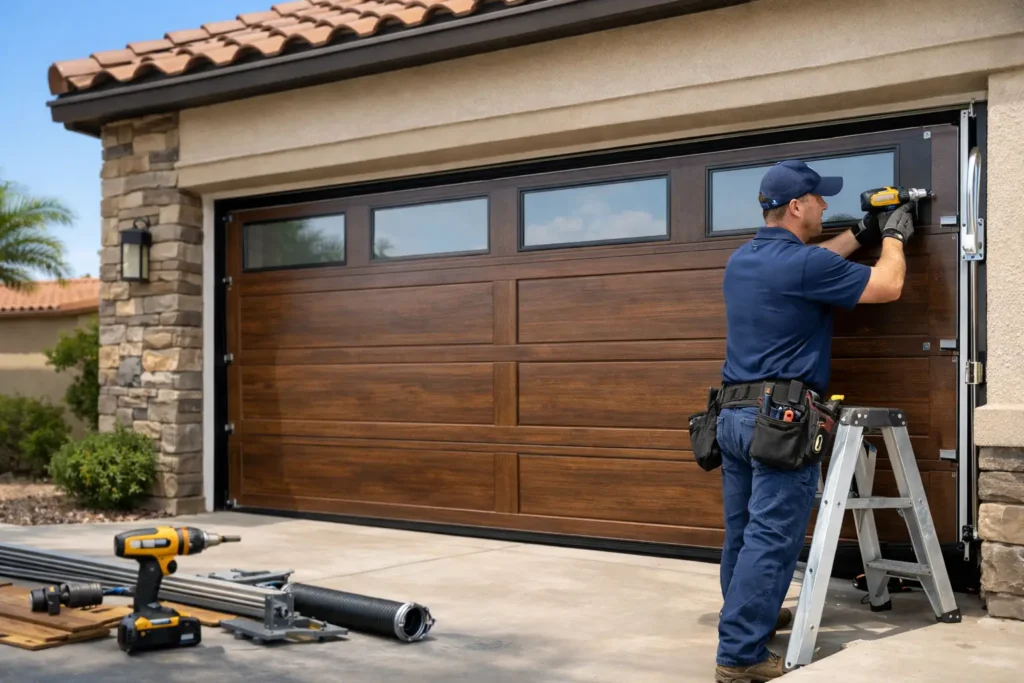
They are also a strong choice when replacing an aging one-piece door. A professional installation can update the tracks, springs, safety sensors, and opener setup as needed, giving you a system designed to work together rather than asking new equipment to compensate for old hardware.
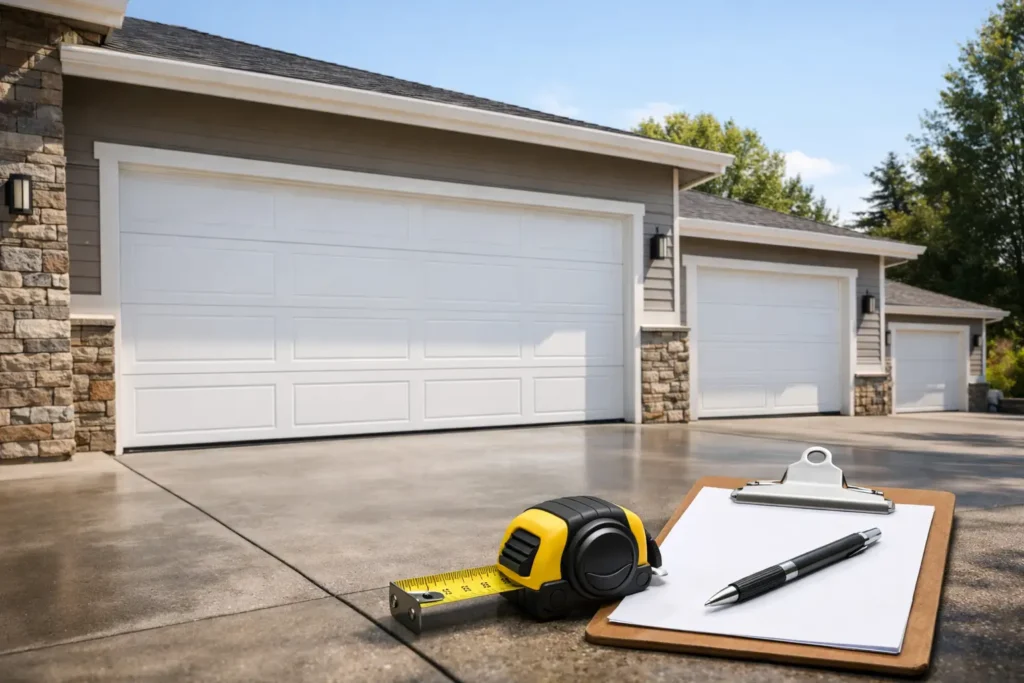
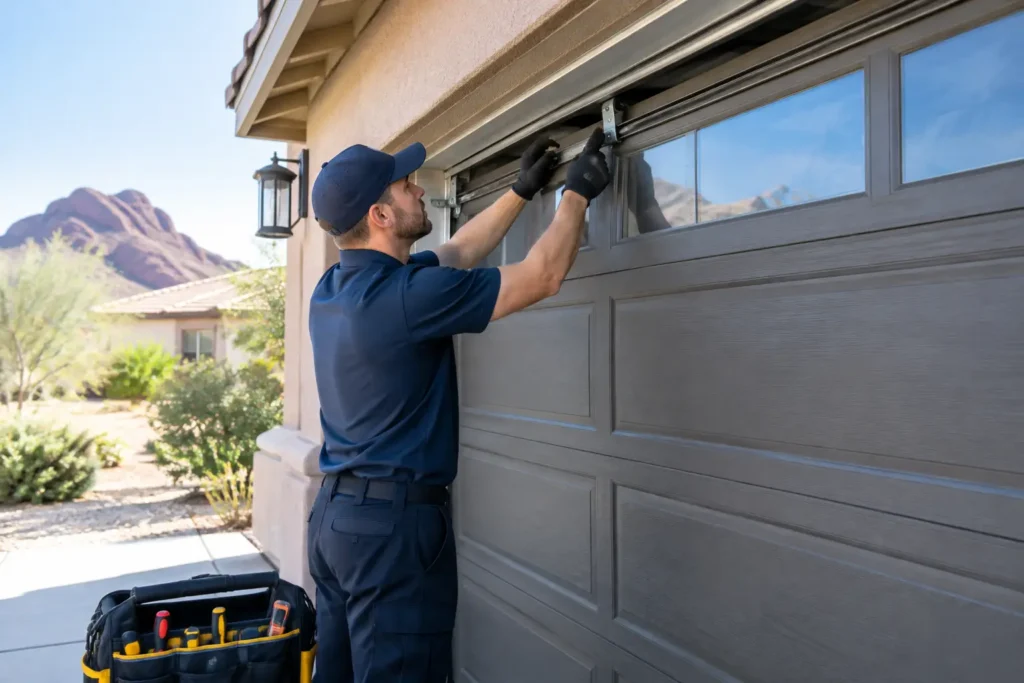
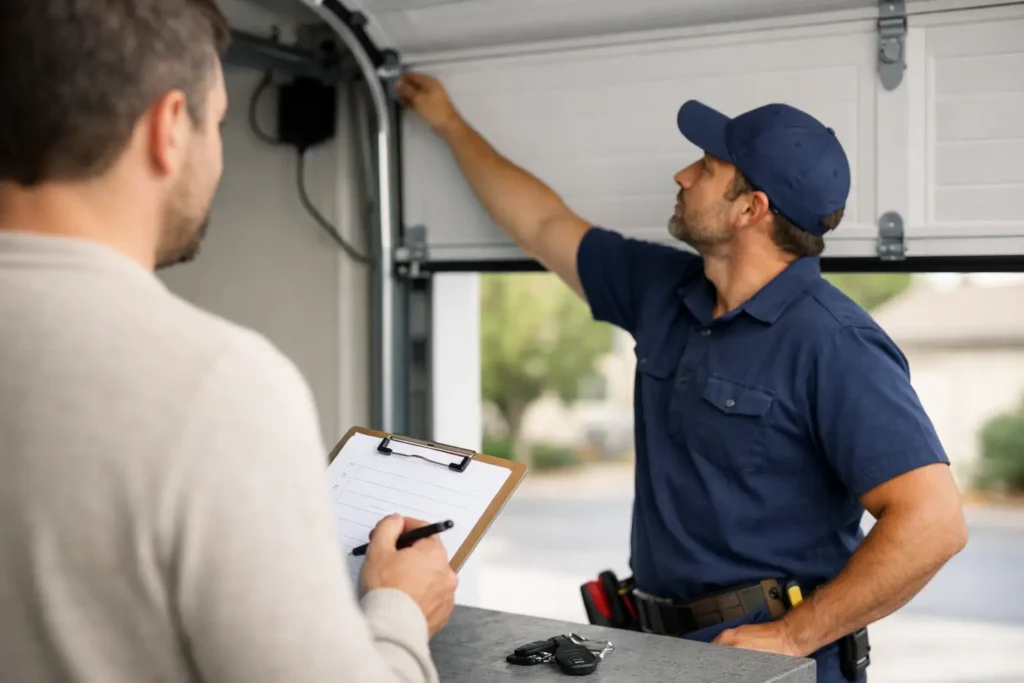
If you are unsure which option fits your garage, a hands-on inspection is the fastest way to get clear answers. Riggs Rescue AZ can check the opening, ceiling clearance, driveway space, door balance, and existing hardware, then explain the practical options with straightforward pricing. The best garage door is the one that opens safely, fits your routine, and gives you fewer things to worry about when you head out the door.