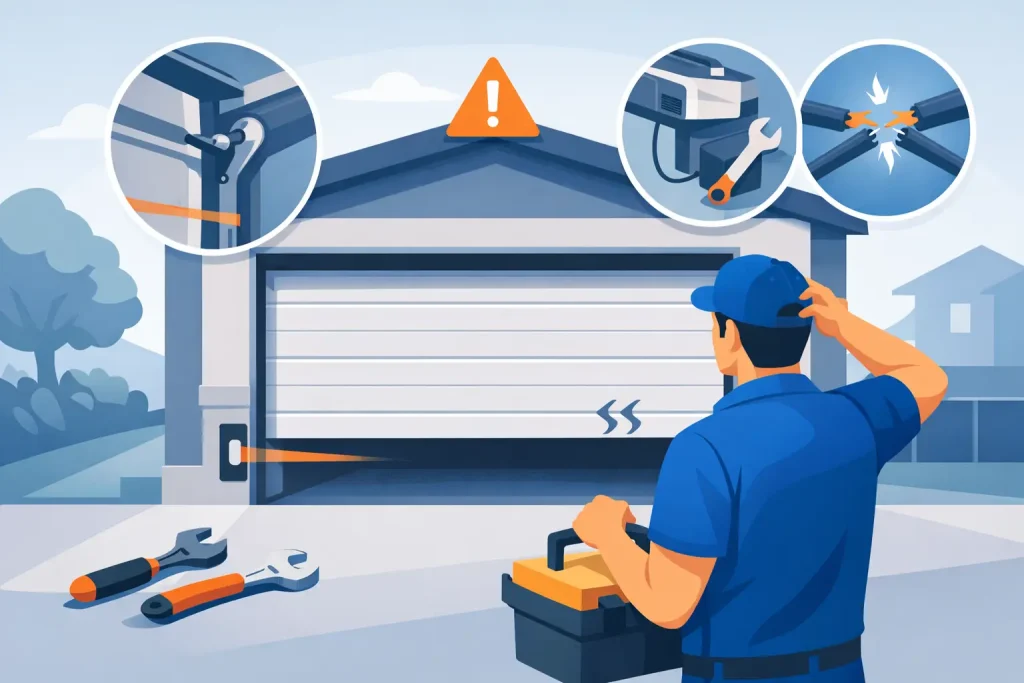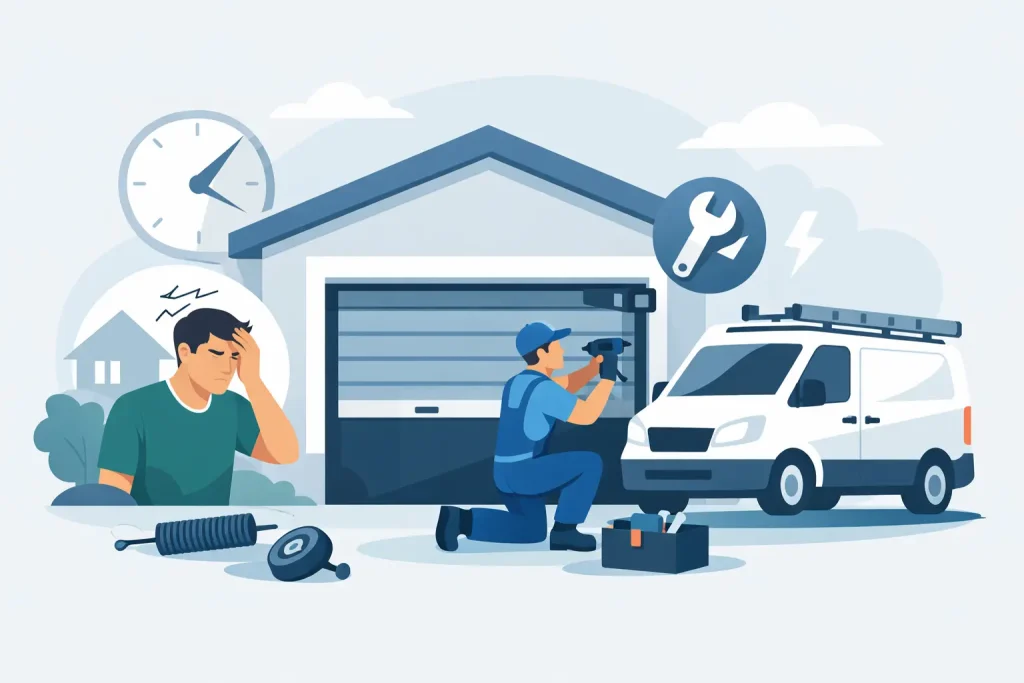
A garage door rattling through the house is more than an annoying sound. It can be your door’s way of telling you that a part is loose, worn down, out of alignment, or under more strain than it should be. Catching the cause early may help you avoid a stuck door, a damaged opener, or an inconvenient repair when you are trying to leave for work.
Some garage door noise is normal. A large moving door has rollers, hinges, tracks, springs, and an opener all working at once. But a new rattle, a sharp shaking sound, or vibration that gets worse each day deserves attention. Here is what may be causing it, what you can safely check, and when it is time to call a garage door professional.
What Causes Garage Door Rattling?
Rattling usually happens when one moving component has too much play. The vibration from the door traveling up and down makes that loose or worn part shake against metal, the wall, or another component. The sound can come from several places, and identifying when it happens is often the first clue.
If the rattle starts as soon as the opener runs, the opener mounting, chain, belt, or door hardware may be involved. If it gets loud only halfway through the door’s travel, worn rollers or a track issue may be more likely. A rattle that occurs when the door is fully open or closed can also point to loose track brackets, a shaky opener rail, or an improperly secured door.
Loose nuts, bolts, and brackets
Garage doors move hundreds of times each year, and every cycle creates vibration. Over time, bolts at the hinges, roller brackets, track brackets, and opener mounting points can gradually loosen. Even one loose fastener can cause a noticeable metallic rattle.
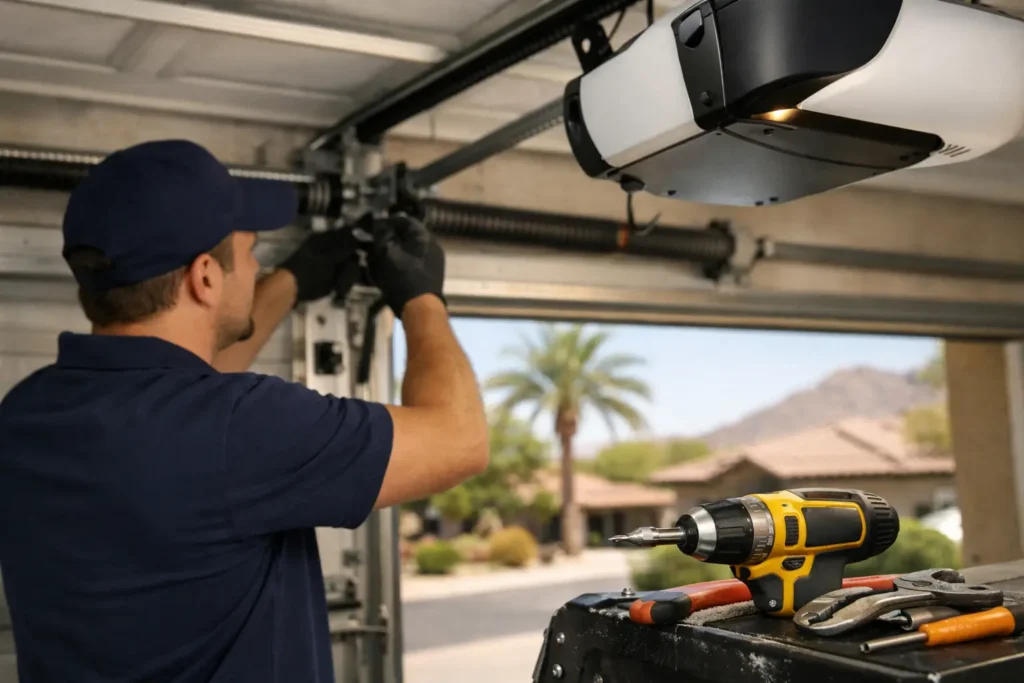
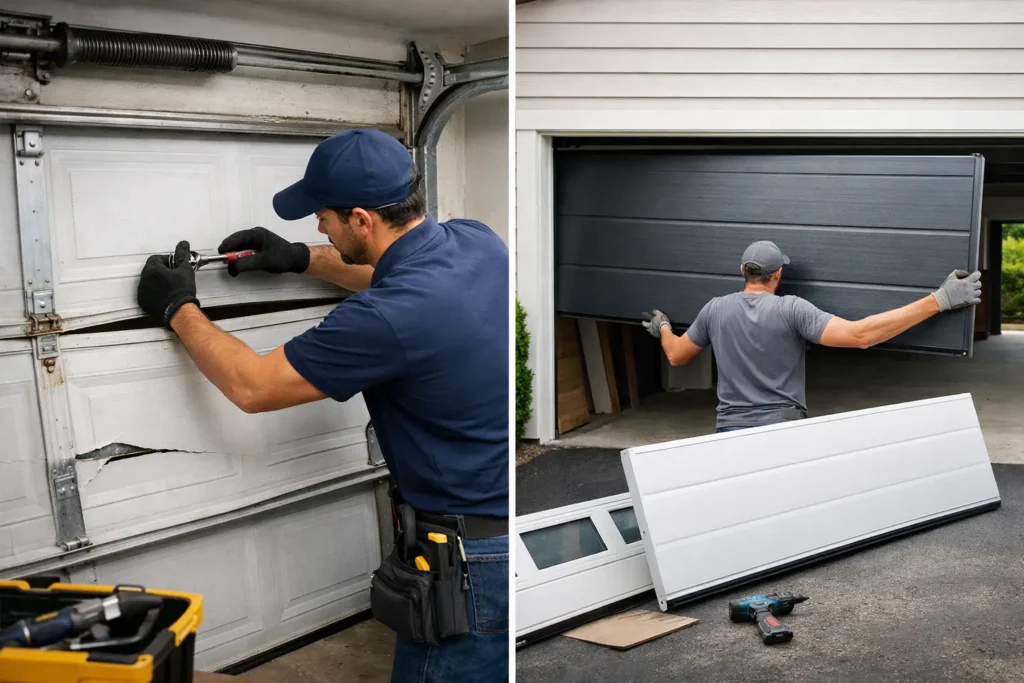
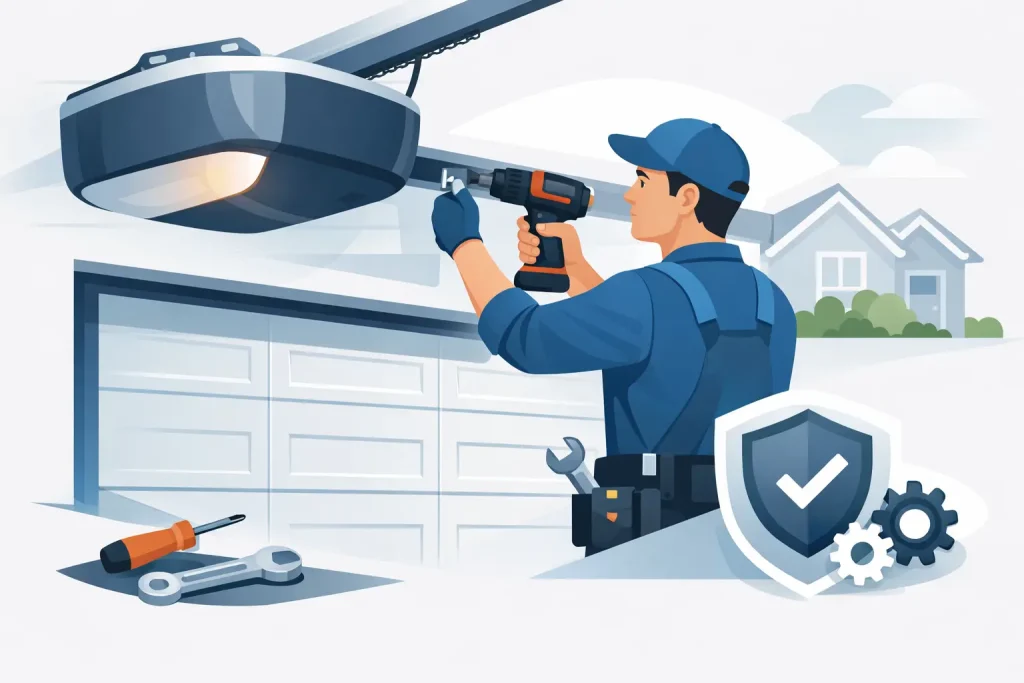
You can visually inspect accessible hardware with the door closed. Look for brackets that move when lightly touched, bolts backing out, or metal parts that appear separated from the wall or ceiling. Tightening ordinary, accessible hardware may help, but do not adjust bottom brackets, spring hardware, or any bolts connected to the torsion spring system. Those components are under extreme tension and should only be handled by a trained technician.
Worn or damaged rollers
Rollers guide the garage door through its tracks. When they wear out, crack, lose bearings, or become dry, they can wobble and chatter as the door moves. Older metal rollers often create more noise than nylon rollers, especially after years of use.
A worn roller can make the door rattle, squeak, grind, or move unevenly. If you notice rollers that are chipped, visibly loose, or no longer rolling smoothly, replacement is often the right fix. Upgrading to quality nylon rollers can make a noticeable difference in both noise and day-to-day operation.
Track problems and loose supports
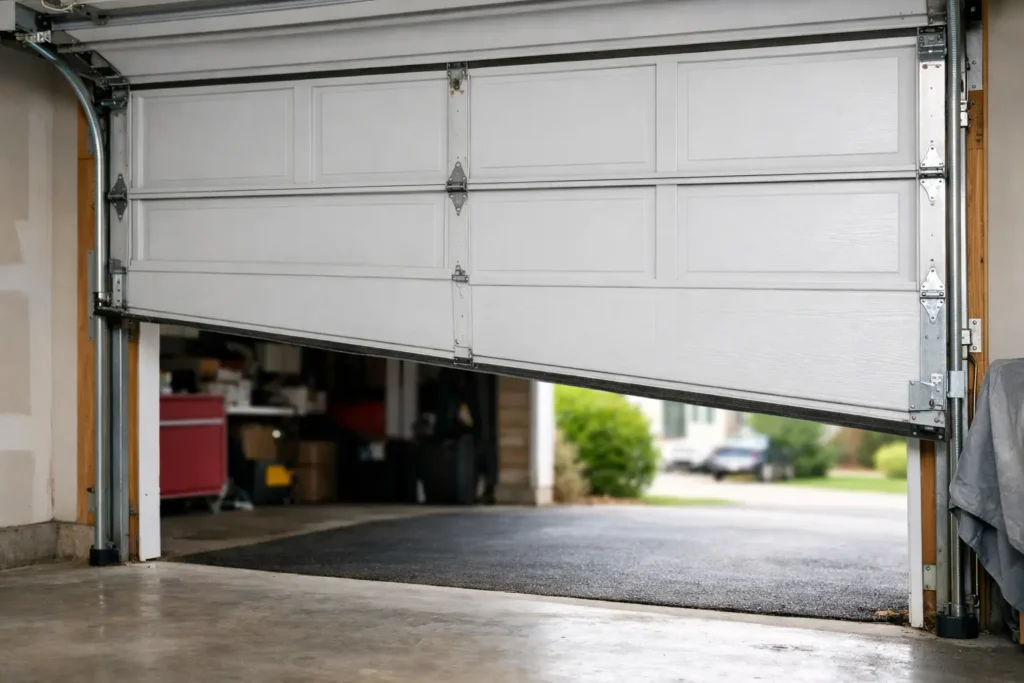
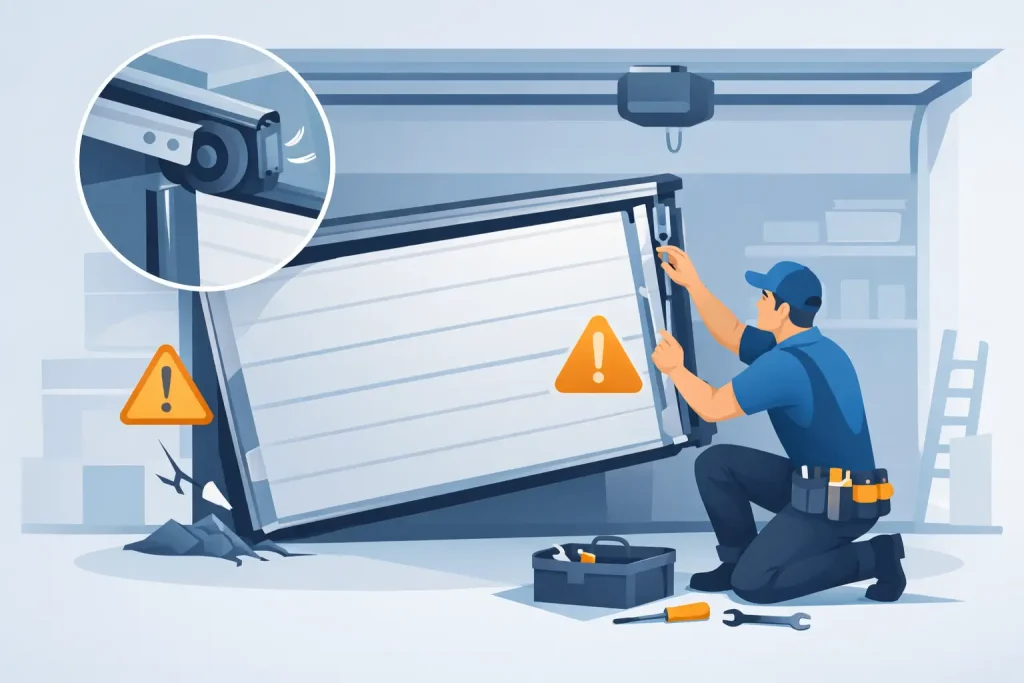
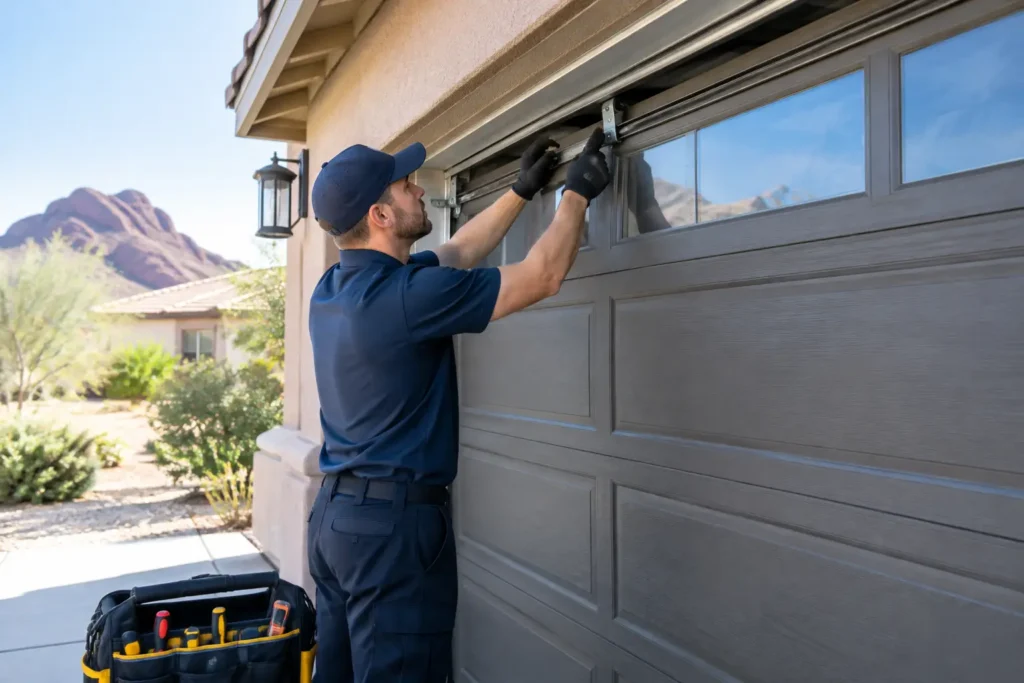
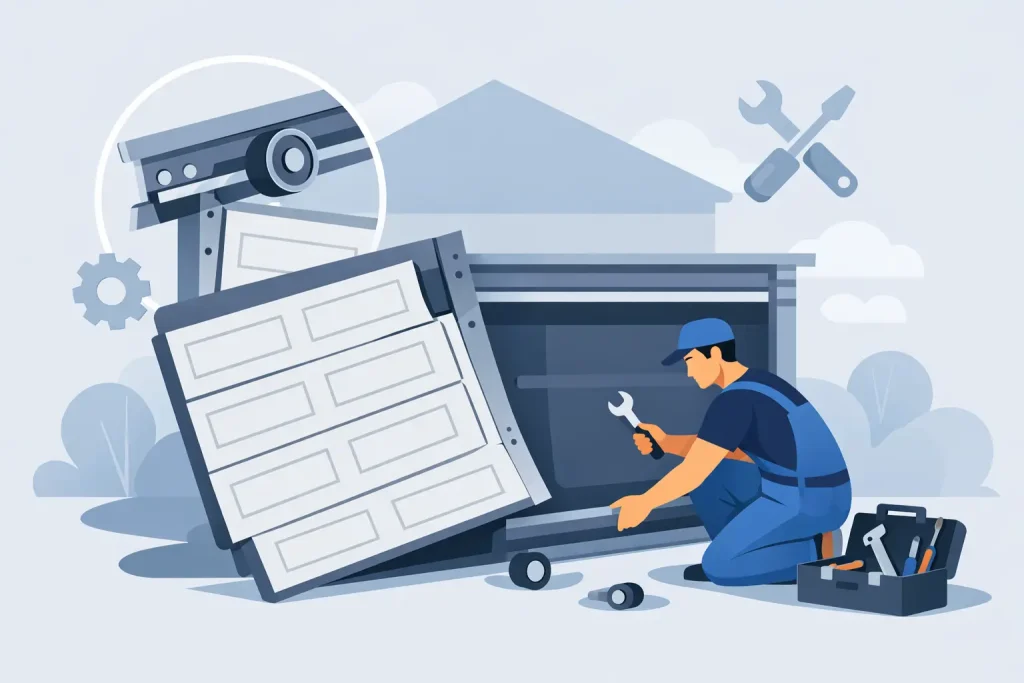
The tracks need to stay securely mounted and properly aligned for the door to travel smoothly. A loose track bracket can let the track shake against the wall, while a bent or misaligned track can force rollers to bounce or scrape as they move.
Do not try to bend a track back into place with a hammer or force it by hand. Small alignment changes can affect how the entire door operates. If the door is shaking, rubbing, or making a rattle at the same point during every cycle, a professional inspection can determine whether the track needs adjustment, repair, or replacement.
Dry hinges and moving parts
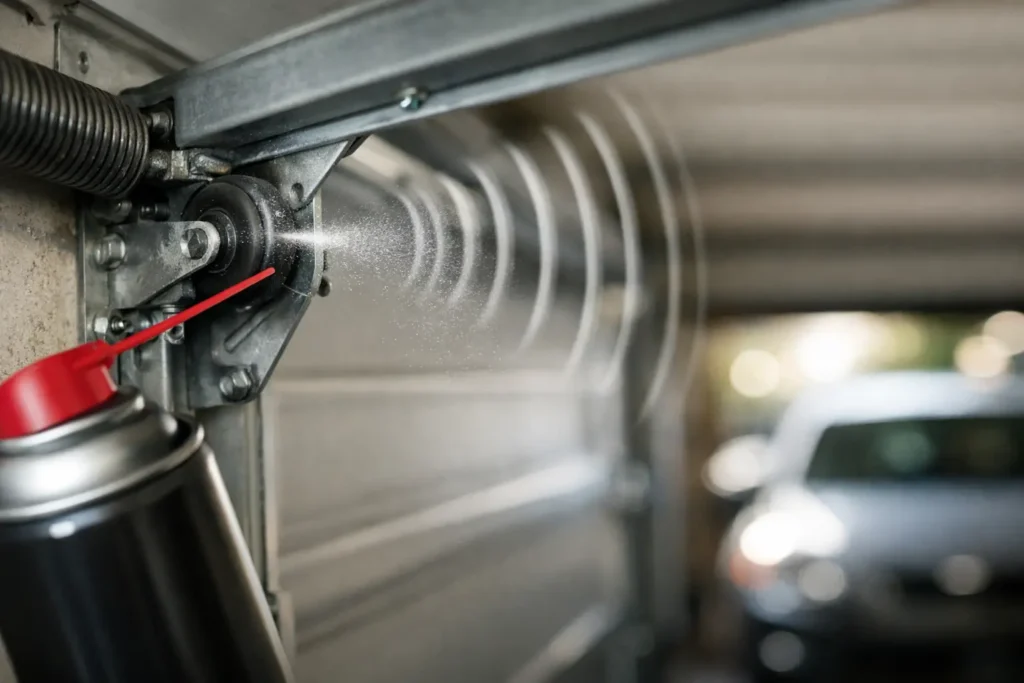
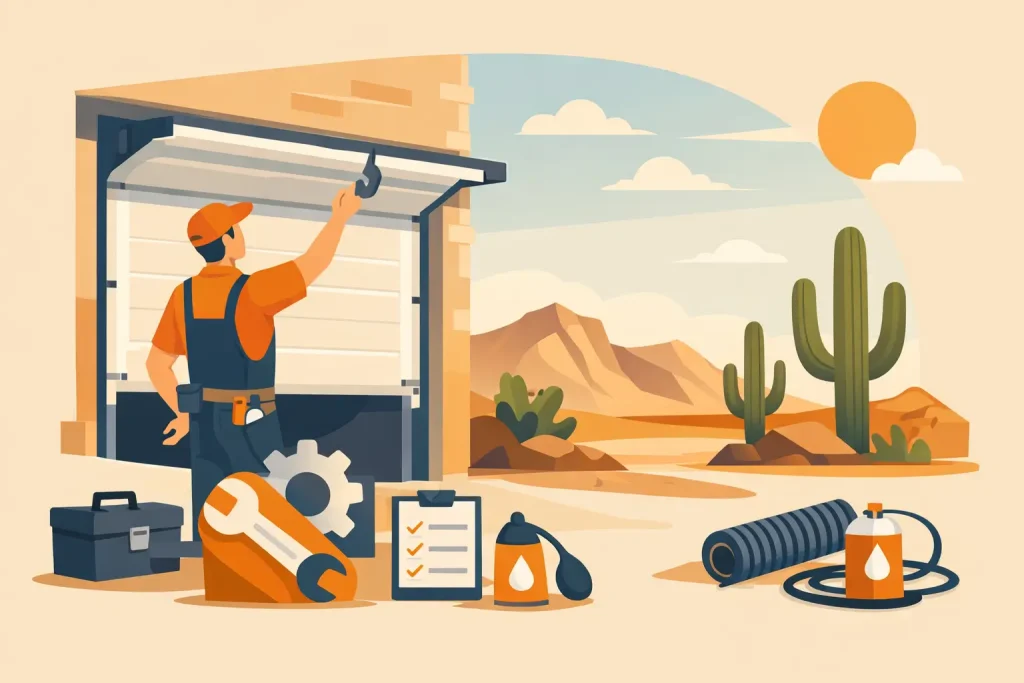
In the dry Arizona climate, garage door lubrication can wear away faster than many homeowners expect. Dry hinges, roller stems, bearings, and spring coils may create squeaks, popping, or light rattling sounds as the door flexes.
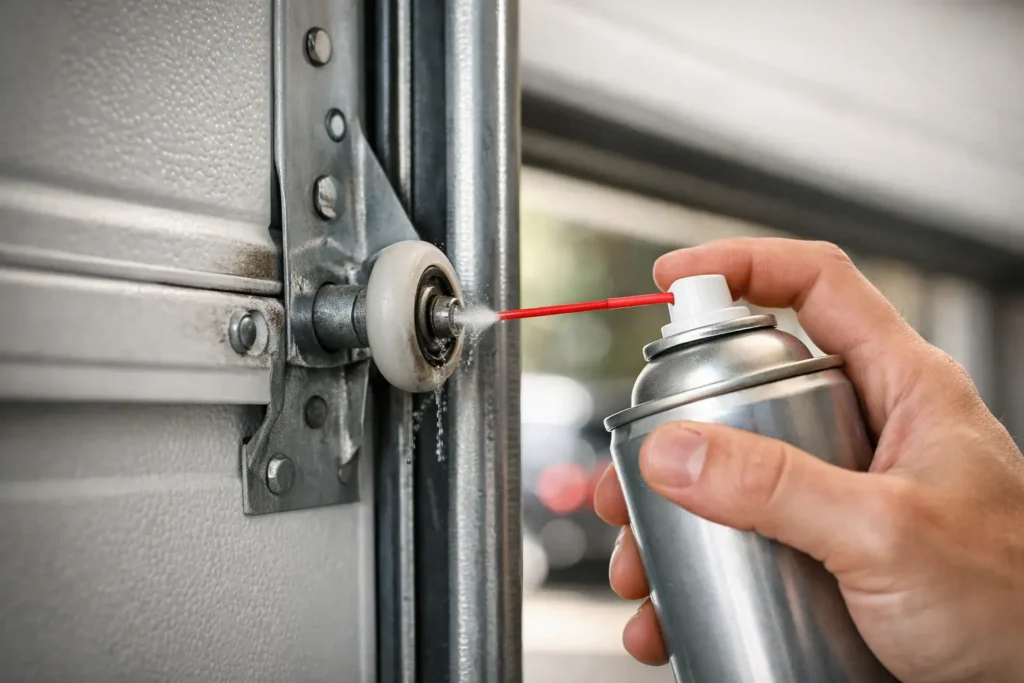
Use a garage-door-specific lubricant on the appropriate moving parts, following the product directions. Avoid coating the tracks with grease or heavy lubricant. Rollers need traction inside the tracks, and greasy tracks collect dust and debris that can make operation worse. If lubrication quiets the door only briefly, there may be a worn part underneath the noise.
An unbalanced door or spring issue
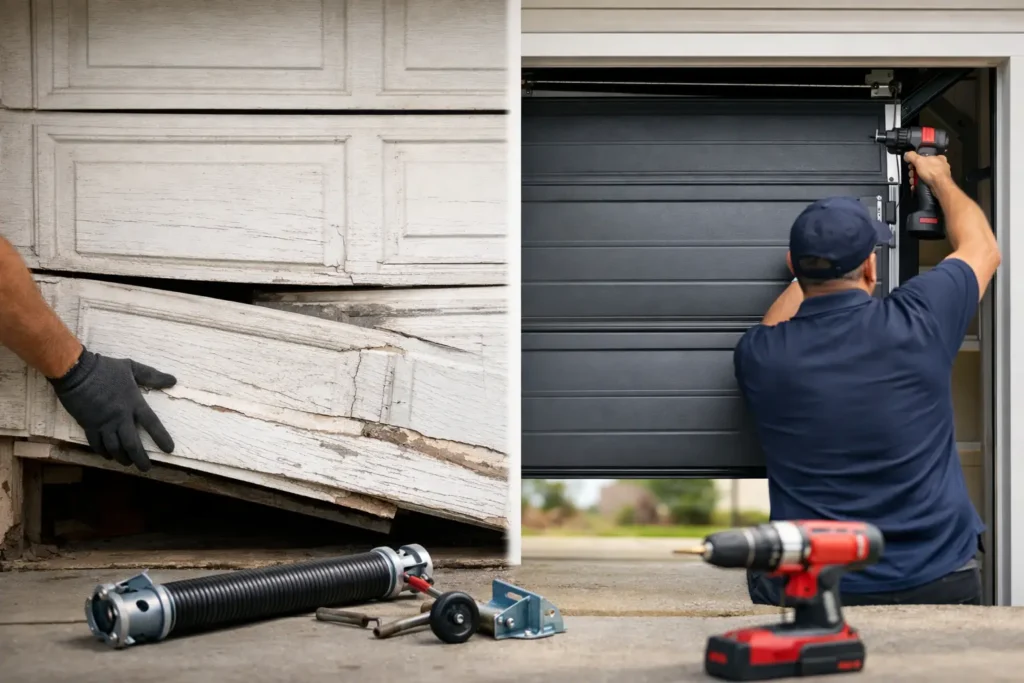
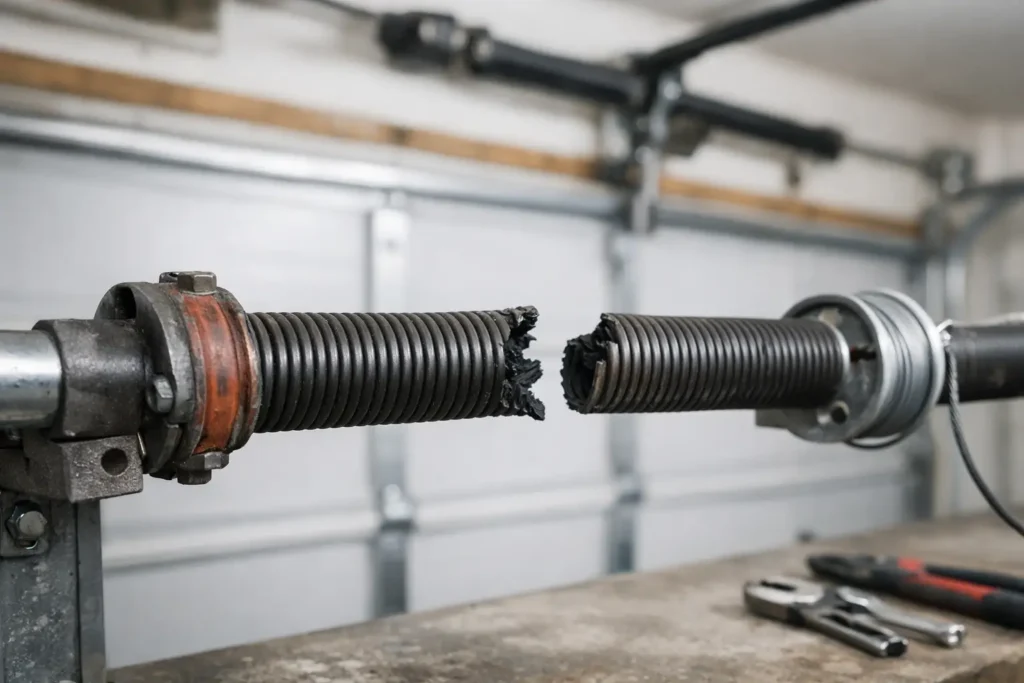
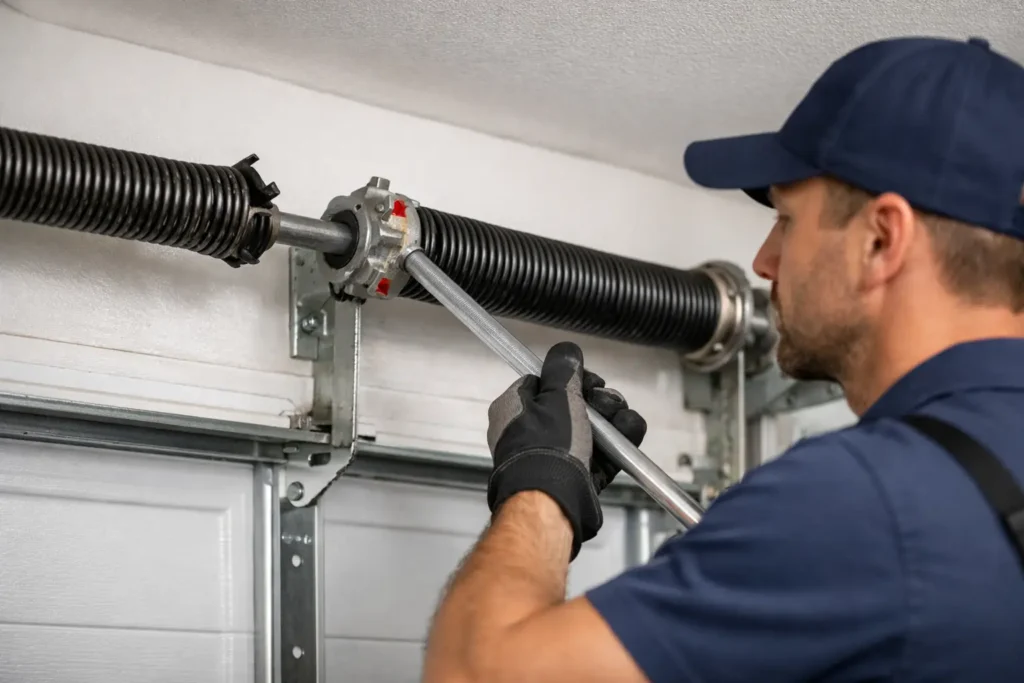
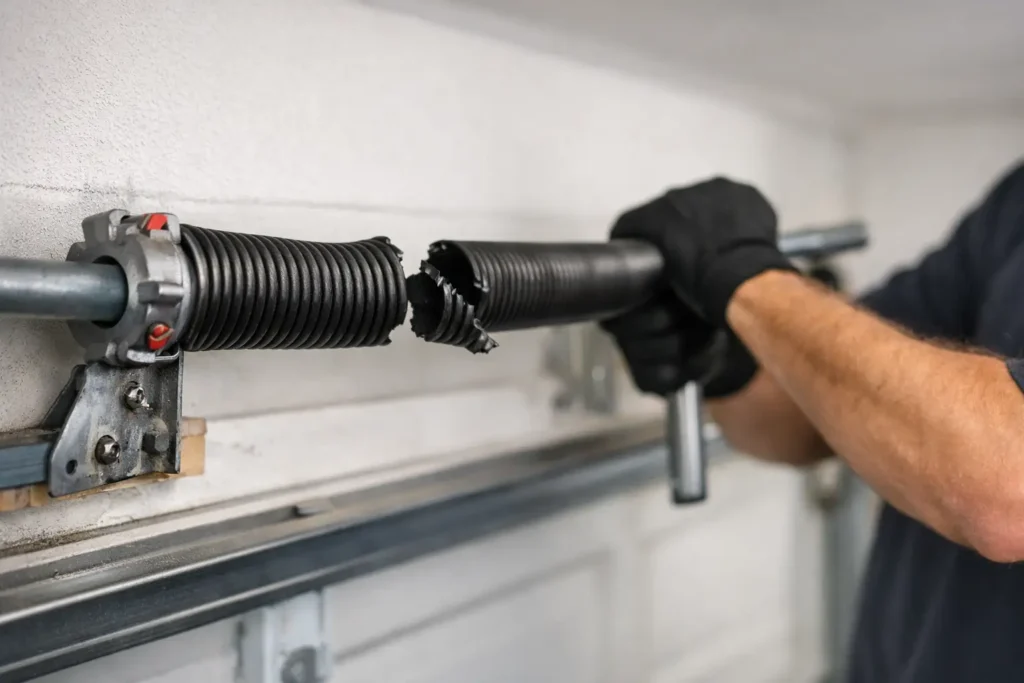
A garage door should be balanced enough that the opener is not carrying the full weight of the door. When springs weaken or break, the door may shake, strain, rattle, or move unusually fast or slow. You may also notice the opener sounding louder than usual because it is working harder than it should.
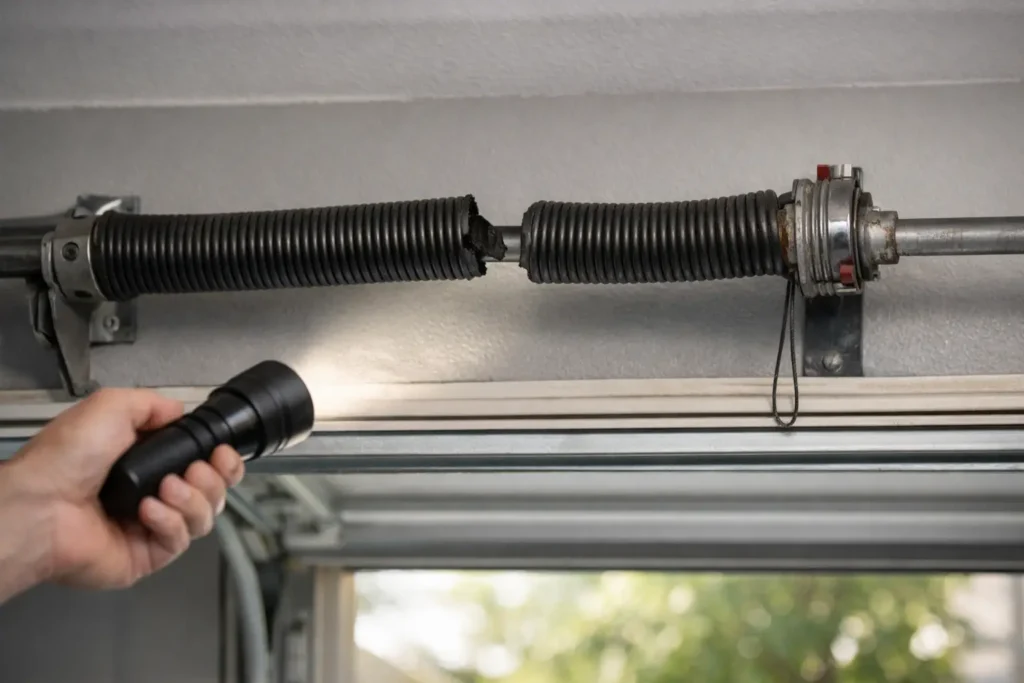
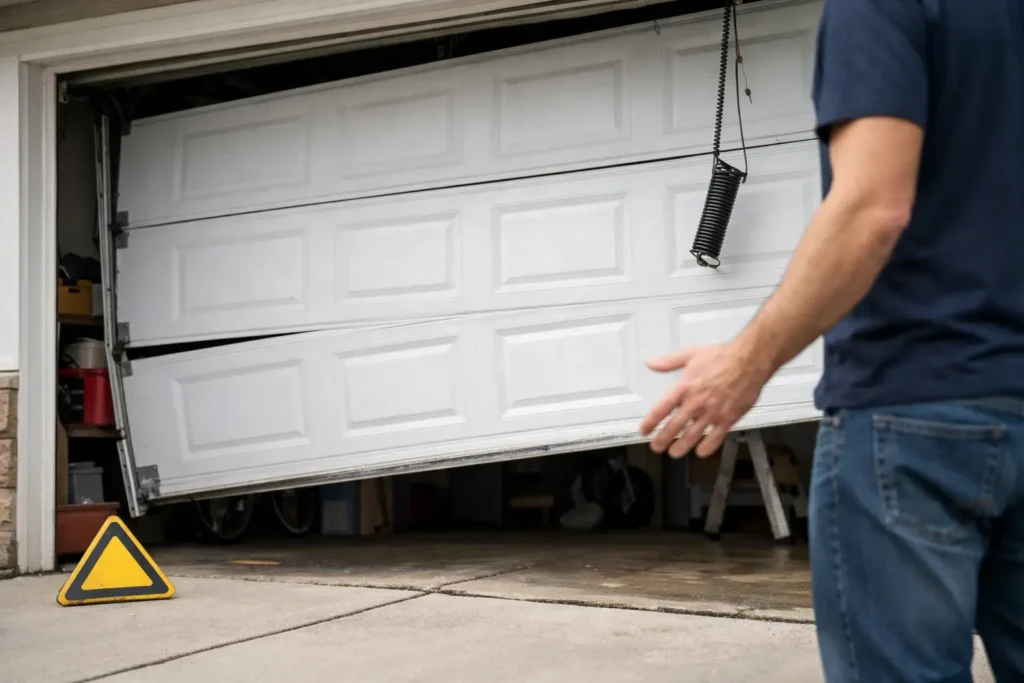
Broken or failing springs are not a DIY repair. The stored force in garage door springs can cause serious injury and property damage when handled incorrectly. If the door suddenly feels heavy, will not open fully, slams shut, or has a visible gap in a torsion spring above the door, stop using it and schedule service.
Safe Checks You Can Make Before Calling
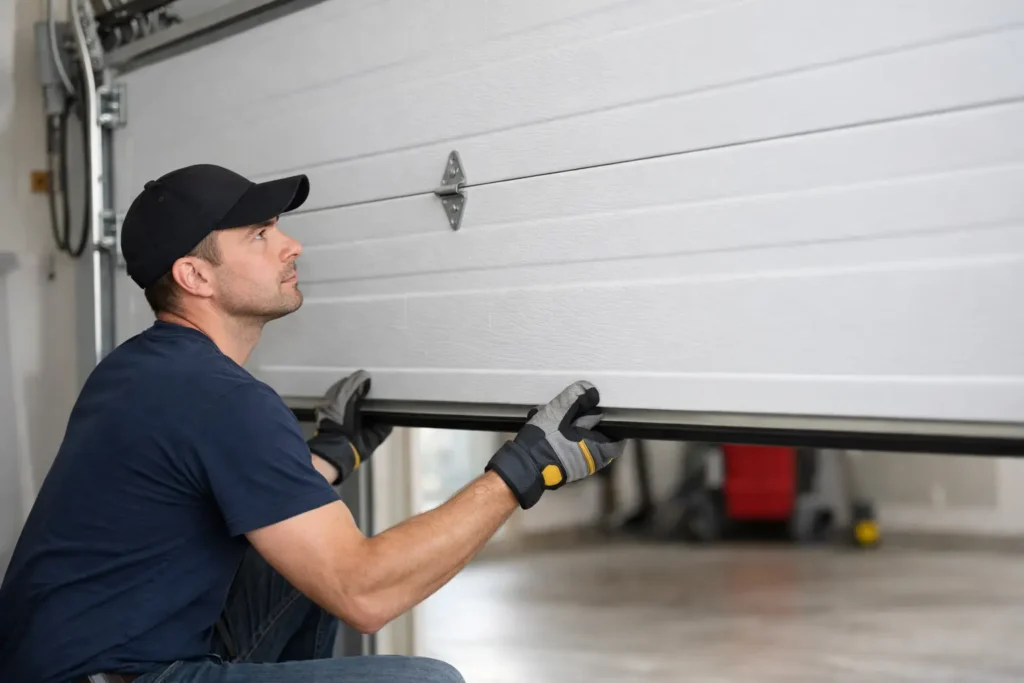
Before assuming the worst, listen carefully to the door during one complete open-and-close cycle. Stand clear of the door and keep children and pets away from the area. Notice whether the rattle happens at the beginning, middle, or end of travel, and whether it is louder on one side.
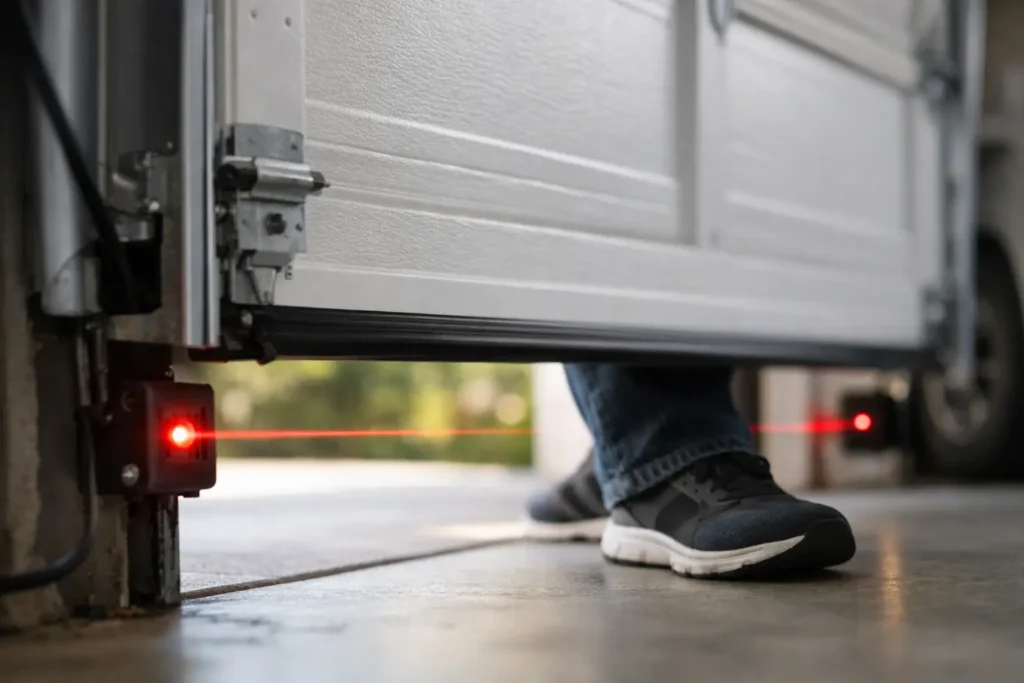
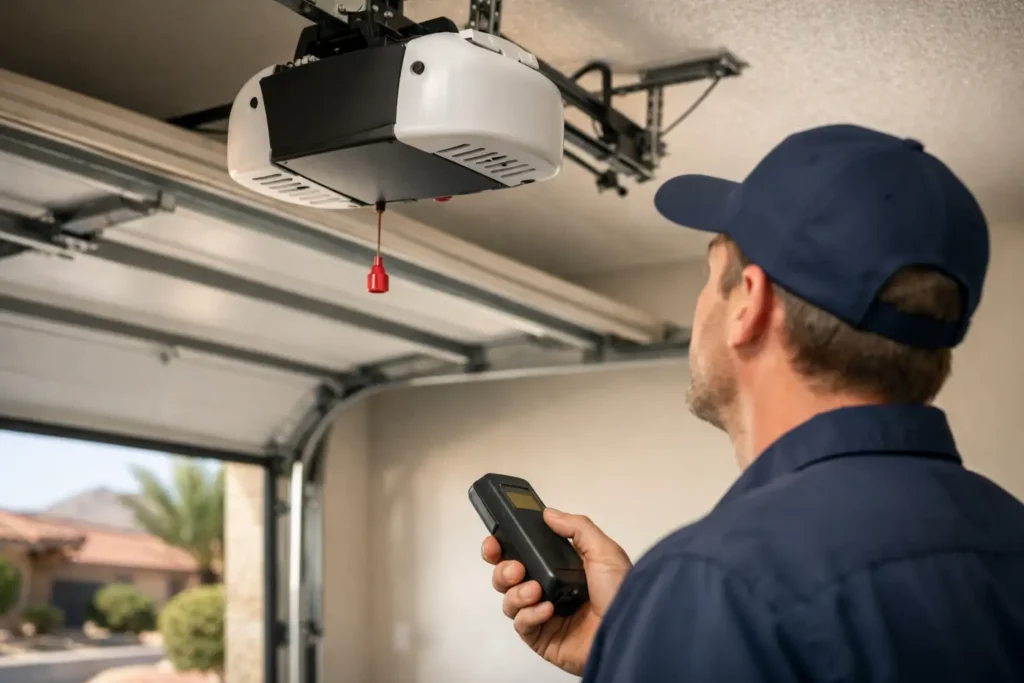
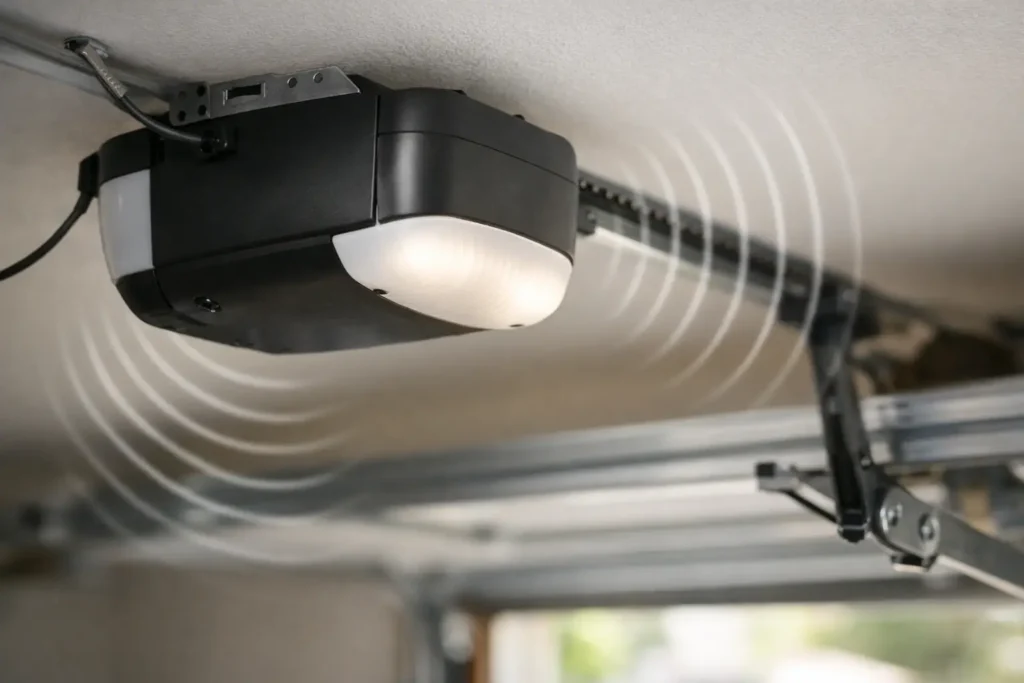
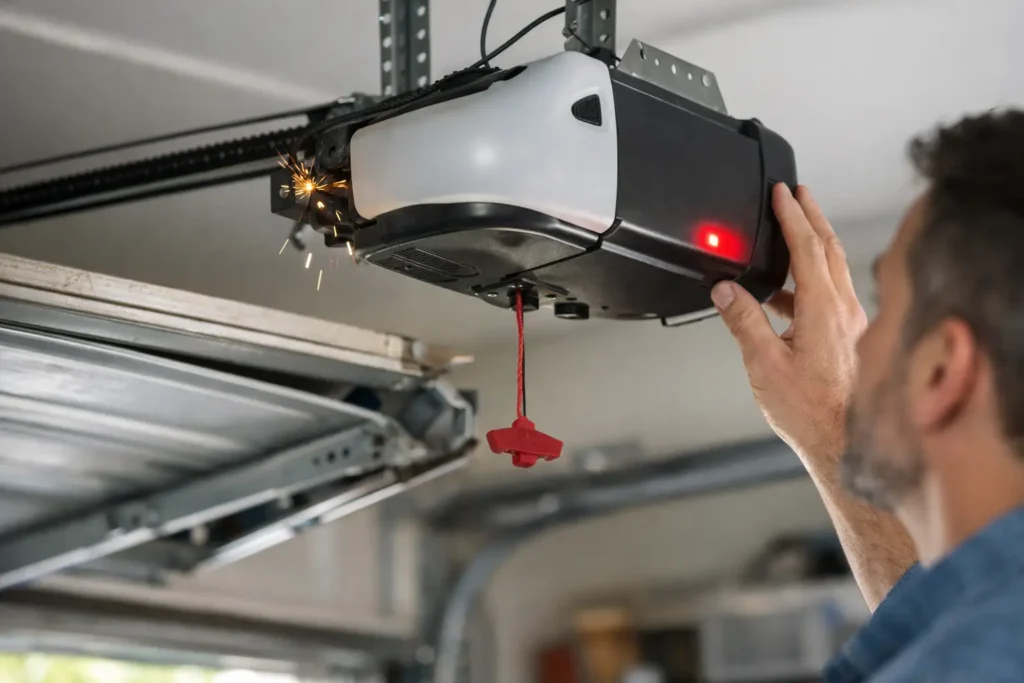
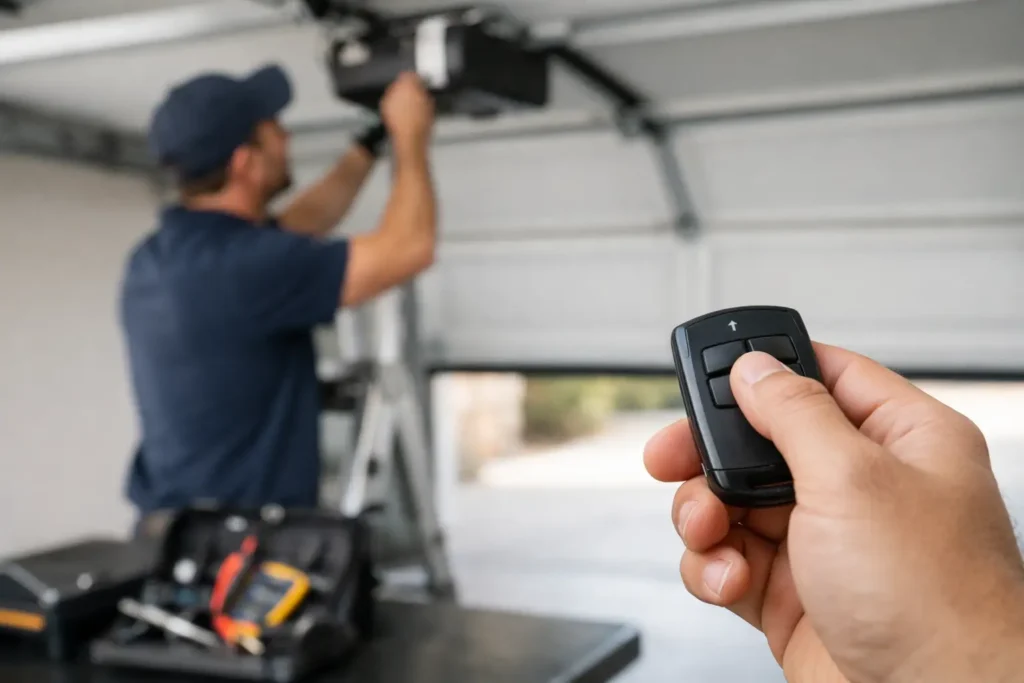
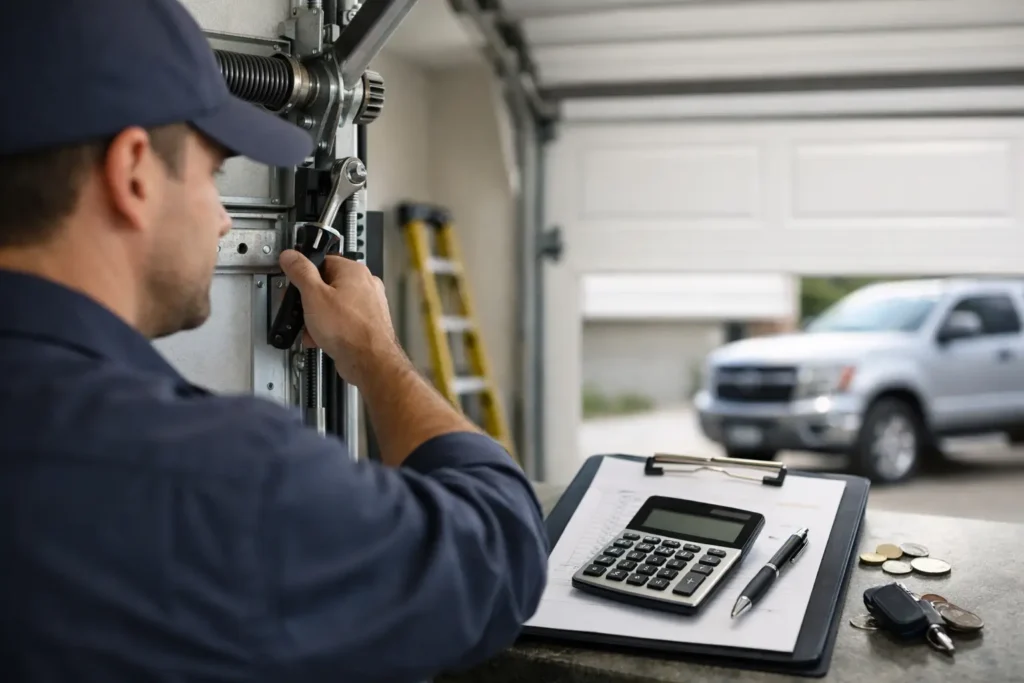
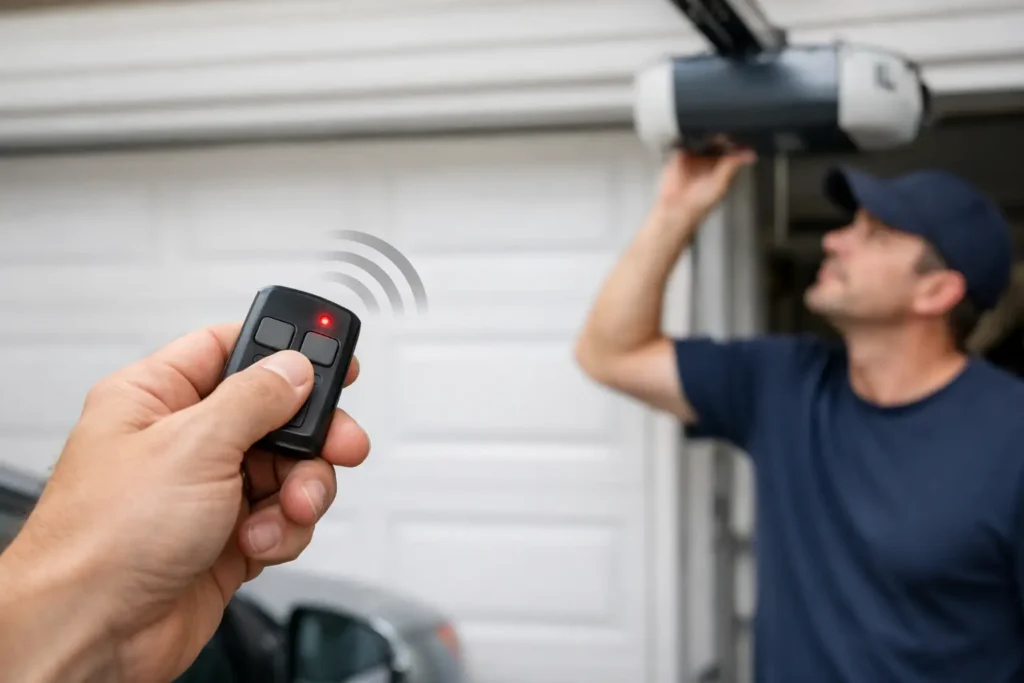
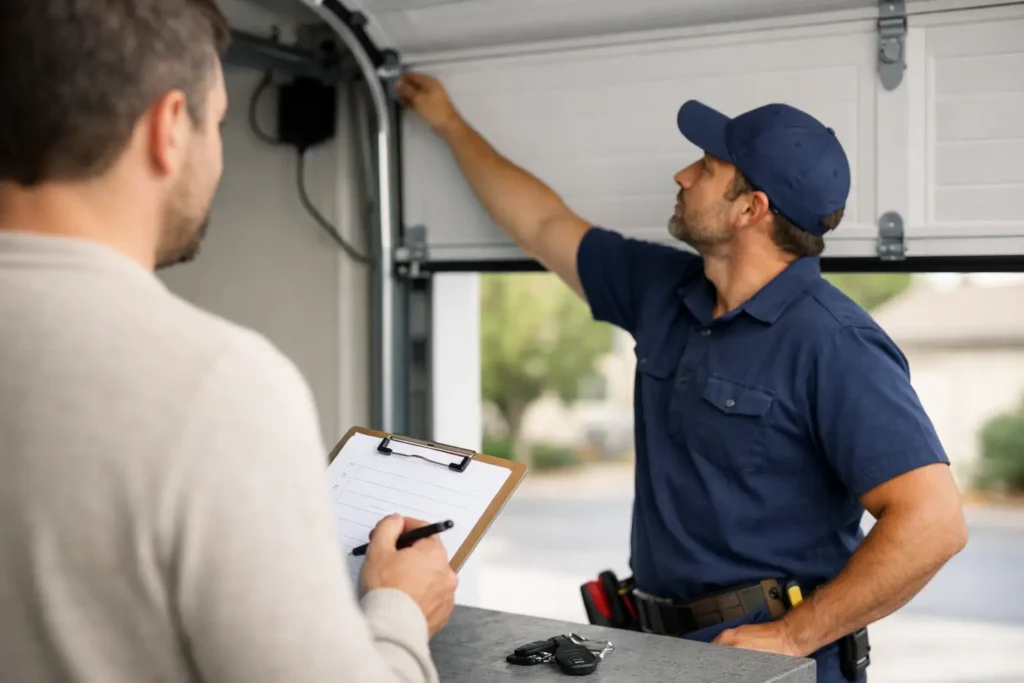
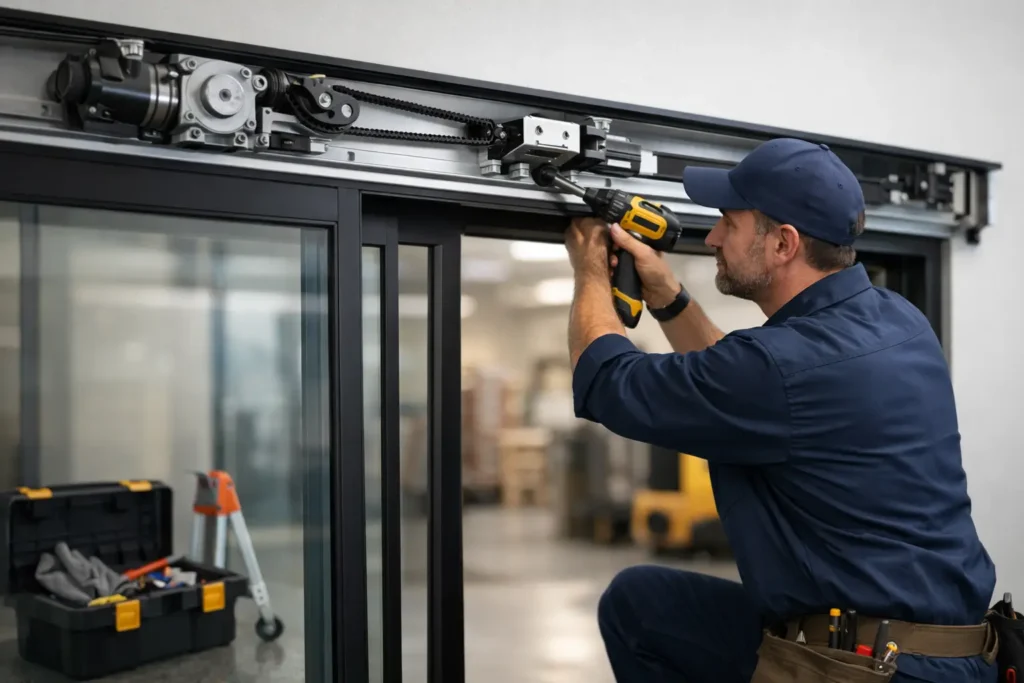
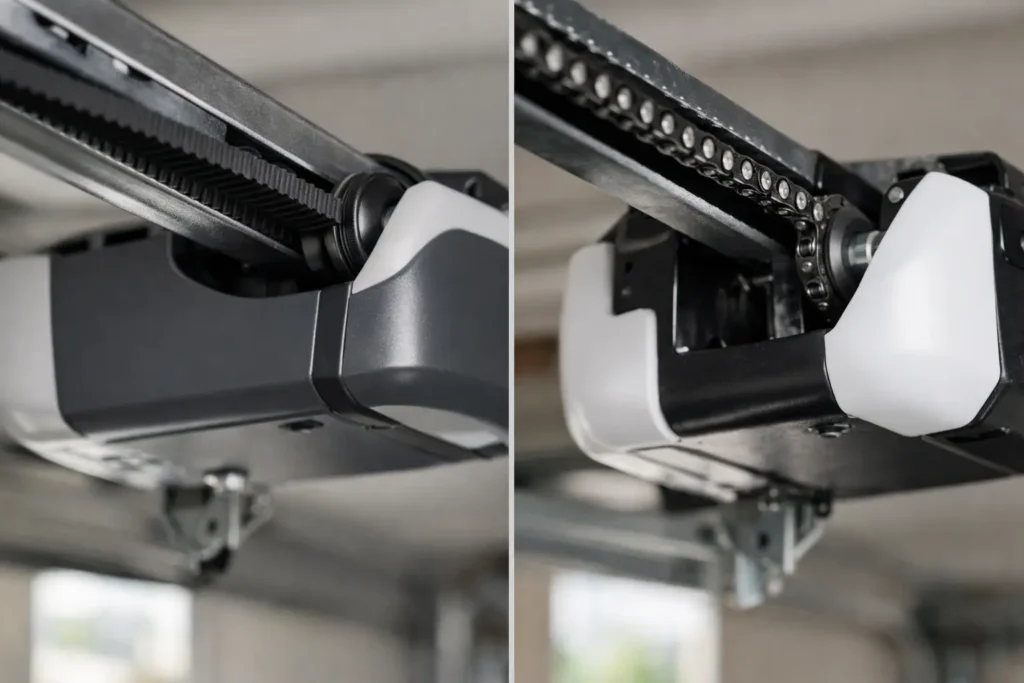
With the door closed, look for obvious debris in the tracks, loose hinges, rollers that look damaged, and track brackets that appear to be pulling away from the wall. You can also check whether the opener motor unit or rail visibly shakes while operating. A little vibration is expected, but excessive movement may mean the mounting hardware needs attention.
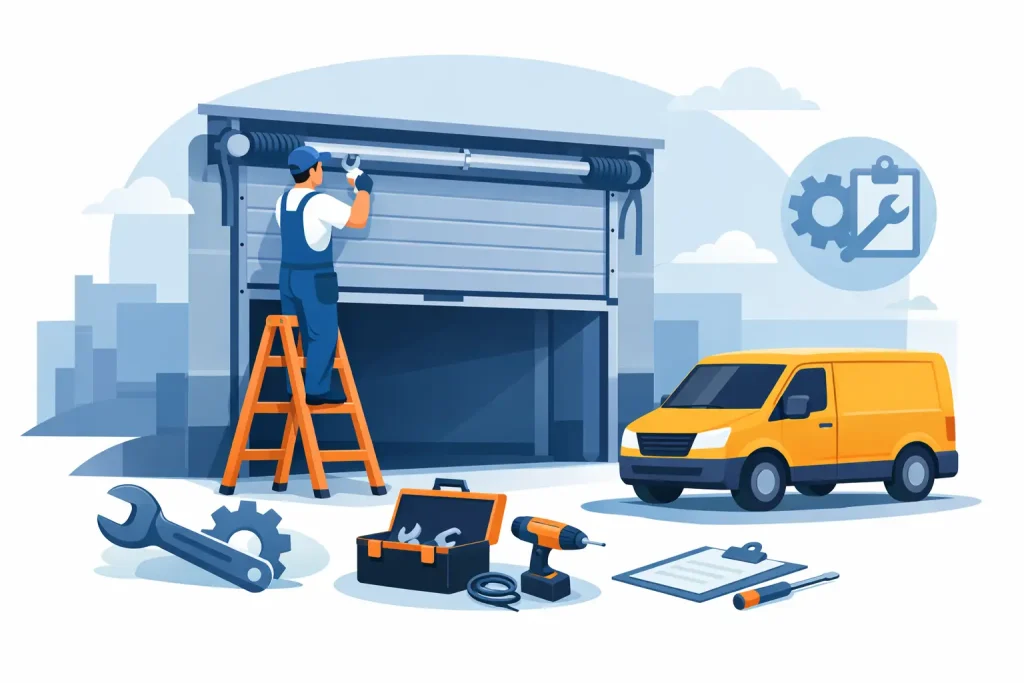
If you are comfortable doing basic maintenance, you can tighten accessible bolts and apply garage door lubricant to hinges, roller stems, and spring coils. Do not remove cables, loosen spring components, adjust bottom fixtures, or attempt to reset a door that has come off track. Those repairs can become dangerous quickly.
When a Rattling Garage Door Needs Professional Repair
A garage door rattling may be a simple maintenance issue, but it should not be ignored when the noise comes with poor performance. Call for service if the door jerks, leans to one side, pauses during travel, reverses unexpectedly, grinds against the tracks, or leaves gaps when closed.
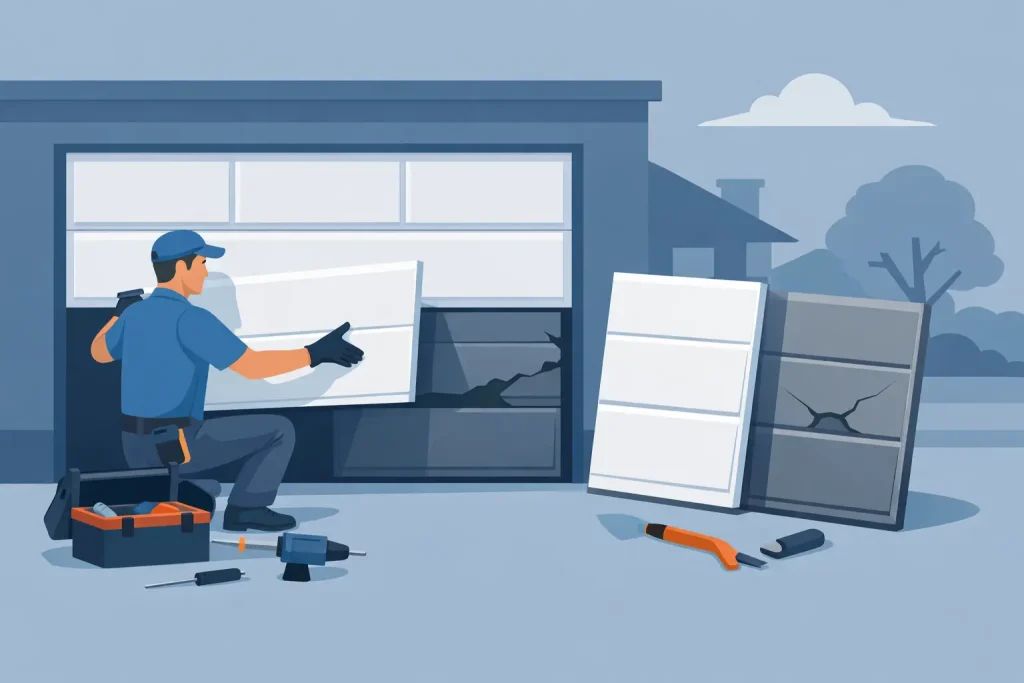
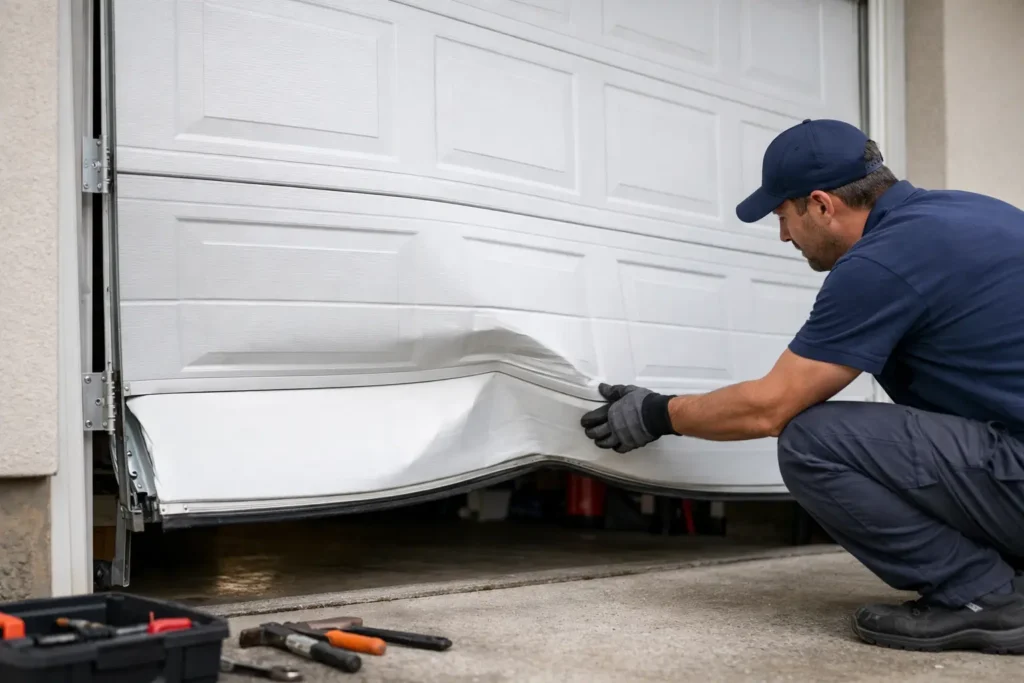
You should also schedule a repair if the opener is straining, the garage door is noticeably louder than it used to be, or the rattle began after a vehicle bump, storm, or impact. Continuing to run a damaged door can wear out the opener and turn a small repair into a larger expense.
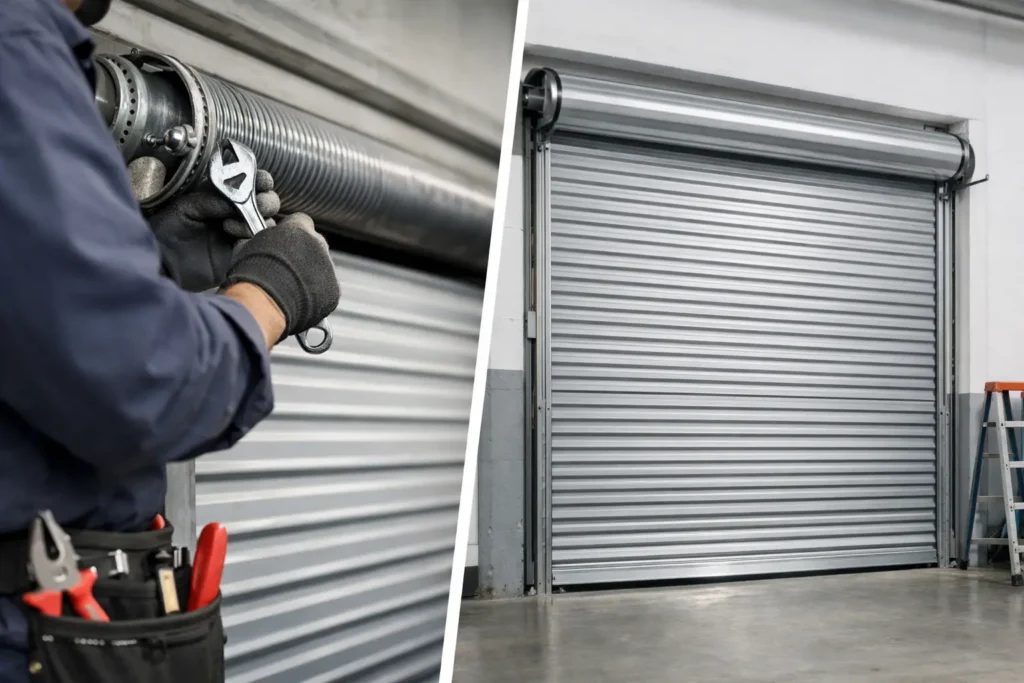
For business owners and property managers, prompt service matters even more. A rattling commercial garage door may affect security, deliveries, employee access, and daily operations. Commercial doors are heavier and often operate more frequently, so a vibration issue should be inspected before it causes downtime.
How to Keep Your Garage Door Quieter
Regular care is the best way to prevent most garage door noise. An annual professional tune-up can catch loose hardware, roller wear, spring fatigue, and track concerns before they become urgent. For doors that get heavy use, such as homes with multiple drivers or busy commercial properties, more frequent maintenance may make sense.
Keep the tracks clear, watch for changes in the door’s movement, and avoid waiting until the door stops working completely. A door that starts rattling is giving you an early warning. Addressing it promptly is usually easier on your schedule and your budget.
At Riggs Rescue AZ, we believe garage door repair should come with clear answers and no surprises. If your door is rattling, shaking, or sounding like it is working too hard, a careful inspection can pinpoint the cause and help keep your home or business moving safely. A quieter door often starts with one small repair handled at the right time.